
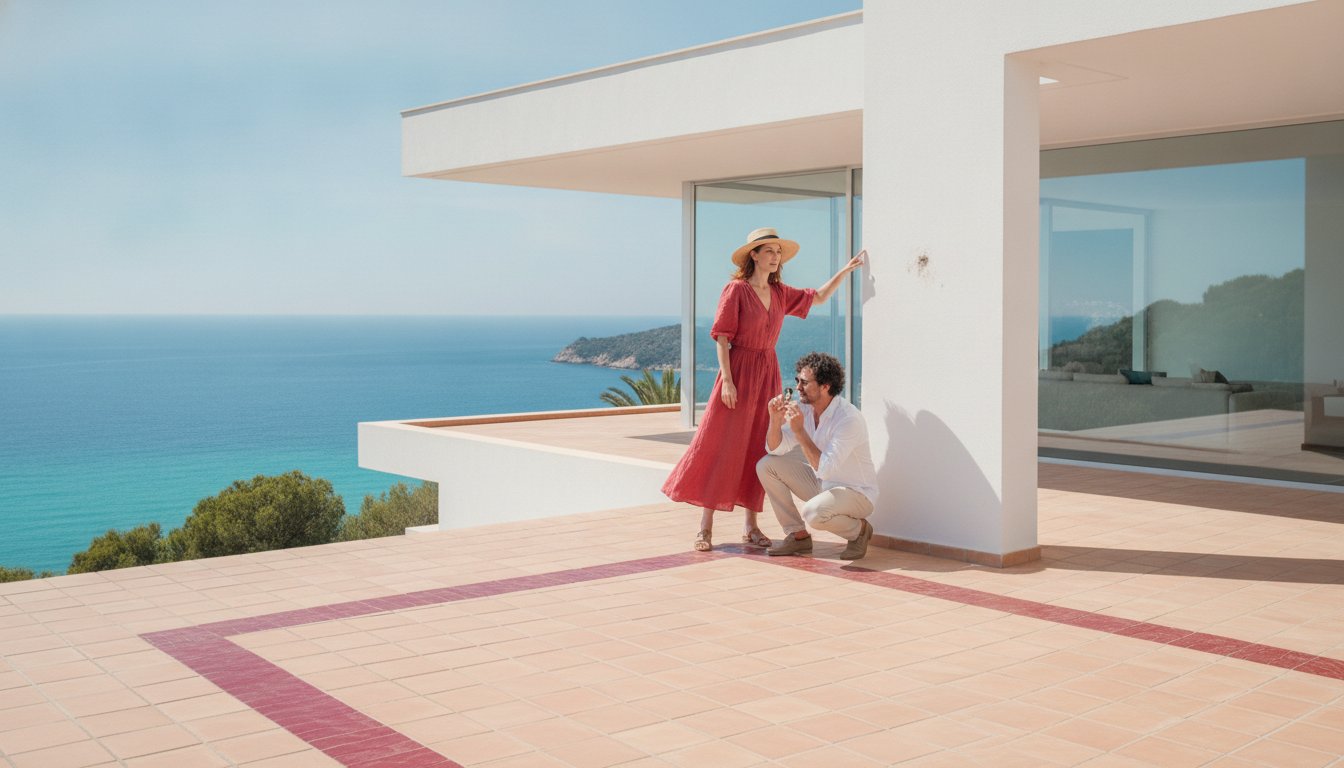
Imagine stepping onto a sun-drenched terrace in Puerto de Mazarrón, convinced you've found your dream home, only to realise later that a faint scent of damp or a missing document could turn your sanctuary into a setback. It's completely natural to feel a blend of thrill and hesitation when you're exploring potential homes. You aren't just buying bricks and mortar; you're choosing a new lifestyle, and the pressure to get every detail right can feel heavy.
We're here to help you navigate this journey with total confidence. By learning how to identify the most common red flags when viewing property in spain, you can protect your savings and your peace of mind. Whether you're viewing a villa in La Azohia, a townhouse in Isla Plana, or comparing options across the Costa Calida and the Costa Blanca, knowing what to look for is your best defence. Whilst the Murcia region offers a rugged, authentic charm, the Valencia region brings its own unique character, and we'll show you how to vet properties in both effectively.
This guide provides a clear, actionable checklist that covers physical warning signs, essential legal paperwork, and environmental factors unique to these Mediterranean coastlines. You'll gain the expert knowledge needed to ask the right questions and the confidence to walk away if a deal isn't quite what it seems.
Key Takeaways
- Learn how to look past fresh paint and use your senses to detect hidden structural issues or damp amongst the sea breeze.
- Discover why property orientation is a game-changer for your comfort in the Costa Calida and Costa Blanca, ensuring your terrace stays perfect year-round.
- Master the legal paper trail to spot red flags when viewing property in spain, including how to verify that the physical building matches its official description.
- Evaluate the community vibe in areas like Puerto de Mazarrón or La Azohia to avoid seasonal "ghost towns" and poorly maintained communal spaces.
- Build the confidence to walk away from risky resales or explore the streamlined safety of New Build Villas with the right professional support.
Physical Red Flags: Spotting Structural and Cosmetic Warnings
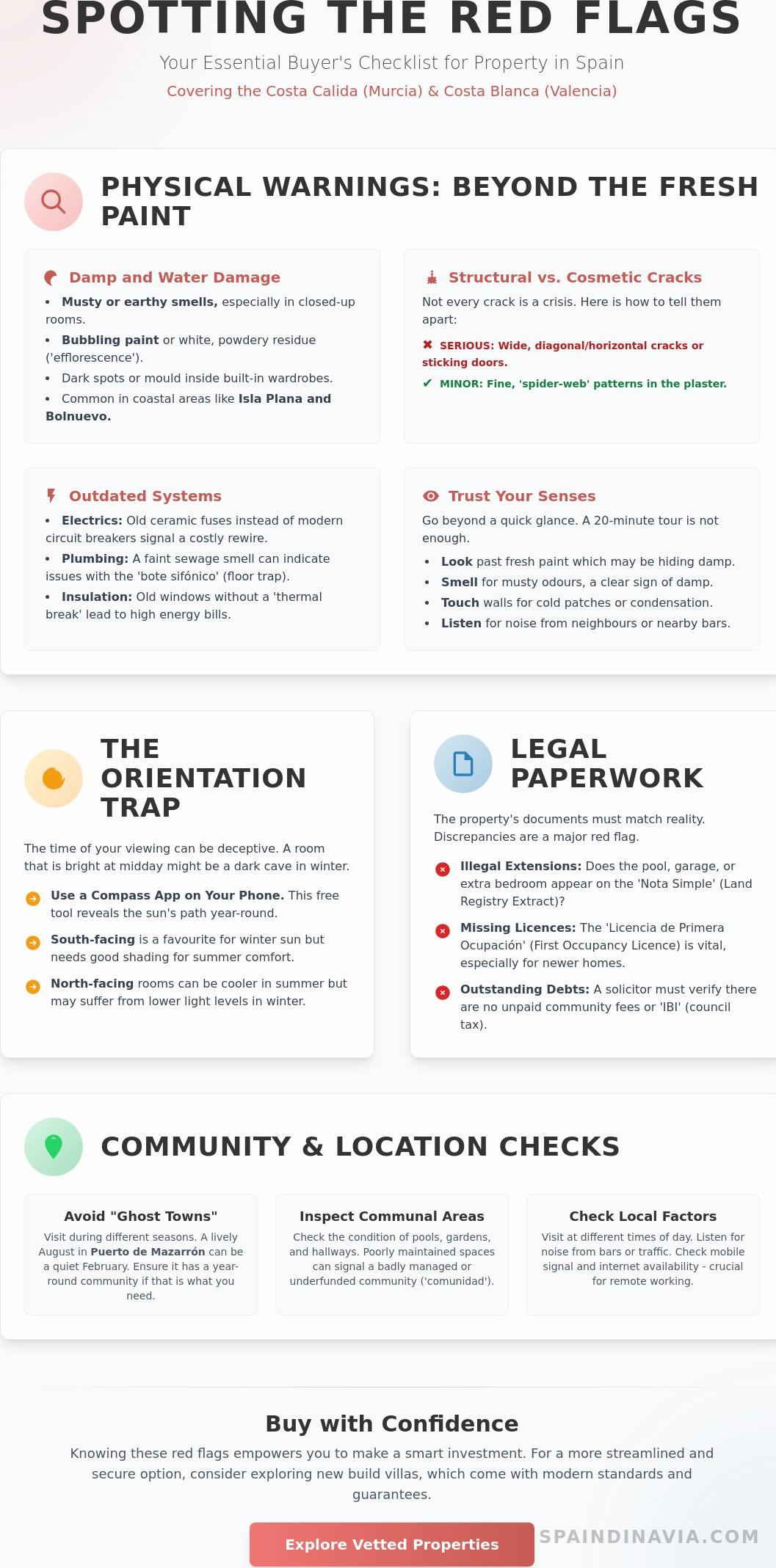
When you step inside a charming apartment in Puerto de Mazarrón or a villa in the hills of La Azohia, your senses are often overwhelmed by the light and the view. However, keeping a sharp eye for red flags when viewing property in spain is what separates a dream purchase from a costly mistake. A common tactic used to mask issues is a quick coat of fresh paint. Whilst it might look pristine during your twenty-minute tour, it could be hiding rising damp or structural movement. Under the Spanish Civil Code, sellers are technically liable for 'vicios ocultos' or hidden defects, but proving these after the sale is notoriously difficult and expensive. It's much safer to spot them before you sign.
Don't forget to use your nose. A musty, earthy smell amongst the sea breeze is a clear indicator of damp. If you notice a faint scent of sewage, it might suggest a problem with the building's plumbing vents or the 'bote sifónico' (the floor trap), which can be a recurring nuisance in older coastal developments across both the Costa Calida and the Costa Blanca. These smells are often more prominent in properties that have been closed up for the winter, so don't be afraid to ask when the house was last ventilated.
Take a moment to find the electrical panel. If you see old-fashioned ceramic fuses rather than modern circuit breakers, you are likely looking at a full rewiring job to meet current safety standards. Similarly, check the window seals. In sunny regions like Murcia and Valencia, poor insulation doesn't just let the cold in during January; it makes your air conditioning bills skyrocket in August. Modern double glazing is a standard in New Build Villas, but in resales, older aluminium frames often lack the thermal break needed to keep the heat out.
Damp and Water Damage in Coastal Homes
Humidity is a reality in coastal spots like Isla Plana and Bolnuevo. Look for bubbling paint or salt efflorescence, which is a white, powdery residue on the lower parts of walls. This often signals rising damp. Check inside built-in wardrobes; if they smell musty or show dark spots, the property likely lacks proper ventilation. This is particularly common in older apartments that haven't been updated with modern damp-proofing membranes.
Structural Cracks vs. Cosmetic Settling
Not every crack is a crisis. Small, hair-like 'spider-web' patterns in the exterior render usually just mean the plaster has dried too quickly in the Spanish heat. However, large horizontal gaps or diagonal cracks that are wide enough to fit a coin into are serious red flags. These suggest subsidence or a shifting foundation. Pay attention to doors and windows; if they stick or won't close properly, the frame might have warped due to structural movement rather than simple age.
The Orientation Trap: Lighting and Temperature Red Flags
The sun is your best friend in Spain, but it can also be a deceptive host. One of the most overlooked red flags when viewing property in spain is the time of day your visit is scheduled. If you view a flat in Puerto de Mazarrón at 1:00 PM, the sun is directly overhead, making every room look radiant and inviting. However, come winter, or even late afternoon in spring, that same property might be plunged into shadow by a neighbouring building. This isn't just about aesthetics; it directly impacts your heating bills and your mood. Use a compass app on your phone during every viewing. It's a simple, free tool that reveals exactly where the sun will be at different times of the year, helping you avoid a home that feels like a cave for six months of the year.
Understanding these environmental factors is just as vital as avoiding common legal and financial pitfalls that often trip up international buyers. A property with poor orientation can lead to unexpected costs, such as excessive humidity in north-facing rooms or astronomical cooling bills for south-facing lounges that lack proper shading. If you want to ensure your future home is as comfortable as it is beautiful, you can browse our carefully selected properties that prioritise quality of life and smart design.
Orientation and the Spanish Sun
South-facing properties are the traditional favourite in the Costa Calida and Costa Blanca because they capture the maximum amount of light during the mild winters. In places like Bolnuevo or Isla Plana, this means you can enjoy your terrace even in January. However, without high-quality shutters or a deep porch, these same homes can become ovens in August. Conversely, a north-facing home might stay pleasantly cool in the peak of summer, but it will likely feel damp and dark during the winter months. Dual-aspect properties, which have windows on opposite sides of the building, are the gold standard. They allow for natural cross-ventilation, which is the most effective way to keep your home fresh whilst reducing your reliance on air conditioning.
Lighting "Tricks" to Watch For
Be wary of artificial "cheats" during your tour. If an agent has every lamp and spotlight turned on during a bright afternoon in La Azohia, ask yourself why. They might be trying to mask a lack of natural light caused by narrow streets or nearby trees. Always ask to see the property with the lights turned off to get a true sense of the space. Look out for small, high-set windows too. Whilst they offer privacy, they often restrict the airflow and views that make Mediterranean living so special. Always observe the shadows cast by surrounding structures; a lovely garden in the morning could be completely shaded by a tall apartment block by 3 PM.
Legal Red Flags: What the Property Documentation Reveals
Whilst you might be charmed by the sea views in La Azohia or the relaxed pace of Bolnuevo, the most dangerous red flags when viewing property in spain are often invisible to the naked eye. They hide within the folders of documentation that every seller should have ready. If an agent or owner tells you they will "sort the paperwork later" or that it is "currently with the notary", consider this a major warning sign. In a professional transaction, the essential documents should be available for your solicitor to review from day one. Buying without them is like sailing a boat without a hull; you might stay afloat for a while, but eventually, the water will get in.
Be particularly cautious when dealing with "pro se" or unrepresented sellers. Whilst a private sale can feel more personal, these owners sometimes lack the professional oversight to ensure their debts are cleared before the sale. In Spain, debts such as the IBI (council tax), community fees, and even utility bills are attached to the property itself, not the individual. If you buy a townhouse in Puerto de Mazarrón from a seller who hasn't been diligent, you could find yourself legally responsible for their unpaid taxes from the last four years.
The Nota Simple and Property Registry
The Nota Simple is a concise extract from the Property Registry that provides a legal snapshot of the property, detailing the current owners and any outstanding mortgages, tax debts, or legal embargos. It's the first document you should request during your journey. If the seller’s name doesn’t match the name listed on the Nota Simple, walk away immediately until they can provide a clear legal explanation. This document is your primary defence against unknowingly inheriting someone else's financial burdens or entering into a contract with someone who doesn't actually own the home.
Illegal Renovations and "Urbanistico" Issues
Walk through the property with the "Escritura" (the title deeds) in mind. In sun-drenched spots like Isla Plana or across the border in the Costa Blanca, it's common to see lovely glassed-in terraces or extra guest annexes. However, if these physical features aren't recorded on the official deeds, they may be illegal extensions. You could be held liable for fines or even faced with demolition orders years after the purchase. Always ask for the most recent IBI receipts to ensure the building's recorded size matches what you see. If you're looking at a home on "suelo rústico" (rustic land), be doubly cautious. Regulations on rustic land in the Murcia region are distinct from those in the Valencia region, and they often require much more intensive legal scrutiny to ensure the building is fully legal.
Finally, never overlook the "Cédula de Habitabilidad" (Habitation Certificate). This confirms the property meets the minimum health and safety standards for living. Without a valid certificate, you'll find it nearly impossible to set up water and electricity contracts in your name, leaving you with a beautiful home that you cannot legally inhabit.
Community and Environmental Red Flags
A property might be structurally sound and legally clear, but its surroundings dictate the rhythm of your daily life. One of the most subtle red flags when viewing property in spain is the "Ghost Town" effect. Some coastal areas in both the Costa Calida and the Costa Blanca are vibrant in July but feel deserted by November. Whilst a quiet street sounds appealing, a total lack of life means local shops, pharmacies, and even medical centres may close for the season. Puerto de Mazarrón is a fantastic example of a town that maintains a healthy year-round community, whereas some more isolated developments further up the coast might leave you feeling isolated during the winter months.
Beyond the seasonal atmosphere, you must investigate the health of the "Comunidad" or Homeowners Association. If you're looking at resale apartments or townhouses, the state of the communal pool and gardens tells a story. Peeling paint in the stairwells or a lift that sounds strained often suggests a lack of funds. Ask the agent specifically about the percentage of neighbours who are up to date with their community fees. If a high number are in arrears, the burden of maintaining the building falls on the remaining owners, often leading to "Derramas" (special levies) for essential repairs like roof fixing or pool relining.
If you want to avoid these community pitfalls and find a home in a thriving, year-round neighbourhood, explore our latest listings across the coast today. We prioritise locations that offer a genuine balance of Mediterranean joy and practical convenience.
The Health of the Comunidad
Observe the behaviour of the residents whilst you are on-site. Is the complex a hub for short-term holiday rentals with constant suitcase noise, or does it feel like a settled residential area? Neither is inherently bad, but they offer very different lifestyles. Check for notices in the communal areas regarding upcoming works. If the building is older, ask if the "ITE" (Inspección Técnica de Edificios) has been completed recently, as this mandatory safety check can trigger expensive mandatory upgrades for all owners.
Location Suitability in Costa Cálida and Costa Blanca
Noise pollution is a common grievance that buyers often miss during a quick daytime viewing. Check the proximity to local bars, which may have outdoor terraces that stay busy late into the night. Similarly, look for large vacant plots of land nearby. In growing areas like Bolnuevo or parts of the Costa Blanca, a "sea view" can quickly become a view of a concrete wall if a new block of flats is planned. Visit the local town hall or ask your solicitor to check the "Plan General de Ordenación Urbana" to see what the future holds for those empty spaces.
Lastly, consider the physical environment. Properties very close to the shoreline in La Azohia or Isla Plana are subject to the "Ley de Costas" (Coastal Law). This regulation can restrict your ability to renovate or, in extreme cases, affect ownership rights if the property sits within the protected maritime zone. Additionally, the constant salt spray is a silent enemy of metalwork and air conditioning units. If you see rusted railings or pitted window frames, factor in higher-than-average maintenance costs for your Mediterranean retreat.
Buying with Confidence: How to Filter Out Red Flags
Identifying red flags when viewing property in spain is an essential skill, but you don't have to do it alone. The goal is to move from a place of anxiety to one of absolute certainty. Whilst the search for a Mediterranean home involves many moving parts, the most effective way to filter out risks is to have a professional team pre-vetting the options before you even step off the plane. Whether you are looking at the rugged coastline of the Costa Calida or the popular stretches of the Costa Blanca, your focus should always be on quality and transparency. Once you've found a property that passes your initial "sniff test", the next step is to involve an independent solicitor who can verify every legal claim made by the seller.
We take this responsibility seriously. Our team acts as a bridge between your dream and the reality of the local market. We reject more properties than we list because we understand that a single overlooked defect can ruin the experience of moving abroad. By the time you join us for a viewing in Bolnuevo or La Azohia, we've already done the heavy lifting to ensure the paperwork is in order and the structure is sound. To start your journey on the right foot, you can view our secure, pre-vetted property portfolio and see the standard we demand for our clients.
New Build vs. Resale: A Safety Comparison
For buyers who feel particularly nervous about hidden defects, New Build Villas often provide the safest path. These properties must adhere to strict modern construction standards that effectively prevent issues like damp or poor insulation, which are common in older resales. In areas like Puerto de Mazarrón and across the Orihuela Costa in the Costa Blanca, new builds come with a "Seguro Decenal". This is a mandatory 10-year structural guarantee that protects you against major building faults. Additionally, when buying off-plan, your stage payments are protected by bank guarantees, ensuring your investment is secure even before the first brick is laid.
The Importance of Local Expertise
Local knowledge is the ultimate filter for environmental red flags. Understanding the subtle differences between Isla Plana and the more bustling resorts of the Costa Blanca can prevent you from buying in an area that doesn't suit your lifestyle. We know which streets in Puerto de Mazarrón stay vibrant all year and which developments might face future construction that could block a sea view. This deep-rooted presence in the Murcia and Valencia regions allows us to provide a level of security that generic portals simply cannot match. We don't just show you houses; we guide you through the local community, ensuring your new life in Spain starts with total peace of mind.
Secure Your Mediterranean Future Today
Your journey to a new life in the sun should be defined by excitement rather than anxiety. By keeping this checklist in mind, you're already better equipped to identify potential red flags when viewing property in spain. Remember that a beautiful terrace in Bolnuevo or a sleek apartment in the Costa Blanca is only a good investment if the structure is sound, the orientation is right, and the legal paperwork is flawless. From checking for damp amongst the sea breeze to verifying the Habitation Certificate, your attention to detail is your greatest asset during every viewing.
We specialise in providing a secure path to ownership, particularly through our selection of New Build Villas that meet the highest modern standards. We work alongside independent solicitors and local experts to ensure every property in our portfolio is thoroughly pre-vetted before you even arrive. From your very first viewing in Isla Plana or La Azohia to the moment you receive your keys, we provide comprehensive support to make the process seamless and safe. Browse our hand-picked Costa Cálida and Costa Blanca properties today and take the first step toward your dream home with total confidence. Your perfect Spanish retreat is waiting for you.
Frequently Asked Questions
What is the most common red flag when buying property in Spain?
The most frequent warning sign is a lack of transparency regarding legal documentation. If a seller or agent cannot provide a recent Nota Simple or building licenses, it's a major concern. This often indicates hidden debts, illegal extensions, or ownership disputes that could halt your purchase. In a professional transaction, these documents should be available for your solicitor to review from the very beginning.
Can I buy a property in Spain if the Nota Simple is missing?
You should never proceed with a reservation or payment without seeing a recent Nota Simple. This document is the only way to verify the legal owner and check for embargos or unpaid taxes. Whilst a missing copy isn't always a deal-breaker, it is a significant hurdle that your solicitor must clear before you commit any funds to a property in the Costa Calida or Costa Blanca.
Are cracks in the walls always a sign of structural failure in Spanish homes?
Not necessarily, as many Spanish properties show minor "settling" cracks or spider-web patterns in the external render due to the intense Mediterranean heat. However, large diagonal gaps or horizontal cracks are serious red flags when viewing property in spain. These often suggest foundation issues or subsidence, particularly in older villas in La Azohia or coastal apartments across the Valencia region.
How do I check if a Spanish property has outstanding debts?
Your solicitor will check the Nota Simple and request the latest certificates for IBI (council tax) and community fees. In Spain, debts follow the property rather than the individual, so verifying that these are paid up to date is vital. Always ask for proof of payment from the Homeowners Association in areas like Puerto de Mazarrón to ensure you don't inherit someone else's financial burdens.
What is the "Ley de Costas" and how does it affect coastal viewings?
The Ley de Costas is a national law that protects the Spanish shoreline and can restrict ownership or renovation rights for properties built too close to the sea. If you're viewing a frontline home in Isla Plana or along the Costa Blanca, you must verify if the building falls within a protected zone. Failure to check this could result in legal limitations on how you use or improve your home.
Is it a red flag if the property has been on the market for a long time?
A long time on the market isn't always a sign of a bad property, but it should prompt deeper investigation. It might simply be overpriced, or there could be a legal complication that has scared off previous buyers. In popular areas like Bolnuevo, a property that hasn't sold within a typical timeframe usually has a specific reason, such as an unresolved inheritance or a missing habitation license.
Should I view a property at different times of the day?
Viewing a home at various times is the best way to uncover environmental red flags when viewing property in spain, such as noise or poor light. A quiet street in Puerto de Mazarrón at noon might become a noisy thoroughfare in the evening. Similarly, a morning viewing won't show you if a nearby building blocks the winter sun, which is a key factor for comfort in both the Murcia and Valencia regions.
Why are community fees so high in some Spanish urbanisations?
High fees usually reflect extensive communal facilities like multiple pools, 24-hour security, or landscaped gardens. However, they can also be a warning sign if they are inflated to cover debts from other non-paying neighbours. Always ask to see the community's annual general meeting minutes to understand the budget and ensure you aren't subsidising the arrears of others in the complex.


