
What if the secret to finding the perfect Mediterranean lifestyle isn't following the crowds to the high-rise skylines of the Costa Blanca, but looking towards a coastline where history still breathes? It's a common feeling to want a home that feels like "real Spain" rather than a commercialised resort. If you've been searching for a location with deep cultural roots, learning about Puerto de Mazarrón and its history reveals a 2,500-year legacy that sets it apart from its busier neighbours.
Discover the fascinating journey of this maritime gem, from the ancient Phoenician traders who left behind world-famous shipwrecks to the Roman artisans who built a thriving industry here. We'll guide you through the heritage of the Costa Cálida, focusing on the unique charm of Puerto de Mazarrón, Isla Plana, La Azohia, and Bolnuevo. You'll gain a clear understanding of why this area, which welcomed 1.16 million international visitors in 2024, is such a compelling spot for investment properties and see a curated list of historical sites that make living here a truly enriched experience.
Key Takeaways
- Understand the geographic layout of the 35km coastline and why the Port is the seaside heart of the Costa Cálida, offering a more traditional feel than the busier Costa Blanca.
- Discover fascinating facts about Puerto de Mazarrón and its history, including the world-famous Phoenician shipwrecks and Roman salt-fish factories.
- Explore how the 19th-century mining boom for lead and silver shaped the local landscape, creating a unique cultural identity that differs from the modern skylines of the Costa Blanca.
- Identify must-visit cultural sites across Bolnuevo, Isla Plana, and La Azohía, including ancient pirate defence towers and natural wind-carved monuments.
- Learn why a rich cultural heritage adds tangible long-term value to investment properties and holiday rental properties on the Costa Cálida.
An Overview of Puerto de Mazarrón: The Jewel of the Costa Cálida
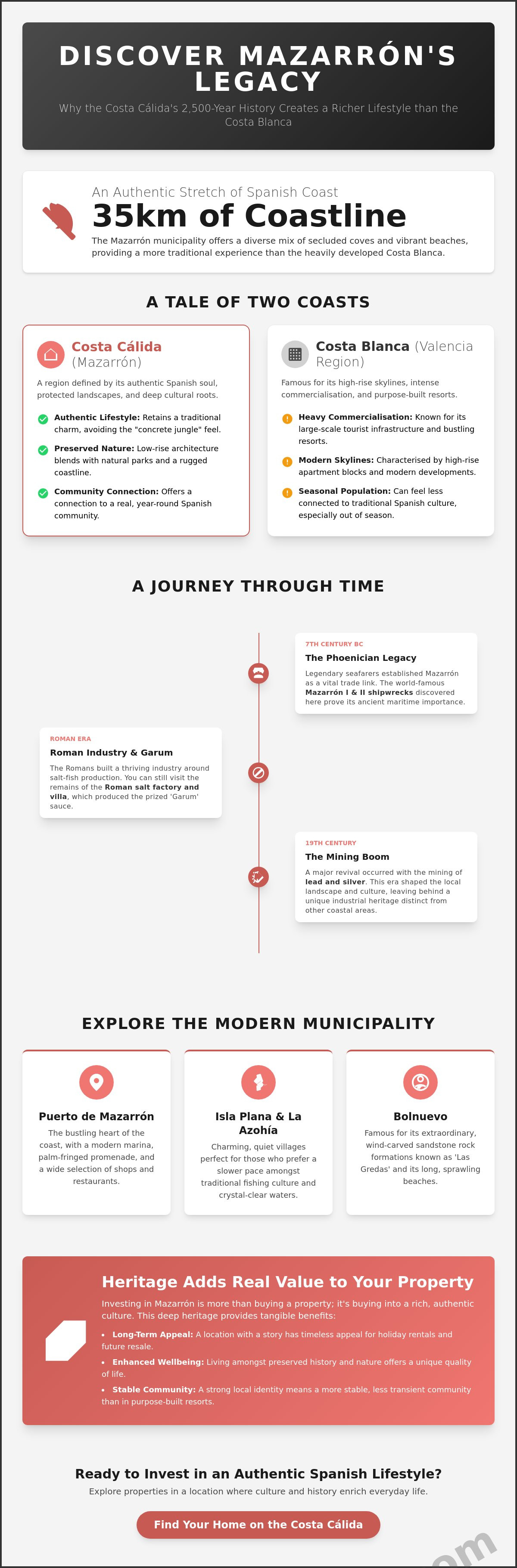
Imagine a bay where the Mediterranean sparkles against a backdrop of rugged, sun-drenched mountains. This is Mazarrón. The municipality stretches across a stunning 35km coastline, offering a blend of secluded coves and urban beaches that have remained largely untouched by the heavy hand of mass tourism. It's essential to distinguish between Mazarrón town, the administrative centre located slightly inland, and Puerto de Mazarrón, the bustling seaside heart. Whilst the town holds the historical weight of the municipality, the Port is where the lifestyle dream truly comes alive. If you want to understand the soul of this region, starting with the facts about Puerto de Mazarrón and its history is the best place to begin. Citing the History of Mazarrón helps you see why this area feels so different from the purpose-built resorts found elsewhere in Spain.
Costa Cálida vs Costa Blanca: A Tale of Two Coasts
The Costa Cálida, or "Warm Coast", enjoys a unique microclimate protected by the surrounding mountain ranges. Unlike the Costa Blanca in the Valencia region, which is famous for its high-rise skylines and intense commercialisation, Mazarrón has retained its authentic Spanish soul. You won't find a "concrete jungle" here. Instead, you'll see low-rise architecture and preserved natural parks that speak to a more grounded way of life. This authenticity is a major draw for those looking for investment properties that offer more than just a place to stay; they offer a connection to a real community. Living amongst preserved heritage and protected landscapes provides a sense of wellbeing that the busier northern coasts often struggle to replicate.
The Layout of the Modern Municipality
Today's municipality is a vibrant collection of distinct areas, each offering something unique for residents and visitors. Puerto de Mazarrón serves as the central hub with its modern marina, palm-fringed promenade, and a wide selection of resale apartments and townhouses. Just a short drive along the coast, you'll find the charming villages of Isla Plana and La Azohía. These spots are perfect for those who prefer a quieter pace amongst traditional fishing culture and crystal-clear waters.
To the west lies Bolnuevo, famous for its extraordinary rock formations and sprawling beaches. The infrastructure throughout these areas supports a high quality of life, with modern amenities blending seamlessly with historical landmarks. Whether you're interested in holiday rental properties or new build villas, the layout provides a variety of environments that the more uniform Costa Blanca can't always provide. Learning about Puerto de Mazarrón and its history ensures you appreciate the grounded, maritime success that still defines the area's character today.
Ancient Mariners and Roman Industry: The Roots of the Port
Long before the Costa Blanca became a hub for modern tourism, the shores of the Costa Cálida were already a bustling centre of international trade. To truly understand the appeal of this coastline, you must look beneath the waves. The story of the region begins with the Phoenicians, legendary seafarers who recognised the strategic value of this sheltered bay over 2,500 years ago. Unlike the purpose-built resorts often found in the neighbouring Valencia region, the identity of this area is anchored in its role as an ancient maritime gateway. Learning about Puerto de Mazarrón and its history reveals a town that was built on industry and exploration rather than just holiday leisure.
The Phoenician Legacy: 2,500-Year-Old Shipwrecks
The discovery of two Phoenician boats, known as Mazarrón I and Mazarrón II, at Playa de la Isla changed our understanding of ancient seafaring forever. These vessels, dating back to the 7th century BC, were found remarkably preserved in the seabed. They prove that Mazarrón was a vital link in trade routes that spanned the entire Mediterranean. Whilst the original remains are kept in a specialised museum in Cartagena, you can visit the replicas and the interpretation centre right here in the Port. This heritage provides a sense of permanence that is often missing from the more commercialised strips of the Costa Blanca. If you're inspired by this deep connection to the sea, exploring resale apartments in Puerto de Mazarrón allows you to live just steps away from where these ancient mariners once anchored.
The Roman Salt Industry and Garum
Following the Phoenicians, the Romans transformed the area into an industrial powerhouse. They were drawn here by the abundance of fish and the natural salt pans. According to the official guide to Mazarrón, the town became a primary producer of Garum, a fermented fish sauce that was considered a luxury delicacy throughout the Roman Empire. The Roman Fish-Salting Factory, located near the modern marina, is now a beautifully preserved museum where you can see the original vats used for production.
This Roman influence laid the foundations for the town's layout and its enduring relationship with the Mediterranean. Even in nearby Isla Plana and La Azohía, you can find traces of Roman villas and thermal baths. This historical depth creates a unique atmosphere for those seeking investment properties; you aren't just buying a building, you're becoming part of a legacy. The blend of ancient ruins and modern amenities offers a lifestyle of quiet sophistication that stands in stark contrast to the busy, high-rise environment of the Costa Blanca.
The Mining Era: How Lead and Silver Shaped the Landscape
The landscape of Mazarrón is a visual testament to an industrious past that few other coastal areas can claim. Whilst the Costa Blanca in the Valencia region is often defined by its limestone cliffs and modern resort skylines, the Costa Cálida offers a more rugged, authentic aesthetic. To truly learn about Puerto de Mazarrón and its history, you must look to the mountains. During the 19th century, the Sierra de la Almenara became the site of an incredible economic boom. The extraction of lead and silver transformed a quiet fishing village into a thriving industrial hub, drawing workers and investment from across Europe. This era didn't just bring wealth; it physically coloured the earth. The "Red Mountain" of Coto Fortuna still glows with vibrant, otherworldly hues of ochre and rust, a striking sight for anyone exploring the local hiking trails today.
Industrial Heritage and Architecture
The wealth generated by the mines funded a period of architectural elegance that still defines the town centre. Iconic buildings like the Town Hall and the Casino (the Ateneo Cultural) were built to showcase the prosperity of the mining elite. These structures stand as sophisticated reminders of a "Golden Age" that sets the area apart from the more commercialised developments found on the Costa Blanca. British mining companies played a significant role here, bringing with them engineering expertise and leaving behind a legacy that is still visible on the horizon. If you look towards the hills, you can still spot the silhouettes of smelting works and tall brick chimneys. This heritage adds a layer of character to the region, making it a unique spot for those looking for investment properties or resale villas with a sense of history.
The Alum and Red Ochre Period
Before the 19th-century boom, the area was already famous for alum and red ochre. In the Middle Ages, alum was a vital commodity used to fix dyes in the textile industry, and Mazarrón was one of the few places in the world where it could be found in abundance. The red ochre, known locally as almagra, was equally prized. This mineral wealth was the primary reason ancient mariners were drawn to these shores, eventually leading to the discovery of the ancient Phoenician shipwrecks that highlight the area's 2,500-year maritime importance.
This industrial past is why the mountains surrounding Puerto de Mazarrón, Isla Plana, and La Azohía remain so beautifully unspoilt. Unlike the densely built-up areas of the Costa Blanca, much of the land here was preserved for mining or protected as natural heritage. Today, this means residents enjoy a landscape that is both historically rich and naturally stunning. Whether you are searching for holiday rental properties or a permanent home, the mining legacy ensures that Mazarrón feels like a place with a story to tell, rather than just another tourist destination.
Exploring the Modern Heritage Sites: From Bolnuevo to La Azohía
History in this corner of the Costa Cálida isn't confined to museums; it's etched into the very cliffs and towers you see on your morning walk. Whilst the Costa Blanca is famous for its modern amusement parks and bustling promenades, the Mazarrón area offers a more organic connection to the past. Living here means having 2,500 years of human endeavour as your backdrop. If you are curious about Puerto de Mazarrón and its history, you'll find that every village along this bay has a unique story to tell, from the defensive watchtowers of La Azohía to the ancient Roman traces in Isla Plana.
The Enchanted City of Bolnuevo
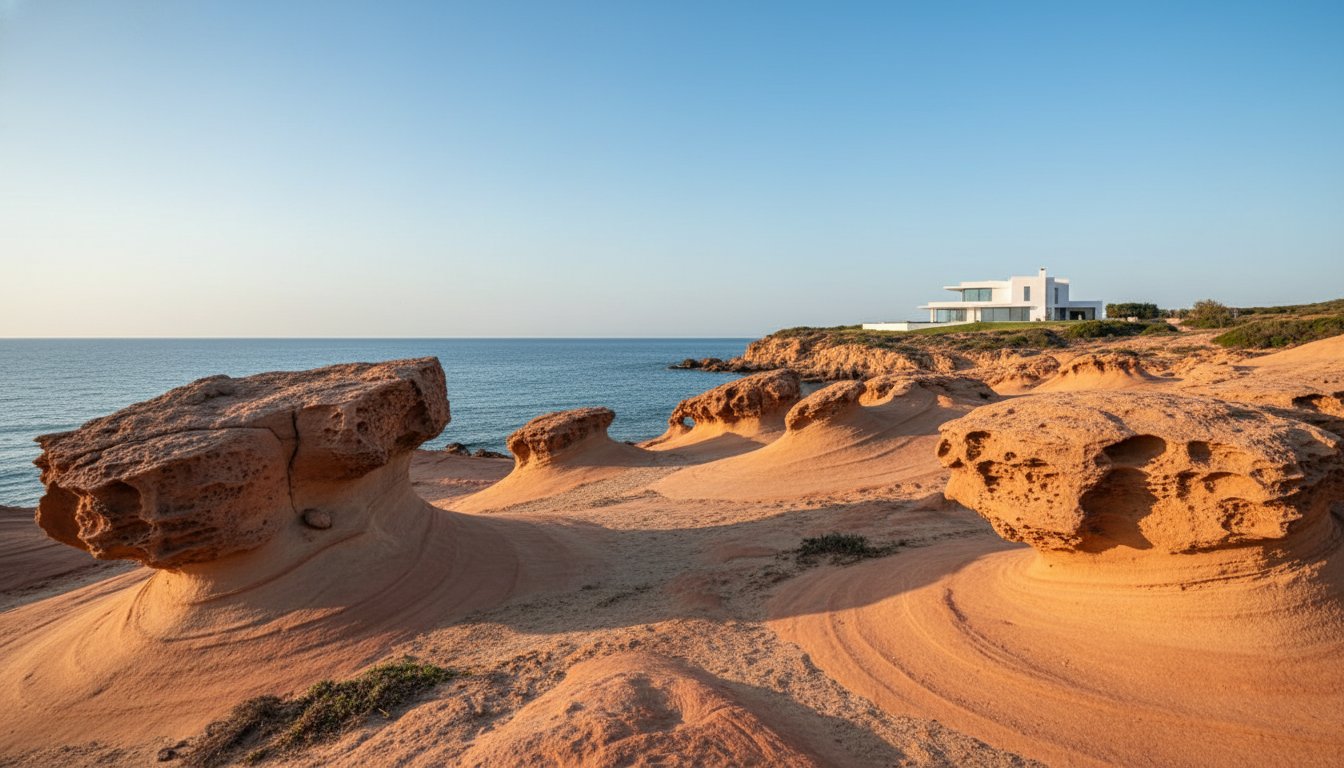
Just a few minutes from the Port lies the "Enchanted City" of Bolnuevo. These extraordinary sandstone formations, known as the Gredas, have been sculpted over millennia by wind and water into shapes that defy gravity. They serve as a natural monument that holds deep cultural significance for the locals. Every November, the Romería festival brings the community together to celebrate a miraculous event from the 16th century when the town was saved from a pirate raid. For the best experience, visit during the "golden hour" just before sunset. The sandstone glows with a deep orange hue that is perfect for photography. If you prefer a guided experience, the local Tourist Office offers free hiking tours at 18:00h in June 2026, though you must register in advance.
Coastal Defences: Towers and Pirates
During the 16th and 17th centuries, this coastline was a frequent target for Barbary Corsairs. To protect the inhabitants, a network of watchtowers was constructed. The Torre de los Caballos in Bolnuevo and the Santa Elena Tower in La Azohía are remarkable examples of this military architecture. Unlike the high-rise hotels that dominate much of the Costa Blanca, these stone sentinels have been carefully preserved, offering panoramic views of the Mediterranean. They provide a tangible link to a time when life on the coast required constant vigilance. This sense of preserved character is precisely why many are choosing to look at investment properties in Puerto de Mazarrón as a way to secure a home in a location that values its roots.
Isla Plana also offers a window into the past with its Roman baths, which have transitioned from an industrial site into part of a peaceful coastal retreat. These sites aren't just ruins; they are part of the daily life for those who choose the Costa Cálida. Whether you are exploring the Santa Elena Tower or relaxing near the Bolnuevo erosions, you are experiencing a lifestyle that is deeply connected to the land and its legacy. This blend of natural beauty and historical depth ensures that the area remains a unique alternative to the more commercialised Spanish costas.
Investing in an Authentic Spanish Lifestyle: The Mazarrón Difference
Choosing a home in Spain is about more than just finding the right number of bedrooms; it's about finding a place where you belong. When you look for investment properties on the Costa Cálida, you're buying into a narrative that has been written over thousands of years. This depth of character provides a stability that is often missing from the "concrete jungle" developments of the Costa Blanca. By learning about Puerto de Mazarrón and its history, investors can see why this town avoids the "boom and bust" cycles of more commercialised regions. As of April 2026, the average residential property price in the Port reached €2,054 per square metre, a 19.28% increase from the previous year, proving that authenticity has a very real market value.
Why History Matters for Property Buyers
Owning a home in a town with a genuine soul offers a unique sense of security. Because so much of the coastline in Bolnuevo, Isla Plana, and La Azohía is protected by historical or environmental designations, the risk of over-development is significantly lower than in the busier Valencia region. This preservation ensures that your sea view remains exactly that. Whether you are looking at new build villas or resale apartments, the surrounding heritage acts as a natural buffer against the urban sprawl seen on the Costa Blanca. For those ready to take the next step, our Buying Property in Spain Guide provides an essential checklist to ensure your investment is as secure as the stone towers guarding our bay.
A Long-Term Lifestyle Choice
One of the most significant benefits of the Mazarrón area is its year-round vitality. Unlike some parts of the Costa Blanca that can feel like seasonal ghost towns, Puerto de Mazarrón maintains a steady heartbeat throughout the winter. This is a "blue-collar" maritime town that works, breathes, and celebrates together. Festivals like the Virgin of Carmen in July, where the fishing fleet carries the statue of their patron saint out to sea, foster a deep sense of community that welcomes newcomers with open arms.
The future of the region looks equally bright, with ongoing investments in the marina and cultural centres that aim to balance modern amenities with historical preservation. If you are considering the Costa Cálida for your next move, exploring Spain Property Investment will help you understand why Mazarrón is a smart choice for both your lifestyle and your portfolio. Ultimately, the facts about Puerto de Mazarrón and its history point to a destination that knows exactly who it is, offering a grounded and enriched way of life that is increasingly rare to find.
Begin Your Mediterranean Story in the Heart of the Costa Cálida
Puerto de Mazarrón is far more than a simple seaside town; it's a coastal legacy shaped by ancient mariners and industrial pioneers. By choosing this authentic stretch of the Costa Cálida over the commercialised skylines of the Costa Blanca, you're embracing a lifestyle defined by 2,500 years of culture. From the unique geological wonders of Bolnuevo to the quiet Roman history of Isla Plana, understanding about Puerto de Mazarrón and its history reveals why this region is such a stable and rewarding place to call home.
If you're inspired to find your own place in this historic landscape, we're here to guide you. We've been local experts in the area since 2016, specialising in everything from high-quality new build villas to authentic resale apartments. Our team provides comprehensive support through every step of the Spanish buying process, ensuring you feel secure and inspired. Discover your dream home amongst the history of Puerto de Mazarrón with Spaindinavia. We look forward to welcoming you to the neighbourhood and helping you turn your Mediterranean dream into a reality.
Frequently Asked Questions
Is Puerto de Mazarrón worth visiting for its history?
Puerto de Mazarrón is absolutely worth visiting for its history, as it offers a 2,500-year timeline that you won't find in the more modern resorts of the Costa Blanca. Whilst the neighbouring Valencia region is famous for its recent tourism growth, learning about Puerto de Mazarrón and its history reveals a town built on ancient trade. You can explore everything from 7th-century BC shipwrecks to 16th-century pirate watchtowers.
What is the most famous historical landmark in Mazarrón?
The Roman Fish-Salting Factory is arguably the most famous landmark, alongside the Phoenician boats found in the bay. This museum in the Port showcases the town's industrial past as a Mediterranean hub for Garum production. It provides a grounded, authentic atmosphere that contrasts sharply with the high-rise commercialism often associated with the Costa Blanca, making it a must-see for anyone interested in the roots of the Costa Cálida.
How old are the Phoenician boats found in Puerto de Mazarrón?
The Phoenician boats found at Playa de la Isla date back to the 7th century BC, making them approximately 2,700 years old. These vessels, known as Mazarrón I and II, are amongst the most important underwater archaeological discoveries in the world. They prove that the bay was a vital maritime centre long before the modern developments of the Costa Blanca or other Spanish costas were even imagined.
What is the "Enchanted City" of Bolnuevo?
The "Enchanted City" refers to the Gredas de Bolnuevo, which are extraordinary sandstone formations carved by wind and sea over thousands of years. These natural monuments are a living part of the local heritage and serve as the backdrop for the annual Romería festival. They offer a unique, rugged beauty that sets the Costa Cálida apart from the more manicured beach landscapes found in parts of the Costa Blanca.
Why is the earth around Mazarrón so red?
The earth is red due to the high concentration of iron and red ochre, known locally as almagra, in the surrounding mountains. This mineral wealth was the driving force behind the 19th-century mining boom in the Sierra de la Almenara. Whilst the Costa Blanca is known for its white limestone cliffs, the hills around Mazarrón glow with these deep, rusty tones, creating a landscape that is visually unique in Spain.
What role did the Romans play in the history of the Port?
The Romans transformed the Port into an industrial powerhouse for the production of salt-fish and Garum, a fermented fish sauce. They utilised the natural salt pans and the abundant Mediterranean fish to create a delicacy exported throughout the Empire. This industrial legacy laid the foundations for the town's layout, providing a historical depth that many newer holiday destinations on the Costa Blanca simply cannot replicate.
Can you visit the ancient mines in Mazarrón?
You can explore the mining landscape via several designated hiking trails that pass by the old smelting works and brick chimneys. Whilst many of the deep mine shafts are fenced off for safety, the "Red Mountain" remains accessible for those who want to see the remains of this golden era. This industrial heritage is a key part of what makes learning about Puerto de Mazarrón and its history so fascinating for modern residents and visitors.
How does the history of Mazarrón differ from the Costa Blanca?
Mazarrón's history is rooted in "blue-collar" maritime success and mining, whereas the Costa Blanca is often defined by its rapid 20th-century tourism expansion. This has resulted in Mazarrón retaining a low-rise, traditional Spanish feel with preserved heritage sites and natural parks. In contrast, the Costa Blanca is characterised by high-rise skylines and a more commercialised lifestyle, making the Costa Cálida the preferred choice for those seeking an authentic Spanish home.


