
Imagine finding the perfect resale villa in Bolnuevo or a modern apartment in Puerto de Mazarrón, only to later discover the property carries hidden debts from a previous owner. It's a scenario that keeps many buyers awake at night when exploring the Costa Calida and the Costa Blanca. However, once you understand what is the spanish land registry (registro de la propiedad), you'll see it's actually the ultimate shield for your investment and your peace of mind.
We realise that navigating foreign legal documents can feel daunting, particularly when you're faced with language barriers and unfamiliar terminology. You deserve to feel completely confident when making such a significant life decision. This guide promises to demystify the registration process and show you exactly how to secure your new home in 2026. We'll explore the essential role of the Nota Simple, clear up the common confusion between the Registry and the Catastro, and provide a practical roadmap for buyers in Isla Plana, La Azohia, and throughout the Murcia and Valencia regions.
Key Takeaways
- Understand what is the spanish land registry (registro de la propiedad) and how it provides the legal certainty needed to protect your home on the Costa Calida or Costa Blanca.
- Identify why an up-to-date Nota Simple is the most important document for uncovering hidden mortgages or tax liens before you sign any contracts.
- Master the step-by-step registration journey, ensuring your public deed is correctly filed and all mandatory taxes are settled to secure your title.
- Recognise the distinct roles of the Land Registry and the Catastro to avoid common administrative pitfalls when buying in areas like Puerto de Mazarrón or Isla Plana.
- Discover how expert guidance and collaboration with English-speaking solicitors can organise a seamless, fraud-free property journey for your new Mediterranean lifestyle.
Understanding the Spanish Land Registry (Registro de la Propiedad)
When you're searching for a sun-drenched home in Bolnuevo or a sleek new build villa on the Costa Blanca, you'll quickly hear about the "Registro de la Propiedad". If you're wondering what is the spanish land registry (registro de la propiedad), it's the official public institution responsible for recording the legal ownership and any encumbrances on real estate. It's the definitive source of truth for property in Spain. Without it, the market would lack the stability that makes the Murcia and Valencia regions so attractive to international investors.
Unlike some international systems that track individual owners, the Spanish registry is organised by the property itself, known as a "finca". This means every plot of land or building has its own unique "history book" in the registry. It acts as a vital safeguard, ensuring that what you see on a sales contract matches the official record. This system provides what's known as "fe pública registral", or legal certainty. Essentially, if you act in good faith and buy from the registered owner, the law protects your rights against most unforeseen claims. It's a gold standard of protection that offers total peace of mind.
Land Registry vs. Catastro: Clearing the Confusion
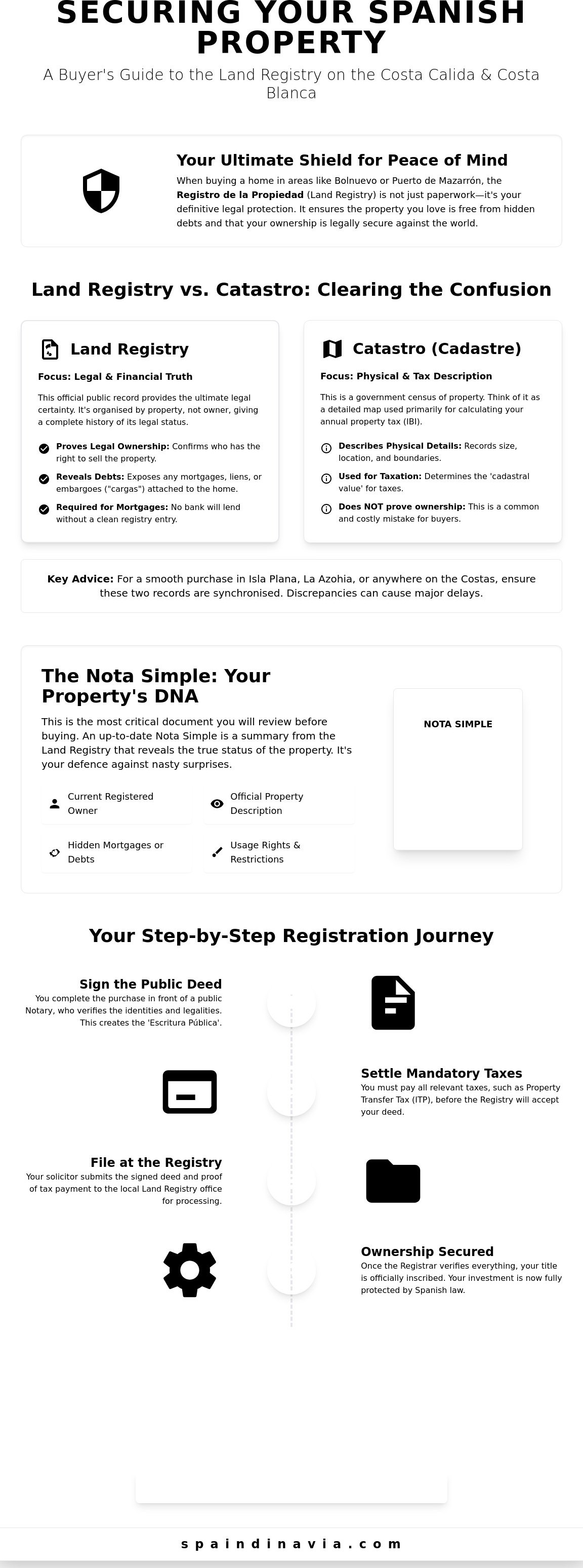
It's easy to get confused between the Registry and the Catastro when looking at properties in Puerto de Mazarrón or Isla Plana. Think of the Catastro as a physical description for tax purposes. It records dimensions, locations, and boundaries to help the government calculate property taxes. However, it doesn't prove who owns the home. For the legal reality, you must look at the Registro de la Propiedad (España).
We've seen cases where the physical size in the Catastro doesn't match the legal description in the Registry. This can happen if an extension was built without being properly recorded. For a smooth purchase on the Costa Calida or the Costa Blanca, these two records should be synchronised. If they aren't, it can cause hurdles with mortgages or future sales. Ensuring they align is a key step in protecting your investment and avoiding unnecessary legal delays down the road.
The Public Nature of the Registry
Transparency is a cornerstone of the Spanish property market. The Registry is a public record, meaning anyone with a "legitimate interest", such as a potential buyer or their legal representative, can request information about a specific property. This is fantastic news for you. It means you don't have to take a seller's word for it; you can verify the facts yourself.
Before any new information is added to the record, a Registrar validates every document. These are highly trained legal experts who check that everything is lawful and correct. This rigorous vetting process is why what is the spanish land registry (registro de la propiedad) remains the most trusted tool for anyone buying in La Azohia or seeking a holiday rental on the Costa Blanca. It ensures the person selling the property actually has the right to do so, shielding you from potential fraud.
Why the Land Registry is Essential for Your Security
Owning a slice of paradise in Bolnuevo or a chic apartment on the Costa Blanca is a dream for many. But how do you truly prove that home is yours? In Spain, the only definitive proof of ownership is a valid entry in the registry. Whilst a signed contract is a start, it doesn't offer the same level of protection. If you're still asking what is the spanish land registry (registro de la propiedad), think of it as your ultimate legal insurance policy. It guarantees your rights against any claims that aren't officially recorded.
Financial institutions are equally reliant on this system. If you plan to finance your purchase with a mortgage in 2026, the registry is non-negotiable. No bank in the Murcia or Valencia regions will grant a loan unless the property is correctly registered. They need the same security you do, ensuring the asset they're lending against has a clean title and clear boundaries. This registration process is what turns a private agreement into a right that the whole world must respect.
Protecting Against Hidden Charges and Liens
One of the biggest fears for buyers in Puerto de Mazarrón or Isla Plana is inheriting someone else's financial mess. In Spain, "cargas" (charges) follow the property, not the individual. This means if a previous owner has unpaid mortgages, tax liens, or court embargoes, those debts stay attached to the house. The registry reveals these hidden issues before you commit your hard-earned money. It also highlights "afectaciones fiscales", which are notations indicating the property might be subject to future tax reviews. Checking these records ensures you're starting your new life with a clean slate.
Legal Peace of Mind for Expats
For expats, the registry provides an essential layer of protection against "double sale" fraud. This is a rare situation where a dishonest seller might try to sell the same property to two different buyers. Under Spanish law, the person who registers the title first is generally recognised as the legal owner, regardless of who signed the contract first. This level of state recognition provides immense comfort whilst you transition to a new lifestyle. Whether you're looking at investment properties in La Azohia or a family home in the Valencia region, knowing your investment is backed by the state allows you to focus on the joy of your move.
The Nota Simple: Your Most Important Document
If you're eyeing a resale apartment in Puerto de Mazarrón or a villa on the Costa Blanca, the Nota Simple will become your closest companion. Whilst we've discussed what is the spanish land registry (registro de la propiedad) as a protective institution, the Nota Simple is the physical evidence of that protection. It's a concise document, typically two or three pages long, that provides a summary of a property's legal status at a specific moment in time. It's the primary tool used by professionals to verify that a house is safe to buy.
The extract details the physical description, boundaries, and current owners. Crucially, it lists any "cargas" or debts. One vital thing to remember is its shelf life. A Nota Simple is generally only considered "current" for three months. Because new debts or liens can be registered at any time, your solicitor or agent should always request a fresh version just days before you sign the contract at the Notary. This ensures no last-minute surprises dampen your Mediterranean dream in areas like Bolnuevo or Isla Plana.
How to Read a Nota Simple
Start by looking for the "IDUFIR" or "CRU". This unique identification number is like a fingerprint for the property, ensuring you're looking at the right plot in La Azohia or anywhere in the Murcia region. The "Titularidad" section confirms exactly who has the right to sell. If you see multiple names here, every person listed must agree to the sale for it to be valid. Finally, check the "Cargas" section with care. Whilst a mortgage is common and usually cleared during the completion, court embargoes or local tax debts are red flags that require immediate investigation before you commit any funds.
Obtaining Your Extract in English
The official registry operates in Spanish, but translated versions are available for international buyers. You can request these through the "Registradores de España" digital portal, which makes the process much easier for those buying in the Valencia region from abroad. It's a fantastic way to get a baseline understanding of your potential new home. However, a translation is just a guide. We always recommend having a professional review the Spanish original. Nuances in legal phrasing can be significant, and having an expert eye ensures nothing is lost in translation whilst you're making such a vital investment in your future lifestyle.
How to Register Your Property: The Step-by-Step Process
Once you've found your favourite bungalow in Bolnuevo or a sleek townhouse in La Azohia, it's time to move from viewing to ownership. Understanding what is the spanish land registry (registro de la propiedad) is one thing, but navigating the actual registration is where your dream becomes a legal reality. The journey is a structured sequence of three main steps, designed to ensure that your new life on the Costa Calida or the Costa Blanca starts on the most secure footing possible.
Step 1: The Notary and the Public Deed
The process officially kicks off at the Notary office. Here, you and the seller sign the "Escritura Pública de Compraventa", or the public title deed. This isn't just a formality; it's a solemn legal act. Immediately after the ink is dry, the Notary sends an electronic notice to the Land Registry. This is known as the "asiento de presentación". This entry notice is vital because it effectively "locks" the property's record for 60 days. It prevents any other claims or sales from being registered whilst your application is in progress. Whether you're buying in Puerto de Mazarrón or along the vibrant coast of the Costa Blanca, this immediate notification is your first line of defence.
Step 2: Settling Taxes and Fees
Before the Registrar will even look at your application, you must prove that all relevant taxes have been paid. This is a mandatory prerequisite. If you're purchasing a resale apartment in Isla Plana, you'll pay the Property Transfer Tax (ITP). It's important to note that rates vary between regions. For instance, as of June 2026, the ITP in the Valencian Community (Costa Blanca) is 9%. For new build villas, you'll pay 10% IVA plus Stamp Duty (AJD). In the Valencia region, the AJD was reduced to 1.4% on June 1, 2026. Once paid, you'll receive the "Carta de Pago", which serves as your proof of payment for the registry.
Step 3: Filing and Final Certificate
With your taxes settled, the physical or digital deed is presented to the local Land Registry office. The Registrar then performs a "calificación", which is a thorough legal review to ensure the transaction complies with every detail of Spanish law. By law, the Registry has 15 working days to process this. Once approved, you'll receive the "Escritura" back, now sporting the Registry's official seal, along with a "Nota de Despacho". This confirms you are the official owner in the eyes of the state.
If you're ready to start your journey, explore our latest resale villas and let us guide you through every step of this process.
Expert Support for a Seamless Purchase with Spaindinavia
Starting a new chapter in Spain is an exhilarating journey, yet the administrative path can sometimes feel like a maze. We're here to ensure that your transition to the Mediterranean is as smooth and joyful as the lifestyle you're seeking. Our team doesn't just find you a house; we act as your local experts, ensuring every legal detail is meticulously handled. We understand what is the spanish land registry (registro de la propiedad) and its vital role in your security, so we organise all the necessary checks before you even consider committing to a purchase.
To provide the highest level of protection, we collaborate closely with independent, English-speaking solicitors. They work on your behalf to verify that a property is "clean" and free from the hidden debts or liens we've discussed. Whether you're interested in investment properties on the Costa Blanca or a family home on the Costa Cálida, our focus remains on your peace of mind. We guide you through every hurdle, from obtaining your NIE number to the final registration of your deed, ensuring your investment is recognised and protected by the Spanish state.
Your Partner in the Mazarrón Area
Our roots are deep in the Murcia region, particularly within the beautiful Mazarrón area. If you're searching for New Build Villas in Puerto de Mazarrón or a charming resale apartment in Bolnuevo, our local expertise is a vital asset. Understanding what is the spanish land registry (registro de la propiedad) becomes much simpler when you have a partner who knows the local offices and specific requirements of the region. We know the nuances of these neighbourhoods, from the tranquil shores of Isla Plana to the traditional heart of La Azohia. Our hand-picked portfolio is selected with quality and compliance in mind, ensuring your dream home is legally sound.
Beyond the Sale: Comprehensive Property Management
Our commitment to you doesn't end when your name is recorded in the registry. We stay by your side to help manage and maintain your new investment. Whether you've purchased one of our resale apartments or a holiday rental property, we ensure it remains secure and well-cared for whilst you're away. This holistic approach is what sets us apart in both the Murcia and Valencia regions. We believe in building long-term partnerships, providing a sense of security that extends far beyond the initial transaction. For a deeper dive into the steps of a secure purchase, explore our Buying Property in Spain Guide. We're here to make your dream of a warmer life a secure and beautiful reality.
Secure Your Future Under the Spanish Sun
Gaining a clear understanding of what is the spanish land registry (registro de la propiedad) is the most important step you'll take towards a stress-free move. We've explored how this institution provides the legal certainty you need, whilst the Nota Simple acts as your primary tool for uncovering hidden charges before they become your problem. Whether you're settling in the Murcia region or the Valencia region, these safeguards ensure your investment remains protected for years to come.
Since 2016, our team has maintained a dedicated local presence to guide buyers through every administrative hurdle. We specialise in secure new build villas and resale apartments, working in close collaboration with independent solicitors to ensure every transaction is transparent and "clean". From the golden sands of Puerto de Mazarrón and Bolnuevo to the picturesque coves of Isla Plana and La Azohia, we're here to manage the details whilst you focus on your new lifestyle.
Find your secure dream home in Spain with Spaindinavia. Your Mediterranean journey is just beginning, and we're excited to help you make it a safe and beautiful reality.
Frequently Asked Questions
Is it mandatory to register a property in the Spanish Land Registry?
Registration is not strictly mandatory by law, but it's vital for your legal security. Without it, you won't be able to secure a mortgage from any bank in the Murcia or Valencia regions. It's the only way to officially prove your ownership to the public. If you're buying a resale apartment in Puerto de Mazarrón, skipping this step leaves your investment vulnerable to claims from the previous owner's creditors.
How much does it cost to register a property in Spain?
Registration fees are regulated by the state and typically range from 0.1% to 0.25% of the purchase price. For a property valued at €200,000, you should budget approximately €420. If you're investing in a larger villa in Bolnuevo worth €850,000, the fee is about €700. These costs are consistent across both the Costa Calida and the Costa Blanca, though they are separate from Notary fees and regional taxes.
How long does the registration process usually take?
The Registrar has a legal limit of 15 working days to process your application once all documents are submitted. However, the entire journey from signing the deed at the Notary to receiving the final sealed document usually takes between one and three months. This timeframe is standard whether you're purchasing a new build villa on the Costa Blanca or a townhouse in the quiet streets of La Azohia.
Can I register a property myself or do I need a lawyer?
Whilst you're legally allowed to handle the registration yourself, we strongly advise using a professional solicitor. Navigating the complex legal requirements and language can be difficult for international buyers. At Spaindinavia, we always collaborate with independent, English-speaking lawyers. They ensure that what is the spanish land registry (registro de la propiedad) requirements are met perfectly, protecting your interests in Isla Plana or any other coastal area.
What happens if the Land Registry and the Catastro records do not match?
Discrepancies between these two records are common but must be corrected to ensure a smooth future sale. The Land Registry focuses on legal rights, whilst the Catastro handles physical descriptions for tax purposes. If the sizes don't match, your solicitor will need to initiate a synchronisation process. This is particularly important for older properties in Bolnuevo where extensions might not have been correctly updated in both systems.
Can a property be sold if it is not registered?
It's possible to sell an unregistered property, but it's incredibly difficult and risky for the buyer. Most savvy investors and all financial institutions will refuse to proceed without a registered title. Selling this way often results in a significantly lower price. To protect your capital and ensure a secure future sale on the Costa Blanca or Costa Calida, always ensure your title is correctly recorded from the start.
How do I find out which Land Registry office corresponds to my property?
Every property is assigned to a specific office based on its geographic location. For homes in Puerto de Mazarrón, Isla Plana, or Bolnuevo, you'll deal with the local office in Mazarrón. If you're unsure, you can use the "Registradores de España" online portal to find the exact office for your plot. Your agent or lawyer will typically handle this coordination as part of their standard service.
What is the difference between the Escritura and the Land Registry record?
The Escritura is the public contract signed before a Notary, whilst the Land Registry record is the state's official recognition of that deed. Think of the Escritura as the evidence of the transaction and the Registry as the ultimate proof of title. To fully understand what is the spanish land registry (registro de la propiedad), remember that the Registry record is what provides "legal certainty" against third-party claims across Spain.


