

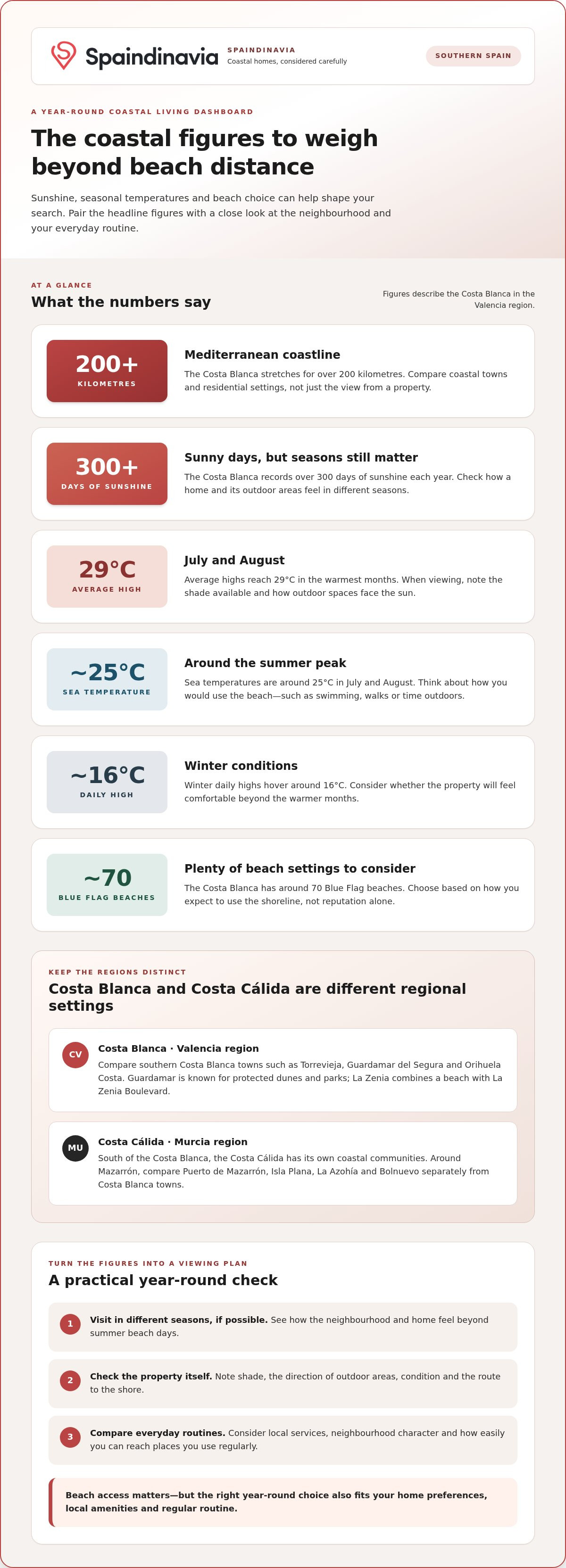
The closest home to the beach isn’t automatically the best choice for year-round living. Buying property near the beach in the southern Costa Blanca appeals to buyers seeking Mediterranean coast, outdoor living and a choice of coastal towns, but the right location also depends on everyday amenities and transport. The Costa Blanca, in the Valencia region, stretches for over 200 kilometres of coastline.
Waking up near the sea is an obvious appeal of buying property near the beach in southern Costa Blanca. But beach access is only one part of the decision: the character of the area, the property itself and the practicalities of daily life matter too.
Explore how southern Costa Blanca towns differ in lifestyle and property options, what to weigh if you plan to live there throughout the year, and how airport and road connections can shape your choice. We’ll also distinguish this area from the Costa Cálida in the Murcia region, so you can focus your search on the coast that suits the life you have in mind.
Key Takeaways
- Compare southern Costa Blanca towns by beach access, local atmosphere and the property style that suits your plans.
- Look beyond the asking price: location, property type and proximity to everyday amenities all shape the choice.
- For year-round living, consider how local services and transport fit your regular routine, not just your holiday plans.
- Distinguish the Costa Blanca in the Valencia region from the Costa Cálida in Murcia, including the Mazarrón area around Puerto de Mazarrón, Isla Plana, La Azohía and Bolnuevo.
- Explore whether a new-build villa, resale apartment, townhouse or bungalow best matches the lifestyle you want, with Spaindinavia’s property options.
Why buy in the Costa Blanca?
Torrevieja, Guardamar del Segura and Orihuela Costa are useful places to compare when searching for beach access in southern Costa Blanca. Look beyond the view: assess the home’s condition, its location and how well the area meets your needs throughout the year.
Coastal locations and residential areas
The Costa Blanca has over 200 kilometres of Mediterranean coastline, with different towns and residential settings to explore. Buying property near the beach in southern Costa Blanca means weighing shoreline access against the services and atmosphere around each home. Compare the distance to the places you’ll use regularly, not just the distance to the sea.
Guardamar del Segura is known for its protected dunes and parks, while La Zenia combines a beach with the La Zenia Boulevard shopping destination. Visit shortlisted areas at different times of day to see how their surroundings fit your routines.
Apartments and villas near the coast
Apartments and villas offer different layouts and styles of coastal living. These figures are starting points for each town, not direct comparisons between equivalent homes. Compare floor area, outdoor space, condition and distance from the coast.
Listings also vary across Spain’s coastal regions. The Costa Blanca is in the Valencia region, so compare the regional setting as well as the property details.
Coastal and inland price comparisons
This gap can help frame your search, but town averages don’t describe every home. Weigh the importance of beach proximity against space, location and the features you value.
Use the same checklist for every property: record its location, asking price, floor area and type. Separate essentials, such as a particular layout, from preferences such as sea views. This helps you compare listings on practical details, not just photographs.
Southern Costa Blanca town choices
Torrevieja, Guardamar del Segura and Orihuela Costa are useful starting points for a beach-focused property search.
Buying property near the beach in southern Costa Blanca involves more than choosing a town. Match the home to your plans, then assess its condition, neighbourhood and access to everyday services. If you’re also considering the Costa Cálida in Murcia, compare its Mazarrón-area communities separately, including Puerto de Mazarrón, Isla Plana, La Azohía and Bolnuevo.
Location-specific lifestyle considerations
Climate, beach access and local amenities all shape coastal life throughout the year. Compare the Costa Blanca in Valencia with the Costa Cálida in Murcia, then assess each neighbourhood against your everyday routine.
Climate and coastal lifestyle
The Costa Blanca records over 300 days of sunshine each year, but seasons still matter. Average highs reach 29°C in July and August, when sea temperatures are around 25°C. Winter daily highs hover around 16°C, so consider whether your home will also feel comfortable during cooler months.
Use the seasons as a practical viewing checklist. If possible, visit a neighbourhood during warmer months and again in winter. Note how much shade the property offers, how its outdoor areas face the sun, and whether local amenities suit your plans beyond beach days. Around Torrevieja, two salt lakes add a distinctive feature to the coastal landscape.
The Costa Blanca also has around 70 Blue Flag beaches. Rather than choosing by a beach’s reputation alone, think about how you’ll use it: a daily walk, swimming, or relaxed time outdoors. Your preferred pace can help narrow the Spanish coastal lifestyle and the residential setting that fits it.
The Costa Cálida is in Murcia, south of the Costa Blanca in Valencia. Around Mazarrón, compare Puerto de Mazarrón, Isla Plana, La Azohía and Bolnuevo. Each is a distinct coastal community, so assess its location and everyday setting separately from Costa Blanca towns.
Beach-neighbourhood living
Living near the beach can make the shoreline part of everyday life rather than an occasional destination. But proximity to the sea alone doesn’t tell you whether a neighbourhood suits family life or a longer stay. Consider the route to the shore, nearby amenities and how easily you can reach places you use regularly.
Before viewing, list your family’s priorities: access to everyday services, outdoor space and a comfortable route to the beach. Compare each property and its surroundings against that list. A development can feel different from an established community, so look beyond the building to the wider residential area.
La Zenia is one example of a coastal area with a named shopping destination, La Zenia Boulevard. Use examples like this to identify the amenities that matter to you, rather than assuming every neighbourhood offers the same mix. Consider your preferred routes on foot and by car, and how your routine might change outside summer.
Before choosing, list and rank your non-negotiables, including beach access, neighbourhood character and practical amenities. This makes it easier to compare developments and communities consistently, whether you’re viewing near Torrevieja or exploring Mazarrón on the Costa Cálida.
Southern Costa Blanca towns and property prices
Compare asking prices alongside bedrooms, floor area and location. Buying property near the beach in southern Costa Blanca can involve very different budgets across towns and property types, so build a like-for-like shortlist. Treat listing examples as snapshots, not as guaranteed prices for similar homes.
If you plan to rent out the property, assess that separately. Potential income depends on occupancy, property costs and the type of letting you intend. Tourist rentals involve licensing requirements, so factor this into your plans before relying on projected rent.
Prices in Torrevieja and Denia
Torrevieja listings cover a range of sizes and layouts. These examples show why bedroom count alone doesn’t explain an asking price.
When assessing listings, compare floor area, condition, location and outlook. Buying property near the beach in southern Costa Blanca calls for the same careful comparison, especially if sea views or walkable beach access are priorities.
Prices by property type
Search filters help narrow the options. Villa searches can focus on plots larger than 500 m² or 1,000 m². These filters help buyers define the type and space they want before reviewing individual homes.
These are different listing categories, so their ranges aren’t direct comparisons.
Make your shortlist useful by recording each home’s town, property type, floor area, plot size and asking price. Rank essentials such as outdoor space, beach access or room for guests. This helps you compare a flat in Torrevieja with a house elsewhere without letting one appealing feature dominate your decision.
Compare the Costa Blanca in Valencia and the Costa Cálida in Murcia as separate regions. If Mazarrón is also on your list, assess Puerto de Mazarrón, Isla Plana, La Azohía and Bolnuevo on their own merits. Keep the region, town and property type clear in your notes, especially when weighing holiday use against a longer-term home.
Year-round living and local amenities
When choosing a coastal home, plan for ordinary weekdays as well as sunny weekends. Compare nearby services, regular household spending and the upkeep each property may require.
Benefits of living by the sea
Living by the coast can make walks and beach visits part of everyday life. The Costa Blanca in Valencia offers a different setting from the Costa Cálida in Murcia. In the latter, compare Mazarrón-area communities such as Puerto de Mazarrón, Isla Plana, La Azohía and Bolnuevo.
Year-round living also depends on access to useful services. Torrevieja has a university hospital, which may matter to buyers weighing healthcare access alongside a sea view. Map the places you expect to visit regularly, then compare each property’s location with those destinations.
Alicante province had more than 490,000 foreign residents during 2025. That figure gives context for the international character of the area, but your own day-to-day experience depends on the town and neighbourhood you choose. Visit at different times of year and notice whether shops, services and public spaces suit your routine.
Before a viewing, list your priorities, including healthcare, food shopping, outdoor space and access to the coast. Assess each property against the same checklist rather than relying on an impressive view or holiday impression.
Living costs and property maintenance
Treat these as separate budget categories, not a complete household budget. Your usage, shopping habits and travel needs will affect your spending.
Build a practical budget by listing regular bills and the journeys you expect to make. A home near amenities may change how often you travel, while a more distant property may affect transport needs. Compare these trade-offs before deciding which location works best.
Maintenance matters when comparing houses and apartments. During a viewing, note the condition of windows, exterior surfaces, plumbing and shared spaces. For an apartment, find out which areas are communal; for a house, consider the upkeep of outdoor areas and fittings.
Coastal exposure makes a property’s condition and materials particularly relevant to maintenance planning. Note visible wear during viewings and keep a list of questions about building upkeep. If you’ll use the home year-round, consider how routine tasks fit into the time you’ll spend in Spain.
Compare the Costa Blanca with the Costa Cálida on practicalities as well as scenery. The former is in Valencia; the latter is in Murcia and includes the Mazarrón coast. A shortlist that accounts for local amenities, monthly costs and property upkeep can help you find a home suited to everyday life.
Airport access and regional transport
Airport access can shape visits, holiday plans and everyday travel. Compare the route from the airport with the journeys you expect to make from your chosen town.
Alicante-Elche Miguel Hernández Airport is nine kilometres from Alicante city centre. The C6 bus runs every 20 minutes between the airport and Alicante. This gives you a useful starting point for planning arrival in the city, but your onward journey depends on your destination.
When considering a property purchase, map the whole journey rather than focusing only on airport distance. Note where you’ll arrive, how you’ll travel onward and what local transport is available. Consider the route for visits outside summer too, when your routine may differ from a holiday itinerary.
Guardamar del Segura is described as having easy access to Alicante Airport. Pilar de la Horadada has access to both Alicante and Murcia airports. When comparing these towns, consider which airport best fits your regular travel and assess the onward route to each property.
Road connections matter too. La Zenia has access to the AP-7 and N-332, two routes to consider when planning journeys along the coast. Check how your intended trips connect with these roads, especially if you expect to travel between several towns or visit Alicante regularly.
Regional differences matter when planning travel. The Costa Blanca is in Valencia, while the Costa Cálida is in Murcia. In Mazarrón, compare Puerto de Mazarrón, Isla Plana, La Azohía and Bolnuevo with your preferred airport and route. Pilar de la Horadada is described as accessible from both Alicante and Murcia airports, while Guardamar is linked with Alicante Airport.
For each shortlisted home, note the nearest airport, the onward route and the transport you’ll use locally. Consider how often you’ll make the journey, whether for personal stays or rental arrangements. A property can be appealing but inconvenient if its location doesn’t fit your plans.
During a viewing trip, group properties by location and plan each day around realistic routes. Note road access, nearby transport options and the distance between viewings. This helps you compare the journey to each area as well as the homes themselves.
If you’re weighing coastal locations against airport access, explore property options in the area and compare each home’s setting with your travel priorities.
Spaindinavia: New Build Villas
Once you’ve shortlisted locations, Spaindinavia can help you compare property options. If a new-build home appeals to you, explore New Build Villas. Resale Apartments, Townhouses and Bungalows offer other ways to match a property to your space and lifestyle needs.
Keep the regional distinction clear as you refine your search: the Costa Blanca is in the Valencia region, while the Costa Cálida is in Murcia. On the Costa Cálida, compare Puerto de Mazarrón, Isla Plana, La Azohía and Bolnuevo with the Costa Blanca towns you’ve considered. Spaindinavia supports buyers through the purchase process, working with independent solicitors, banks and local experts to support secure transactions.
Contact Spaindinavia to discuss your property search and the next steps.
Take the next step towards your coastal home
Turn your shortlist into a clear plan. Decide which location suits everyday life, then note the property features you won’t compromise on. If you’re weighing the Costa Blanca in Valencia against the Costa Cálida in Murcia, include Mazarrón’s Puerto de Mazarrón, Isla Plana, La Azohía and Bolnuevo in your comparisons.
Buying property near the beach in southern Costa Blanca is a personal decision, shaped by how you want to spend your time and the home that suits your needs. Spaindinavia offers New Build Villas, Resale Apartments and Townhouses, giving you different property types to consider as you refine your plans.
When you’re ready to discuss your priorities, share your property shortlist with Spaindinavia. Take the process one considered step at a time, and let your vision of coastal living guide the search.
Frequently Asked Questions
Final Thoughts: Where Should You Buy?
Choose by daily routine, not just beach distance. The Costa Blanca, in Valencia, and the Costa Cálida, in Murcia, offer distinct coastal settings. Compare Mazarrón choices, including Puerto de Mazarrón, Isla Plana, La Azohía and Bolnuevo, against your priorities for services, quiet and access. Both coasts enjoy over 300 days of sunshine per year. Visit shortlisted areas and rank what matters most before deciding.
New-Build or Resale Property?
Choose a new build if modern design and energy-efficient construction matter to you. New-build properties may also include developer warranties. Resale homes are often in established neighbourhoods, where you can assess the area as well as the property. Compare condition, layout and location, then consider how much work you’re willing to take on after completion.
What Kinds of Property Can You Buy?
Options include apartments, villas, townhouses and bungalows, as new-build or resale homes. Start by deciding how much indoor and outdoor space suits your plans, then consider whether you prefer a shared residential setting or a standalone house. If you’re weighing holiday use against permanent living, assess the layout and location for how you expect to use the property throughout the year.
Which Areas Offer the Best Investment Potential?
No single area suits every investment plan. Compare locations by the tenants you hope to attract, the home’s condition, access to amenities and your intended use. For a holiday rental, consider whether the property’s location and layout suit likely guests, then account for maintenance and management. For long-term ownership, focus on its suitability for regular living as well as its appeal to future buyers.
What Are Average Property Prices Near the Beach in Torrevieja, Orihuela Costa, Guardamar del Segura and Santa Pola?
Prices vary by town, property type, size, condition and distance from the coast. In Santa Pola, compare individual homes by location, size and condition to see how they fit your budget.
What Taxes and Closing Costs Apply When Buying Property in Spain as a Foreign Buyer?
Budget approximately 10%-15% of the property price for additional buying costs. These can include property transfer tax or VAT, notary fees, land registry fees, legal fees and administrative costs. The exact costs depend on the property and transaction. Build this allowance into your budget before making an offer, so you can compare the full purchase outlay rather than focusing only on the asking price.
Can US Citizens Buy Property in Spain, and What Documents and Permits Are Needed?
Yes. Foreign buyers can purchase property in Spain without restrictions, and a NIE, or foreigner identification number, is required for the purchase and financial transactions. No special purchase permit is needed. A Spanish bank account isn’t required, but it’s strongly recommended for handling payments and expenses. If you plan to borrow, non-resident buyers typically obtain mortgage financing of 60%-70% of the property value.
What Are the Steps and Typical Timeline for Buying Property in Spain?
The process typically moves from choosing a property to reservation, independent legal checks, signing the purchase contract and completion before a notary. After reservation, the process usually takes 4-6 weeks. A private purchase contract may involve an Arras deposit of around 10% of the purchase price, after the reservation fee.


