

Confidence comes from preparation, not guesswork. Overcoming the fear of buying property abroad starts with independent local legal advice before you sign documents or spend money. Research the market, the area and the practicalities of looking after a home from a distance. A clear plan helps you make decisions step by step, rather than relying on the appeal of a sunny view alone.
It’s natural to worry about unfamiliar rules, choosing the right area or managing a home when you’re away. Those concerns don’t have to put your plans on hold. Use them to guide the questions you ask and the checks you make before committing.
This guide explains how legal advice and market research can reduce uncertainty, what to consider when choosing a neighbourhood, and how to plan for ongoing maintenance and remote management. If you’re exploring Spain, it also looks at the differences between the Costa Cálida in the Murcia region, including Puerto de Mazarrón, Isla Plana, La Azohía and Bolnuevo, and the Costa Blanca in the Valencia region.
Key Takeaways
- Speak to an independent local solicitor before signing documents or spending money, and understand the legal and tax steps involved.
- Research the local market and visit in person where possible to build a clearer picture of property options and everyday life.
- Look into ownership and residency rules before choosing a country, as requirements can differ across borders.
- Compare neighbourhoods by considering safety, community, local amenities and the kind of future use you have in mind.
- Plan for maintenance, taxes and rental arrangements so you know how the property will be cared for when you’re away.
1. Hiring an independent local real estate attorney
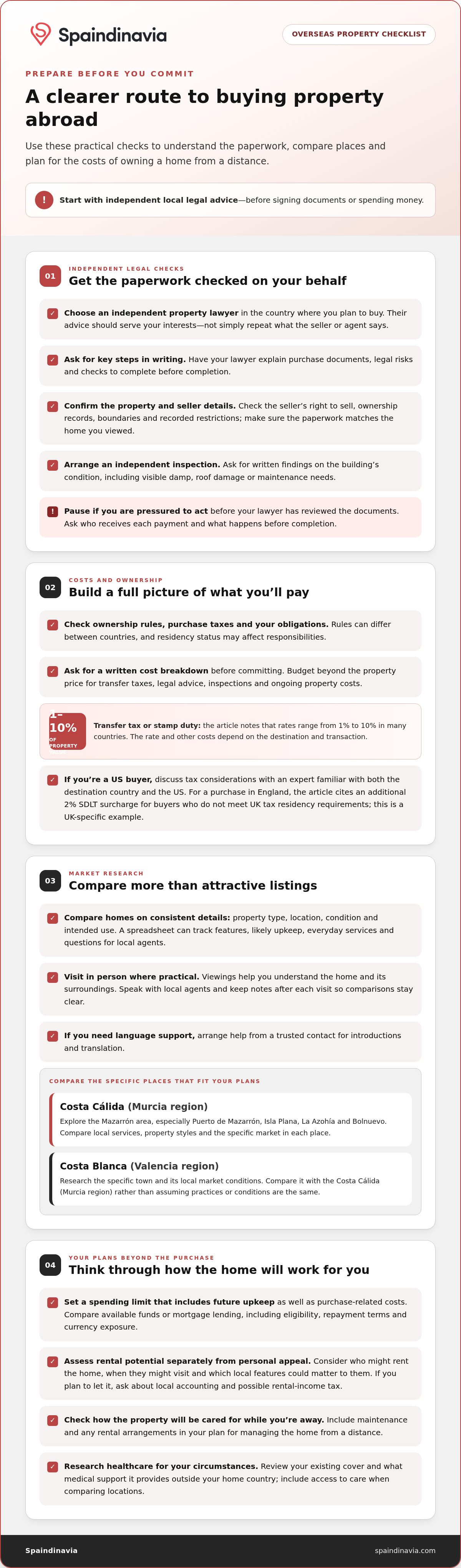
Before signing documents or spending money, appoint an independent property lawyer in the country where you plan to buy. They can explain the purchase documents, identify legal risks and clarify which checks should happen before completion. Independence matters: your lawyer should advise you in your interests, not simply repeat the seller’s or agent’s explanation. Ask for key steps in writing so you can review them calmly.
Use your lawyer’s advice to understand ownership rules, purchase taxes and any obligations that apply to you. Property laws can differ between countries, and your residency status may affect your responsibilities. If you’re a US buyer, discuss the purchase with a tax expert familiar with both the destination country and US tax considerations.
US buyers should budget beyond the purchase price for transfer taxes, legal advice, inspections and ongoing property costs. Property transfer taxes or stamp duties range from 1% to 10% of the property value in many countries; the rate and other costs depend on the destination and transaction. Ask for a written breakdown of the costs that apply to your purchase before committing.
For England, buyers who do not meet UK tax residency requirements pay an additional 2% SDLT surcharge, according to HM Revenue & Customs. This is a UK-specific example, not a general rule for overseas purchases. A local lawyer can explain how the relevant tax rules apply to the property and buyer in front of you.
To reduce the risk of overseas property scams, keep your lawyer independent and have them review documents before you sign or transfer money. Check that the property details in the paperwork match the home you viewed, and ask who receives each payment. Treat pressure to act before your lawyer has reviewed the documents as a reason to pause and seek advice.
Before buying, ask your lawyer to check the seller’s right to sell, ownership records, property boundaries and any recorded restrictions. Arrange an independent inspection to assess the building’s condition, including visible damp, roof damage or maintenance needs. Get important findings in writing, then decide whether they affect your plans or need further investigation.
A trustworthy local estate agent should explain the buying process, provide consistent property details and answer practical questions clearly. Ask how offers are communicated, which documents follow an accepted offer and what happens before completion. A viewing helps you compare the listing with the property itself, while an independent lawyer reviews the legal paperwork. Keep the agent’s information distinct from your lawyer’s advice.
In Spain, compare the Costa Cálida in the Murcia region with the Costa Blanca in the Valencia region rather than assuming the same local practices apply. On the Costa Cálida, explore Puerto de Mazarrón, Isla Plana, La Azohía and Bolnuevo; on the Costa Blanca, research the specific town and its property market. Ask your local lawyer to explain the process for the exact area and property you’re considering.
2. Researching the overseas property market
Build your picture of a market from local evidence, not a single attractive listing. Choose the country and specific towns that suit your plans, then compare property types, locations, condition and intended use. A spreadsheet can help: record each property’s features, likely upkeep, access to everyday services and questions for a local estate agent. This makes patterns easier to spot and gaps easier to follow up.
Where practical, visit the country and speak with local estate agents in person. A viewing gives you first-hand insight into the home and its surroundings, while local conversations can clarify how buyers approach the process. If you don’t speak the local language, arrange help from a trusted contact who can assist with introductions and translation. Keep notes after each visit so impressions don’t blur together.
For Spain, compare the Costa Cálida in the Murcia region with the Costa Blanca in the Valencia region. The Costa Cálida includes the Mazarrón area, particularly Puerto de Mazarrón, Isla Plana, La Azohía and Bolnuevo; the Costa Blanca has its own towns and local market conditions. Compare the specific places that interest you, considering daily services, property styles and how each location fits your plans.
Financing options depend on your circumstances and the destination market. You might use available funds or explore mortgage lending, comparing eligibility, repayment terms and currency exposure before deciding. If you’re considering paying cash, discuss how that choice fits your wider financial plan with a wealth adviser. Set a spending limit that includes purchase-related costs and future upkeep, rather than judging affordability by the property price alone.
Research rental potential separately from personal appeal. Consider who might rent the property, when they might visit and which local features could matter to them. If you plan to let the home, include local accounting advice in your research, as rental income may have tax implications in the country where the property is located. Spaindinavia also offers rental management services to help owners manage bookings and tenants while they’re away.
Healthcare deserves its own research before you settle on a destination. Review your existing cover and learn what medical support it provides outside your home country. Some US health insurance policies provide limited emergency medical coverage during travel abroad for a few months. For a longer stay, explore the healthcare options relevant to your circumstances and include access to care in your location comparison.
Turn research into a short list of practical questions: what will ownership involve, what needs attention before moving in, and who can help locally? Use the answers to compare areas and properties on consistent terms. If you’re exploring homes around Mazarrón or comparing the Murcia and Valencia coasts, review local property options as one part of that research.
3. How to overcome your fears of buying property in a foreign country?
Treat ownership rules as country-specific, not as assumptions you can carry across borders. Property laws may differ between countries, and rules can also differ for foreign buyers who aren’t citizens or permanent residents. Before choosing a property, ask a local lawyer to explain who can own it, what ownership includes and whether residency status affects your purchase.
Foreign ownership restrictions can relate to the buyer, the property or its location. Some destinations may apply different rules to overseas buyers, so find out whether your status changes the process or documents required. Ask your lawyer to explain the relevant rules in plain language, then request a written summary of what they mean for your intended purchase. Avoid relying on a rule described for another country or region.
Spain is a useful example of why local detail matters. The Costa Cálida is in the Murcia region, whilst the Costa Blanca is in the Valencia region. If you’re comparing Spanish homes, ask about the rules and purchase process for the specific property and location. On the Costa Cálida, narrow your research to places such as Puerto de Mazarrón, Isla Plana, La Azohía or Bolnuevo; don’t assume the same details apply elsewhere.
Use a simple sequence to make unfamiliar rules manageable: identify the country and area, clarify your buyer status, learn what ownership permits, and ask a local lawyer to explain the paperwork. Keep a record of questions and answers. If a document uses unfamiliar terms, ask what each means before deciding. Understanding the legal steps helps distinguish an actual restriction from a concern based only on unfamiliar language.
Exchange rates affect the home-currency cost of a purchase and later expenses paid in another currency. A change between budgeting and payment can alter how much your own currency covers, including recurring costs. Include currency conversion in your financial planning, and discuss the impact of paying cash with a wealth adviser.
Key risks include misunderstanding ownership rules, overlooking legal or property issues, and underestimating ongoing responsibilities. Currency changes can also create financial uncertainty. Reduce these risks by researching local law, understanding the paperwork, and planning for maintenance and any rental arrangements before committing.
Make the advice specific to your plans. If the property is a holiday home, clarify how ownership and local rules affect that intended use. If you expect to rent it out, understand local requirements and tax responsibilities first. A local lawyer can explain the legal position, while your financial adviser can help you weigh the purchase against your wider finances.
Compare areas without treating a country as one uniform market. Put the Costa Cálida and Costa Blanca on separate shortlists, noting the differences between their locations. Then take your questions to a local lawyer familiar with the area you’ve chosen. A focused approach makes it easier to identify what you need to know before moving forward.
4. Choosing a desirable neighborhood
A property’s surroundings shape daily life as much as its layout. List what you need from the area: a peaceful base, convenient services, a close-knit community or access to schools. Compare neighbourhoods against that list rather than choosing from photographs alone. Consider crime rates and owner occupancy as part of your research into a community’s character and stability.
Explore the streets around each home, not just the property itself. Walk the route to local shops, public spaces and other places you expect to use. Notice how the area feels, how properties are maintained and whether the surroundings suit your plans. If you’re considering a home for family use, include school access and community life in your comparisons. These details can matter more to everyday comfort than a feature inside the home.
Visit each shortlisted neighbourhood at different times, if possible. A quiet street during one viewing may feel different during a busier period. Note noise, activity, access and the general atmosphere, then compare your observations with your priorities. If you can’t visit, ask a local contact or estate agent to describe the immediate surroundings and daily routines.
For Spanish property, compare the Costa Cálida in the Murcia region with the Costa Blanca in the Valencia region. They’re distinct coastal markets, so research the particular town and neighbourhood rather than treating either coast as uniform. On the Costa Cálida, focus on Mazarrón and its local areas: Puerto de Mazarrón, Isla Plana, La Azohía and Bolnuevo. Compare these with specific Costa Blanca locations that match your lifestyle and intended use.
Think about how an area may work throughout the year. A holiday home, a longer stay and a future rental can each call for different surroundings. Consider which services you want nearby, the community you hope to join and how easily you can reach important places. Write down essential features separately from preferences. That distinction makes it easier to compare two appealing locations honestly.
Neighbourhood choice can also affect future demand. A desirable location may attract tenants and could help a property increase in value if you later sell it. That outcome isn’t automatic, so consider the area’s appeal alongside the property itself. Ask what might draw someone to live or stay there, and whether those reasons are likely to suit the buyer or tenant you have in mind. For owners who eventually look to exit in dynamic overseas markets like Dubai, private matching desks such as DealDeed help connect motivated sellers with serious, vetted buyers.
Before deciding, create a short comparison for each area: safety, owner occupancy, local community, schools where relevant, everyday services and suitability for your plans. Add notes from visits or conversations, then rank the factors that matter most. This simple exercise turns a broad choice into a clear decision grounded in specific neighbourhoods, whether you’re exploring Mazarrón, elsewhere on the Costa Cálida or the Costa Blanca.
5. Maintaining and managing a property from abroad
Plan for ownership after completion, not just the day you receive the keys. Budget for taxes and maintenance alongside the purchase price, then list the regular tasks your home will need. For example, an apartment may need routine checks, while a villa may require attention to outdoor areas too. A written plan helps you organise these responsibilities before distance makes them harder to manage.
Start with a maintenance record specific to the property. Note the age and condition of important features, such as windows, plumbing, appliances and exterior finishes. Ask for available service records and keep them with invoices, inspection notes and contact details. This provides a useful reference when arranging repairs and helps distinguish routine upkeep from work that needs prompt attention.
If you can’t visit regularly, arrange for a local property management company to check the home. Agree what each visit should cover, how findings will be reported and how urgent issues will be raised. A written process might include checking for visible leaks, confirming the property is secure and sending photographs when something needs attention. Keep a record of visits and follow-up work.
Owners who rent out a property can use a company or individual to help manage the home and tenants. Before letting, decide how bookings, tenant communication, maintenance reports and repair decisions will be handled. Keep responsibilities clear, and arrange local accounting advice about rental income taxes in the country where the property is located. For investors diversifying into other international markets such as the UAE, dedicated rental guarantee solutions from takeem.ai can offer extra peace of mind by securing consistent yields remotely.
- Keep property documents, maintenance records and invoices organised.
- Set out who checks the property and how issues are reported.
- Record how tenant questions and repair requests are handled.
- Include taxes and upkeep in your ownership budget.
Location shapes the practical arrangements. If you’re considering the Costa Cálida in Murcia, focus on the Mazarrón area, including Puerto de Mazarrón, Isla Plana, La Azohía and Bolnuevo. Compare it with the Costa Blanca in Valencia, where local arrangements may differ. Build your maintenance plan around the specific town, property type and whether you’ll use the home yourself or rent it out.
Make the plan useful from day one: save local contact details, keep instructions for essential household systems and decide who can access the property when work is needed. If you’ll be away, identify who will receive updates and approve next steps. These arrangements help you stay informed without managing every task from another country.
As you consider where to buy, explore property options in the Costa Cálida and Costa Blanca and factor ongoing care into your choice. A home that suits your intended use and has a workable local management plan can make ownership from abroad easier to organise.
Spaindinavia: New Build Villas
Spaindinavia can help you explore property options once you’ve clarified your priorities, preferred area and plans for ownership. Its portfolio includes new-build villas, resale apartments, townhouses and bungalows, with support through the buying process in collaboration with independent solicitors, banks and local experts.
For a home on the Costa Cálida in the Murcia region, explore Puerto de Mazarrón, Isla Plana, La Azohía and Bolnuevo. If you’re weighing up the Costa Blanca in the Valencia region, compare its locations and property market separately. Your preferred lifestyle, property type and intended use can help guide that choice.
Contact Spaindinavia to discuss your property search and next steps.
Turn your plans into a clear next step
Before arranging another viewing, write a short brief describing the life you want your property to support. Note whether you picture quiet weekends, longer stays, time with family or a home that could also welcome tenants. Add the features that matter most, then keep the brief beside you as you explore. It gives each decision a personal reference point, rather than letting the search become a collection of attractive but disconnected options.
Overcoming the fear of buying property abroad doesn’t mean having every answer at once. It means moving forward with a clearer sense of what you want and making each decision at a considered pace. Your ideal home should fit your plans, not someone else’s idea of the perfect purchase.
If you’re ready to explore what could suit you, get in touch with Spaindinavia about your property search. Take the next step with care, and give your plans room to grow into a life that feels like yours.
Frequently Asked Questions
How to overcome your fears of buying property in a foreign country?
Turn uncertainty into a sequence of decisions: choose a destination, define how you’ll use the home and identify the questions you need answered before committing. For example, list what you need from a holiday property separately from what you’d expect of a permanent residence. Overcoming the fear of buying property abroad becomes more manageable when each decision has a clear purpose and you keep written notes as you go.
How can I verify a foreign property's title and ownership?
Ask an independent local solicitor to check the ownership record and confirm that the seller has the right to sell. The solicitor can compare the seller’s details with the property documents and identify recorded debts, restrictions or other matters affecting ownership. In Spain, a solicitor can also explain the transaction documents. Keep copies of the checks and ask for plain-language explanations of anything you don’t understand.
What legal restrictions apply to foreign buyers in popular countries?
Rules depend on the country, the property’s location and the buyer’s status, so don’t assume neighbouring countries follow the same requirements. Requirements for foreign buyers can vary, so check the applicable rules before purchasing. A local solicitor can explain the documents and purchase steps relevant to your circumstances. For another country, establish its ownership and residency rules before choosing a property or making a commitment.
How do property laws, contracts, and buyer protections differ by country?
Countries set their own rules for ownership, contracts, taxes and the steps that make a sale legally complete. Even familiar terms can mean different things in different systems. Ask a local solicitor to explain what an offer, reservation document and purchase contract require you to do, and when you become committed. Request a translated explanation if needed, and keep signed documents and written legal advice together for reference.
What are the ongoing costs of owning a home abroad, including maintenance and property taxes?
Plan for recurring costs as well as repairs. In Spain, ongoing ownership costs can include property tax, known as IBI, community fees for some homes, utilities and home insurance. Add maintenance needs such as caring for a garden or private pool where relevant. A practical budget separates regular bills from occasional work, making it easier to see how the property’s type, location and intended use affect ownership costs.
Should I hire a local real estate lawyer, agent, or surveyor when buying abroad?
Give each professional a distinct role. An independent local solicitor reviews legal documents and ownership matters; an estate agent helps you understand listings and local buying practices; a surveyor can assess the building’s condition. In Spain, working with an independent solicitor is highly recommended. Agree who handles each task early so practical property questions and legal advice don’t become confused.
What steps can make buying property abroad safer and less stressful?
Keep the process organised with a written purchase file. Save the listing, viewing notes, solicitor’s explanations, inspection findings and each version of the contract in one place. Record decisions and outstanding questions, and don’t sign documents you haven’t understood. If buying in Spain, keep your NIE, the identification number used for property purchases and financial transactions, accessible for the relevant steps. A clear record helps you track progress without relying on memory.


