

Could your dream Spanish home be the one property your SIPP cannot buy directly? If you’re exploring using a SIPP to buy property in spain, the key question is not just where you’d like to live, but how the property will be used. UK SIPP rules generally distinguish between residential property, such as a holiday home, and commercial property. Getting that distinction wrong could have serious tax consequences.
It’s understandable to find conflicting answers online. The rules can be complex, and a route that sounds possible may not suit your pension, your plans or your tax position. Before committing funds or making an offer, check the proposed investment with your SIPP provider and a regulated financial adviser. If you may become a Spanish tax resident, ask a qualified Spanish tax professional how your choices could be treated there.
This 2026 guide explains the eligibility distinction, outlines alternatives to investigate and sets out questions to ask before you act. It also separates two important decisions: getting professional advice on pension funding, then exploring Spanish property options once you’ve confirmed a suitable purchase route.
Key Takeaways
- Before using a SIPP to buy property in spain, clarify the property’s intended use and whether direct ownership may be eligible.
- Compare direct ownership, indirect investment and personal purchase as different routes, each with its own questions about access, control and responsibilities.
- Ask your SIPP provider whether its scheme permits the proposed asset and ownership structure, then seek advice from suitably qualified professionals.
- Use an ordered checklist to assess your plans, and get written confirmation before committing pension funds or proceeding with a purchase.
- Keep pension suitability and property choice as separate decisions. Spaindinavia can help explore property options, but does not provide pension, tax or legal advice.
Using a SIPP to buy property in Spain: start with the eligibility question
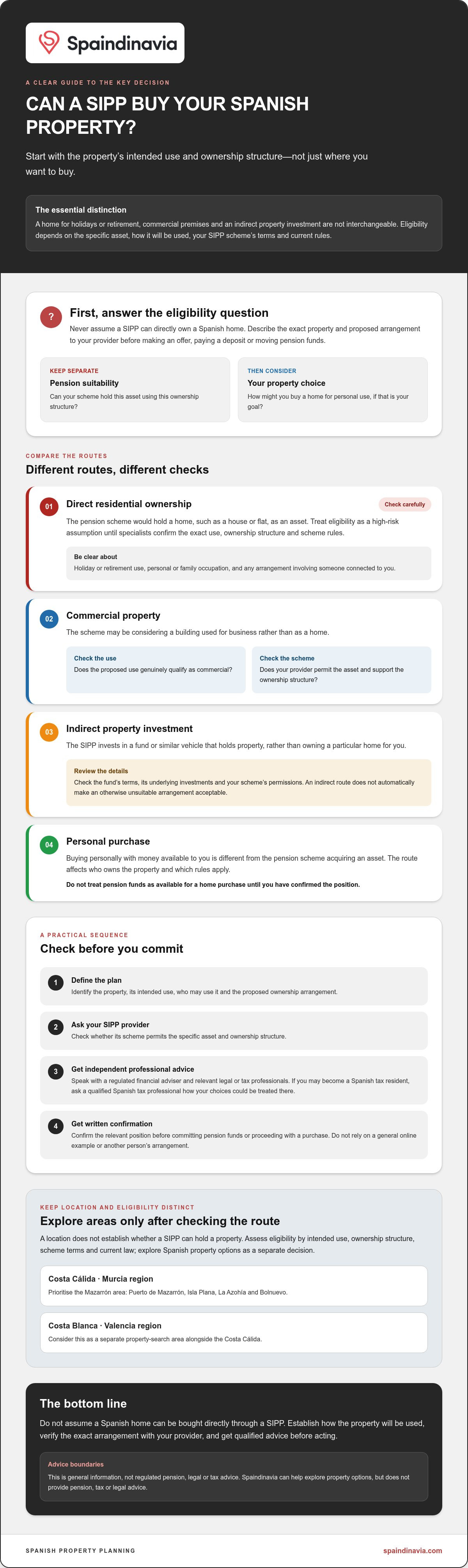
Never assume a SIPP can directly own a Spanish home. The answer depends on the property type, its intended use, your scheme’s rules and the current law. Check those details with your SIPP provider and suitably qualified advisers before making an offer, paying a deposit or moving pension funds.
This distinction matters if you’re weighing a personal goal, such as having a place for holidays or retirement, against a pension investment. Buying a property personally with money available to you is different from the pension scheme acquiring an asset. The purchase route affects who owns the property and which rules apply, so do not treat pension funds as available for a home purchase until you’ve confirmed this.
What does buying property through a SIPP mean?
A SIPP, or self-invested personal pension, is a type of personal pension that gives you a choice over investments, subject to the scheme’s terms and applicable rules. The Self-Invested Personal Pension (SIPP) overview offers background on how these pensions work. In a property investment, the asset is held within the pension scheme’s structure rather than being your privately owned home.
A property you hope to use as a holiday or retirement home should not automatically be treated as a suitable SIPP investment. Keep the questions separate. First, is the proposed asset and ownership arrangement permitted for your pension? Then, independently, how might you buy a home for personal use?
Why Spanish residential property needs particular scrutiny
Residential and commercial property can raise different pension considerations. A flat intended as a home, a property rented to others and commercial premises are not interchangeable simply because they’re all real estate. Describe the specific property and its planned use to your provider, and ask for the scheme’s position on that exact arrangement.
Be clear about any personal or family use, or a proposed arrangement involving someone connected to you. These details warrant professional review. Do not rely on a general online example or assume that a structure used by someone else will work for your SIPP.
Check eligibility before you commit: the property’s use and ownership structure matter as much as its location.
This article is general information, not regulated pension, legal or tax advice. It can help you frame the questions, but it cannot confirm whether your individual plan is permitted. Before taking action, seek current guidance from your SIPP provider, a regulated financial adviser and relevant legal or tax professionals.
SIPP property rules: how residential, commercial and indirect routes differ
There isn’t one answer for every property or pension scheme. If you’re considering using a SIPP to buy property in spain, compare your proposed route with the property’s actual use and ask your provider to assess the precise arrangement. A label such as “investment property” or “overseas commercial building” is not, by itself, proof that a scheme can hold it.
| Route | What it involves | What to check |
|---|---|---|
| Direct residential ownership | The pension scheme would hold a home, such as a house or flat, as an asset. | Treat eligibility as a high-risk assumption. Confirm the property’s use, ownership structure and scheme rules with specialists before proceeding. |
| Commercial property | The scheme may be considering a building used for business, rather than as a home. | Check that the use genuinely qualifies as commercial, and that the provider permits the asset and can support the proposed ownership structure. |
| Indirect investment | The SIPP invests in a fund or similar vehicle that holds property, rather than owning a particular home for you. | Review the fund’s terms, underlying investments and scheme permissions. This route does not automatically make an otherwise unsuitable arrangement acceptable. |
Could a SIPP buy a Spanish home for personal use?
A holiday home you plan to occupy is not the same as a property held solely as an investment. Personal occupation, family use or arrangements involving someone connected to you can raise additional questions about scheme compliance. Do not assume that letting the property at other times changes the answer. Give your provider the full picture, including who may use the home and when, and request written confirmation before signing a contract or transferring funds.
Are commercial property or property funds different?
Potentially, but neither route is automatically suitable. With direct ownership, the pension scheme holds the building itself. A fund investment gives exposure to property through an investment vehicle, with its own terms and risks. Overseas commercial property can also raise practical issues. IPM Pensions discusses some practical difficulties of overseas SIPP property, including legal and language barriers.
Property investment exposure isn’t the same as owning a Spanish home for your personal use. A fund, company or overseas structure should not be treated as a shortcut around pension restrictions. Ask your provider and qualified advisers to review the specific asset, structure and intended use before you commit.
Once you’ve confirmed a suitable purchase route, you can explore Spanish property separately. Explore Spanish property options with Spaindinavia, an independent property agency, not a pension, legal or tax adviser.
SIPP or personal purchase? Compare the routes before choosing
Before deciding how to fund a Spanish property, start with what you want it to do. A home for your own holidays or future retirement raises different questions from a property intended to generate rental income or form part of a long-term investment plan. Consider using a SIPP to buy property in spain only after checking whether the pension route fits both the asset and its intended use.
These are broad options to discuss with qualified professionals, not recommendations. A mortgage is also subject to a lender’s assessment, so do not assume you’ll qualify or that borrowing will suit your circumstances.
| Route to discuss | Questions to consider |
|---|---|
| SIPP investment | Does the scheme permit the asset and ownership structure? How much control would you have, what access to funds would be available, and what administration would the investment involve? |
| Personal purchase | Would you own the property yourself, and does that suit your plans for personal use, letting or future occupation? Ask advisers how the purchase and ownership may affect your circumstances. |
| Mortgage | Would borrowing be appropriate and available to you? Discuss eligibility, ownership, repayment responsibilities and how a mortgage fits with your wider plans. |
Which route fits a home you want to use yourself?
Be clear about your main aim: personal occupation, holiday use, rental income or a long-term investment. If you want to stay in the property yourself, personal access may not sit comfortably with the requirements of a pension investment. Explain exactly who would use the home and how often to your SIPP provider and advisers. Get independent, regulated financial advice before changing pension arrangements or committing to a purchase.
What should you compare before deciding?
Look beyond the initial funding idea. Compare the control you need, when and how you can access funds, the investment purpose, scheme restrictions and ongoing administration. Also ask what could happen if the proposed arrangement proves unsuitable. Do not assume one route is universally cheaper, safer or more tax-efficient. Those conclusions depend on your circumstances and require professional advice.
Keep the questions in two clear groups. A regulated financial adviser and your provider can address UK pension suitability and scheme permissions. A Spanish solicitor and relevant tax professional can advise on conveyancing, ownership and Spanish tax considerations. One answer does not replace the other.
Once you’ve established a suitable purchase route, turn to the practical steps of choosing and buying a home. The separate buying property in Spain checklist can help you organise that process, while keeping the property search distinct from pension-funding advice.
How to check whether your SIPP and Spanish property plan are compatible
A clear process can help you separate pension suitability from the practical steps of buying a home. If you’re considering using a SIPP to buy property in spain, work through these checks before signing, transferring funds or making commitments:
- Define the intended use. Is the property for personal holidays, family use, rental income, commercial activity or another purpose? Be specific about who may use it and how.
- Describe the exact asset and structure. Share the property type, location, proposed owner and any company or fund involved. Do not assume a different ownership structure changes the scheme’s rules.
- Check the scheme documents and ask your SIPP provider. Ask whether the scheme permits that precise asset and ownership structure, and clarify who would handle administration and due diligence. Request details of relevant restrictions in writing.
- Get UK pension advice. Ask a regulated financial adviser to assess whether the proposed route is suitable for your circumstances and explain potential pension and tax considerations.
- Seek separate Spanish advice. Ask an independent solicitor to review ownership, purchase documents and transaction steps. Consult a qualified Spanish tax professional about the proposed ownership and any relevant tax obligations.
- Wait for written professional confirmation. Keep the provider’s response and advice on file, and do not proceed on the strength of a verbal assurance or a general online example.
Questions to ask your SIPP provider and UK adviser
Put the proposal in writing and ask whether the exact property type and intended use are permitted under your scheme. Who is responsible for administration and due diligence? Which scheme-document restrictions apply? Ask your regulated adviser to assess pension suitability and explain any potential tax consequences relevant to your circumstances. Keep these answers focused on your own plan, not a similar case you’ve read about.
Questions for Spanish property and tax professionals
Ask the independent solicitor to explain who would legally own the property, what the purchase documents mean and which transaction steps apply to your proposed route. A qualified Spanish tax professional can advise on relevant obligations for that ownership structure. UK pension advice and Spanish legal or tax advice address different issues, so neither replaces the other.
Get provider approval and independent advice in writing before you sign, transfer funds or commit to a purchase. Once you’ve confirmed an appropriate route, you can explore property options separately. Explore Spanish property options with Spaindinavia, an independent property agency that does not provide pension, legal or tax advice.
Plan a Spanish property purchase with clear, independent advice
Keep two decisions separate: first, whether your pension can support the proposed purchase route; then, which Spanish property suits your plans. If you’re researching using a SIPP to buy property in spain, confirm funding and ownership with qualified advisers before making a commitment.
Once that route is clear, shape your search around the lifestyle and home you want. Decide on property type, intended use and practical requirements before comparing listings. For example, consider whether a new-build villa, resale property or another type of home better fits your plans, and whether you expect to live there, rent it out or use it as a holiday home.
When to begin your property search
Start comparing properties once qualified advisers have clarified the permitted funding and ownership route. Write down your priorities, such as whether you’re looking for a new-build or resale home, how much space you need and what you’d like nearby. The Spanish property buying checklist can help you organise the purchase process, while your financial, legal and tax professionals advise on their respective areas.
How Spaindinavia can support the property side
Spaindinavia is an independent Spanish property agency with a hand-picked portfolio that includes new-build villas, luxury villas and resale apartments. It supports property searches and the buying process, including collaboration with independent solicitors, banks and local experts. These professionals are independent, so clarify their roles. Spaindinavia does not provide pension recommendations or legal or tax advice.
Once your purchase route is clear, explore Spanish property options with Spaindinavia and begin shaping a search around your plans.
Take the next step with clarity and confidence
Using a SIPP to buy property in spain calls for careful checks before you commit. The property’s use and ownership structure matter, and a route that works for one pension scheme may not suit another. Ask your SIPP provider and qualified advisers to confirm the position in writing, and keep UK pension advice separate from Spanish legal and tax guidance.
Once you’ve clarified whether your intended purchase route is suitable, you can focus on finding a property that fits your plans. Spaindinavia is an independent agency operated by local real estate experts. It supports buyers through the property process, including collaboration with independent solicitors, banks and local experts, but does not provide pension, tax or legal advice.
Ready to explore property options? Explore Spanish property options with Spaindinavia. With the right advice and a clear plan, you can take your next step towards a Spanish home with greater confidence.
Frequently Asked Questions
Can I use my SIPP to buy a residential property in Spain?
Generally, no: a UK SIPP cannot directly own residential property, including a home in Spain. The property’s intended use and your scheme’s terms still need checking with your provider and qualified advisers. If you’re considering using a SIPP to buy property in spain, do not treat pension funds as available for a personal home. Ask for written confirmation about the proposed arrangement before signing documents or transferring money.
Can a SIPP buy a holiday home in Spain for me to use?
Generally, you shouldn’t assume it can. A holiday home you or your family plan to use is residential property, and personal occupation raises particular questions about whether the pension scheme can hold it. Renting it out at other times does not automatically change its status. Tell your SIPP provider exactly who would use the property and how, then get specialist advice and written confirmation before making a commitment.
Can a SIPP invest in Spanish commercial property?
A SIPP may be able to invest in commercial property, but overseas ownership isn’t automatically permitted or straightforward. The property’s actual use, your scheme’s rules and the proposed ownership structure all need review. Ask the SIPP provider whether it will allow the specific asset and clarify administration requirements. Also consult UK pension and Spanish legal professionals about the cross-border arrangement before proceeding.
What happens if a SIPP invests in property that is not permitted?
An investment that breaches pension rules may be treated as an unauthorised payment and could lead to substantial tax charges for the member and the scheme. The consequences depend on the circumstances, so do not rely on a general example to assess your position. If you think a SIPP has already invested in an unsuitable property, contact the scheme administrator and a regulated pension adviser promptly for guidance.
Can I use a SIPP to buy a property in Spain and rent it out?
Renting out a home does not, by itself, make direct SIPP ownership suitable. Residential property remains subject to pension restrictions, even if you intend to let it rather than occupy it personally. The exact arrangement, including any personal or connected-party use, needs specialist review. Ask your provider about the specific property and ownership structure, and get independent pension advice before making an offer or moving funds.
Do all SIPP providers allow overseas property investments?
No. Providers and individual schemes can have different investment permissions and administrative requirements, and overseas property may involve additional practical and legal considerations. Do not assume that a provider which accepts one type of property investment will accept another, or that another member’s experience applies to you. Ask your provider in writing about the exact asset, intended use, ownership structure and any responsibilities you would need to meet.
Should I speak to a Spanish solicitor before using pension funds to buy property?
Yes. An independent Spanish solicitor can advise on the proposed ownership, purchase documents and transaction steps, but that advice does not replace UK pension guidance. Ask your SIPP provider and a regulated UK financial adviser to assess scheme permission and pension suitability. A qualified Spanish tax professional can explain relevant tax considerations. Keep the advice separate, and avoid signing or transferring funds until the relevant professionals have reviewed your plan.


