

The keys are almost within reach, but a quick walk-through can leave defects unnoticed and important concerns poorly recorded. A snagging list for a new build villa in spain turns your handover visit into a clear, prioritised record of what needs attention before you settle in.
It’s natural to focus on the excitement of your new home. A practical checklist makes it easier to slow down, inspect each room and record every issue with its location and supporting photographs. It also helps you decide when an observation needs an independent technical professional rather than guesswork.
Use this room-by-room guide to check finishes, doors and windows, plumbing, electrics and outdoor areas. Then organise your findings so they’re easy to share and follow up. The property’s documents will help you confirm what is included, when you can inspect it and how to submit your findings.
Key Takeaways
- Use a room-by-room approach to make your handover walkthrough thorough and manageable.
- Build a snagging list for a new build villa in spain with clear references, locations, observations and dated photographs.
- Separate visible cosmetic concerns, incomplete work and items that may need expert assessment.
- Understand how an independent technical inspection differs from a visual walkthrough, and when specialist advice may help.
- Keep your final list and related correspondence together, then submit them through the process agreed for your purchase.
What is a snagging list for a new build villa in Spain?
A snagging list is a written record of defects, unfinished work and questions that need clarification before or around handover. In the construction industry, the same idea is often called a punch list; this snagging list reference explains the term and its purpose. For your villa, the list turns a walk-through into specific observations that can be reviewed and followed up, rather than relying on memory or a general comment such as “the finish needs attention”.
A handover inspection is a visual check, not a technical survey. You can note a chipped tile, a door that catches or paint that looks uneven. Those observations are different from signs such as damp patches, a suspected leak or an installation that doesn’t appear to work as expected. Record what you can see without trying to diagnose the cause. If something may involve structure, safety or a hidden system, ask an independent qualified professional whether it needs further investigation.
Keep the tone calm and factual. Describe the location and condition, add a photograph where useful, and ask the developer to confirm the process for submitting and following up observations in writing. A clear record makes discussion easier, but it isn’t legal or contractual advice about whether to accept the property or what remedies may apply.
When should you prepare a new-build villa snagging list?
Start by checking your purchase documents and asking when inspection and handover visits can take place. Arrange access and allow enough time to check the property without rushing. Confirm practical details such as who will let you in and which areas will be accessible. If you’re buying from abroad, decide whether you’ll attend in person or appoint an appropriate representative, and confirm any arrangements with the relevant parties in advance.
Check what is included in your purchase before inspecting outdoor areas, fittings or other features. If access or the inspection process isn’t clear, ask the developer to confirm it in writing rather than making assumptions.
What can a snagging list help you do?
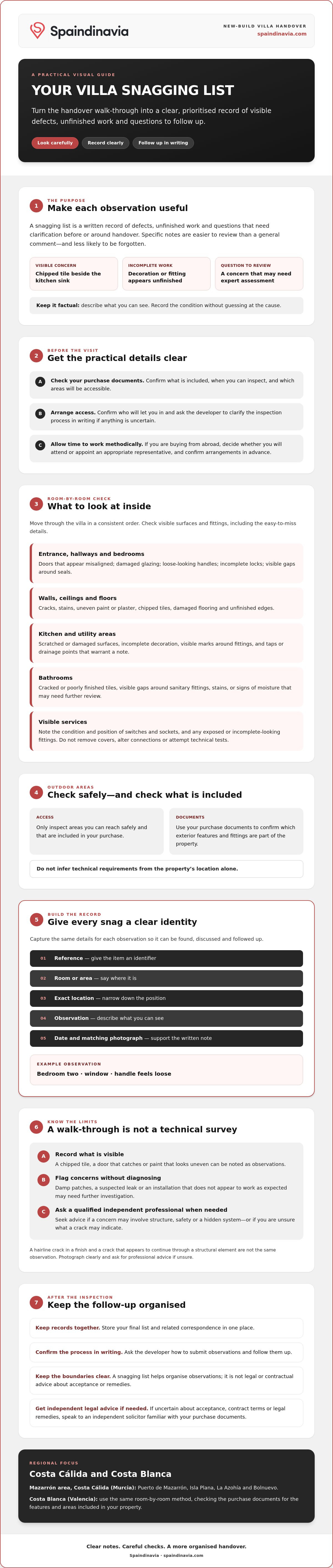
A well-organised snagging list for a new build villa in spain gives each observation a clear identity. Note a reference number, room or area, exact location, what you observed, the date and a matching photograph. For example, “Bedroom two, window, handle feels loose” is more useful than “window problem”.
This structure helps you discuss points neutrally with the developer and distinguish visible finish concerns from incomplete work or items that may need expert assessment. Keep the list separate from decisions about acceptance, contract terms or legal remedies. If you’re unsure about those, seek advice from an independent solicitor familiar with your purchase documents.
Room-by-room snagging checklist for a new-build villa in Spain
Work through the villa in a consistent order, moving from room to room before checking the exterior. For every concern, note its exact location, what you observed and the photograph that supports it. Keep your wording factual: “cracked tile beside the kitchen sink” is clearer than “poor workmanship”. This visual checklist helps you record what’s apparent. It doesn’t replace a specialist’s assessment.
Which interior areas and finishes should you inspect?
Look carefully at surfaces and visible fittings, including areas that are easy to pass by during an exciting handover. Add an item to your snagging list for a new build villa in spain if you notice:
- Entrance, hallways and bedrooms: doors that appear misaligned, damaged glazing, loose-looking handles, incomplete locks or visible gaps around seals.
- Walls, ceilings and floors: cracks, stains, uneven paint or plaster, chipped tiles, damaged flooring or unfinished edges.
- Kitchen and utility areas: scratched or damaged surfaces, incomplete decoration, visible marks around fittings, or taps and drainage points that warrant a note.
- Bathrooms: cracked or poorly finished tiles, visible gaps around sanitary fittings, stains, or signs of moisture that may need further review.
- Visible services: note the condition and position of switches and sockets, and any exposed or incomplete-looking fittings. Don’t remove covers, alter connections or attempt technical tests.
Describe what you can see rather than guessing at the cause. A hairline crack in a finish and a crack that appears to continue through a structural element are not the same observation. Photograph either clearly and request professional advice if you’re unsure what it may indicate.
What should you check outside the villa?
Only inspect areas you can reach safely and that are included in your purchase. Check your documents to confirm which exterior features and fittings are part of the property. Don’t infer technical requirements from the property’s location alone.
- Exterior walls and boundaries: note visible cracks, stains, unfinished finishes, damaged boundary features, and the condition of accessible doors and windows.
- Terraces and balconies: record damaged surfaces, incomplete edges, visible standing water or signs that water may be entering the building.
- Garden, pool and drainage: where included and safely accessible, note incomplete work, visible damage or standing water near accessible drainage points.
Don’t climb, lift covers or enter restricted areas to investigate. If you spot possible water ingress or a concern you can’t assess visually, document it and seek appropriate technical advice. If you’re considering a purchase and would value guidance through the property process, explore new-build villas with Spaindinavia.
How to record and prioritise snags before handover
A useful record should make every observation easy to find, discuss and track. Give each item a unique reference, then note the room or exterior area, what you can see, the date and the photo filename. This simple structure keeps your snagging list for a new build villa in spain clear as you add updates or share it with the developer.
How do you write a clear snagging-list entry?
Be specific and describe the visible condition without guessing at its cause. For example, “Kitchen, cupboard beside the oven, door appears uneven” is more useful than “kitchen units faulty”. Take one close photograph to show the detail and a wider image to show where it is. Label both with the same reference number, such as K-01, so they’re easy to match to your notes later.
Use a consistent log. A notebook or spreadsheet can include:
- Reference and location: a unique label and the precise room or exterior area.
- Observation and evidence: what you noticed, plus the names of the supporting photographs.
- Date, priority and status: when you recorded it, how urgently it needs attention and whether it’s been raised or reviewed.
- Contact and update: who you contacted, when, and any response or next step agreed.
Keep the language neutral. “Water mark visible on the ceiling near the window” records an observation; “roof is leaking” assumes a cause that may need technical investigation.
Which snags should be raised first?
Prioritise by the type of concern, not by how easy it is to describe. Keep categories separate so that a minor finish issue doesn’t obscure a more serious observation:
- Prompt professional attention: a possible safety concern, visible sign of water ingress or an essential service that appears not to function. Avoid trying to test or repair it yourself.
- Incomplete work or visible damage: for example, an unfinished fitting or a damaged surface. Record each separately, even if several are in the same room.
- Minor finish observations: such as uneven paint or a small chip, with a clear location and photograph.
- Needs expert assessment: anything whose significance or cause isn’t clear from a visual check.
Ask an independent surveyor or another relevant professional to assess uncertain or potentially significant issues. Your log is a practical record, not a technical diagnosis or a decision about contractual rights. Keep it dated and update the status after each discussion. Use your purchase documents and the developer’s confirmed process to guide how you submit the list.
Should you hire an independent surveyor for a new-build villa snagging inspection?
A buyer’s walkthrough and a specialist inspection serve different purposes. During a visual handover check, you can note what’s visible, such as a damaged finish, an incomplete fitting or a door that doesn’t close smoothly. An independent surveyor or other suitable technical professional can assess concerns within the scope of their inspection and explain whether further investigation may be needed.
Consider specialist advice if you notice possible structural movement, persistent damp or building services that seem faulty or are difficult to assess safely. A photograph can show what caught your attention, but it can’t establish the cause or provide a technical diagnosis. The right professional depends on the concern, so describe what you’ve observed and ask whether their inspection is suitable for it.
When is a visual handover check not enough?
Seek advice if a crack appears to be more than a surface mark, damp keeps returning, or an installation’s condition is uncertain. Before arranging an inspection, confirm what it covers and excludes, whether the professional will provide a written report, and what access they’ll need. Ask about their relevant qualifications and experience, and check that the agreed scope matches your concern rather than assuming every inspection covers the same things.
This is especially helpful if you’re preparing a snagging list for a new build villa in spain and an observation could have technical significance. Keep the note factual, share the supporting photographs, and let the professional assess it rather than trying to diagnose the cause yourself.
How do a surveyor, solicitor and estate agent differ?
Each professional has a distinct role. An independent surveyor provides a technical assessment within the agreed inspection scope. An independent solicitor advises on legal and contractual questions, including how your purchase documents apply to your circumstances. An estate agent can support the property transaction and help you understand the purchase process, but shouldn’t be treated as a surveyor or as a substitute for independent legal advice.
Spaindinavia is an independent property agency that supports buyers through the purchase process and works with independent solicitors, banks and local experts. It doesn’t carry out technical inspections or defect repairs. If you’re considering a new-build villa, discuss finding a suitable villa and clarify which independent professionals you may need for technical or legal questions.
Handling your snagging list after the villa inspection
Once you’ve finished the walkthrough, bring your notes, photographs and any inspection report together in one dated record. Keep a copy somewhere secure and backed up, so you can find the latest version and check what has been raised, acknowledged or is still awaiting a response. Use consistent reference numbers for each item and keep related messages alongside the matching entry.
Before sending anything, check your purchase documents for the stated process. If they don’t make the submission channel clear, ask the developer to confirm how they want to receive observations. Don’t assume a particular deadline or outcome. Ask for written acknowledgement and clarification of what happens next.
How should you raise the snagging list with the developer?
Keep your message calm, concise and specific. Include the reference number, location, neutral description and supporting images for each item. For example, explain where a mark appears and attach a close-up and a wider photograph that shows its position. Avoid diagnosing the cause or presenting an uncertain observation as a confirmed defect.
Ask who will review the list, how you’ll receive updates and whether any further information is needed. Save your sent message and the developer’s reply, then add the date and any agreed action to your record. This gives you a clear trail to refer to if you need to follow up, without turning your notes into legal advice.
For broader purchase-process context, see the essential guide to buying property in Spain. The process for handling your snagging list for a new build villa in spain should still be checked against your own documents and confirmed directly with the developer.
What if a concern remains unresolved?
Ask for a clear written response, keep the full correspondence and note what remains outstanding. If the disagreement concerns the building’s condition, seek independent technical advice. For questions about your contract, acceptance or possible remedies, speak with an independent solicitor. These professionals have different roles, and one type of advice shouldn’t be treated as a substitute for the other.
If you’re still planning a purchase, you can explore new-build villa options with Spaindinavia. As an independent property agency, Spaindinavia supports buyers through the purchase process and works with independent solicitors, banks and local experts. It doesn’t provide snagging inspections or defect repairs.
Approach handover with a clear plan
A well-prepared snagging list for a new build villa in spain helps you make the most of your handover visit. Record each observation with its exact location and supporting photograph, then keep cosmetic issues, incomplete work and concerns needing technical assessment clearly separated. A calm, dated record also makes it easier to follow up with the developer and track responses.
Check the arrangements for your own purchase and ask independent professionals for technical or legal advice where needed. Spaindinavia is an independent property agency specialising in new-build villas, supporting buyers throughout the purchase process and working with independent solicitors, banks and local experts.
Explore new-build villas and speak with Spaindinavia about your purchase. With a practical checklist and the right guidance, you can take your next steps towards your Spanish home feeling prepared.
Frequently Asked Questions
What should be included on a snagging list for a new-build villa in Spain?
Include each visible defect, incomplete item or concern, with its precise location, a concise description, a photograph and a unique reference number. A snagging list for a new build villa in spain might cover interior finishes, doors and windows, visible fittings, exterior surfaces and accessible outdoor areas. Describe what you observe without guessing at the cause. If an issue seems significant or you’re unsure what it means, ask an independent professional to assess it.
When should I complete a snagging inspection on a new-build villa?
Check your purchase documents and ask the developer when an inspection can take place and how to submit your findings. Arrange enough time to inspect carefully, and confirm access details before the visit. Don’t assume every purchase follows the same process or deadline. If the timing could affect your contractual position, ask an independent solicitor to explain how your documents apply to your circumstances before making decisions.
Can I inspect a new-build villa myself, or do I need a surveyor?
You can carry out a visual walkthrough and record what you notice, but that isn’t the same as a technical inspection. A surveyor may help assess concerns that need specialist knowledge, such as suspected movement, persistent damp or uncertain building services. Before arranging an inspection, confirm the professional’s relevant qualifications and exactly what the agreed scope covers. For legal or contractual questions, speak with an independent solicitor.
What happens if I find defects during a new-build villa handover?
Record each observation clearly, take supporting photographs and follow the reporting process in your purchase documents or confirmed by the developer. Ask for written acknowledgement and keep replies with your dated list. Don’t assume that reporting an item guarantees a particular repair, remedy or timescale. If a technical concern remains unresolved, seek independent professional advice. For questions about your contract or possible remedies, ask your solicitor.
Is a snagging list the same as a building survey?
No. A snagging list records visible defects, unfinished work or questions identified during a handover check. A building survey is a professional inspection, and its scope depends on the service agreed. One doesn’t automatically replace the other. Before commissioning a survey, ask what areas and concerns it covers and what the report will include. Seek independent legal advice separately if you have questions about your purchase terms.
Should I hire an independent snagging inspector in Spain?
Consider independent technical help if you can’t attend, have a concern you can’t assess visually or want an expert opinion beyond your own walkthrough. Before appointing someone, check their relevant qualifications, inspection scope, report language and access arrangements. A property agent can support the buying process, but shouldn’t be presented as a technical inspector. Ask an independent solicitor about contractual questions, as technical and legal advice address different issues.
Can the snagging process differ between Spanish regions?
The basic practice of observing, photographing and recording issues can be useful wherever you’re buying, but don’t assume local conditions, building details or contractual processes are identical. Check your purchase documents and confirm how to submit findings with the developer. For concerns specific to the property, ask an independent professional familiar with the relevant technical issues. Your solicitor can explain legal or contractual questions; broad comparisons aren’t a substitute for advice on your purchase.


