

What if the only thing standing between you and a morning coffee on a sun-drenched terrace in Puerto de Mazarrón wasn't a language barrier, but simply a lack of a clear roadmap? It's completely natural to feel a sense of hesitation when considering a move to the Costa Blanca or the Costa Cálida without being fluent in the local tongue. You might worry about professional isolation or whether you can truly secure your future whilst your Spanish is still at the basic stage. Many expats share this exact concern, wondering how to find job in Spain if you don't speak Spanish while still enjoying the high quality of life the Mediterranean offers.
We're here to show you that a rewarding career abroad is entirely within reach. This guide explores the high-demand sectors where English is your greatest asset and clarifies the essential legal steps, from NIE applications to the latest Digital Nomad Visa requirements. We'll also look at why the Costa Cálida, specifically the charming coastal pockets of Isla Plana, La Azohia, and Bolnuevo, offers a more affordable and welcoming entry point than the hectic city centres. You'll discover practical strategies to bridge the gap between your current skills and a dream life under the Spanish sun.
Key Takeaways
- Explore the thriving "Expat Economy" across the Costa Blanca and Costa Cálida, where sectors like hospitality and property management prioritise English-speaking talent.
- Learn exactly how to find job in Spain if you don't speak Spanish by leveraging the 2026 Digital Nomad Visa or targeting international businesses in the Murcia region.
- Understand the essential administrative steps to organise your move, from securing your NIE to obtaining a Social Security number for healthcare access.
- Identify why the Mazarrón area, including Puerto de Mazarrón and Bolnuevo, offers a more affordable cost of living whilst you establish your professional career.
- Discover how finding the right role can lead to long-term stability and the opportunity to invest in resale villas or apartments in peaceful Isla Plana and La Azohia.
The Reality of Working in Spain Without Speaking Spanish in 2026
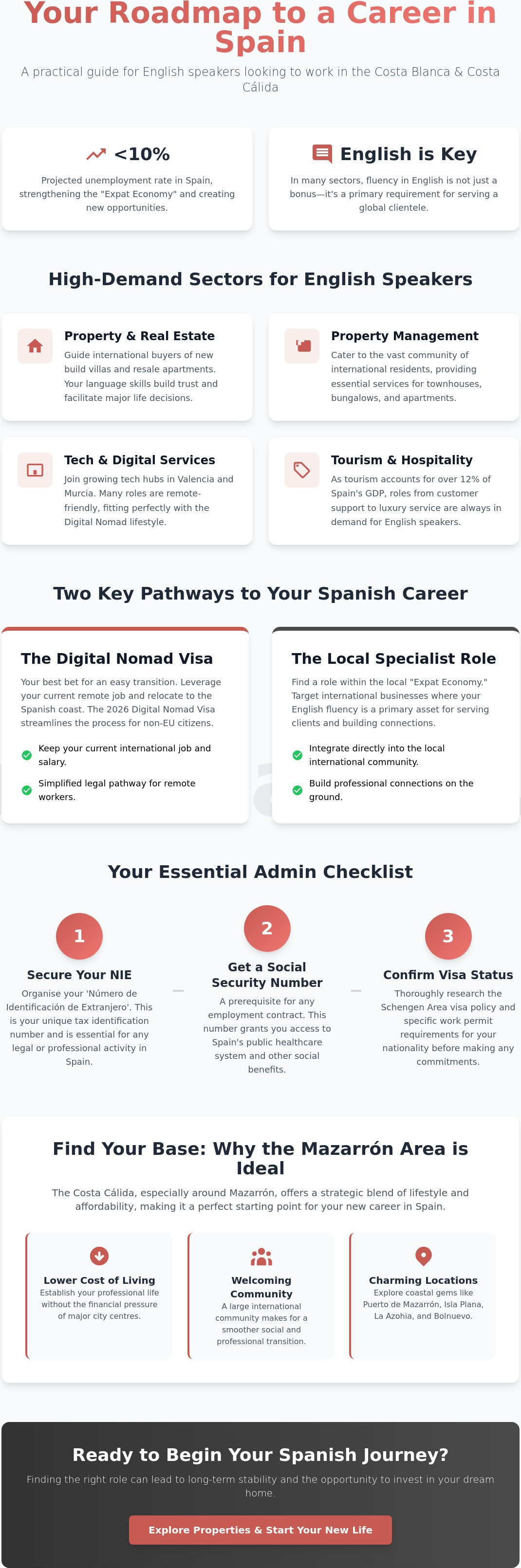
The dream of relocating to the Mediterranean often comes with a nagging question: can I survive professionally without being fluent in Spanish? In 2026, the answer is more encouraging than ever. Spain's economy is evolving, with unemployment projected to fall below 10% for the first time in twenty years. This shift has strengthened the "Expat Economy." It's a thriving ecosystem where English acts as the primary language of business, particularly in international hubs and coastal regions.
Understanding the Schengen Area visa policy is your first step in grasping the legal framework for non-EU citizens. Once the legalities are clear, the focus shifts to location. Whilst the Costa Blanca remains a bustling hub for international services, the Costa Cálida is rapidly emerging as a preferred base for those seeking a balance between work and a lower cost of living. In areas like Puerto de Mazarrón or Bolnuevo, you'll find that your ability to communicate clearly in English is often more valuable to international firms than a Spanish degree. Success here isn't just about your CV. It's about your cultural adaptability and the "soft skills" that allow you to bridge the gap between different nationalities.
The Language Paradox: When English is an Asset
In certain sectors, being a native or fluent English speaker isn't just a bonus; it's a requirement. Tourism accounts for over 12% of Spain's GDP, and the "Digital Spain 2026" agenda has accelerated the demand for international talent. If you're researching how to find job in Spain if you don't speak Spanish, focus on the luxury property market and property management services. These industries cater to a global clientele who value the security of being understood in their own language. Companies in these regions prioritise English to facilitate global trade and support the vast community of international residents living in resale apartments or new build villas along the coast.
Setting Realistic Expectations for Your First Year
It's helpful to view your first twelve months as a transition period. Your initial role might be a stepping stone, perhaps in hospitality or customer support, whilst you attend local language classes to integrate further. Working in a coastal resort like Isla Plana or La Azohia offers a different pace compared to a frantic city centre. Many find that the "lifestyle move" happens first. You secure a base, perhaps one of the many townhouses or bungalows available, and then let your career catch up as you build local connections. The goal is to find a role that supports your life, rather than letting the job hunt dictate your happiness. By focusing on sectors that value your native tongue, you can build a stable foundation for your new life abroad.
High-Demand Sectors for English Speakers Across the Costa Blanca and Costa Cálida
Finding your professional footing in a new country is often about identifying where your existing skills meet local demand. In the coastal regions of Spain, the "Expat Economy" creates a unique marketplace where English isn't just a bonus; it's the primary language of transaction. If you're wondering how to find job in Spain if you don't speak Spanish, focusing on sectors that serve the international community is your most effective strategy. Tourism accounts for over 12% of Spain's GDP, and this massive industry supports a wide range of roles from hospitality to specialised trade services.
The property market is perhaps the most resilient sector for English speakers. As international buyers flock to the coast to purchase new build villas or resale apartments, they seek out professionals who can guide them in their native tongue. This creates a constant need for property managers, sales consultants, and administrative staff. Beyond real estate, the rise of tech hubs in Valencia and Murcia has opened doors for digital professionals. While many roles are remote, understanding Spain's Digital Nomad Visa requirements can help you transition into the local workforce whilst maintaining a global career.
Opportunities in the Costa Blanca (Valencia Region)
The Costa Blanca, particularly around established hubs like Torrevieja and the Orihuela Costa, boasts a self-sustaining service economy. The high concentration of English-speaking residents means there's a permanent demand for English-led services in healthcare, legal support, and education. You'll find that many international schools and private tutoring centres prioritise native speakers for corporate language coaching. The sheer volume of holiday rental properties in this region also ensures a steady stream of work in maintenance and hospitality throughout the year.
Opportunities in the Costa Cálida (Murcia Region)
In the Costa Cálida, the focus is shifting towards sustainable growth and personal service. The Mazarrón area, including Puerto de Mazarrón and Bolnuevo, is becoming a favourite for those who want a more authentic lifestyle without sacrificing job prospects. There's a growing demand for trade services like construction and gardening as expats renovate townhouses and bungalows in Isla Plana and La Azohia. If you're exploring the area, viewing some of the local investment properties can provide excellent insight into which neighbourhoods are seeing the most development and job creation. This region offers a perfect balance for those who want to work amongst a friendly international community whilst enjoying the tranquil beauty of the Murcia coastline.
Remote Work and the Digital Nomad Visa: Your Best Bet for an Easy Transition
Earning a stable salary in Pounds or Dollars whilst watching the sunrise over the Mediterranean is no longer a distant fantasy. For many, the most straightforward answer to how to find job in Spain if you don't speak Spanish isn't actually finding a local employer, but bringing your current career with you. Since its launch in early 2023, Spain has issued nearly 32,000 Digital Nomad Visas, and the momentum has only increased into 2026. This residency path allows you to bypass the local job market entirely while you settle into your new surroundings.
The requirements are clear and practical. To qualify in 2026, a single applicant must demonstrate a monthly income of at least 200% of Spain's Minimum Interprofessional Salary, which currently equates to approximately €2,850 or more. If you're bringing a spouse, you'll need an additional 75% of that base figure. One of the most attractive draws is the special tax regime. Successful applicants can qualify for a flat tax rate of 24% on income up to €600,000 per year. This financial efficiency, combined with official labor market data for Spain showing a steady rise in remote work adoption, makes the nomad route a secure choice for international talent.
The Legal Framework: NIE and Residency
Securing your professional base often goes hand in hand with finding your physical home. Many remote workers choose to start their journey by reviewing a buying property in spain guide to understand how investment can simplify their residency goals. Obtaining your NIE (Foreigner's Identity Number) is the first hurdle. It's the key that unlocks everything from bank accounts to high-speed internet contracts. While EU citizens enjoy simpler work rights, non-EU nationals find that the Digital Nomad Visa provides a robust legal framework that makes the transition feel managed and safe.
Lifestyle Benefits of the Remote Path
Choosing the remote path means your office can be anywhere from a bustling co-working space in the Costa Blanca to a quiet terrace in the Costa Cálida. You aren't tied to a city centre commute. Instead, you can prioritise your well-being in the Mazarrón area. Imagine working from a new build apartment in Puerto de Mazarrón or a resale villa in the peaceful hills of Bolnuevo. The cost of living advantage is significant here. Earning a foreign salary whilst spending in local markets in Isla Plana or La Azohia allows your income to stretch much further. You get to integrate into the local community at your own pace, enjoying the authentic Spanish charm without the immediate pressure of professional language fluency.
Essential Paperwork and Practical Steps to Organise Your Job Hunt
Organising your move to the Mediterranean is an exciting journey, but it requires a bit of administrative groundwork to ensure your transition is as smooth as possible. If you're researching how to find job in Spain if you don't speak Spanish, you'll quickly learn that having your paperwork in order is just as important as your professional experience. Employers in the Costa Blanca and Costa Cálida are often eager to hire international talent, but they need to know you're legally prepared to start.
The NIE (Número de Identidad de Extranjero) is your first priority. This identification number is essential for everything from signing a work contract to opening a bank account. Once you've secured a role, obtaining a Social Security number is the next vital step. This grants you access to the Spanish healthcare system and ensures your contributions are correctly recorded. Whilst digital platforms like LinkedIn are excellent for corporate roles, don't underestimate the power of local expat Facebook groups. In regions like Murcia and Valencia, these communities often share "hidden" job leads in hospitality or property services before they're ever officially advertised.
The Spanish CV: Key Differences
Tailoring your CV for the Spanish market is a small change that makes a big impact. In Spain, it's still common practice to include a professional headshot and basic personal details like your date of birth and nationality. Even if your Spanish is currently at a basic level, be sure to highlight your "cultural competence" and international experience. Focus on how your native English skills can help a local business reach a global audience. This approach is particularly effective when applying for roles within the international service sectors of the Costa Blanca.
Local Networking in the Costa Cálida
In the Mazarrón area, including Puerto de Mazarrón and Bolnuevo, word of mouth is often the most effective recruitment tool. Building a presence in the local community can lead to opportunities that aren't found on traditional job boards. Visit local business hubs and introduce yourself; many owners in Isla Plana and La Azohia prefer hiring someone they've met in person. Networking amongst the international community can provide invaluable "insider" tips on which firms are expanding. If you're ready to establish your professional base and want to see where the growth is happening, explore our latest investment properties along the coast. Taking that first physical step into the local market often opens doors that a digital application simply cannot.
Finding Your Base: Why the Mazarrón Area is the Ideal Starting Point
Choosing the right location is just as vital as finding the right role. While the Costa Blanca offers a bustling international environment with a high density of services, the Costa Cálida provides a unique opportunity to build a life that feels both authentic and manageable. If you are currently figuring out how to find job in Spain if you don't speak Spanish, starting in a welcoming community like Puerto de Mazarrón can make all the difference. Here, the "Expat Economy" is robust enough to offer professional opportunities, yet the atmosphere remains relaxed and distinctly Spanish.
Puerto de Mazarrón serves as a perfect balance. It provides the essential expat services you need, such as English-speaking legal advice and international schools, without the inflated price tags found in major city centres. Living amongst a supportive international community eases the transition, providing you with a network of peers who have already successfully navigated the same path. Whether you are looking for work in the thriving local hospitality sector or launching a remote career, having a stable and beautiful base is the foundation of your success. At Spaindinavia, we focus on being more than just property experts; we act as your local guides, helping you settle into the right neighbourhood to support your new professional journey.
Property as a Foundation for Your New Life
Securing your own home provides a level of safety and permanence that renting simply cannot match, especially when you are in the middle of a career transition. Owning a property in Bolnuevo or Isla Plana gives you a fixed address, which simplifies many of the administrative processes mentioned earlier. There is also significant spain property investment potential in the Murcia region. As more international talent moves to the coast, the demand for high-quality new build villas and resale apartments continues to grow. We help you navigate the legalities of the local market, ensuring your investment is secure and your move to La Azohia or Bolnuevo is handled with complete transparency.
Next Steps: From Dreaming to Doing
Transitioning from dreaming about a life in the sun to actually living it requires a clear, actionable plan. We recommend creating a six-month roadmap that includes your document preparation and a dedicated job search period. Start by booking a viewing trip to explore the distinct differences between the Costa Blanca and the Costa Cálida. Walk the streets of Puerto de Mazarrón, visit the local businesses, and get a feel for the rhythm of life. Contact us at Spaindinavia to discuss your lifestyle goals. Whether you are looking for townhouses, bungalows, or investment properties, we are here to ensure your new life in Spain starts on the strongest possible footing.
Start Your Professional Adventure Under the Spanish Sun
We've explored the thriving expat economy and how the Digital Nomad Visa has opened doors for thousands of international professionals. By focusing on high-demand sectors like property management and tourism, you can build a stable future whilst your language skills grow. Understanding how to find job in Spain if you don't speak Spanish is ultimately about choosing a region that supports your ambition. Whether you prefer the vibrant energy of the Costa Blanca or the tranquil charm of Puerto de Mazarrón, Isla Plana, and La Azohia, the right foundation is key.
Our team offers expert local knowledge of the Costa Cálida and Costa Blanca, providing comprehensive support through the legal and buying process. We specialise in high-quality new build villas and investment properties that provide the perfect sanctuary as you build your career. Start your Spanish journey by finding your dream home with Spaindinavia and take the first step towards a life of sun, sea, and professional fulfilment. Your new life is waiting for you.
Frequently Asked Questions
Is it possible to find a job in Spain without speaking Spanish?
Yes, it is entirely possible to secure employment, particularly within the "Expat Economy" of the coastal regions. Many international companies and service providers in the Costa Blanca and Costa Cálida prioritise English as their primary language for business. Learning how to find job in Spain if you don't speak Spanish involves targeting sectors like tourism, property management, and international sales where your native language is your greatest professional asset.
What are the best regions in Spain for English-speaking jobs?
The Costa Blanca in the Valencia region and the Costa Cálida in the Murcia region are excellent choices for English speakers. The Costa Blanca offers established international hubs with high demand for customer service and sales. Meanwhile, the Costa Cálida, especially around Puerto de Mazarrón and Bolnuevo, is a growing market for property services and remote workers who want a more authentic lifestyle with lower living costs.
Do I need a work permit to work in Spain as a UK citizen in 2026?
Yes, as a non-EU citizen in 2026, you generally require a valid work permit or a specific residency visa to work legally. Most British expats choose the Digital Nomad Visa for remote work or seek a local contract that allows for residency sponsorship. It's essential to organise your NIE and residency paperwork early to ensure you meet all legal requirements for the Murcia or Valencia regions.
What is the average salary for English-speaking roles in the Costa Cálida?
Salaries for English-speaking roles vary significantly depending on the sector and your level of experience. In the Murcia region, salaries for hospitality or administrative roles typically align with local standards, which are balanced by a lower cost of living compared to major cities. Remote workers often keep their UK or US salaries, allowing them to enjoy a high quality of life in areas like Isla Plana or La Azohia.
Can I work in Spain if I only speak English and want to work in real estate?
Yes, real estate is one of the most accessible sectors for those who don't speak Spanish. International agencies frequently hire English speakers to assist clients looking for resale villas or new build apartments. Understanding how to find job in Spain if you don't speak Spanish often involves networking within the property markets of Puerto de Mazarrón or the Costa Blanca, where clear communication in English is vital for closing international deals.
How does the Digital Nomad Visa work for those moving to the Murcia region?
The Digital Nomad Visa allows you to live in Spain whilst working for a foreign employer or your own international business. In 2026, you must demonstrate a monthly income of at least €2,850. This visa is a popular path for those moving to the Murcia region, as it offers a flat tax rate of 24% for the first few years and the freedom to live anywhere from Bolnuevo to the Costa Blanca.
What are the most in-demand jobs for expats in Puerto de Mazarrón?
In Puerto de Mazarrón and the surrounding areas like Isla Plana and La Azohia, demand is highest for property management, hospitality, and specialised trade services. There is a constant need for professionals to manage holiday rental properties or provide maintenance for bungalows and townhouses owned by international residents. These roles allow you to work within a friendly community while your Spanish language skills naturally develop over time.
How long does it take to get a NIE number for work purposes?
Obtaining your NIE (Número de Identidad de Extranjero) can take anywhere from a few weeks to two months, depending on the current demand at the local police station or consulate. It's a vital first step for anyone planning to work in the Costa Cálida or Costa Blanca. We recommend starting this process as soon as you decide to move, as you'll need this number to sign a work contract or open a bank account.


