

A late arrival or departure can add a surcharge to a holiday stay. If you’re comparing luxury holiday let management services on the Costa Blanca, clear arrival arrangements are one detail to understand from the outset.
A smooth rental takes more than securing a booking. Preparing the listing, organising cleaning and linen, arranging welcome packs and coordinating guest arrivals all shape the experience for you and your guests.
This guide explains what rental management can cover, how bookings and arrival arrangements fit into the process, and what to consider when choosing support for a luxury property. It outlines the practical tasks involved so you can decide what kind of management best suits your home and rental plans.
Key Takeaways
- Map each stage of a guest’s stay, from a well-prepared listing and booking to a smooth arrival.
- Decide what a welcome pack should include and how key holding, check-in and property inspections fit into your arrangements.
- Plan cleaning and fresh linen between bookings so the property is ready for each new arrival.
- Prepare essential property details and presentation before creating or refreshing your rental listing.
- Understand how booking terms, payment arrangements and security deposits shape the experience for both owner and guest.
Full-service rental management and promotion
Full-service rental management can bring promotion, bookings and guest arrangements together. The right scope depends on your property, rental category and the tasks you want covered.
End-to-End Rental Management
Start by mapping the guest journey: prepare the listing, respond to booking enquiries, arrange arrival details and organise the property between stays. Ask how each step is handled and what booking information you’ll receive. A clear process shows whether the service includes promotion and practical coordination, rather than advertising alone.
Tourist and seasonal rental categories describe different arrangements, so use wording that accurately reflects the stay you offer. Costa Blanca is in the Valencia region; Costa Cálida is in Murcia, including Puerto de Mazarrón, Isla Plana, La Azohía and Bolnuevo. Keep the regions distinct when comparing local demand or management arrangements.
Rental Income, Pricing and Owner Costs
Use these figures as context, not a promise for an individual home. Location, property features, guest capacity and season affect pricing. A property starts being cost-effective when occupancy reaches 50% or 60% of the month. Build an owner-cost plan that accounts for property, garden and pool maintenance, alongside cleaning and other operating needs.
Choosing a Reliable Rental Manager
Which Costa Blanca companies provide rental management? Managers operate across the region, but a useful comparison starts with the tasks covered, booking communication, arrival arrangements and property checks. Ask for a clear description of responsibilities and reporting, then compare it with the support your home needs.
Choose a manager with a clear process for preparing listings, handling enquiries and coordinating guest stays. Ask how seasonal pricing is approached and owner costs are considered. These details help you assess the service without relying on broad promises or an impressive property description alone.
Licensing, Legal Requirements and Tax
For a Valencian tourist-rental declaration, applicants must submit it online with a digital signature, whether applying as an individual or legal entity, according to the Generalitat Valenciana. Rental income from property in Spain is subject to tax; the amount depends on total income and possible deductions.
For insurance and safety, review your property policy and create a practical inspection routine covering access, fixtures and any pool or garden. Registration is a specific step, while tax, insurance and property checks each need attention. Keep relevant records alongside booking information.
🎁 Do guests receive a welcome pack?
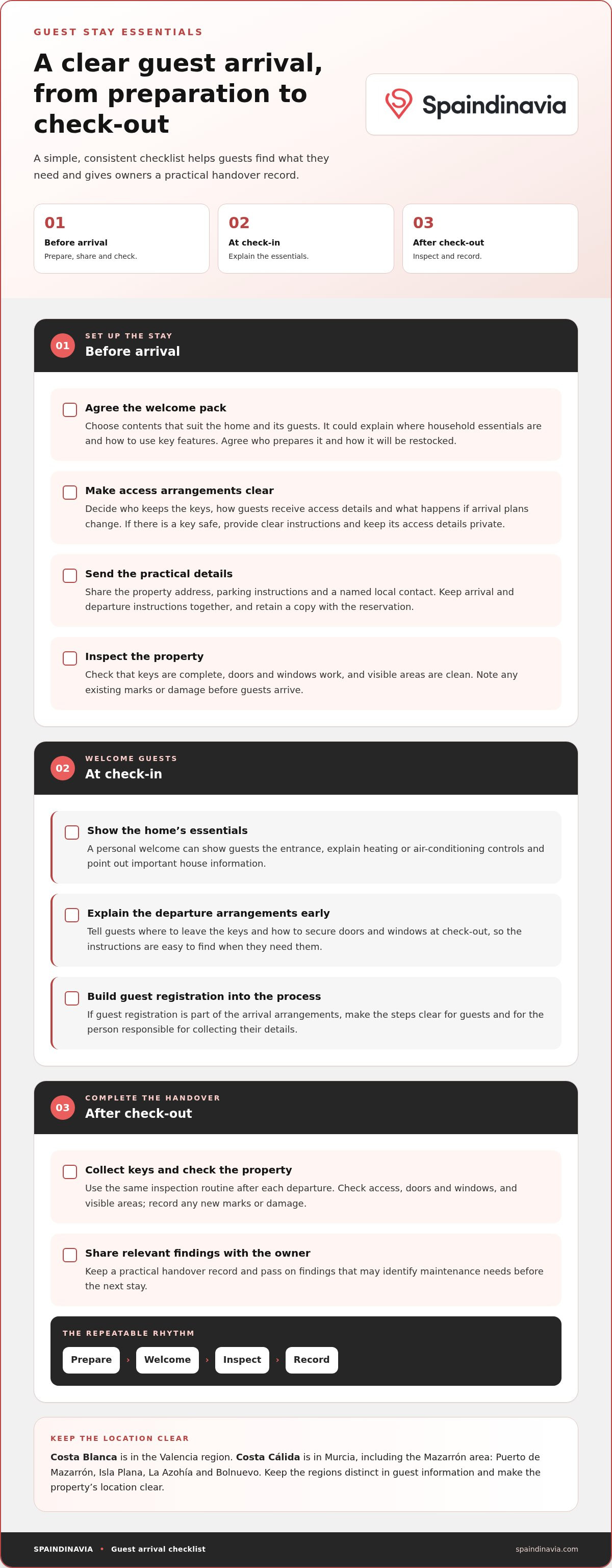
A welcome pack can make arrival easier, but its contents should suit the home and its guests. For example, it might explain where to find household essentials and how to use key features. Agree on its contents, preparation and restocking before accepting bookings. This keeps arrival information consistent, even when different people prepare the property.
Key holding and check-in work best as one clear process. Decide who keeps the keys, how guests receive access details and what happens if arrival plans change. A personal welcome lets someone show guests the entrance, explain the heating or air-conditioning controls and point out important house information. If you use a key safe, give guests clear instructions and keep access details private.
Before arrival, send guests practical details such as the property address, parking instructions and a named local contact. At check-out, explain where to leave keys and how to secure doors and windows. Keep arrival and departure instructions together so guests can find what they need without searching through messages. For direct bookings, send the same essentials in writing and keep a copy with the reservation.
If guest registration is part of the arrival process, make the steps clear for guests and the person responsible for collecting their details. Build registration into the arrival process rather than treating it as an informal extra. Make the steps clear for guests and the person responsible for collecting their details. Costa Blanca is in the Valencia region; Costa Cálida is in Murcia, including Puerto de Mazarrón, Isla Plana, La Azohía and Bolnuevo. They are distinct coastal regions, so make the property’s location clear in guest information.
Use a consistent inspection routine before each arrival and after each departure. Check that the keys are complete, doors and windows work, and visible areas are clean. Note existing marks or damage before guests arrive, then record anything new after check-out. This creates a practical handover record and helps identify maintenance needs before the next stay.
- Before arrival: prepare the welcome pack, check access instructions and inspect the property.
- At check-in: explain the home’s essentials and make sure guests understand the key arrangements.
- After check-out: collect keys, inspect the property and share any relevant findings with the owner.
When planning a stay or considering a holiday home, explore Costa Blanca property options alongside the guest arrangements you want to provide.
Cleaning and linen services between guest stays
A reliable changeover follows a written checklist, not a quick visual check. Remove used towels and bed linen, ventilate rooms and clear rubbish. Clean kitchens and bathrooms carefully, including taps, worktops, shower screens and appliance handles. Finish by checking floors, mirrors and frequently touched surfaces. This sequence helps cleaners work consistently through each room.
Make linen preparation specific to the property. Record bed sizes and pillow arrangements, then keep a clear inventory of clean sheets, duvet covers, pillowcases and towels. Match each set to the right bedroom before making the beds. In a two-bedroom apartment, for example, label storage shelves by room rather than mixing spare sets. Set stained or damaged items aside for attention instead of returning them to guest use.
Laundry needs its own handover process. Keep used linen separate from clean stock, and note items that need stain treatment or replacement. Decide where cleaners leave completed laundry and how the next team can find it. If a guest reports a spill or missing towel, record it with the booking. This gives the cleaning team a useful task list before the next arrival.
Cleaning is also an opportunity to spot maintenance issues. During the room-by-room reset, look for a dripping tap, loose cupboard handle, faulty lamp or chipped glass. Record the location and describe the issue clearly. Keep repairs separate from routine cleaning notes so a maintenance job doesn’t get overlooked. If assistance is needed, pass on the specific observation and access information.
- Kitchen: clean the fridge, hob, sink and worktops; check crockery and utensils are clean.
- Bathroom: refresh surfaces, mirrors and shower areas; set out clean towels and check dispensers.
- Bedrooms: dress each bed with the correct linen and remove personal items left behind.
- Final pass: check floors, bins, windows and the route guests use from the entrance.
Use the same written handover record for every booking. Note when cleaning is complete, where fresh linen is stored and any maintenance issue requiring follow-up. A simple room-by-room form clarifies responsibilities when owners, cleaners and property contacts share tasks. Keep notes factual, such as “bedroom lamp does not switch on”, rather than “room needs attention”.
The approach can be consistent across regions, while local arrangements remain distinct. On either coast, tailor the cleaning and laundry plan to the property’s layout, linen storage and incoming guests’ needs. A clear reset process helps every arrival begin in a clean, orderly home.
Owner onboarding and listing preparation
Begin onboarding with a property walk-through and written inventory. Record the room layout, bed arrangements, appliances, parking details and outdoor features. For example, note whether guests enter through a shared gate or private entrance. This keeps listing details accurate and helps prevent confusion before arrival. Owners should also identify which household items are available to guests.
Build the listing around clear, useful information. Describe the property’s location, layout and amenities plainly, and make sure every detail matches the home. In Alicante province, practical directions can distinguish a coastal address from a property farther inland. Use well-lit photographs that represent each room honestly, including bathrooms, terraces and shared spaces. Add straightforward arrival instructions and explain any features guests should use carefully.
Set owner availability before opening dates for bookings. Mark personal-use periods on the calendar first, then agree how to handle requests that overlap with preferred dates. For instance, reserve a family visit before publishing those dates rather than cancelling a confirmed stay later. Keep the calendar updated when plans change, and assign one person to record each change.
Calendar access should match each person’s role. Owners need a reliable view of booked stays, blocked dates and availability. A shared calendar or agreed update routine can help prevent double bookings, especially when both owner and manager make changes. Decide how promptly to record new reservations and owner-use dates, and keep booking messages aligned with the latest calendar entry.
Prepare an onboarding file with the details needed to describe and operate the home. Include appliance instructions, access notes, a contents list and the preferred process for reporting maintenance. Keep the information current: if you replace a coffee machine or change parking arrangements, update the listing and guest notes before the next booking. Clear records also distinguish owner belongings from items available to guests.
- Property details: check room descriptions, facilities, access and photographs against the home.
- Owner dates: block personal-use periods before opening the calendar to bookings.
- Calendar routine: agree who records reservations and updates availability.
- Guest information: update instructions whenever an appliance or access detail changes.
Keep the regional context accurate in every listing. Costa Blanca is in the Valencia region, while Costa Cálida is in Murcia, including Puerto de Mazarrón, Isla Plana, La Azohía and Bolnuevo. Name the actual destination and describe nearby places clearly, so guests understand where the home is and owners can organise their calendar around its intended use.
Booking, contracts, payments, and security deposits
Written booking terms help owners and guests understand what they’ve agreed. Set out the stay dates, payment stages, cancellation terms and deposit arrangements before confirming each reservation.
Bookings and Rental Contracts
For every booking, provide a written record showing the property, stay dates, guest details and agreed terms. Make cancellation conditions easy to find, especially for direct reservations. An agreement can also explain arrival and departure arrangements, house rules and how guests should report problems during their stay.
For direct bookings, cancellations made 30 days or more before arrival receive a full refund minus management fees. Cancellations between 29 and 20 days before arrival receive a 50% refund minus management fees. If a guest cancels less than 20 days before arrival or doesn’t arrive, 100% is retained.
Payments and Security Deposits
Set out when payment is due, which methods are accepted and how guests receive confirmation. Keep the booking record and payment status together so you can see whether a reservation is confirmed or awaiting payment. For example, a clear receipt should identify the booking dates and amount received.
Explain security deposit terms in writing before guests commit. State what the deposit covers, how you record the property’s condition and how you handle deductions. A check-in inventory and dated post-stay inspection can help distinguish existing wear from damage reported after a visit. Include the process for returning the balance.
Use the same booking workflow for an apartment and a villa, while tailoring the property details. Keep guest names, dates, payment records and signed terms together. If a booking changes, update the agreement and calendar, then send revised details to the guest. This avoids relying on an old message thread as arrival approaches.
Owners should make the payment route clear. Identify who receives funds, how payment is acknowledged and where guests can raise a query. Keep refund and deposit-deduction records with the relevant reservation. This gives owners a straightforward way to review each transaction after the stay.
- Before confirmation: share stay dates, payment terms, cancellation conditions and deposit rules.
- After payment: issue written confirmation and keep the transaction with the booking record.
- After departure: compare inspection notes with the agreed deposit terms before settling any deduction.
These steps apply to bookings on the Costa Blanca, in Valencia region. Costa Cálida is a separate coast in Murcia, including Puerto de Mazarrón, Isla Plana, La Azohía and Bolnuevo. If you’re considering a property for rental plans, explore holiday rental properties as you weigh the practical arrangements.
Spaindinavia: New Build Villas
Spaindinavia can help you explore property options if you’re considering a home for future holidays or rental use. On the Costa Blanca, in the Valencia region, options include new-build villas, resale apartments, townhouses and bungalows. Costa Cálida is a separate coastal region in Murcia, including Puerto de Mazarrón, Isla Plana, La Azohía and Bolnuevo.
As you compare homes, consider how the layout, location and outdoor space fit your plans for personal stays and guests. Clear priorities can help you identify the right type of property, whether you’re drawn to a villa or an apartment. Explore the options at your own pace, then contact Spaindinavia to discuss your property search.
Plan the next step for your property
Choosing a home for holidays or rental starts with matching the property to your plans. If you’re considering luxury holiday let management services on the Costa Blanca, first think about the type of home and location that suit you. Spaindinavia offers New Build Villas, Resale Apartments and Townhouses to explore as you shape your property search.
Costa Blanca is in the Valencia region; Costa Cálida is in Murcia, with coastal areas including Puerto de Mazarrón, Isla Plana, La Azohía and Bolnuevo. Comparing these distinct destinations can help you picture how each might suit your lifestyle and investment aims.
Take the next step at a pace that feels right for you. Contact Spaindinavia about your property and begin exploring the possibilities for your life on Spain’s Mediterranean coast.
Frequently Asked Questions
⏰ Are there surcharges for late arrivals or departures?
Yes. Before travelling, compare your transport times with the agreed arrival window and share any changes promptly. For example, a late flight may affect the handover. Make sure the booking information explains the relevant time window and surcharge so guests can plan their journey with a clear understanding.
⚠️ What happens if there is damage?
Record the damage, report it through the agreed booking process and keep supporting evidence. A dated photograph, short description and condition notes help distinguish a new issue from existing wear. Tell the relevant contact promptly, especially if a broken item affects use of the apartment. Booking terms should explain how claims are handled and whether a security deposit may cover documented damage.
💰 Do guests pay a deposit?
Whether guests pay a security deposit depends on the reservation terms. State the amount, when it’s due, how it’s held and when it’s returned. Owners can make the process easier to follow by recording the property’s condition before and after each stay. Link any claim to a specific item and inspection record rather than making an unexplained deduction.
📅 Can I block dates for my own use?
Yes. Owners can plan personal stays by marking those dates unavailable in the rental calendar. Add owner-use periods before accepting bookings for those dates, then update the calendar if plans change. For example, block a family visit before opening the dates to guests. If a reservation is already confirmed, follow its agreed terms rather than treating those dates as available for personal use.
📉 What if the guest cancels?
For direct bookings, the cancellation terms depend on when the guest cancels. A cancellation 30 days or more before arrival receives a full refund minus management fees. Between 29 and 20 days before arrival, the refund is 50% minus management fees. Less than 20 days before arrival, or a no-show, results in 100% being retained. Share these terms before confirming a direct booking.
What services do luxury holiday let managers on the Costa Blanca provide?
Luxury holiday let management services on the Costa Blanca can cover property promotion, guest communication, booking administration, key holding and inspections. Costa Blanca is in the Valencia region; Costa Cálida is in Murcia, particularly around Puerto de Mazarrón, Isla Plana, La Azohía and Bolnuevo. These are distinct coastal regions. Match the tasks offered to your property’s needs, whether you prioritise guest enquiries, access arrangements or property checks.
What are typical management fees and commission rates on the Costa Blanca?
There isn’t one rate for every property and management arrangement. The cost depends on the work covered, booking administration and property support, and is provided after a quote request. Costa Blanca is in Valencia, while Costa Cálida is in Murcia, including Puerto de Mazarrón, Isla Plana, La Azohía and Bolnuevo. Compare the scope of work for the relevant region and property.
What occupancy rates and rental income can luxury villas expect on the Costa Blanca?
Income and occupancy vary with location, property features, availability and season. A holiday property starts being cost-effective when occupancy reaches 50% or 60% of the month. Teulada-Moraira is on the Costa Blanca in Valencia; the Costa Cálida is in Murcia, including Puerto de Mazarrón, Isla Plana, La Azohía and Bolnuevo.


