

What if the most daunting part of buying your Spanish home wasn't the legal paperwork, but simply deciding which sun-drenched terrace is your favourite spot for morning coffee? We know that the fear of legal "horror stories" or confusion over local taxes can often cloud the excitement of a new life abroad. It's completely normal to feel a sense of uncertainty when you're dealing with language barriers or trying to decide between a resale villa in Bolnuevo or a new-build apartment in Puerto de Mazarrón. We've created these expert guides for purchase process clarity to ensure you feel supported and secure at every turn.
You'll gain a clear roadmap of the entire buying cycle, from the initial reservation agreement to the final signing at the notary. We'll break down the essential costs, such as the 8% ITP tax in the Costa Cálida or the newly reduced 9% rate in the Costa Blanca starting June 2026. Whether you're drawn to the tranquil shores of Isla Plana and La Azohia or the vibrant atmosphere of the Valencia region, this guide provides the practical tips you need to buy with total peace of mind. Let's start this journey together and turn your Mediterranean dream into a reality.
Key Takeaways
- Master the structured journey from "Reserva" to "Escritura" and learn why the Spanish notary-centric system is distinct from the UK process.
- Secure your foundation by understanding how to obtain your NIE number and open a local bank account, which are essential for managing future taxes and utility direct debits.
- Navigate the three vital contracts with confidence, including the binding Arras agreement and its specific penalty clauses that protect your investment.
- Use our expert guides for purchase process clarity to compare regional tax benefits between the Costa Blanca and Costa Cálida, particularly in hotspots like Puerto de Mazarrón and Bolnuevo.
- Plan for post-purchase success by learning how to efficiently organise utility connections and property maintenance for your new villa or holiday rental property.
Understanding the Spanish Property Purchase Cycle in 2026
The Spanish property market offers a beautiful variety of lifestyles, from the bustling promenades of the Costa Blanca to the tranquil, sun-drenched bays of the Costa Cálida. However, the path to ownership follows a specific legal rhythm that might feel unfamiliar if you're used to the UK system. Whilst the British process is often driven by solicitor-led enquiries behind the scenes, the Spanish system is fundamentally notary-centric. This means a public official, the Notary, acts as a neutral party to ensure the transaction complies strictly with the Spanish Civil Code. It's a structured journey that begins with a "Reserva" (reservation) and culminates in the "Escritura" (title deed) signed at the Notary's office.
Following professional guides for purchase process transparency ensures you don't miss a beat during this transition. Whether you're looking at a resale villa in Bolnuevo or a sleek new-build apartment in Puerto de Mazarrón, having a local partner who understands these regional nuances is vital. For instance, administrative timelines in the Murcia region can vary from those in the Valencia region. We always insist on independent legal representation to act solely in your interest. This provides a protective layer of security and ensures every document is perfectly in order before you commit your hard-earned funds.
Why a Structured Process is Vital for Your Investment
A clear roadmap is your best defence against the stress that often accompanies international property deals. Without a defined timeline, it's easy to stumble into common pitfalls amongst international buyers, such as missing tax deadlines or failing to verify specific building licences. Your real estate agent acts as your primary organiser; they bridge the gap between you, the seller, and the legal professionals. In picturesque areas like Isla Plana and La Azohia, local expertise is particularly valuable for navigating specific coastal regulations. A well-managed process prevents financial loss and keeps the focus on your dream lifestyle.
New Build vs Resale: How the Process Differs
Choosing between a modern new-build villa and a charming resale apartment involves more than just aesthetic preferences. The purchase steps vary significantly. For off-plan properties, you'll navigate milestones like staged payments and must ensure you receive bank guarantees for every payment made. Resale timelines are often faster, sometimes completing in just four to six weeks, but they require deeper due diligence to ensure no hidden debts remain on the property. You can explore these differences in detail through our New Build vs Resale comparison to decide which path suits your goals best.
The Legal and Financial Foundation: NIE, Banks, and Solicitors
Building your dream life in the sun requires a solid structural foundation. In Spain, that foundation is built on three essential pillars: your tax identification, a local bank account, and expert legal counsel. Without these, you simply cannot complete a transaction or manage your home effectively. It's helpful to consult the official UK government guidance to understand the broader requirements for British nationals, but having local boots on the ground makes the actual execution much smoother. These guides for purchase process success are designed to ensure you aren't surprised by administrative hurdles at the final hurdle.
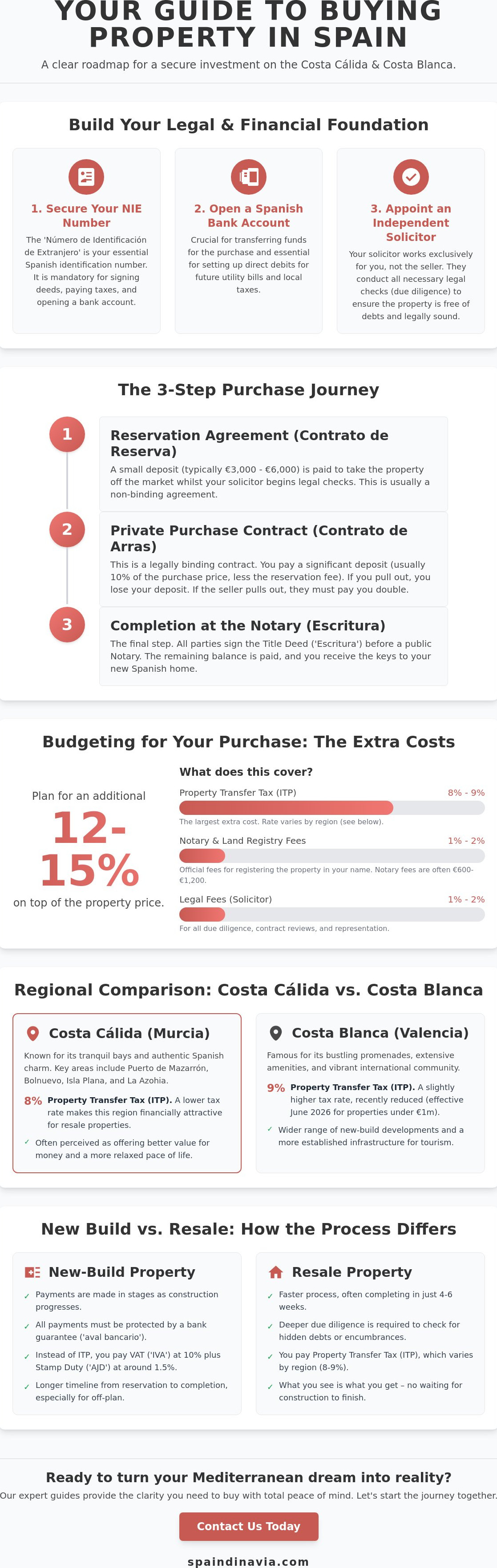
Budgeting is equally critical. Whilst the purchase price is the main figure, you must prepare for "the extra 12 to 15 per cent". This covers the Property Transfer Tax (ITP), which is 8% in the Costa Cálida but currently 9% in the Costa Blanca for properties under €1 million. You also need to account for notary fees (usually between €600 and €1,200), land registry costs, and your legal fees. Opening a Spanish bank account is another immediate priority. It's essential for setting up utility direct debits and paying your annual non-resident taxes once you've settled into your new life in Puerto de Mazarrón or Bolnuevo.
Securing Your NIE: The First Step
The NIE (Número de Identificación de Extranjero) is your "key" to Spain. You'll need it to sign the deeds, pay taxes, and even set up your fibre-optic internet. You can apply via the Spanish Consulate in the UK, which is often easier to manage before you travel. Alternatively, you can apply whilst in Spain at a National Police station. We recommend letting your agent organise your appointments; they know the local systems in both the Murcia and Valencia regions and can save you hours of administrative frustration. There's a difference between a temporary NIE and a permanent residency card, so getting the right advice early is vital.
Choosing an Independent Lawyer
Never rely on a lawyer provided by a developer or the seller. You need an independent Abogado who represents only your interests. They must speak fluent English and have no conflict of interest with other parties in the deal. Their primary job is to perform a vital search of the Land Registry (Registro de la Propiedad) to ensure the property is free of debts and has all the correct building licences. Whether you're buying a resale villa in Isla Plana or a new-build apartment in the Costa Blanca, your solicitor ensures the paperwork is as secure as your investment. If you're ready to start your journey, you can browse our latest coastal properties to find your perfect match.
From Reservation to Completion: The Three Key Contracts
Once you've fallen in love with a resale villa in Bolnuevo or a modern apartment in Puerto de Mazarrón, the legal journey moves into its most critical phase. Unlike buying property in the UK, the Spanish system relies on a specific sequence of three contracts to protect your interests. These guides for purchase process safety ensure you understand exactly what you're signing before significant funds leave your account. Whether you're looking at the Murcia region or the Valencia region, these steps remain the standard for a secure transaction.
The journey begins with the Reservation Agreement (Documento de Reserva). This is a simple document where you pay a small deposit, often between €3,000 and €6,000, to take the property off the market for a set period, usually 14 to 30 days. This gives your solicitor time to conduct the essential due diligence we discussed earlier. For those seeking a broader economic perspective on why these protections exist, this foreign property investment guide highlights why the Spanish market remains a robust and regulated choice in 2026.
Reservation vs Arras: Understanding the Difference
Whilst the reservation secures the property, the Arras Contract (Contrato de Arras) is the most vital document for your security. This is a binding private agreement where you typically pay 10% of the purchase price. It's much more than a receipt; it includes strict penalty clauses. If you withdraw from the deal, you lose your deposit. However, if the seller withdraws, they're legally required to pay you back double the deposit amount. This provides a high level of certainty for buyers amongst the competitive markets of the Costa Blanca and Costa Cálida. Always ensure your lawyer includes a detailed inventory of all fixtures and fittings within this contract to avoid any surprises on completion day.
The Role of the Notary (Notario)
The final stage is the signing of the Public Deed (Escritura de Compraventa) at the Notary's office. It's a common misconception that the Notary is your lawyer; in reality, they're a public official representing the Spanish state. Their job is to verify identities, confirm the legal status of the property, and ensure that all taxes are correctly accounted for. On completion day, your lawyer will manage the payment schedule through bank drafts or verified transfers. Once the Notary is satisfied, you'll sign the deeds, receive your "Copia Simple" (an official copy of the deed), and finally hold the keys to your new home in Isla Plana or La Azohia. It's a moment of great joy that marks the start of your new Mediterranean lifestyle.
Regional Nuances: Buying in Costa Cálida vs Costa Blanca
Choosing the right location involves more than just finding a beautiful coastline; it requires understanding how regional boundaries affect your wallet and your rights. Whilst both regions offer stunning Mediterranean vistas, the fiscal landscape changes as you cross the border from the Valencia region into the Murcia region. For instance, the Property Transfer Tax (ITP) for resale villas and apartments is a key differentiator. As of June 2026, buyers in the Costa Blanca will see a rate of 9% for properties under €1 million, whereas the Costa Cálida maintains a general rate of 8%. These guides for purchase process regionality are essential for accurate budgeting before you start your search.
Beyond taxes, regional regulations also govern the "Licence of First Occupation" (LFO) for new-build villas and apartments. This document confirms the property is habitable and complies with the original planning permission. In some areas of the Costa Blanca, the process for renewing this licence (the "Licence of Second Occupation") is more strictly enforced during resales than in parts of the Costa Cálida. Understanding these subtle differences ensures your investment remains secure and marketable for years to come. If you're ready to explore these locations in person, you can contact our local experts to arrange a viewing tour tailored to your preferences.
Deep Dive: The Mazarrón Area
The Mazarrón area is a jewel of the Costa Cálida, offering a unique blend of traditional Spanish charm and modern amenities. Isla Plana and La Azohia are perfect for those seeking tranquil living amongst rugged mountains and crystal-clear waters. Meanwhile, Puerto de Mazarrón and Bolnuevo remain firm favourites for British families and retirees due to their vibrant promenades and excellent services. If you're looking at holiday rental properties as an investment, this area offers robust local property management options to ensure your home is well-maintained whilst you're away.
Costa Blanca South: Accessibility and Amenities
The southern Costa Blanca is renowned for its superb infrastructure and ease of access. With frequent flights into Alicante and Murcia international airports, it's a top choice for frequent travellers who want to be in their new home within hours of landing. The property styles here vary from sleek, contemporary villas to traditional bungalows, catering to every taste and lifestyle. For a detailed look at how these regions compare in terms of rental yields and capital growth, explore our Property Investment Guide. These guides for purchase process success help you weigh up whether the established amenities of the Costa Blanca or the untouched beauty of the Costa Cálida best suit your long-term goals.
Post-Purchase Success: Management and Settling In
Receiving the keys at the notary's office is a wonderful milestone, but it's really the beginning of your new chapter under the Spanish sun. Our commitment to your journey doesn't end when the paperwork is filed. We believe that professional guides for purchase process excellence should extend well into the settling-in phase. This ensures your transition from buyer to resident is as smooth as the Mediterranean breeze. One of your first tasks will be to organise the transfer of utility contracts for water and electricity. In the Mazarrón area, fibre-optic internet is widely available, and we can help you find the best local providers to keep you connected whilst you enjoy your new terrace.
Security and maintenance are often the primary concerns for those who have purchased holiday rental properties or a second home. A reliable key-holding service is an essential investment for peace of mind. These local experts don't just hold your spare set of keys; they perform regular property checks, manage emergency repairs, and ensure your home is aired and ready for your arrival. Whether you've chosen a contemporary villa in the Costa Blanca or a traditional townhouse in Bolnuevo, having a trusted partner on the ground is invaluable. We pride ourselves on being that bridge, offering support long after the final signatures are dry.
Settling into the Spanish Lifestyle
Life in the Murcia region moves at a gentler, more inviting pace. We recommend spending your first few weeks exploring the local social hubs. Visit the vibrant marina in Puerto de Mazarrón for a morning coffee or explore the unique rock formations in Bolnuevo to truly feel at home. If you're moving permanently, you'll need to register for local healthcare and residency. Whilst the Costa Blanca offers a high density of international amenities and English-speaking services, the Costa Cálida provides a more authentic Spanish feel that many of our clients find enchanting. If your property is part of a gated development, remember to budget for 'Comunidad' fees. These community costs cover the shared maintenance of pools and gardens, keeping your surroundings beautiful year-round.
Rental Management: Making Your Property Work for You
Many owners choose to let out their homes to offset running costs or generate a healthy return. To do this legally, you must obtain a tourist rental licence. It's important to recognise that the application process and requirements can differ between the Valencia and Murcia regions. Using our comprehensive guides for purchase process and post-sale management helps you navigate these local laws without stress. Professional rental management goes beyond just finding guests; it includes guest communication, professional cleaning, and ensuring your property remains secure whilst you're away. By maintaining high standards, you'll improve your occupancy rates and protect the long-term value of your investment in Isla Plana or La Azohia.
Take the First Step Toward Your Mediterranean Future
Buying a home in Spain is more than just a transaction; it's the start of a vibrant new lifestyle. By now, you should feel more confident about navigating the legal landscape, from securing your NIE to understanding the regional tax differences between the Costa Blanca and the Costa Cálida. Remember that a secure purchase is built on independent legal advice and a clear understanding of the three-contract system. These guides for purchase process clarity are designed to remove the mystery, allowing you to focus on the excitement of choosing between a villa in Bolnuevo or an apartment in Puerto de Mazarrón.
With over 10 years of experience in the Murcia and Valencia regions, we specialise in helping you find coastal gems like Isla Plana and La Azohia. We provide comprehensive support throughout your entire journey, from the initial NIE application to long-term rental management. You don't have to navigate this path alone; we're here to ensure every step is handled with care and expertise. Start your journey with Spaindinavia: Explore our New Build Villas and let's turn your dream of a home in the sun into a beautiful reality. Your new life by the sea is waiting for you.
Frequently Asked Questions
How long does the property purchase process in Spain usually take?
A standard resale purchase usually takes between six and twelve weeks from the moment your reservation is accepted. New-build properties follow a longer timeline dictated by construction milestones and staged payments. Whether you are buying a villa in Puerto de Mazarrón or an apartment in the Costa Blanca, your solicitor's speed in completing due diligence is the main factor in how quickly you can reach the notary's office.
Do I need to be physically present in Spain to buy a property?
You don't need to be physically present if you grant Power of Attorney (Poder Notarial) to your independent lawyer. This legal document allows your solicitor to sign the deeds, open bank accounts, and handle tax filings on your behalf. It is a very popular option for our clients in both the Murcia and Valencia regions who prefer to manage the process from the UK whilst we handle the local logistics.
What are the total additional costs (taxes and fees) on top of the purchase price?
You should budget for additional costs between 12% and 15% of the purchase price to cover taxes, notary fees, and legal costs. In the Costa Cálida, the Property Transfer Tax (ITP) for resales is 8%, whilst in the Costa Blanca, it is 9% for properties under €1 million as of June 2026. These guides for purchase process budget tips ensure you have a clear financial picture before committing to a home in Bolnuevo or La Azohia.
Can I get a mortgage in Spain as a UK resident in 2026?
Yes, UK residents can still secure Spanish mortgages, typically with a loan-to-value ratio of 60% to 70%. This means you will generally need a deposit of 30% to 40% plus your closing costs. Banks in both the Murcia and Valencia regions have streamlined their digital applications, making it easier to get a mortgage offer before you arrive to view properties in Isla Plana or the surrounding coastal areas.
Is it safe to buy a property off-plan in the Costa Cálida region?
Buying off-plan is very safe provided you ensure your developer provides legally mandated bank guarantees (Avales Bancarios) for every payment made. These guarantees protect your investment if the developer fails to complete the build on time. Our guides for purchase process security insist that your lawyer verifies these protections before any funds are transferred for new-build villas in the Mazarrón area or the wider Costa Blanca.
What is the difference between a NIE number and a TIE card?
A NIE is simply a tax identification number required for all property transactions, whilst a TIE is a residency card for non-EU citizens living in Spain. You only need a NIE number to buy a holiday home in Puerto de Mazarrón or Bolnuevo. If you decide to move to Spain permanently and stay for more than 90 days, you will then need to apply for the TIE as part of your residency application.
Do I need a Spanish bank account to complete the purchase?
You definitely need a Spanish bank account because the final payment at the Notary is typically made via a guaranteed bank draft issued by a local branch. It is also essential for the ongoing management of your home, as utility companies for water, electricity, and fibre-optic internet require a Spanish IBAN for direct debits. Most of our clients in the Murcia and Valencia regions set this up during their first viewing trip.
What happens if I change my mind after signing the Arras contract?
If you decide to withdraw after signing the Arras contract, you will lose the deposit you have paid, which is usually 10% of the purchase price. However, the contract also protects you; if the seller changes their mind and withdraws from the deal, they are legally required to pay you back double the amount of your deposit. This system provides a high level of security and commitment for both buyers and sellers in the Spanish market.


