

What makes a rainwater harvesting system useful: a large tank, or a setup matched to the way you’ll use water at home? If you’re comparing sustainable villas for sale Costa Blanca, it’s a practical question. A tank alone won’t tell you what the system can supply, how it connects to the property or what upkeep it needs.
Rainwater collection can be a useful part of a more resource-conscious home, but its value depends on the design and the household’s needs. Before treating it as a deciding feature, find out which uses it serves, how water is stored and treated, and what happens when the tank is low.
This guide explains how rainwater harvesting works and how to compare different setups. Use the viewing checklist to assess a villa’s storage, connections, intended uses and maintenance information. If you’re considering a new-build villa, these details can help turn broad sustainability preferences into practical criteria. Spaindinavia specialises in new-build villas and supports buyers through the purchase process.
Key Takeaways
- Assess what the rainwater system is designed to supply, rather than judging it by the tank alone.
- Trace the route from collection surface to storage and planned use, and note where filtration or treatment fits into the design.
- Compare simple collection-and-storage setups with broader systems by considering household needs, space and upkeep.
- At a viewing, record intended uses, visible components, system information and maintenance requirements.
- When comparing sustainable villas for sale Costa Blanca, assess water features alongside the layout and your plans for the property.
What makes a sustainable villa, and where does rainwater harvesting fit?
Rainwater harvesting can collect and store rainfall for planned uses around a home. Its usefulness depends on how the system is designed and how you expect to use the property. When comparing sustainable villas for sale Costa Blanca, look at the details of each system rather than treating the feature as proof of a villa’s overall environmental performance.
Rainwater harvesting is the collection and storage of rainfall for suitable planned uses around a property. The overview of rainwater harvesting describes the practice and its range of methods and applications. As a buyer, focus on what the specific setup is intended to do, and what it is not designed to do.
A home’s environmental performance involves more than one feature. Consider water management alongside the layout, energy features, materials and how you plan to use indoor and outdoor spaces. Look for practical details you can assess, such as where water is collected, which areas the system serves and whether its components are accessible for upkeep. This broader view helps you compare a sustainability claim with the property itself.
How rainwater harvesting systems work in a Spanish villa
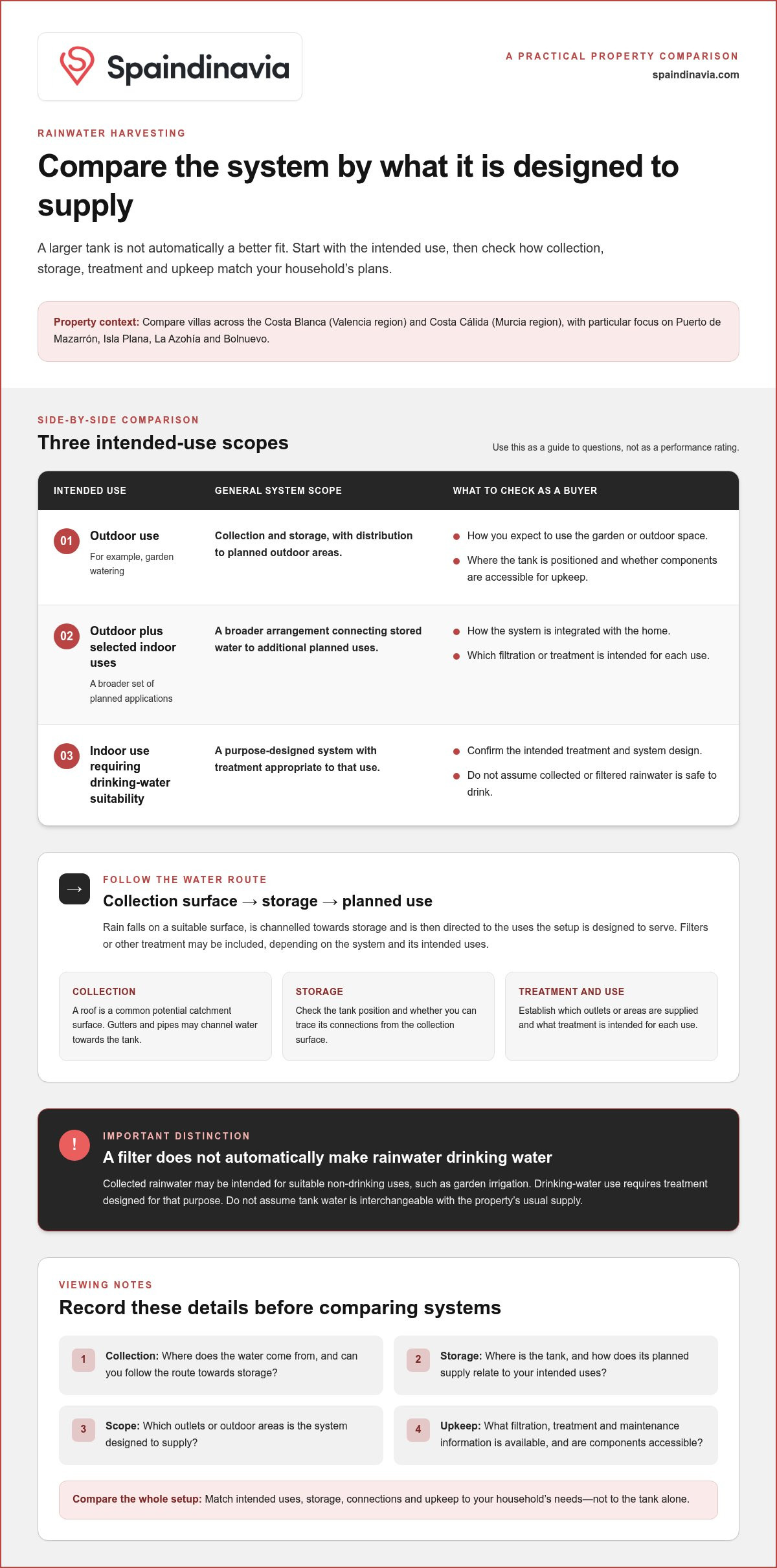
Follow the water’s route to understand what the system does. Rain falls on a suitable surface, is channelled towards storage and is then directed to the uses the setup is designed to serve. Depending on the system and its intended uses, filters or other treatment may be included along the way.
A rainwater harvesting system collects rainfall, conveys it to storage and distributes it for planned uses. Each stage affects how the arrangement works in practice. During a viewing, look beyond the tank: note where the water comes from, how it reaches storage and which outlets or areas it is intended to supply.
From rainfall to storage
A roof is a common potential catchment surface: the area from which rainfall is collected. Other suitable surfaces may also be used, depending on the property’s design. Gutters and connecting pipes can channel water towards a tank. Note their visible layout and condition, and whether you can follow the route from the collection surface to storage.
The catchment area, pipework and tank position differ from property to property. A visible roof or tank does not show the full system. Look for connections between the components and record anything that is concealed or difficult to inspect. This helps you understand the setup’s apparent scope without making assumptions about its performance.
Storage, treatment and household uses
Storage capacity should relate to the water that can be collected and the uses the household has in mind. A larger tank is not automatically a better fit. Consider whether the storage and planned demand align with your routine. If outdoor watering matters to you, look at the size and layout of the garden or other outdoor areas, and establish which parts the system is intended to supply.
Filtration and treatment requirements depend on the intended use and system design. Collected rainwater may be intended for suitable non-drinking uses, such as garden irrigation. The presence of a filter does not mean the water is safe to drink. Drinking-water use requires treatment designed for that purpose. Treat the stated use as an essential system detail, and don’t assume tank water is interchangeable with the property’s usual supply.
When viewing new-build villas, record the system’s route, storage and intended uses alongside other property details. These observations give you specific points to consider during the purchase process. Spaindinavia supports buyers through that process, including when weighing up the features of a new-build villa purchase.
Comparing rainwater system options: match the setup to the household
The suitable rainwater system depends on its intended uses and your household’s water needs. Start by listing what you would realistically use collected water for, then compare those plans with the system’s stated scope. A straightforward setup may suit limited outdoor use. A broader arrangement can serve more planned applications, but its design and maintenance requirements need to suit those uses.
Use the table as a comparison guide, not a performance rating. The important questions are what the system supplies, how it is designed to do so and whether that matches your plans for the property.
| Intended use | General system scope | Considerations for buyers |
|---|---|---|
| Outdoor use, such as garden watering | Collection and storage, with distribution to planned outdoor areas | Consider how you’ll use the garden, where the tank sits and whether components can be accessed for upkeep. |
| Outdoor use plus selected indoor applications | A broader arrangement connecting stored water to additional planned uses | Check how the system is integrated with the home and what filtration or treatment is intended for each use. |
| Indoor use requiring water suitable for drinking | A purpose-designed system with treatment appropriate to that use | Don’t assume collected or filtered rainwater is drinking water. The intended treatment and system design matter. |
Which intended uses should shape the comparison?
Separate outdoor uses from indoor ones before comparing properties. A household hoping to water plants has different priorities from one expecting rainwater to serve indoor outlets. A wider range of uses can affect the system’s design and treatment requirements, so be specific about what you expect it to do.
Think about when you’ll use the water, too. Consider how often the home will be occupied, whether outdoor areas need regular attention and which household routines may create demand. You don’t need a precise forecast to start comparing properties. A practical list of likely uses gives you a clearer basis for assessing the system’s stated scope.
What trade-offs should buyers understand?
A simpler collection-and-storage arrangement may suit a narrower set of uses. A broader system can serve more planned applications, but has more components to understand, including how it fits into the property and whether those parts are accessible for inspection and upkeep. Neither option is automatically better. The right fit depends on your priorities and the property’s layout.
Space and access matter. Note where the tank and visible components are located, and whether the arrangement appears practical to inspect and maintain. Consider how the rainwater system works alongside the property’s usual water supply. Rainfall varies, so collected water is not a guaranteed source. A suitable alternative supply remains important when stored water is limited.
Write down your intended uses and compare them with each villa’s stated system scope. When considering a new-build villa purchase, this list can help keep your property priorities clear throughout the buying process.
How to assess a villa’s rainwater harvesting system before buying
A viewing is a chance to turn a sustainability claim into practical details. If you’re comparing sustainable villas for sale Costa Blanca, use this checklist to record what each rainwater system does, how it fits the property and what you need to understand before deciding.
- Identify the intended uses. Record which areas or outlets the system is designed to serve. Distinguish non-drinking uses from any stated drinking-water use, and note the system’s limitations so you can compare them with your plans.
- Trace the visible components. Look for the collection route, gutters or connecting pipes, storage location and distribution points. Note which parts are accessible and which are concealed. Don’t assume the tank alone tells you how the system works.
- Review the system information. Look for documentation describing the arrangement, intended uses, treatment and operating guidance. Keep it with your viewing notes, and flag any gaps or unclear terms for follow-up.
- Understand how supplies are separated and connected. Record how the rainwater setup interacts with the property’s other water supplies. If the arrangement is unclear from what you can see or from the documentation, note exactly what needs explaining.
- Clarify routine upkeep and responsibility. Use the system information to establish what regular care involves, which components need access and who is responsible for maintenance after purchase. Note visible signs of wear or restricted access without drawing technical conclusions from appearance alone.
What should you inspect and document?
Take concise notes during the viewing. Photograph visible components where permitted, mark the tank’s location on a simple property plan and write down the stated uses. Add questions beside the relevant feature. For example, note whether a pipe’s destination is documented or whether the storage area is accessible for upkeep. Consistent notes make it easier to compare properties after several viewings.
How can you plan for upkeep and uncertainty?
Care requirements vary by system, so use the property-specific documentation rather than assuming a generic maintenance schedule. Consider whether components can be accessed safely and whether their visible condition appears consistent with the information provided. Treat technical or regulatory claims as matters to assess against current, property-specific information. Technical questions can be referred for appropriate independent review, while legal questions are best considered with an independent solicitor.
Use this Spanish property buying checklist alongside your notes on the rainwater system. As you move from viewing to decision-making, explore new-build villas with Spaindinavia and keep your priorities in view throughout the purchase process.
Choosing a sustainable new-build villa with confidence
A suitable home brings together more than one sustainability feature. Consider the rainwater system alongside the villa’s layout, outdoor space, daily routines and how you expect to use the property. A setup that suits occasional stays may not match the needs of a full-time household. A feature is most useful when it supports the way you plan to live.
When comparing sustainable villas for sale Costa Blanca, assess each claim in the context of the whole property. Separate features you can identify or review in documentation from broad environmental descriptions. Then weigh the system’s stated uses and limits against other priorities, such as how you’ll use the rooms, manage outdoor areas and care for the home over time.
Turn your priorities into a property brief
Before arranging viewings, write a short brief describing how you expect to use the villa. Include likely uses for collected water, how often the property will be occupied and which sustainability features matter most. Be realistic: a feature is most useful when it fits your routines and the property’s design.
Use the checklist above to compare homes consistently. For each villa, note the system’s stated uses and limits, the location and accessibility of its components, and any documentation you’ve reviewed. Compare these details with the property’s layout and your longer-term ownership plans. This helps you compare like with like instead of letting one appealing feature outweigh the overall fit.
- Water priorities: List the uses you expect and distinguish essential features from preferences.
- Property fit: Consider whether the layout and outdoor space support your everyday plans.
- Long-term ownership: Factor in occupancy patterns, upkeep and how you want to use the home over time.
Keep unanswered questions visible in your notes. Clear records help you return to specific details during the purchase process instead of relying on memory or a broad sustainability claim.
Move from research to a supported purchase
Spaindinavia specialises in new-build villas and supports buyers throughout the property-purchase process. The agency works with independent solicitors, banks and local experts to help buyers progress through the different stages of a purchase. This support complements your own assessment of property features, including the documented details of a rainwater system.
Take your time, compare the whole home and let your priorities guide the decision. If a new-build villa feels like the right fit, explore Spaindinavia’s villa portfolio.
Take your next step towards the right villa
Let your priorities guide your search. Keep your notes close, compare each property with what matters most to you and consider how it will suit your everyday routines and longer-term plans. A clear sense of what you need can make the search more focused.
If you’re exploring sustainable villas for sale Costa Blanca, browse the available homes and consider how each one fits your plans. Compare the property as a whole, including the features you can review and the details that matter to your household.
Explore Spaindinavia’s new-build villas and take the next step in your search.
Frequently Asked Questions
Can a rainwater harvesting system supply all the water a villa needs?
Don’t assume that a rainwater system can meet a villa’s entire water demand. The amount available depends on rainfall, the collection area, storage and household use, all of which can vary over time. A household using water for several purposes may need an alternative supply as well. When assessing a property, distinguish the system’s intended contribution from the home’s complete water provision.
Is harvested rainwater safe to drink?
Not automatically. Rainwater collected for a villa may be intended for uses such as watering plants rather than drinking. Drinking it requires treatment designed for that purpose and reliable confirmation that the water is suitable for consumption. Don’t judge safety by how clear the water looks or assume a filter makes it drinkable. Check the system information for its stated uses and limitations.
How much rainwater storage does a villa need?
There isn’t one storage capacity that suits every villa. The right amount depends on factors such as the collection area, rainfall patterns, intended uses and how many people will use the property. A home occupied mainly for holidays may have a different demand pattern from a permanent residence. To compare options, list your expected uses and occupancy pattern, then consider them alongside the system’s documented design.
What happens to a rainwater system during a dry period?
During a dry spell, stored water may become limited or run out. The home needs a suitable alternative supply for the uses normally served by the system. How the changeover works depends on the property’s arrangement. Before buying, find out what happens when storage is low and whether household routines need to change. Don’t plan on collected water being available continuously.
Does a rainwater harvesting system reduce household water bills?
It may reduce the amount of mains water used for purposes supplied by the system, but that doesn’t guarantee lower overall bills. The result depends on how much water is collected and used, household demand and the costs of operating and maintaining the setup. Treat savings as a possibility specific to the property, not a promised return. Review the system’s intended uses and your likely routine before factoring savings into your decision.
Is rainwater harvesting suitable for a new-build villa?
It can be suitable when the system is considered alongside the villa’s design, available space, planned uses and household needs. Assess the feature as part of the whole property, not as a guarantee of performance. Review the documented system scope and how it fits the home, then weigh it against your priorities for layout and long-term use.
What maintenance does a villa rainwater harvesting system require?
Maintenance depends on the system’s components and intended uses, so follow the property-specific documentation rather than relying on a generic schedule. It may describe care for collection routes, filters, storage or other fitted parts. Check what access is needed, which tasks are routine and who will be responsible after purchase. Clear maintenance guidance helps you understand the ongoing commitment and plan for it sensibly.


