

Could your pension help you buy a home in Spain, or would accessing the money first change who owns the property and how it’s taxed? The tax implications of buying a spanish property with pension funds depend on the pension arrangement, the ownership structure and where you’re tax-resident. Clarify those points before committing your retirement savings.
It’s understandable to want a clear answer before picturing life in the sun. But a property held by a pension scheme is not the same as one you buy personally using pension money, and the tax and legal questions can differ. This 2026 guide explains what to clarify with an independent pension specialist, Spanish tax adviser and property lawyer before you proceed.
You’ll also find a practical due-diligence checklist to use before viewing or buying, including questions about Spanish property taxes and your country of tax residence. Keep the property search separate from the pension and tax checks until independent specialists have clarified the proposed structure.
Key Takeaways
- Check whether your pension arrangement permits the proposed investment and ownership structure. Pension-held property, personal ownership and pension-funded borrowing aren’t interchangeable.
- The tax implications of buying a spanish property with pension funds depend on who owns the property and your circumstances. Ask about purchase, ownership, letting and eventual disposal.
- Compare personal ownership and pension investment by intended use, control and administration, then ask independent specialists to explain which tax outcomes may apply.
- Follow a clear order: confirm scheme permission, seek cross-border tax advice, arrange legal review and then carry out property due diligence.
- Get written confirmation before paying a reservation deposit or signing commitments, and assess the property separately from the pension structure.
Can you buy a Spanish property with pension funds? Start with the ownership structure
Possibly, but eligibility depends on your pension arrangement and the proposed ownership structure. Buying a home personally, having a pension scheme hold property as an investment, and arranging borrowing that involves pension funds are different routes. Don’t treat them as interchangeable. Each raises separate questions about who owns the property, who can use it and how the money is handled.
Establish who will legally own the property before assessing its tax treatment, because the ownership structure helps determine which tax questions and obligations need professional review. Spanish property law and your pension scheme’s rules must be checked separately. A scheme may have requirements for an investment, while the Spanish legal and tax position depends on the actual ownership arrangement. For general background on the wider system, see this overview of Taxation in Spain. It isn’t a substitute for advice on your circumstances.
What does it mean for a pension to own overseas property?
With personal ownership, you buy the property in your own name, though the source of your funds may raise separate pension and tax questions. With a pension-held investment, the scheme is intended to hold the property as an asset, rather than simply provide money for you to buy a home personally. Pension-funded borrowing describes a proposed borrowing arrangement involving pension funds. It doesn’t, by itself, mean the pension owns the property.
Speak to the scheme’s trustees or administrator about its rules and decision process. They’re people to consult, not automatic approvers. If you hope to occupy the property, explain that from the outset and get specialist advice. Don’t assume you can personally use a property held by a pension scheme.
Does a SIPP or other pension arrangement allow a Spanish property purchase?
There’s no universal answer. A SIPP or another pension arrangement may have its own terms, restrictions and approval process, so ask a qualified pension adviser and the scheme administrator to confirm in writing whether the specific proposal is permitted. Don’t rely on a general statement that a pension type can invest in property.
Even if the scheme permits the investment, that doesn’t settle its treatment under Spanish law or tax rules, or the tax position in your country of residence. The tax implications of buying a spanish property with pension funds therefore need cross-border review before you commit. Ask an independent Spanish property lawyer and a tax adviser to examine the intended ownership and use. Keep your property search separate until the pension and tax structure is clear.
How pension ownership can change the Spanish property tax questions
Once the proposed owner is clear, map the tax questions across the property’s full lifecycle. A purchase can involve acquisition taxes and transaction charges; ownership, letting and eventual sale can raise separate tax and reporting questions. Which person or entity is responsible may depend on the ownership structure confirmed by your advisers, so don’t assume that the person arranging the funds will automatically be the person liable.
Purchase costs arise at the transaction stage; ongoing tax obligations may continue during ownership, letting or disposal. Ask for both to be assessed separately, and make sure the advice reflects the actual owner, your tax residence and how you plan to use the property.
Which Spanish tax points should buyers ask about before completion?
Ask an independent Spanish tax adviser to identify the acquisition taxes and transaction charges that apply to your specific purchase. The answer may depend on details such as the property and transaction, so avoid relying on a general estimate or assuming that a result for one buyer applies to another.
If a pension arrangement is involved, ask who must provide documents, make payments and meet any reporting responsibilities. Have the adviser review the proposed ownership structure and explain in writing which responsibilities apply to the individual and which, if any, apply to the scheme or another entity. Ask for the advice to reflect the specific property and transaction you are considering.
What changes if the property is rented out or later sold?
Letting or selling can bring different questions from those considered at purchase. Ask the adviser to assess how rental income should be treated and reported for the actual owner, including which expenses may be relevant under the applicable rules. Before modelling potential returns, request advice on a future sale, any gain and reporting obligations in Spain and your country of tax residence.
Keep responsibility clear. A letting or property-management arrangement doesn’t replace the owner’s tax obligations, and it shouldn’t be treated as tax advice. For broader purchase checks alongside specialist tax guidance, Veritas Advisory’s cross-border due-diligence checklist can help you organise questions about the transaction before committing.
Keep written advice with your purchase records and revisit it if your intended use or ownership plan changes. Once your tax and legal advisers have reviewed the structure, explore Spanish property options with Spaindinavia as a property-search and transaction-support contact, not as a source of pension or tax advice.
Personal purchase versus pension investment: compare the questions, not just the tax
A tax result that looks attractive on paper doesn’t automatically make an ownership structure right for you. First decide what you want the property to do: provide a home for you, serve as a holiday property, earn rental income or combine uses. Then check whether the proposed structure can support that purpose, and what control and administration it involves.
The tax implications of buying a spanish property with pension funds can’t be assessed reliably from a simple comparison of tax rates. Outcomes depend on the scheme, the verified owner, your circumstances and the property’s intended use. Use this table to organise questions for your pension specialist, Spanish solicitor and tax adviser, not to assume a guaranteed result.
| Question | Personal purchase | Pension investment |
|---|---|---|
| Who holds title? | Ask the solicitor to confirm whether you would own the property personally and sign the purchase documents. | Confirm the proposed legal owner and who has authority to sign or make decisions for the scheme. |
| How much control will you have? | Clarify which decisions you can make about use, rental and a future sale. | Ask who approves property decisions, rental arrangements and a future sale under the scheme’s rules. |
| Can you use the property? | Explain whether you want a home, holiday property, rental investment or mixed use. | Ask the pension specialist specifically about personal occupation and use by connected parties. Don’t assume either is permitted. |
| What tax and administration apply? | Ask advisers to assess the tax and reporting position for your circumstances. | Ask for scheme-specific advice on tax, records, reporting, administration and current charges. |
Which ownership questions matter most for your intended use?
Be precise about your plans. A property you hope to occupy is not the same proposition as one held solely as a rental investment. Tell the pension specialist about any personal or connected-party use you’re considering, and ask the Spanish solicitor to confirm who would legally hold title and sign the purchase documents. Keep those answers in writing.
How should you compare advice, control and administration?
Ask the scheme provider for current, personalised details of charges and administration; don’t rely on generic figures. Find out who keeps records, handles decisions and authorises future rental or sale arrangements. Then list what remains unanswered. A lower projected tax burden cannot, on its own, establish that a structure is suitable.
Compare specific properties only after advisers have checked the relevant legal and property details. Avoid assuming the tax treatment is identical for different properties or transactions. Choose a structure only when its permissions, practical administration and tax position have each been reviewed for your circumstances.
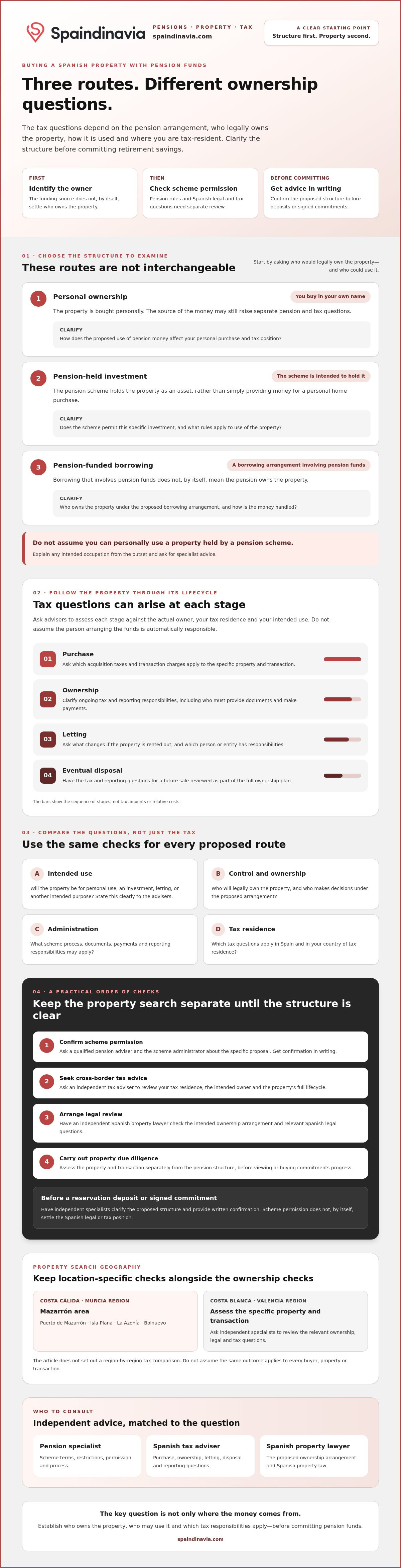
Before committing pension funds, follow this cross-border due-diligence checklist
Take the checks in sequence, and keep a written record of each answer. A property can look right whilst the pension structure, payment process or legal position still needs clarification. Don’t pay a reservation deposit or sign a commitment until the relevant specialists have confirmed the arrangement in writing.
- Confirm scheme permission. Ask your pension provider, trustees or administrator whether the specific proposal is permitted, who would own the property and which transaction steps need approval. Request written confirmation of the scheme rules that apply, including any conditions on payment, personal use, rental or a future sale.
- Get independent cross-border tax advice. Consult UK and Spanish tax specialists familiar with pension and property matters. Ask them to review the proposed owner, payment flows, intended use and your tax residence, and explain what taxes, reporting and records may apply at purchase, during ownership and if you rent out or sell. The tax implications of buying a spanish property with pension funds depend on your actual circumstances, so ask advisers to identify assumptions in any projections.
- Arrange an independent legal review. Instruct a Spanish solicitor to check the proposed ownership, property title, contract terms, planning documentation and completion arrangements. Ask who is legally able to sign each document and whether the transaction matches the pension and tax advice you’ve received.
- Carry out property due diligence. Once the structure and professional reviews are progressing, check the property and transaction details with your solicitor. Confirm that the home suits your intended use and that any proposed rental or personal-use plans have been reviewed by the relevant advisers.
Keep the paperwork together
Ask each adviser which records apply to your case. Depending on the proposed arrangement, gather the relevant scheme rules and written approval, tax advice, legal advice, draft contract and property documentation, and information about how funds will be paid. Keep the final advice and approvals in one place, and make sure they relate to the same proposed owner and transaction.
Use the Buying Property in Spain Guide: The Essential 2026 Checklist for Secure Investment alongside your professional advice to organise the property checks. A guide can help structure your questions, but it can’t confirm whether your pension permits an investment or determine your tax position.
Keep the property search separate from pension and tax advice. Once you’re ready to explore suitable homes, discuss your Spanish property search with Spaindinavia, an independent property agency that supports buyers through the purchase process and works with independent solicitors and local experts.
Choose the property only after the pension and tax structure is clear
A home that suits your plans isn’t automatically suitable for a pension investment. Treat these as two separate decisions: first, ask independent specialists to confirm the pension and tax structure; then assess which property fits that confirmed arrangement. This order helps you avoid falling for a home before you know whether its intended use is compatible with the scheme.
Before viewing, prepare a short brief for your advisers and property search. Include:
- Intended use: Will it be a home, holiday property, rental investment or a combination? Ask your pension specialist whether that use fits the structure they’ve confirmed.
- Property type: Note whether you’re considering a new-build villa, resale villa, apartment, townhouse or bungalow.
- Practical needs: Set out the location, layout and day-to-day requirements that matter to you, along with any management arrangements you may need to investigate.
- Confirmed budget: Ask your financial and tax advisers to clarify what funds can be used and what other purchase and ownership costs need to be considered.
Use this brief to compare homes against your real priorities, not assumed investment performance. The tax implications of buying a spanish property with pension funds depend on the confirmed ownership structure and your circumstances; a property’s appeal or potential rental use doesn’t establish that the pension arrangement is suitable.
How can you keep the property search aligned with your plan?
Share the same written brief with your pension specialist, tax adviser, solicitor and property agent. If your plans include personal occupation or rental, ask the relevant advisers to confirm whether that use works with the approved structure before you make a decision. Ask them to check any property-specific details that could affect your intended use.
Then compare suitable properties on practical criteria such as layout, condition and how each option fits your intended use. Spaindinavia sells new-build and resale properties, including villas and apartments, as well as other property types. No property choice should be treated as a promise of investment returns.
What support can a property agency provide?
Spaindinavia is an independent property agency that can help you explore property options and supports buyers through the purchase process. Its role is property search and transaction support, not pension, tax or legal advice. Independent solicitors review legal matters; pension and tax specialists advise on their respective areas. Keep those roles clear, and make sure your advisers have confirmed the structure before you commit.
Once your independent advice has clarified the plan, explore Spanish property with support throughout the buying process.
Take the next step with clarity
The key is to confirm the ownership structure before judging the property or its tax position. Personal ownership and a pension-held investment aren’t the same, and the tax implications of buying a spanish property with pension funds depend on your scheme, circumstances and intended use.
Before committing funds, get written confirmation from your pension provider or trustee, independent cross-border tax specialists and a Spanish solicitor. Once they’ve clarified what’s permitted and what obligations to plan for, you can focus your search on homes that genuinely fit your plans.
Spaindinavia is an independent property agency offering buyer support throughout the purchase process and working with independent solicitors, banks and local experts. It isn’t a pension or tax adviser, but can help you explore suitable property options once you’ve obtained specialist advice. Explore Spanish property with Spaindinavia and discuss your property search.
Frequently Asked Questions
Can I use my pension to buy a property in Spain?
Possibly, but it depends on your pension arrangement, its rules and the proposed ownership structure. Ask your provider or trustee to confirm in writing whether the specific transaction is permitted and what steps apply. Then get independent advice from specialists familiar with Spanish property and cross-border tax. Scheme approval alone doesn’t settle questions about Spanish law, tax treatment or whether you or someone connected to you may use the property.
Can a SIPP buy property in Spain?
A SIPP may be able to invest in overseas property only if its specific rules allow the proposed transaction. Ask the provider or trustee to confirm eligibility, restrictions and required steps in writing. Then have a qualified tax adviser review the tax position and an independent Spanish solicitor check ownership documents and intended use. Don’t assume that information about another SIPP or pension scheme applies to yours, or commit funds before these checks are complete.
What taxes apply when buying a Spanish property with pension funds?
The applicable taxes and transaction charges depend on the property, transaction and legally recognised owner. Pension involvement may also create separate questions about scheme rules and reporting. The tax implications of buying a spanish property with pension funds therefore need to be assessed for your circumstances, rather than inferred from a general estimate. Ask a Spanish tax adviser for current figures and written guidance before signing or committing funds.
Do I pay tax in the UK or Spain on a pension-owned Spanish property?
You may need to consider tax and reporting in one or both countries, depending on your tax residence, ownership structure, property use and the rules that apply. Don’t assume that paying tax in one country settles any obligations elsewhere. Ask qualified UK and Spanish tax advisers to review the same proposed arrangement, including any income, reporting responsibilities and eventual sale, before deciding how to hold the property.
Can I use a Spanish property bought through my pension as a holiday home?
Don’t assume you can use a property held by a pension scheme as a holiday home. Personal occupation, including use by family or connected people, can raise scheme-rule, legal and tax questions. Ask the provider or trustee to confirm in writing whether the proposed use is permitted, then have independent advisers review the Spanish position. Explain your plans before making an offer, so they can assess the actual arrangement rather than a general scenario.
Should I buy a Spanish property personally or through my pension?
Neither option is automatically best; suitability depends on your plans, pension rules and circumstances. Start by clarifying whether the property is intended for personal use, letting or another purpose. Then ask your pension provider, independent tax specialists and Spanish solicitor to assess the same proposed transaction. Compare control, administration, permitted use and tax treatment, and don’t choose a structure solely because a projected tax result appears favourable.
What should I check before making an offer on a Spanish property using pension funds?
First, confirm in writing that your scheme permits the proposed investment and clarify who would own the property and how funds would be transferred. Next, seek independent cross-border tax advice and ask a Spanish solicitor to review the title, contract and purchase process. Make sure the intended use, including any personal occupation or rental plans, has been checked. Keep the written advice and approvals together before paying a deposit or accepting contractual commitments.


