
Imagine arriving for your long-awaited July holiday only to find the air conditioning failing and a stubborn patch of damp greeting you in the master suite. It's a scenario many owners face when the unique Mediterranean climate is left to its own devices. You've worked hard for your dream home in the sun, and you deserve the peace of mind that it remains a sanctuary rather than a source of stress. That's why having a robust annual property maintenance checklist for spanish homes is essential for protecting your investment and keeping long-term costs down.
We understand that managing a property from abroad can feel daunting, especially with the new 2026 Technical Building Code (CTE) mandates now in effect. Whether you own a new build villa or a resale apartment, staying ahead of sun damage and humidity is the key to a secure and lasting investment. This guide provides a clear, seasonal roadmap to help you navigate everything from the latest energy efficiency standards to routine system checks. You'll discover how to prevent the 20% surcharges on unpaid IBI taxes and ensure your home meets the government's 16% energy reduction targets. Let's walk through the essential steps to keep your Spanish life vibrant and worry-free.
Key Takeaways
- Protect your investment's resale value by understanding how to counter Mediterranean environmental stressors like high UV indices and Saharan calima dust.
- Ensure your home remains a sanctuary by following an annual property maintenance checklist for spanish homes that targets dormant interior systems and prevents costly emergency repairs.
- Safeguard your property's exterior structure, particularly terraces and drainage systems, against the unique weather patterns of the Spanish coast.
- Master seasonal garden and pool upkeep to manage water evaporation and maintain your outdoor living space whilst you are away.
- Develop a robust security and "lock-up" protocol to provide total peace of mind and protect your home from damp, pests, or intruders.
Why a Spanish Property Maintenance Schedule is Essential
Preventative maintenance in the Spanish coastal context is the proactive strategy of identifying and addressing minor wear before it escalates into structural failure or costly emergency repair. Adopting a structured property maintenance routine ensures your investment remains a source of joy rather than a financial burden. For owners of resale apartments or new build villas, an annual property maintenance checklist for spanish homes is the primary tool for preserving value in a market that rewards well-kept properties. Beyond aesthetics, regular oversight ensures your holiday rental remains compliant with local regulations and guest-ready for the peak summer season.
The Impact of the Mediterranean Climate
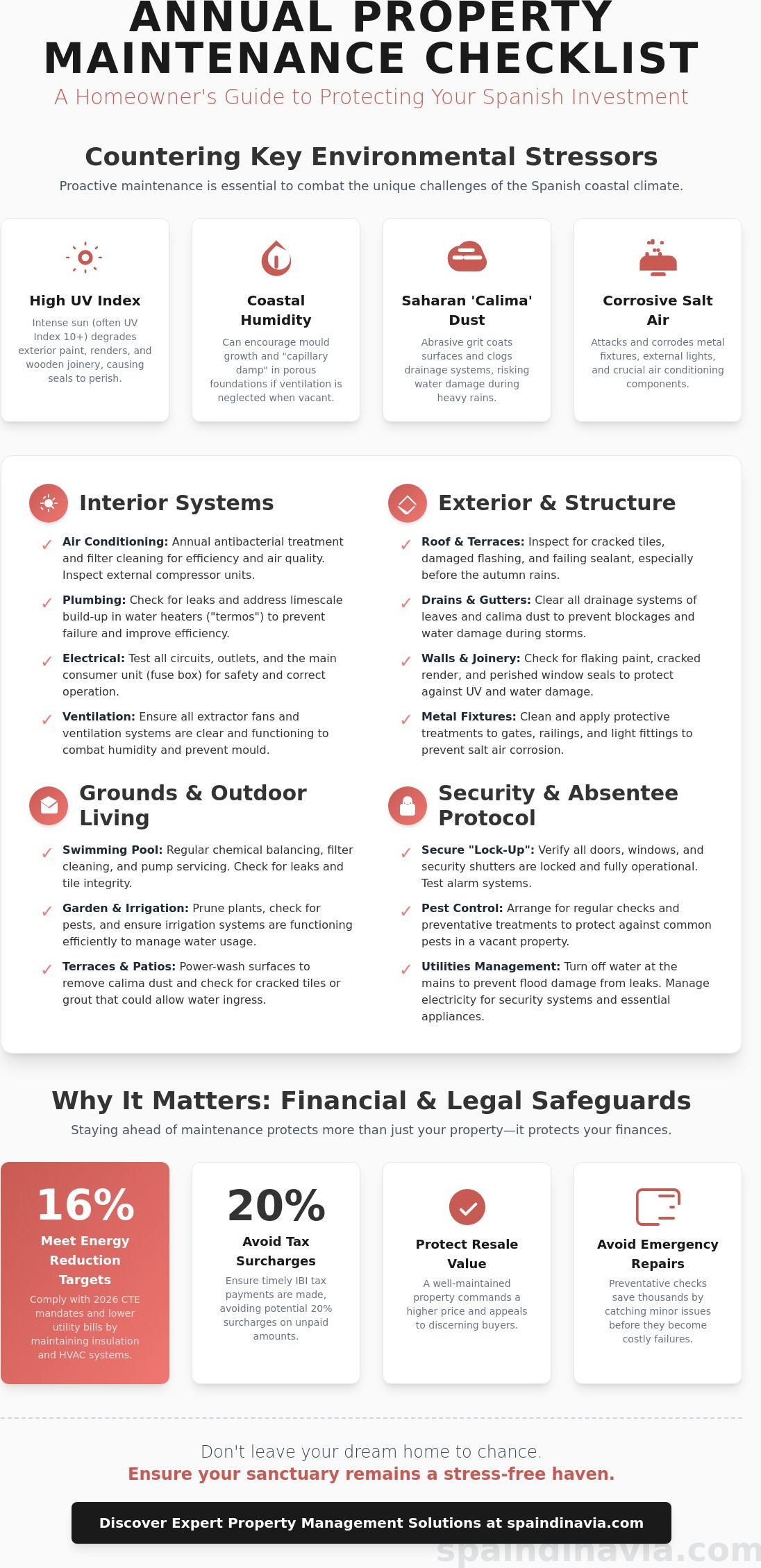
The Spanish sun is a powerful force that demands respect. High UV indices, often exceeding level 10 during the summer months, can degrade exterior renders and bleach wooden joinery in a single season. This intense radiation causes paint to flake and seals to perish, which leaves your home vulnerable to the occasional but heavy autumn rains. You must also account for the "calima," the Saharan dust storms that coat surfaces in abrasive grit. If left unmanaged, this dust clogs drainage systems and can lead to significant water damage during flash storms.
Humidity presents another challenge, particularly in older resale villas where "capillary damp" can rise through porous foundations. Unlike the dry heat many expect, coastal areas experience high humidity that can encourage mould growth if ventilation is neglected whilst the property is vacant. Additionally, the salt-laden air along the coast is highly corrosive. It attacks metal fixtures, outdoor lighting, and even the internal components of air conditioning units, making annual cleaning and protective treatments essential for longevity.
Financial and Legal Benefits
Identifying a small leak or a cracked roof tile during the low season can save you thousands in emergency call-out fees during the August bank holiday. Maintaining a clear record of upkeep also protects your legal standing. Most home insurance policies include "reasonable care" clauses. If a claim arises from long-term neglect rather than a sudden event, your provider may refuse to pay, leaving you to foot the bill for expensive structural repairs.
Efficiency is now a legal priority too. The 2026 update to Spain's Technical Building Code (CTE) mandates stricter energy standards for all renovations and new projects. With the government targeting a 16% reduction in energy consumption for existing homes by 2030, keeping your insulation and HVAC systems in top condition directly lowers your utility bills amongst rising costs. By following an annual property maintenance checklist for spanish homes, you stay ahead of these regulations and ensure your property remains a high-performing, desirable asset for years to come.
Interior Systems: Ensuring Reliability and Safety
The internal systems of your Spanish home are its lifelines. They often sit dormant for months whilst you are back in the UK, making them prone to unexpected failure or degradation. As we highlighted in our buying property in spain guide, the journey to a stress-free home starts with a thorough understanding of these systems at the point of purchase. Integrating these checks into your annual property maintenance checklist for spanish homes ensures that when you turn the key, everything works exactly as it should, protecting both your comfort and your investment.
Air Conditioning and Climate Control
Don't wait for a July heatwave to discover your air conditioning is blowing warm air or emitting a musty scent. Dust and microorganisms thrive in the dark, damp environment of an AC unit's internal coils. An annual antibacterial treatment and a thorough cleaning of the filters are essential for air quality and system efficiency. You should also inspect the external compressor units for debris or nesting birds; restricted airflow forces the motor to work harder, which significantly increases your electricity consumption. Scheduling a professional service in the spring ensures your system is ready for the intense 2026 summer season.
Plumbing and Solar Water Heating
Spain’s coastal regions are notorious for "hard" water. High mineral content leads to rapid lime-scale build-up inside your "termo" (electric water heater). This build-up can reduce the unit's lifespan by 30% if left unserviced. If your villa features solar thermal panels, you must check the glycol levels annually. This fluid prevents the system from overheating in the summer and freezing in the winter. For absentee owners, flushing every tap and toilet for several minutes is a critical health step to prevent stagnant water risks, such as Legionella, especially before guests arrive at your holiday rental property.
Spanish Regulatory Inspections
Navigating local regulations is vital for both safety and legal compliance. In Spain, the Inspección de Gas is a mandatory safety check required every five years for properties with a mains gas supply or large orange bottles. Keeping a meticulous annual property maintenance checklist for spanish homes also helps you stay on top of the RITE (Reglamento de Instalaciones Térmicas en los Edificios) regulations. These dictate that boilers and thermal systems must be inspected by a certified professional annually or bi-annually, depending on their power output. For a more detailed breakdown of these requirements, you can consult this comprehensive guide to annual inspections. Testing smoke alarms and carbon monoxide detectors should be the final, non-negotiable step on your list to ensure a truly secure environment for your family and tenants.
Protecting Your Property Exterior and Structure
Your property's exterior is its first line of defence against the intense Mediterranean elements. Whilst the interior provides comfort, the structure itself absorbs the brunt of 300 days of sunshine and the occasional, violent storm. Coordinating these checks in the spring is essential to ensure your home is prepared for the high temperatures and increased usage of the summer season. Including exterior inspections in your annual property maintenance checklist for spanish homes prevents small cracks from becoming major structural issues. You can identify early signs of UV degradation on PVC window frames by looking for a fine 'chalky' residue on the surface or a slight yellowing that suggests the material is becoming brittle.
Roofing and Terrace Integrity
Spanish solariums and terraces are prone to thermal expansion. Inspect your floor tiles for hairline cracks and ensure the grout remains intact; missing grout allows water to seep underneath, which leads to "popping" tiles during the next heatwave. Clearing your "sumideros" (drains) is equally vital. The Saharan calima dust often settles in these pipes, forming a thick sludge that causes flooding during the heavy "Gota Fría" rains common in September. Checking expansion joints on large tiled areas every 12 months ensures the structure can breathe as temperatures fluctuate by 20 degrees between day and night.
Exterior Finishes and Joinery
Take a walk around your property and tap the walls; a hollow sound in the render often indicates that the paint has detached from the brickwork, creating a pocket for moisture. Lubricating your "persianas" (shutters) and sliding door tracks with a silicone-based spray prevents the salt air from seizing the mechanisms. For those with wooden pergolas or decking, an annual check for termite activity or rot is non-negotiable. Termites can cause significant damage in as little as six months if left unchecked in the warm Spanish climate.
New Build Villa Specifics
Owners of new build villas must be particularly vigilant during the first two years of occupancy. It's common to see minor "settling cracks" as the structure finds its footing; however, any crack wider than 2mm should be documented and reported to the developer under your building warranty. Maintaining modern glass balustrades and powder-coated aluminium frames is also necessary to prevent sea-salt pitting, which can permanently mar the aesthetic of a high-end home. Protecting these modern finishes is a key part of our spain property investment strategy, as it ensures your asset retains its premium market appeal and continues to deliver high yields.
Seasonal Grounds Maintenance: Pools and Gardens
Outdoor living is the heart of the Spanish dream. Whether you are dining al fresco on a terrace or enjoying a morning swim, these spaces define your Mediterranean experience. However, the garden and pool are also the areas that require the most consistent attention. Neglecting them whilst you are away can lead to green water or withered plants in just a few days. Including these outdoor tasks in your annual property maintenance checklist for spanish homes ensures your sanctuary remains inviting and functional year-round. Effective management is about more than just aesthetics; it's about water conservation and system longevity in a climate that can be unforgiving.
Swimming Pool Care
Extreme heat in July and August can cause water levels to drop by as much as 5cm per week through evaporation alone. This loss doesn't just waste water; it also concentrates chemicals, which can irritate skin and damage pool liners. For 2026, many owners are switching from traditional sand filters to glass media. Glass is more efficient, requires fewer backwashes, and lasts up to 10 years. You should also calibrate your automatic dosing systems annually. These systems must be robust enough to handle the increased UV load that quickly degrades chlorine. Professional pool cleaning typically costs between €100 and €150 per month, which is a worthwhile investment to prevent expensive pump failures. Look closely at the waterline for grout loss or loose tiles; these are often the first signs of a slow leak that could cost hundreds in wasted water if left unaddressed.
Landscaping and Irrigation
Your garden's survival depends entirely on the reliability of your irrigation system. In regions with hard water, mineral deposits (cal) often block drip-lines and sprinkler heads. Testing your timers and flushing the lines in early spring is a non-negotiable task. Basic garden maintenance usually costs around €80 to €120 per month, ensuring your plants thrive even during a drought. Beyond hydration, you must protect your trees. The Red Palm Weevil (Picudo Rojo) remains a major threat across the coast; correct, professional pruning and preventative treatments are essential to save your palms. Finally, fire safety is a critical responsibility. Clearing dry brush and maintaining a clean perimeter around your home is a mandatory safety measure in many Spanish municipalities. If you are looking for a property with manageable outdoor space, explore our latest townhouses and bungalows designed for easy Mediterranean living.
The Absentee Owner Checklist: Security and Management
Leaving your Mediterranean sanctuary for several months shouldn't be a source of constant worry. As the final piece of your annual property maintenance checklist for spanish homes, security and management protocols provide the ultimate peace of mind whilst you are back in the UK or Scandinavia. By establishing a rigorous "lock-up" routine, you safeguard your investment against environmental factors and unauthorised entry, ensuring your return is as joyful as your first arrival. Professional oversight is often the difference between a property that ages gracefully and one that requires expensive remedial work.
Security and Access Control
Modern security goes beyond simple locks. You should test your alarm systems annually and ensure that remote camera feeds are active and clear on your mobile devices. Check the integrity of all window bolts and security gates; salt air can stiffen mechanisms over time, making them easier to bypass. Many owners now utilise professional "Key Holding" services. Having a trusted local partner who can provide emergency access or facilitate routine checks is invaluable, especially if a neighbour reports a suspected leak or if you need to grant access to a maintenance contractor.
The "Lock-Up-and-Leave" Protocol
A successful departure requires a methodical approach to your home's internal environment. Turn off the main water supply to prevent flood damage from a burst pipe, but ensure your garden irrigation remains on a separate, active line. Unplug non-essential electronics to protect against power surges, which are common during the intense lightning storms that occasionally hit the coast. Finally, set digital timers for interior lights and perhaps a radio to give the property a "lived-in" appearance, which remains one of the most effective deterrents for intruders.
Professional Management Services
If managing this entire checklist from abroad feels overwhelming, professional property management companies offer a "boots on the ground" solution. In 2026, management services typically charge between €50 and €100 per month for essential services like keyholding and regular property inspections. These monthly walkthroughs are designed to catch small issues, such as a minor damp patch or a pest entry point, before they escalate into significant disasters. Organising your documents, insurance policies, and spare keys amongst trusted local experts ensures your home is always in safe hands. To ensure your investment is perfectly preserved for your next visit, contact Spaindinavia for professional property management and maintenance support.
Secure Your Spanish Sanctuary for the Years Ahead
Maintaining a home in the Mediterranean is a rewarding journey that requires a mindful approach to the local climate and the shifting 2026 regulations. By implementing a consistent annual property maintenance checklist for spanish homes, you've taken the first step toward protecting your investment's value and ensuring every visit is defined by relaxation rather than repairs. From calibrating pool chemistry to navigating mandatory gas inspections, proactive care is what keeps the dream of Spanish living vibrant and sustainable for the long term.
You don't have to manage these responsibilities alone whilst you're away. As specialists in New Build Villa management with a trusted local network of certified tradespeople, we provide the professional presence you need. Whether it's comprehensive key-holding or monthly inspections, let Spaindinavia manage your property maintenance and security so you can focus on enjoying the sun. Your peace of mind is our priority, and we're here to ensure your home remains the perfect retreat for many years to come. Enjoy the warmth and the lifestyle, knowing your Spanish sanctuary is in expert hands.
Frequently Asked Questions
How often should I service my air conditioning unit in Spain?
You should service your air conditioning unit at least once a year, ideally during the spring months before the summer heatwaves arrive. This annual check includes cleaning the filters and applying an antibacterial treatment to the internal coils to ensure air quality and system efficiency. Regular servicing can prevent the motor from overworking, which helps you stay within the government's 2026 energy consumption reduction targets.
What is the mandatory gas inspection for Spanish homes?
The Inspección de Gas is a mandatory safety check that must be performed every five years by a certified technician. This regulation applies to all properties with a mains gas connection or those using large orange butane bottles. Upon completion, you'll receive a certificate that is vital for your home insurance validity and ensures your installation meets current Spanish safety standards.
Is it safe to leave my water on whilst my Spanish property is empty?
It's generally recommended to turn off your main water supply whilst your property is vacant to prevent damage from undetected leaks. However, you should ensure that your garden irrigation is on a separate line so that your Mediterranean plants remain hydrated. This balanced approach is a key component of a secure annual property maintenance checklist for spanish homes, protecting your interior from floods while keeping your garden lush.
How do I protect my Spanish villa from the Calima dust?
Protecting your villa from Saharan Calima dust involves sealing window frames and rinsing exterior surfaces promptly after a storm. You must prioritise clearing your sumideros (drains) regularly, as this fine dust can mix with rain to create a thick sludge that blocks drainage systems. If left unmanaged, these blockages can lead to significant flooding during the heavy "Gota Fría" rains in September.
Can I do my own property maintenance or do I need a professional?
You can certainly manage basic cleaning and minor gardening yourself, but technical tasks like gas, electrical, or structural work require a certified professional. Under the updated 2026 Technical Building Code (CTE), specific renovations must be certified to meet new energy efficiency standards. Hiring local experts ensures that your maintenance is compliant with Spanish law and that your 10-year structural insurance remains valid.
What happens if I ignore settling cracks in my new build villa?
Ignoring settling cracks wider than 2mm can lead to moisture ingress and might jeopardise your seguro decenal, the mandatory ten-year structural insurance policy. Whilst minor hairline cracks are common in new constructions during the first 24 months, larger fissures should be documented and reported to the developer immediately. Addressing these early prevents long-term structural issues and protects the resale value of your investment.
How much should I budget for annual property maintenance in Spain?
You should budget between €500 and €2,000 per year for general maintenance and minor repairs to keep your home in top condition. This is separate from fixed annual costs like the new waste collection tax, which averages €120 to €180, and the IRNR tax for non-residents, typically ranging from €150 to €400. Allocating these funds ensures you can cover essential services like pool cleaning and garden upkeep without stress.
Does my Spanish home insurance cover maintenance issues?
No, standard Spanish home insurance policies do not cover general maintenance or damage resulting from wear and tear. Insurance is designed to protect you against sudden, accidental events like fire, theft, or flood. Most providers include "reasonable care" clauses, so they may refuse a claim if they determine the damage was caused by a failure to follow an annual property maintenance checklist for spanish homes.


