

What if the biggest hurdle to your Mediterranean dream wasn't the house hunt, but the worry of leaving your four-legged companion behind? We know that for many families, a move to the sun is only complete if every member is present, yet the reality of bringing pets to spain from the uk in 2026 can feel overwhelming. You might be worried about the latest post-Brexit regulations or the stress of long-distance travel, but relocating with your cat or dog doesn't have to be a source of anxiety.
We've designed this comprehensive roadmap to turn that confusion into confidence. You'll find a clear checklist for the essential Animal Health Certificate (AHC), which has replaced the old EU pet passport system, alongside practical advice on choosing your transport method. Beyond the paperwork, we'll guide you through the most welcoming neighbourhoods for pet owners, from the dog-friendly beaches of Bolnuevo, Isla Plana, and La Azohia in the Mazarrón area of the Costa Cálida to the vibrant coastal communities of the Costa Blanca. Whether you are settling near the bustling Puerto de Mazarrón or a villa in the wider Murcia region, let's prepare you for a smooth transition to your new life under the Spanish sun.
Key Takeaways
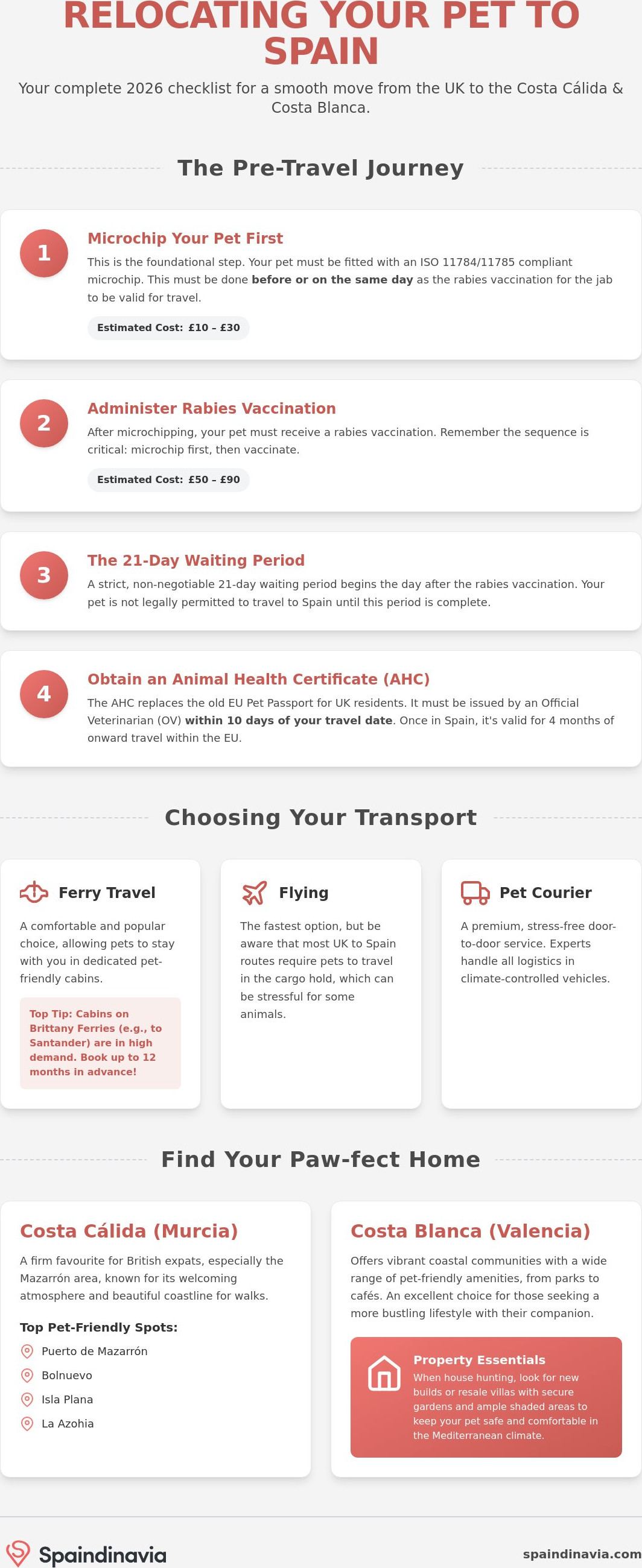
- Navigate the latest 2026 legal requirements, including the transition from EU Pet Passports to mandatory Animal Health Certificates (AHC) and microchipping timelines.
- Compare the most stress-free transport logistics for bringing pets to Spain from the UK, from pet-friendly ferry cabins to specific flight regulations.
- Explore the differences in pet-friendly amenities between the Costa Blanca and the Costa Cálida, highlighting the best coastal spots for morning walks.
- Discover why the Mazarrón area, particularly Bolnuevo and Isla Plana, has become a favourite destination for British expats relocating with their dogs.
- Learn what to look for in new build villas and resale properties, ensuring your home features the secure gardens and shade essential for the Spanish climate.
Essential Legal Requirements for Bringing Pets to Spain in 2026
Securing your dream home in the sun is an exciting milestone; however, ensuring your furry companions can join you requires a bit of forward planning. Since the updates in April 2026, the process for bringing pets to spain from the uk has become more structured, moving away from the old EU Pet Passport system for UK residents. To enjoy your new life in the Costa Cálida or the Costa Blanca, you'll need to follow a specific sequence of veterinary steps to ensure a smooth crossing at the border.
The foundation of these regulations is the Pet Travel Scheme (PETS), which maintains the safety and health of animals moving across borders. Whether you're moving to a resale villa in Bolnuevo or a modern apartment in the Costa Blanca, the legal requirements remain the same for every traveller. You'll need to budget for these essentials early. Typically, microchipping costs between £10 and £30, whilst the mandatory rabies vaccination ranges from £50 to £90.
The Animal Health Certificate (AHC) Explained
Because UK-issued EU Pet Passports are no longer valid, you must obtain an Animal Health Certificate (AHC) for every single trip you take to Spain. This document must be signed by an Official Veterinarian (OV), so check that your local practice has one available. You'll need to secure this certificate within 10 days of your departure date. Once you've entered Spain, the AHC is valid for four months of onward travel within the EU, giving you plenty of time to explore the region from Isla Plana to the northern reaches of the Costa Blanca.
Microchips and Rabies: The Golden Rule
Timing is everything when it comes to vaccinations. Your pet must be microchipped before or on the same day as their rabies jab. If the vaccination happens first, it won't count for travel purposes, and you'll have to start the process again. Ensure the chip is ISO 11784/11785 compliant so it can be easily scanned by border officials in Spain. After the rabies vaccination, there's a strict 21-day waiting period before your pet is legally allowed to travel. This pause is non-negotiable; therefore, we recommend starting your vet visits at least a month before your moving date to a new build villa in Puerto de Mazarrón or La Azohia.
Don't forget the return journey. If you plan to visit the UK from your new base in the Murcia region, your dog will require a tapeworm treatment. A vet must administer this between 24 and 120 hours before you arrive back in the UK. Keeping these records organised ensures that your lifestyle remains stress-free, allowing you to focus on enjoying the Mediterranean climate with your best friend.
Transport Logistics: Best Ways to Travel from the UK to Spain with Pets
Selecting the best route for your journey is the next big step once your veterinary paperwork is in order. Bringing pets to spain from the uk can take several forms, and your choice often depends on your pet's temperament and your final destination. Whether you're moving to a new build villa in Puerto de Mazarrón or a modern townhouse in the Costa Blanca, the travel method you choose sets the tone for your relocation. You'll want a path that's as stress-free for your animals as it is for you.
Flying is certainly the quickest option, though it's important to understand that most UK-Spain routes require pets to travel in the hold as cargo. For many owners, this can feel daunting. If you prefer to keep your companion close, professional pet couriers offer a door-to-door service in climate-controlled vehicles. This is a fantastic way to outsource the stress, as these experts handle the logistics whilst you focus on finding resale villas with secure garden spaces in Bolnuevo or Isla Plana.
Ferry Travel: The Comfortable Alternative
Brittany Ferries remains a favourite for those sailing from Portsmouth or Plymouth to Santander or Bilbao. These routes offer dedicated pet-friendly cabins, allowing your dog or cat to stay by your side throughout the crossing. These cabins are incredibly popular and often sell out 12 months in advance, so early booking is essential. For dogs, these ships feature "green decks" and exercise areas, ensuring they arrive in Spain refreshed and ready for their new Mediterranean life. The ferry cost typically starts from £50 each way, making it a competitive choice for a comfortable journey.
The Road Trip: Driving from the UK
Driving through France via the Eurotunnel is another excellent alternative. At a cost of £30 per pet each way, it's a budget-friendly option that keeps your pet in the familiar environment of your car. You'll need to follow the latest UK government guidance when crossing the French border, ensuring your AHC is scanned at the pet reception centre before boarding. The drive south offers a chance to see the changing landscape as you move towards the arid beauty of the Costa Cálida.
Managing your pet's well-being during the long drive is vital. The journey to the Murcia region or the Costa Blanca can be warm, so ensure your vehicle's air conditioning is working perfectly. Keep plenty of fresh water accessible and plan regular breaks. Whether you're heading to the coastal charm of La Azohia or the vibrant communities of the Costa Blanca, a well-paced road trip with pet-friendly hotel stops ensures everyone arrives happy and hydrated.
Adjusting to the Mediterranean Lifestyle: Costa Cálida and Costa Blanca
Stepping off the ferry or out of the car in Spain is a moment of pure joy, but the transition to Mediterranean life involves more than just finding the nearest beach. Bringing pets to spain from the uk is a significant lifestyle shift that requires you to adapt to a new pace of life. Once you've settled into your new home, your priorities will shift from border paperwork to local regulations. For instance, once you become a resident, you should visit a local vet to obtain a Spanish Pet Passport. This document simplifies travel within Europe and ensures your pet is registered on the Spanish national database.
Spanish law is quite specific regarding pet behaviour in public spaces. You'll find that leads are mandatory in most urban areas, and certain breeds fall under the "Potentially Dangerous Dogs" (PPP) classification. If your dog is on this list, you'll need to arrange specific insurance and a local license. For the most up-to-date entry requirements and breed-specific details, you can consult the official Spanish government website. Understanding these rules early helps you integrate into the community without any unexpected surprises.
Health and Safety in the Sun
The Spanish sun is glorious, but it demands a change in your walking routine. Locals embrace the "paseo," walking their dogs in the early morning or late evening when the pavement has cooled down. Hot tarmac can easily blister sensitive paws. Beyond the heat, you must protect your pet from local health risks like Leishmaniasis, which is spread by sandflies, and heartworm. English-speaking vets are plentiful across the Murcia and Valencia regions, and they can provide specific collars or spot-on treatments tailored to the local environment. Keeping your companion healthy is the first step to enjoying the outdoor lifestyle together.
Regional Differences for Pet Owners
Choosing between the Costa Blanca and the Costa Cálida often comes down to your preferred pace of life. The Costa Blanca is famous for its vibrant, pet-friendly infrastructure. You'll find a high density of cafes in places like Alicante or Torrevieja where your dog is welcomed with a bowl of water. In contrast, the Costa Cálida offers a more rugged, natural appeal. The Mazarrón area is a particular favourite for active owners. Places like Puerto de Mazarrón, Isla Plana, and La Azohia provide stunning coastal trails and open spaces that are perfect for long rambles.
In Bolnuevo, the wide open landscapes and natural rock formations offer a unique backdrop for your daily exercise. Whilst the Costa Blanca provides more urban parks, the Murcia region excels in providing a sense of freedom and connection to nature. Before you decide on the perfect location for your move, our Buying Property in Spain Guide can help you evaluate which region best suits your investment goals and your pet's needs.
Pet-Friendly Living in the Mazarrón Area: Puerto de Mazarrón to Bolnuevo
Choosing the right location is just as vital as the paperwork when bringing pets to spain from the uk. Whilst the Costa Blanca offers a wonderful array of urban dog parks and pet-friendly promenades, the Mazarrón area in the Costa Cálida provides a more rugged, natural playground that many British expats find irresistible. The combination of coastal paths and mountain trails makes this corner of the Murcia region a true sanctuary for active dogs and their owners.
Life in Puerto de Mazarrón and Bolnuevo revolves around the outdoors. You'll quickly discover that the local community is incredibly welcoming to four-legged residents. From the quiet, traditional charm of Isla Plana and La Azohia to the more bustling atmosphere of the port, there's a pace of life to suit every breed. The transition is made easier by the presence of several English-speaking social groups and dog training clubs in the Mazarrón centre, where you can share advice on everything from local pet insurance to the best groomers in the area.
Beach Days with Your Dog
One of the biggest draws for pet owners in this region is the access to dedicated "Playas Caninas" or dog beaches. Unlike many parts of the Costa Blanca where beach access is strictly seasonal, Mazarrón has pioneered year-round spots for dogs. You can enjoy the sands at Playa de las Moreras, Playa de El Gachero, and Playa de Cobaticas. Etiquette is important here; always keep your dog under control and ensure you pick up after them to maintain these beautiful spaces. During the cooler winter months, many of the main beaches in Bolnuevo and Puerto de Mazarrón also become unofficial meeting spots for local dog owners, creating a lovely social atmosphere.
Hiking and Outdoor Adventures
For those who prefer a more adventurous "paseo," the Sierra de la Muela offers breathtaking trails with views over the Mediterranean. Walking the "ramblas"—the dry riverbeds that weave through the Mazarrón countryside—provides a natural, shaded path for your daily exercise. However, rural walks in Spain require a bit of local knowledge. Between January and April, be vigilant for processionary caterpillars in pine-forested areas, as these can be dangerous to curious dogs. Stick to the coastal paths around La Azohia or the open plains of Bolnuevo during these months to stay safe whilst enjoying the fresh sea air.
The process of bringing pets to spain from the uk is just the beginning of a wonderful adventure in the Murcia region. If you're ready to find a home that fits this active lifestyle, browse our latest new build villas with the secure garden space and shade your dog deserves.
Securing Your Pet-Friendly New Build Villa with Spaindinavia
The journey of bringing pets to spain from the uk doesn't end when you cross the border; it truly concludes when you open the door to a home that welcomes every family member. Finding a property that balances your aesthetic desires with your pet's practical needs is a speciality of ours. Whilst the Costa Blanca is known for its stylish new build apartments, the Costa Cálida, especially around Puerto de Mazarrón and Bolnuevo, offers an abundance of new build villas that provide the space and security essential for dog owners.
When choosing between property types, it's vital to consider the local "Comunidad de Propietarios" (Community of Owners) rules. If you opt for a resale apartment or a townhouse within a complex, there may be specific regulations regarding pets in communal areas or elevators. New build villas often grant you more autonomy, allowing you to create a private sanctuary without restrictive community bylaws. Our team ensures you understand these nuances before you commit, giving you peace of mind that your pet will be as welcome as you are.
The Perfect Pet-Friendly Property Features
Modern homes in the Murcia and Valencia regions are designed with the climate in mind, which naturally benefits your pets. High-quality tiled flooring is a standard feature in our new build villas, providing a cool surface for your dog to lie on during the afternoon heat whilst being incredibly easy to clean after a sandy walk in Isla Plana. We also prioritise properties with advanced climate control systems to keep the interior comfortable year-round. Before you move in, we can help you assess the garden to ensure it is "escape-proof," checking that walls and gates are of a suitable height and security for your specific breed.
Expert Guidance for Your Move
At Spaindinavia, we view ourselves as a bridge between your life in the UK and your new Mediterranean lifestyle. We don't just show you houses; we connect you with the local infrastructure that makes pet ownership easy. This includes introducing you to English-speaking vets in the Mazarrón area and pointing out the best pet supply stores in La Azohia. If you're planning a viewing trip, we can even suggest pet-friendly accommodation so your companion can experience the local environment firsthand.
Settling into a new villa in Puerto de Mazarrón or the wider Costa Blanca is a life-changing event. Our role is to handle the complexities of the property search so you can focus on the joy of bringing pets to spain from the uk. From the first inspiration to the final signatures, we're here to ensure your entire family, paws included, finds their perfect place in the sun.
Start Your Mediterranean Journey Together
Navigating the transition to a new life abroad is a significant milestone for any family, especially those with four-legged companions. We've explored the essential 2026 legal requirements, the most comfortable transport routes, and the vibrant pet-friendly communities across the Costa Blanca and Costa Cálida. Whether you're dreaming of morning walks on the dog-friendly beaches of Bolnuevo or exploring the rugged trails of the Murcia region, successfully bringing pets to spain from the uk is entirely achievable with the right preparation.
Choosing a home that offers safety and comfort is the final piece of the puzzle. As specialists in new build villas across Mazarrón, our team provides a hand-picked portfolio of properties with secure gardens and modern features designed for the Spanish climate. We offer expert support for UK buyers moving to the Costa Cálida, ensuring every detail is handled with care. Find your pet-friendly dream villa in Spain with Spaindinavia and begin your new chapter with confidence. We can't wait to welcome you and your pets to Puerto de Mazarrón, Isla Plana, or La Azohia very soon.
Frequently Asked Questions
Do I still need a pet passport to bring my dog to Spain from the UK in 2026?
UK-issued EU pet passports are no longer valid for bringing pets to spain from the uk as of 2026. Instead, you must obtain an Animal Health Certificate (AHC) from an official veterinarian within 10 days of your departure. This applies to every single trip you make from Great Britain to the EU, ensuring your pet meets all current health and vaccination standards for entry into the Murcia or Valencia regions.
How much does an Animal Health Certificate (AHC) cost in the UK?
An Animal Health Certificate (AHC) typically costs between £100 and £300 in the UK. Whilst some specialised services may offer certificates for as low as £99, urgent or last-minute requests can often exceed £199. It's wise to shop around local practices in your area, as prices vary significantly between providers. Remember that this fee is per certificate and usually covers up to five pets travelling on the same trip.
Are there any dog breeds that are banned or restricted in Spain?
Spain does not strictly ban breeds, but it regulates "Potentially Dangerous Dogs" (PPP), which require a specific license and insurance. This category includes breeds such as the Pit Bull Terrier, Rottweiler, and Akita Inu. If you own a PPP breed, you'll need to pass a psychological test, have no criminal record, and ensure your dog is muzzled and on a short lead in public spaces across the Costa Blanca and Costa Cálida.
Can I take my cat on the ferry from the UK to Spain?
Cats are welcome on ferry routes when bringing pets to spain from the uk, with Brittany Ferries providing pet-friendly cabins. The fee typically starts from £50 each way. Booking early is essential, as these cabins often sell out months in advance. Your cat must stay in its carrier whilst moving through public areas, but they can roam freely once inside your private cabin, ensuring a stress-free journey for everyone.
What happens if my pet’s rabies vaccination expires while I am in Spain?
You must visit a local Spanish veterinarian to administer a booster if your pet’s rabies vaccination expires whilst you are in Spain. To avoid a 21-day travel ban, the booster must be given before the current vaccination expires. Once you're a resident, your vet will record this in a Spanish Pet Passport, which then becomes your primary document for future travel between your new home in Mazarrón and the UK.
Is it too hot for a long-haired dog to live in the Costa Cálida?
Long-haired dogs can thrive in the Costa Cálida as long as you prioritise shade and hydration during the peak summer months. Many owners in Puerto de Mazarrón and Isla Plana choose to give their pets a shorter "summer clip" to help them stay cool. Modern new build villas with tiled floors and air conditioning provide a perfect retreat from the sun, allowing your pet to enjoy the Mediterranean lifestyle safely alongside you.
Are dogs allowed in restaurants and cafes in the Mazarrón area?
Dogs are widely accepted on the outdoor terraces of restaurants and cafes throughout the Mazarrón area, from Bolnuevo to La Azohia. Under Spain's 2026 Animal Welfare Law, establishments are generally more pet-friendly than ever, though it's always polite to check with the staff before sitting down. You'll find that most venues in the Murcia region are happy to provide a bowl of water for your companion whilst you enjoy your meal.
Do I need to register my pet with the local Spanish town hall?
Registration on the local municipal census is a mandatory requirement for all pet owners living in Spain. You should visit your local Ayuntamiento (Town Hall) in Mazarrón or your specific municipality in the Costa Blanca to complete this process. This registration helps local authorities manage pet populations and ensures you're compliant with regional laws. You'll need to bring your pet's identification documents and your own residency paperwork to complete the registration.


