

A Spanish holiday home can be yours all year, but your time there may be limited. For non-EU citizens, including UK citizens, stays without a visa are limited to 90 days within any 180-day period. The reality of owning a holiday home in Spain is therefore about more than choosing a sunny place to escape to: your plans for visits, renting and ongoing ownership all matter.
The appeal is clear: a familiar coastal base can make time in the sun part of everyday life. But renting out the property is not simply a way to offset costs. Local rules and the practical work of managing bookings can determine whether it suits your plans.
This guide explains what to weigh before you buy, from stay limits and deposits to rental choices and the differences between Costa Cálida in the Murcia region and Costa Blanca in the Valencia region. If you’re drawn to Puerto de Mazarrón, Isla Plana, La Azohía or Bolnuevo, you’ll also find a clearer picture of how to match a home and location to the way you want to use it.
Key Takeaways
- Understand how local licensing rules and rental tax obligations can affect your plans before choosing a property.
- Build ongoing maintenance, utilities and management into your ownership decision, especially if you’ll be away for long periods.
- Compare Costa Cálida in the Murcia region, including Puerto de Mazarrón, Isla Plana, La Azohía and Bolnuevo, with Costa Blanca in the Valencia region to find the setting that suits your lifestyle.
- If you’re a non-EU citizen, including a UK citizen, plan visits around the limit of 90 days in any 180-day period and understand the deposit terms before committing.
- Weigh the potential rental income against licensing requirements and the practical work of managing bookings, cleaning and repairs.
1. Why buy a holiday home in Spain?
Owning gives you a familiar base for returning to Spain, whilst renting or staying in hotels avoids the responsibilities of a property. A home you own can also be rented out, but income depends on lawful availability, bookings and running costs. In places such as Puerto de Mazarrón, the appeal of returning to your own coastal base needs weighing against these obligations.
Rental income can help offset expenses, but it does not guarantee a profit. Compare realistic booking prospects with recurring costs, including property taxes, utilities, community fees, cleaning, repairs and management. An empty home can still generate bills. Treat rental income as one part of your ownership plan, not as a promise that the property will pay for itself.
Start with the local regulations before deciding that short-term rental will work. Holiday-rental licence availability varies across Spain: some regions and cities allow more licences, while others impose strict limits. Some towns also restrict short-term lets or charge licensing fees. Barcelona and Palma de Mallorca, for example, are among the cities trying to restrict holiday rentals and crack down on rental portals.
Requirements can differ between regions, so a licence in one area doesn’t establish what applies elsewhere. Spanish regions set their own minimum standards for holiday lets. These can include central heating in colder areas or air conditioning in warmer areas. Before choosing between Costa Cálida in the Murcia region and Costa Blanca in the Valencia region, identify the rules for the specific town and property. For Costa Cálida, focus your research on Puerto de Mazarrón, Isla Plana, La Azohía and Bolnuevo rather than assuming one coastal area follows another’s rules.
Tax is another part of the rental calculation. Non-EU owners who are non-resident in Spain are taxed at 24% on rental income, with no deductions. That affects the amount left after letting, so include it when judging potential returns. Rental rules and tax obligations are separate: meeting a local licensing requirement doesn’t remove the tax on income.
Approach the decision in a practical order. First, establish whether the property can be used for the rental purpose you have in mind. Then check local requirements and restrictions. Finally, compare expected rental income with recurring costs and applicable taxes. If renting is not central to your plans, assess the home primarily as a place to enjoy, rather than relying on income that depends on bookings and local rules.
2. What Is The Property Market Like In Spain?
Property in Spain ranges from coastal apartments to detached homes, and the right purchase depends on location, condition and intended use. Compare Costa Cálida in the Murcia region with Costa Blanca in the Valencia region, then narrow your search to specific towns. For Costa Cálida, consider Puerto de Mazarrón, Isla Plana, La Azohía and Bolnuevo; compare each property’s access, upkeep and community arrangements rather than relying on the coast’s name alone.
COVID-19 highlighted a practical consideration for international buyers: travel disruption can make in-person viewings and paperwork harder to arrange. Build flexibility into your search, and avoid committing based only on photographs. A full property survey is advised before signing, helping you assess the home’s condition and plan for repairs. For ongoing maintenance, remember that a property left empty still needs attention, while living far away can make repairs, cleaning and bookings harder to coordinate.
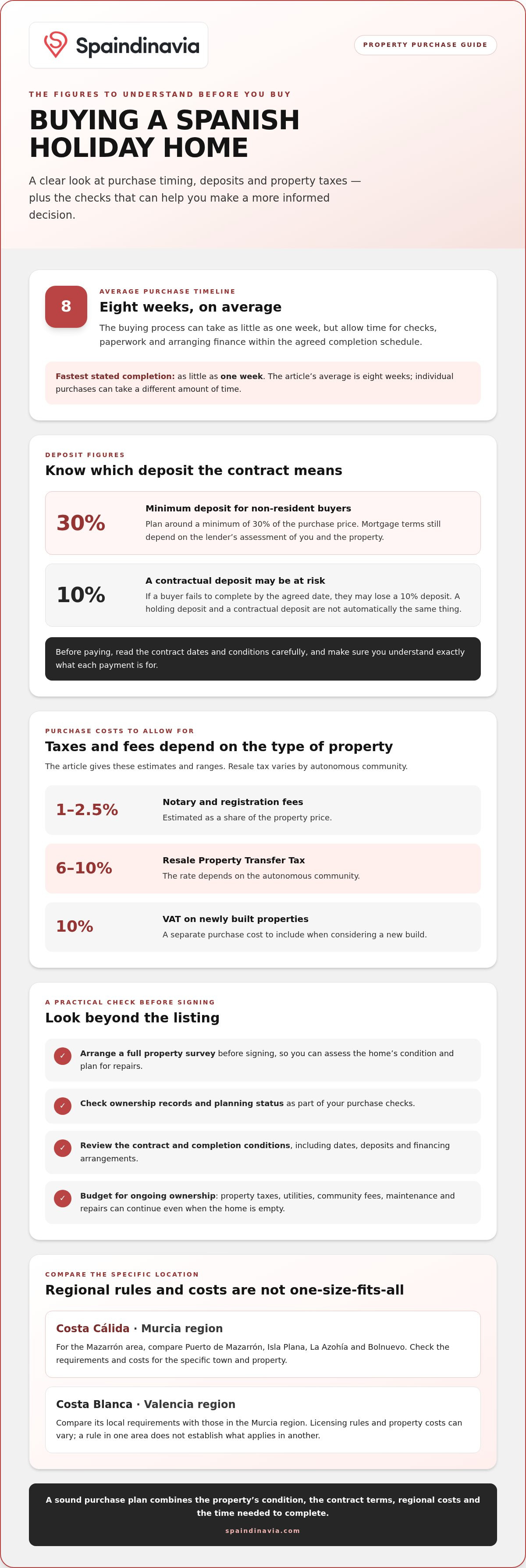
Buying typically involves finding a property, agreeing terms, completing checks and signing the purchase documents. The process averages eight weeks, though some purchases can be completed in as little as a week. Non-resident buyers generally need a minimum deposit of 30% of the purchase price. A buyer who fails to complete by the agreed date may lose a 10% deposit, so understand the contract dates and conditions before paying. A holding deposit and the contractual deposit are not automatically the same thing.
The risks of buying include unclear title, planning issues or fraud, which can leave you with ownership disputes or unexpected problems with the property. Arrange a full survey before signing and have the ownership records, planning status and contract reviewed as part of your purchase checks.
For non-resident buyers, mortgage terms depend on the lender’s assessment of the buyer and property. Plan around the general minimum deposit of 30% and allow time to arrange financing within the agreed completion schedule.
After purchase, budget for property taxes, utility bills and community fees. Notary and registration fees are estimated at 1-2.5% of the property price; resale Property Transfer Tax is typically 6-10%, depending on the autonomous community. Newly built properties are subject to 10% VAT, with rates stated as correct at May 2025. Community fees can vary with shared facilities, so check what the building maintains and what owners pay. For anyone, including buyers from the UK after it left the EU in early 2020, ownership costs and travel arrangements deserve separate planning. Set aside funds for routine care, then decide how you’ll manage repairs and visits when you’re away.
3. Reasons and locations for buying a Spanish holiday home
Choose a location for the life you want, not just the view in the listing. A Spanish holiday home might give you a familiar place to return to, a base for exploring local culture, or a property you hope to rent out. Each aim points to different priorities, such as everyday convenience, a quieter setting or features that suit guests. Ask yourself: what is the reality of owning a holiday home in Spain for your day-to-day plans?
Compare Costa Cálida in the Murcia region with Costa Blanca in the Valencia region. Costa Blanca is known for beaches, golf courses and modern infrastructure; around Mazarrón, Costa Cálida offers a coastline of distinct places, from Puerto de Mazarrón to quieter Bolnuevo, Isla Plana and La Azohía. Visit the specific towns you’re considering at the time of year you expect to use the home, and notice the pace, surroundings and services you value.
Location can shape both the purchase and its long-term appeal. A forum contributor reported that properties next to the Spanish coastline can carry a premium of 30% to 40% or higher. Compare a home directly by the sea with one further inland. Consider whether the extra cost fits your budget and how often you’ll use the coastal setting, rather than assuming proximity automatically makes a property the better choice.
Access is another practical point. One buyer described a Spanish home a 15-minute drive from the airport, illustrating how travel time can influence short visits and guest convenience. Check the route from the airport to each property, then consider how you’ll reach shops, restaurants and the places you plan to enjoy. In Mazarrón, compare the individual location and journey rather than relying on a broad regional label.
Climate can also guide your shortlist. Some areas of Spain receive over 3,200 hours of sunshine per year, while Alicante receives 320 days of sunshine a year. These figures describe particular areas, not every town or property. Match the climate you want with how you’ll use the home, then consider the property’s orientation and outdoor space during a viewing.
An established area may appeal if you want familiar services and a settled feel. If you are considering a developing area, assess what is there now rather than assuming its future appeal. Compare access, nearby amenities, surroundings and the property itself. If you plan to rent it out, factor in local requirements before treating guest demand as a reason to buy. To understand what owning a holiday home in Spain would mean for you, weigh these practicalities against the lifestyle you want.
Make a shortlist by ranking your priorities, then assess each home against the same criteria: location, access, lifestyle fit and intended use. This helps you distinguish an appealing holiday setting from a property that genuinely suits your plans.
4. Non-resident ownership, stay limits, and deposits
Buying a home in Spain doesn’t automatically change how long you can stay in the country. Non-EU citizens, including UK citizens, can visit without a visa for up to 90 days within any 180-day period. This limit matters whether you own a coastal apartment or stay in hotels, so plan your visits before arranging long-term rentals or extended stays.
US citizens can buy property in Spain, but ownership itself doesn’t provide visa or residency rights. As non-EU citizens, US owners fall under the 90-day limit for visa-free stays. A property purchase and permission to live in Spain are separate matters; don’t treat the home as a route to longer visits.
If you hope to spend more time in Spain than the visa-free allowance permits, investigate the appropriate visa or residency route before making plans. Spain offers a Non-Lucrative Visa for people with reasonable income, including retirees. The key distinction is between owning a home for holidays and obtaining permission to reside in Spain. Neither a Costa Cálida property in Murcia nor a Costa Blanca home in the Valencia region changes that distinction.
Build your calendar around the 90-day allowance. Record your travel dates and count days spent in Spain across each 180-day period, rather than relying on a simple calendar-year tally. For example, a plan to spend six months each year at a home in Puerto de Mazarrón, Isla Plana, La Azohía or Bolnuevo goes beyond the visa-free limit. Longer stays require an immigration route that matches your circumstances.
Deposits also deserve careful attention. A typical holding deposit in Spain is around €3,000, according to a buyer’s account. Before paying, understand what the agreement says the payment secures, when it applies and what happens if the purchase doesn’t proceed. Keep the written terms and payment records together with your purchase documents.
Don’t confuse a short visit with a long-term rental arrangement. The 90-day rule concerns visa-free stays; renting out your home or arranging term rentals doesn’t extend your right to remain in Spain. Owners should plan occupancy around their own permitted stay, as well as the property’s intended use.
Make two separate plans before committing: one for the property purchase and another for your time in Spain. Map out intended visits against the 90-day allowance, then explore a visa route if you need longer stays. This helps you choose a home that fits your real routine, whether you’re planning seasonal visits to the Murcia coast or exploring the Valencia region.
5. Renting out a holiday home
Renting can bring income from a Spanish holiday home, but it also makes the property an ongoing responsibility. Before buying, decide how much time you will reserve for personal use and when guests could stay. Your calendar affects rental opportunities, especially if you want to visit during popular holiday periods.
Treat this as an example, not a current rate or a guide to expected income. Location, season, amenities, guest capacity and local demand all influence what a particular property can earn.
Start by checking whether the exact property and town permit your intended rental use. Licence availability and restrictions differ across Spain, so don’t assume the rules in one destination apply elsewhere. Compare the requirements for Costa Cálida in the Murcia region with Costa Blanca in the Valencia region. In Mazarrón, look specifically at Puerto de Mazarrón, Isla Plana, La Azohía and Bolnuevo, rather than treating the whole coast as one rental market.
Then plan the guest experience. A clear listing should accurately describe the property’s layout, facilities, access and surroundings. Consider how guests will receive keys, find the home and report a problem. If you live abroad, cleaning between bookings, repairs and arrivals need reliable coordination. A property manager can reduce the workload, but adds to your costs.
European visitors may be among the guests you hope to welcome, but don’t build your decision around assumed demand. Consider the home’s practical appeal: sleeping arrangements, outdoor space, access to local amenities and how easily it can be prepared between stays. For example, a family choosing between a coastal apartment and a townhouse may value different facilities and surroundings. Match the property to the guests you want to attract, without promising features it doesn’t have.
Work out the rental plan before committing: establish the permitted use, decide who will handle bookings and turnovers, then compare expected income with ownership expenses. Include empty periods, utilities, maintenance, cleaning and management in your calculation. Non-EU non-resident owners also need to account for Spain’s 24% tax on rental income, with no deductions. That tax applies to rental income, so gross booking revenue isn’t the amount you keep.
Renting is most suitable when the property’s rules, location and day-to-day management fit your plans. If you mainly want a home for personal stays, prioritise that use rather than relying on rental income to make the purchase worthwhile.
Spaindinavia: New Build Villas
Spaindinavia can help you compare property options with the way you plan to use your Spanish home. Explore New Build Villas, Resale Apartments, Townhouses and Bungalows, considering practical priorities such as location, layout and whether you will use the property yourself or rent it out.
For Costa Cálida in the Murcia region, focus your search on Puerto de Mazarrón, Isla Plana, La Azohía and Bolnuevo. Costa Blanca is in the Valencia region, so compare the distinct locations and local setting rather than treating the two coasts as interchangeable. Spaindinavia supports buyers through the purchase process, helping you consider your options with care.
Contact Spaindinavia or visit spaindinavia.com to explore your next step.
Turn your plans into a property shortlist
Before arranging viewings, write down how you want your Spanish home to fit your everyday life. Note when you will visit, how much time you will spend there, whether guests will stay and which features matter most. This gives you a clearer way to compare a property’s appeal with its practical fit.
Your answer to what the reality of owning a holiday home in Spain looks like will be personal. Costa Cálida is in the Murcia region, while Costa Blanca is in the Valencia region; compare the atmosphere and setting of each, then narrow your Costa Cálida search to Puerto de Mazarrón, Isla Plana, La Azohía or Bolnuevo. A focused shortlist makes it easier to assess homes against your own priorities, rather than being swept along by a beautiful first impression.
When you’re ready to explore properties that match your plans, contact Spaindinavia about buying in Spain. Take the next step at a pace that feels right, with your priorities clearly in view.
Frequently Asked Questions
Why buy a holiday home in Spain?
A holiday home can give you a familiar base for repeat visits, with space and routines tailored to your preferences. You may also be able to rent it out when you are away, if local rules allow and you are prepared to organise guest arrangements. Before deciding, compare how often you expect to visit with the work of maintaining a property. Buying suits your plans best when personal use remains worthwhile without relying on rental income.
Can I buy a house in Spain as a non-resident?
Yes, non-residents can buy property in Spain, including buyers from outside the EU. Owning a home doesn’t itself grant the right to live in Spain or extend visa-free stays. Keep the purchase decision separate from immigration planning: consider ownership, intended visits and any visa needs as distinct matters. This applies whether you’re considering Costa Cálida in Murcia or Costa Blanca in Valencia.
What is the property market like in Spain?
Spain’s property market varies by region, town, property type and whether a home is new-build or resale. Costa Blanca offers vibrant areas and a larger selection, while Costa Cálida is associated with a more relaxed lifestyle and better value. Compare similar homes in the same locality, then consider neighbourhood character, condition and amenities. Resale homes are often in established areas; new builds offer modern design and energy efficiency.
What does it cost to buy a holiday home in Spain, including taxes and closing costs?
Budget around 10-14% on top of the purchase price for taxes and buying costs. The total depends on whether the property is resale or newly built, the autonomous community, and the legal and registration work involved. Costs can include transfer tax or VAT, notary and land-registry fees, and legal costs. Keep these expenses separate from your deposit and purchase price when planning your funds.
What are typical annual running costs for a second home in Spain?
Annual ownership costs commonly include property tax, known as IBI, community fees where applicable, utilities and home insurance. Electricity, water and internet keep the home usable, while shared facilities may affect community charges. A private pool or garden can require separate maintenance. Build a budget by listing the services the property needs, and consider which bills continue when it is empty.
How do Spanish property prices and rental yields vary by region?
Prices and rental returns depend on the specific property and location, so a regional label alone cannot tell you what a home may earn. Property prices in Costa Cálida are generally lower than in many parts of Costa Blanca, while Costa Blanca offers a larger selection and more vibrant areas. For rental potential, consider permitted use, seasonal demand, occupancy and ongoing costs together. Compare properties on the same basis rather than assuming higher rent means a stronger return.
What taxes do non-resident owners pay on Spanish holiday homes?
Rental-income tax depends on whether a non-resident owner is an EU or non-EU citizen. Non-resident EU owners are taxed at 19% on rental income, with deductions for expenses; non-EU non-resident owners are taxed at 24%, with no deductions. Keep records of rental income and relevant expenses, since the rules treat these owner groups differently. Property ownership and rental-income tax are separate from taxes involved in buying or selling.
What are the rules for renting out a holiday home in Spain, including regional licences?
Holiday-rental licence availability and restrictions vary between Spanish regions and towns. Local requirements may limit short-term lets, charge licensing fees or set minimum standards, such as heating or air conditioning. Before relying on rental income, identify the rules that apply to the specific property and intended use. A licence or requirement in one destination doesn’t establish what applies in another, including between Costa Cálida and Costa Blanca.


