

A useful welcome pack does more than say hello: it helps guests settle in, use the property safely and enjoy the area. When creating a welcome pack for holiday let guests, include a warm note, Wi-Fi details, clear house rules, appliance instructions, emergency contacts and practical information about parking, waste and transport. Add thoughtful local suggestions, from places to eat to nearby walks and attractions.
Small details can make a stay feel more personal. Make the pack easy to use, with essential information up front and recommendations suited to the property, season and guests. This guide explains what to include, how to cover practical details, and how to add touches such as local treats, rainy-day activities and useful extras. You’ll also learn to make emergency information and check-out instructions clear, so guests spend less time working things out and more time enjoying their stay.
Key Takeaways
- Open with a warm, personal note, then make practical details such as Wi-Fi, parking and transport easy to find.
- Explain house rules and waste routines in a friendly, straightforward way so guests know how to care for the property.
- Choose a clear, accessible format for your guide and put the most useful information where guests will spot it quickly.
- Make emergency guidance practical by including the property address, key contacts and where to find essential safety equipment.
- Add thoughtful local suggestions and small comforts that suit the property, the season and the people staying there.
1. What to include in a welcome note?
When creating a welcome pack for holiday let guests, start with a personal greeting and a warm welcome. Add one detail that makes a memorable first impression, such as what you love about the home’s sunny terrace or the harbour at Puerto de Mazarrón. Then explain the first steps: where to find Wi-Fi details, how to contact you and where to park. Brief instructions for useful appliances, such as the coffee machine or air conditioning, can prevent confusion on arrival.
Make help easy to find, even for guests who read only one page. Include the property’s full address and postcode, your contact details, and the nearest hospital, pharmacy and medical centre. Add local emergency-service contacts and clear directions to the property in case a caller needs to describe their location. If guests may need dental care or an optician, list nearby services too. Keep the details current, and separate urgent contacts from routine questions about appliances or check-in.
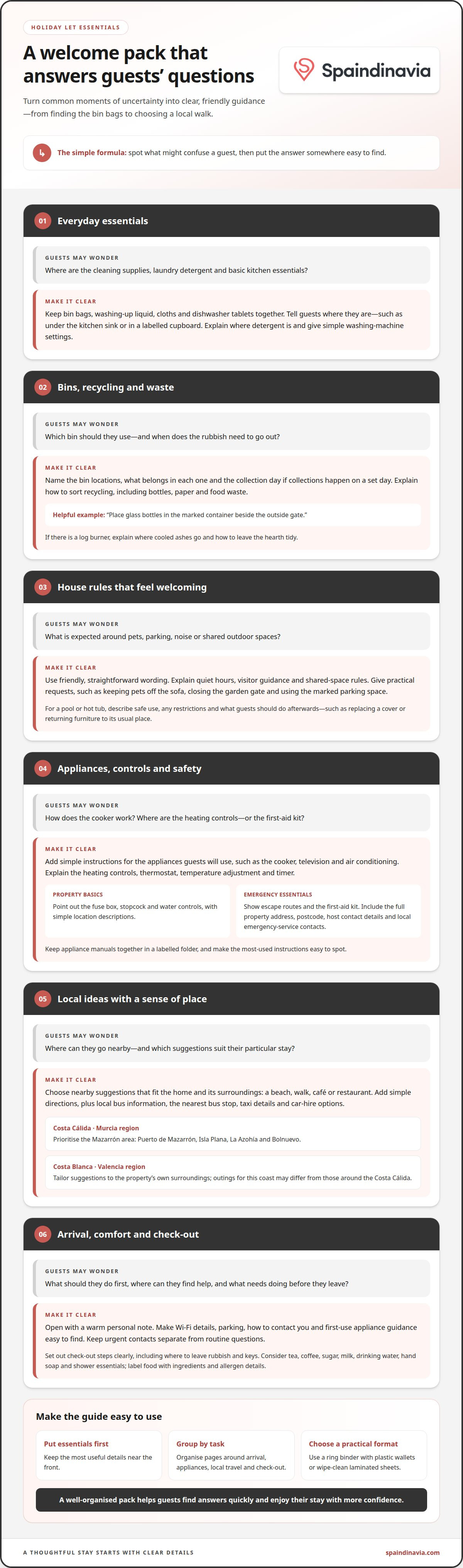
Offer recommendations guests can use without searching through a long guide. For a stay on the Costa Cálida, suggest places such as Puerto de Mazarrón, Isla Plana, La Azohía and Bolnuevo. Point out a nearby beach, a walk, a café for coffee and a restaurant for dinner. On the Costa Blanca, tailor suggestions to the property’s surroundings rather than assuming the same outings suit both coasts. Include the nearest bus stop, local bus information, taxi details and car-hire options, with simple directions from the accommodation.
A small taste of the area can make the welcome feel more personal. You could leave locally made honey, jam, biscuits or olive oil, alongside a note explaining where each comes from. Add takeaway menus for an easy first evening, or vouchers for a local attraction, restaurant or guided tour. If you provide treats, label packaged food clearly and include ingredient and allergen information where available. For guests with pets, recommend nearby pet-friendly cafés or restaurants that welcome animals.
A thoughtful welcome pack balances local character with practical help. Choose fresh, well-presented food and make ingredients clear. In the UK, a holiday-let owner needs a licence to leave alcohol for guests as part of a welcome hamper. What should the pack include? Combine a warm note, contact and medical details, transport guidance, useful local recommendations and one thoughtful touch, such as a food sample or attraction voucher.
2. Housekeeping and waste-disposal instructions
Give guests clear, practical instructions for keeping the property comfortable. Explain where to find bin bags, washing-up liquid, cleaning cloths and dishwasher tablets. Keep these essentials together under the kitchen sink or in a labelled cupboard, and name that location in the guide. If guests can use a washing machine, show where detergent is stored and explain the basic wash settings. Add straightforward instructions for the cooker, television and other appliances they’ll use.
Make waste routines specific to the property. State where household bins are kept, what goes in each one, and when collections take place. If recycling is collected separately, explain how to sort bottles, paper and food waste. Give the collection day if collections happen on a set day. For a home with a log burner, explain where cooled ashes go and how to leave the hearth tidy. A simple example helps: “Place glass bottles in the marked container beside the outside gate.”
Set expectations in a friendly, positive way. Rather than listing prohibitions, explain how guests can help care for the home: keep pets off the sofa, close the garden gate and use the marked parking space. State any quiet hours, visitor rules and guidance for shared outdoor areas. If the property has a pool or hot tub, give clear instructions for safe use and explain any restrictions. Describe how to leave the space afterwards, such as replacing a cover or returning furniture to its usual place.
Property instructions should help guests handle everyday issues calmly. Show where the heating controls and thermostat are, and explain how to adjust the temperature or set a timer. Point out the fuse box, stopcock and water controls, with simple descriptions of their locations. Include heating and hot-water steps that match the appliances in the home. Keep appliance manuals together in a labelled folder, and make the most-used instructions easy to find.
What food, drinks and toiletries should hosts provide? Consider tea, coffee, sugar, milk, breakfast basics, drinking water, hand soap and shower essentials. Leave enough for everyone staying, and label food clearly with ingredients and allergen details. Replenish household supplies between bookings so the next guests find the essentials ready to use.
What safety, emergency and property rules should guests know? Explain escape routes, where to find the first-aid kit and how to contact the host in an emergency. Add practical rules for noise, parking, pets and facilities, plus clear check-out steps, such as where to leave rubbish and keys.
3. Why do you need a guest information pack?
A clear guide helps guests settle in without messaging you about every detail. Choose a hardback ring binder with plastic wallets, or laminated sheets that can be wiped between bookings. Group pages by task, such as arrival, appliances, local travel and check-out. Add a contents page so visitors can quickly find heating instructions or parking details instead of leafing through every page.
Put the folder where guests naturally pause, such as the dining table, kitchen counter or entrance hall. Keep essential information near the front, then place longer appliance manuals in labelled pockets or an archive box. A short welcome message can explain how the guide is organised and where to find extra help. This thoughtful layout makes the collection of instructions a practical part of the guest experience.
A digital guide can complement the printed folder, especially for guests arriving from Sweden, Norway, Poland, Germany, the Netherlands, Belgium or France. Share it after check-in has been confirmed so guests can review directions and arrival details before travelling. A PDF or QR code can link to current property information, while short instructional clips can demonstrate how to use the cooker, heating controls or television. Keep a printed version available for guests who prefer paper.
Tailor the guide to the booking rather than sending every guest identical recommendations. A family staying for a week may value nearby beaches and child-friendly outings; a couple on a short break may prefer dinner suggestions and a scenic walk. Add seasonal details, such as beach information for warmer months or indoor activities for rainy days. Personal touches can make a stay memorable and encourage repeat bookings.
Automation can make tailored messages easier to manage. Create a reusable welcome email with arrival essentials, then add a short section based on the season, guest profile or length of stay. Keep the core guide consistent, and update it whenever an appliance, access arrangement or local service changes. Between guests, review comments in the guest book and make practical improvements, such as clarifying a confusing heating instruction.
How much does it cost to put together a guest welcome pack? It depends on the format, printing, reusable materials and any treats or local products you include. A digital guide can reduce printing, while a simple binder keeps instructions together. Choose additions that suit the property and the experience you want guests to have.
4. Emergency contacts and property address details
Put the property’s full address near the front of the guide, not only in booking messages. Include its postcode, contact number and O.S. grid reference, as well as the name displayed at the entrance or gate. These details help guests explain where they are if they need assistance. Add a short arrival note with a recognisable landmark, such as a nearby roundabout or shop, and explain which entrance to use. Guests arriving after dark will appreciate practical details, such as where to find the porch light.
Give guests a clear way to reach the host or property contact. Include a name, telephone number and the best way to report a maintenance issue. Distinguish routine help, such as a question about a leaking tap, from an urgent safety concern. If someone else manages the property, state their role so guests know whom they’re calling. Keep a printed copy beside the welcome information and include the same details in any digital guide. Update both versions whenever contact arrangements change.
List nearby healthcare services by name and location. Include a local doctor, pharmacy, hospital and emergency department, then add dental care and an optician where available. For each, give its address and a clear route from the property, such as the nearest main road or landmark. A simple printed map can help guests unfamiliar with local street names. Don’t rely only on a map app, since a guest may need information before connecting to Wi-Fi.
Separate emergency contacts from general services so visitors can scan the page quickly. Put the local police and fire service contacts, the host’s number and the property address together. Explain where to find the first-aid kit and how to reach the nearest exit. If the home has a pool, identify where safety equipment is kept and direct guests to the relevant instructions. Keep this page visible in the folder, rather than tucking it behind appliance manuals or local recommendations.
Make the information easy to use for guests travelling from Sweden, Norway, Poland, Germany, the Netherlands, Belgium or France. Use plain English, short labels and recognisable symbols for medical care, police and fire services. If the printed emergency page is bilingual, check that the address and phone details match the main guide. Put a copy beside the entrance or on the fridge, where guests can find it quickly. A small bottle of water can be a welcome arrival touch, but never let it obscure emergency information.
5. Holiday cottage welcome pack ideas
Make the welcome feel connected to the holiday home rather than assembling a generic gift bag. For a coastal cottage, place a reusable beach bag beside a locally made snack and a short note about nearby walks. For a rural stay, choose a jar of local honey, a map of walking routes and a cosy blanket. Add a small card explaining where each item comes from. These personal touches help guests feel they’ve arrived somewhere distinctive.
Think about what guests need during their first evening and morning. Tea, coffee, sugar and a small supply of milk make a late arrival easier. Add breakfast basics such as bread, preserves or fruit, plus bottled water if it suits the property. Choose sealed, clearly labelled foods and show ingredients where possible. A few snacks can be especially welcome after a journey, whilst toiletries such as hand soap and shower gel help guests settle in.
Match the contents to the season and the stay. In summer, consider beach towels, a parasol or a reusable water bottle; in cooler months, hot chocolate and a puzzle can make a rainy afternoon more inviting. Families may appreciate a simple board game, colouring pencils or a local activity suggestion. Guests travelling with dogs might value a bowl, towel or pet-friendly walking map. Include only items suited to the home and the guests you welcome.
Use local recommendations as part of the welcome. A handwritten card could suggest a nearby café for breakfast, a family-friendly attraction or a scenic route for an evening stroll. Include a takeaway menu for guests who prefer a quiet night in. A voucher for a local restaurant, guided tour or attraction can add a special touch. If you leave a local product, such as olive oil or preserves, name its origin and suggest how to enjoy it.
What welcome pack items do holiday let guests value most? Useful essentials often make the biggest difference: tea and coffee, breakfast basics, toiletries, clear property instructions and a few suitable snacks. Add a local treat or practical extra, such as a beach towel, to make the stay feel personal.
What are affordable welcome pack ideas for different budgets? Start with a warm handwritten note, tea, coffee and a guide to nearby places. Add a locally sourced treat or seasonal extra if your budget allows; thoughtful presentation can make even simple items feel special.
Aim for a 5* welcome: place printed/digital PDF guides, apps or property QR codes prominently. A 1-bed couple’s apartment may need a basket. Use reusable, biodegradable or locally sourced items; include heating, boiler, cooker and TV instructions.
Spaindinavia: New Build Villas
Spaindinavia can help you explore property options if welcoming guests has inspired you to consider a holiday home in Spain. Its New Build Villas, Resale Apartments, Townhouses and Bungalows offer different starting points, whether you picture a modern villa or a more compact base for coastal stays.
Think about how you’d use the home: as a personal retreat, a holiday let, or a blend of both. The right property depends on your preferred location, layout and plans for the space. If you’re ready to explore possibilities, discover property options with Spaindinavia.
Contact Spaindinavia to discuss your property search.
Shape your next step around the stay you want to create
A welcome pack can be the starting point for imagining the kind of holiday home you’d enjoy sharing. As you consider creating a welcome pack for holiday let guests, think beyond the guide itself: picture the atmosphere, local experiences and sense of place you want visitors to remember.
If you’re exploring a coastal property, compare Costa Cálida in the Murcia region with Costa Blanca in the Valencia region. Around Mazarrón, Puerto de Mazarrón, Isla Plana, La Azohía and Bolnuevo offer a distinct setting from the Costa Blanca. Consider which location and type of home best fits your plans for personal stays and holiday letting.
Take the next step when you’re ready to explore property options for your plans. Contact Spaindinavia about your holiday-home plans, and move towards creating a place guests can enjoy and remember.
Frequently Asked Questions
What is a Welcome Pack?
A welcome pack brings together useful information and thoughtful touches for guests staying in a holiday rental. It can include a printed guide, a personal message and selected items that make the home easier to use. Think of it as a practical introduction to the property and the stay, rather than simply a basket of snacks or a list of house rules.
Why do you need a guest information pack?
A well-organised pack gives every guest the same reliable reference, even when different people handle arrivals. For example, a guest can look up how to reset the television without relying on a verbal handover. It also helps hosts keep instructions consistent across bookings. Use guest feedback to spot unclear wording, then revise the relevant page so future visitors can find the answer more easily.
What to include in a welcome note?
Keep the note warm, brief and personal. Address guests by name if you have it, welcome them to the home and mention a distinctive feature, such as a courtyard or sea-view balcony. Sign it with the host’s name so guests know who prepared it. Don’t crowd the greeting with instructions; use it to point guests towards the guide.
How can you tailor a welcome pack to families, couples, and pets?
Adapt the emphasis to the booking without assuming what each group needs. Families may benefit from directions to suitable outings, while couples might appreciate a quiet walking route or local dining idea. For guests bringing a dog, make pet rules easy to find and point out suitable nearby places. Use booking details to select useful information, and leave out irrelevant pages where possible.
What local recommendations and information should a welcome guide include?
Choose recommendations guests can use straight away, and make each one easy to act on. Give the venue’s name, location and the kind of visit it suits, such as a relaxed lunch or a coastal walk. Include indoor and outdoor options so guests have alternatives if plans change. Review opening details before each stay, and remove suggestions that are no longer useful.
How should hosts present and deliver a holiday rental welcome pack?
Make the pack easy to notice and navigate. Use clear section labels, a contents page and consistent headings across printed and digital versions. Keep the paper guide somewhere visible, then share the digital copy with the arrival information. Update both formats together when details change, and remove outdated pages between bookings so guests aren’t left comparing conflicting instructions.


