

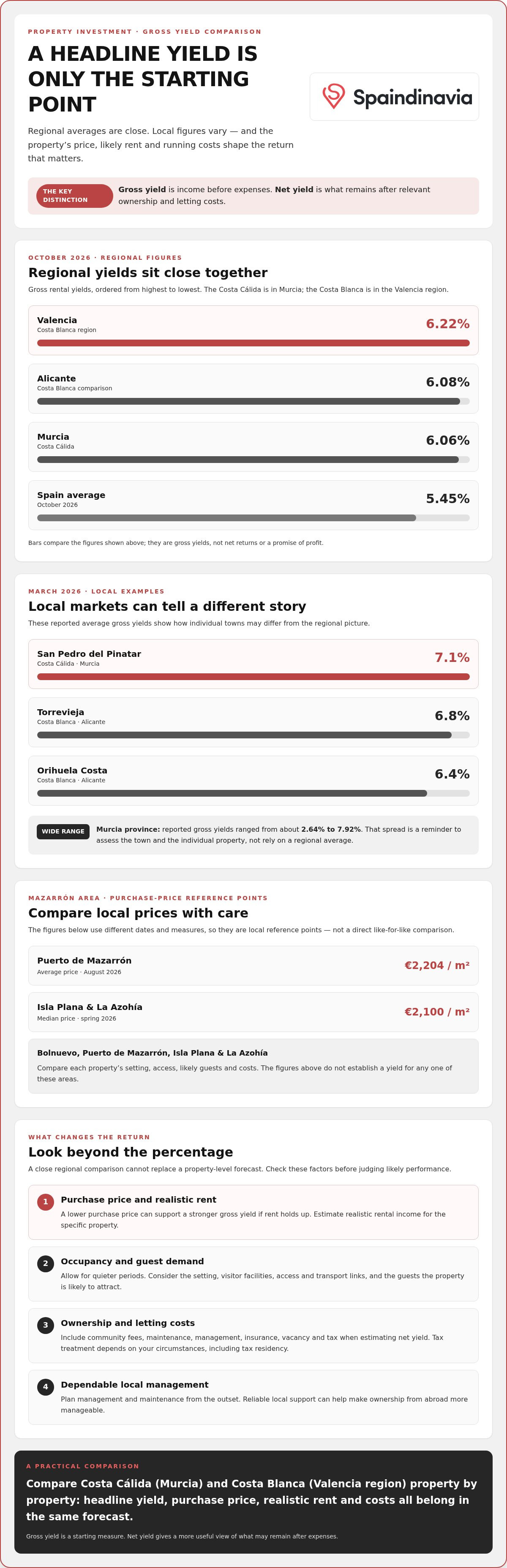
For investors researching “rental yields murcia”, the October 2026 figures offer a useful starting point: gross rental yields stood at 6.06% in Murcia, compared with 6.08% in Alicante and 6.22% in Valencia. Those percentages put Murcia firmly in the conversation, but headline figures don’t tell the whole story.
If you’re weighing up an overseas property, it’s natural to consider quiet periods, unexpected costs and managing a home from abroad. Start by separating gross yield, the income before expenses, from net yield, what remains after running costs and tax. Occupancy and reliable local management matter too.
This guide explains how to compare potential returns, assess a property’s costs and build a practical management plan. It also looks at the different characteristics of more established and quieter coastal markets, and compares new-build villas with resale apartments. The aim is to help you assess an individual property rather than rely on a headline percentage.
Key Takeaways
- Use rental yields in Murcia as a starting point, then compare likely income with purchase costs and ongoing expenses before deciding.
- Compare markets by maturity, rental demand and costs to find the right balance for your budget and investment goals.
- Assess each property’s setting, access to everyday services and likely guest profile before estimating occupancy.
- Match your strategy to the property: consider the appeal of new-build villas alongside the location and character of resale apartments.
- Plan property management and maintenance from the outset to support occupancy, protect your investment and make ownership from abroad more manageable.
The 2026 Outlook for Rental Yields in Murcia: Why Investors are Shifting South
If you're comparing rental yields murcia with returns elsewhere in Spain, the 2026 figures make a case for looking beyond the best-known destinations. Gross rental yield is the annual rent divided by a property's purchase price, expressed as a percentage. Murcia's gross yield was 6.06% in October 2026. For comparison, Global Property Guide reports a Spain-wide average of 5.45%, although figures can vary by location and methodology.
A higher gross yield is a useful starting point, not a promise of profit. It doesn’t account for periods without tenants, maintenance, community fees, management costs or tax. Purchase prices and rental demand can also vary substantially between areas and properties. When comparing rental yields in Murcia with returns elsewhere, look beyond the headline figures to the individual property’s costs and realistic rental income.
The potential appeal of Murcia is the combination of a comparatively lower entry cost in some areas and rental demand, which may help investors balance purchase price with income potential.
The Appeal of the Costa Cálida in 2026
The coastline has a varied character, from lively seaside areas with visitor facilities to quieter settings that may suit guests seeking a more relaxed stay. Sustainable tourism can complement this appeal by encouraging visitors to value local nature and culture, not only a beach holiday. For background on the area's geography and economy, explore the Region of Murcia.
Investors looking beyond Spain’s established coastal markets may be drawn to a different pace and potential value. Access, transport links and visitor facilities matter too: when they make a destination easier to reach and enjoy, they can support a broader rental season. Compare these practical factors for each property rather than assuming that sunshine alone guarantees year-round occupancy.
Understanding Gross vs Net Yields in Spain
Net yield estimates what remains after relevant ownership and letting expenses are deducted from rental income. These may include community fees, maintenance, management, insurance, vacancy and tax. Tax treatment depends on your circumstances, including your tax residency, so don’t assume that two overseas owners will have the same net return.
For British investors, net yield is the more useful figure for judging how a property may perform against its total costs. Build a simple forecast before buying: estimate realistic occupied weeks and rent, list recurring expenses, then allow for quieter periods and unexpected repairs. The Buying Property in Spain Guide covers further tax considerations to factor into your planning.
Comparing ROI: Murcia vs Costa Blanca South
Choosing between the Costa Cálida in Murcia and the Costa Blanca in the Valencia region isn’t simply a matter of picking the highest headline yield. The markets differ in maturity, purchase costs and visitor patterns, all of which shape your potential return. October 2026 gross yield figures were 6.06% for Murcia, 6.08% for Alicante and 6.22% for Valencia. These regional averages are close, so an individual property’s location, price and realistic rental income may matter more than the coast-wide comparison.
Purchase price per square metre affects how much capital you put in at the outset. For context, Puerto de Mazarrón averaged €2,204 per square metre in August 2026, while Isla Plana and La Azohía had a median of €2,100 per square metre in spring 2026. These figures come from different dates and measures, so treat them as local reference points, not a direct comparison with Costa Blanca prices. A lower purchase price can support a stronger gross yield if rent holds up, but calculate net returns after costs before deciding.
Costa Blanca: The Established Powerhouse
Torrevieja and Orihuela Costa offer established holiday markets, with services and visitor appeal that can suit short-stay lets. March 2026 average gross yields were 6.8% in Torrevieja and 6.4% in Orihuela Costa. Short-term rental yields across the Costa Blanca are reported at 6% to 10%, compared with 4% to 6% for long-term rentals. These are broad ranges, not guaranteed results for every property or property type.
A mature market can bring strong visitor recognition, but competition means presentation, pricing and dependable management are important. Compare apartment and villa opportunities individually: the available figures don’t establish a reliable yield range by property type. For a fuller view of price movements alongside rental income, consult Spain’s official housing price index.
Murcia: The High-Growth Alternative
The Costa Cálida offers a different proposition: a quieter coastal feel and, in many locations, a lower entry point than the more established Costa Blanca. San Pedro del Pinatar recorded a 7.1% average gross yield in March 2026, while the broader Murcia province range was wide, from about 2.64% to 7.92%. This variation is a reminder to assess the town and property, not rely on a regional average.
When assessing properties, compare lively settings with convenient amenities against quieter locations that may appeal to guests seeking longer, more relaxed stays. These audiences may call for different rental strategies, so match your property and management plan to the guests you want to attract. Consider the two coasts as complementary portfolio options, then compare property opportunities across both coasts against your goals for income, personal use and long-term growth.
New Build Villas vs Resale Apartments: Which Strategy Wins?
There’s no automatic winner between a new-build villa and a resale apartment. The right choice depends on the rent your target guests will pay, the purchase price and the costs of keeping the property ready to let. Global Property Guide’s gross rental yields in Spain provide useful market context, but a national or regional figure can’t predict an individual property’s performance.
A modern villa may appeal to guests seeking privacy, outdoor space and a contemporary holiday home. An apartment in an established market may suit visitors looking for easy access to beaches, shops and restaurants. Compare like with like: a villa’s higher potential rent may come with a higher purchase price and greater running costs.
The Case for New Build Villas
Modern layouts, energy-efficient features and, where included, a private pool can help a new-build villa stand out in the higher-end holiday market. These features may also make a home more comfortable and straightforward to maintain, but a new property isn’t maintenance-free. Check what ongoing care the building, garden and any pool will need, especially if you’re managing the investment from abroad.
A villa may appeal to guests beyond peak summer, particularly if its location and facilities suit their needs. That doesn’t guarantee higher shoulder-season occupancy. Before you buy, build separate income estimates for busy and quieter periods, and avoid relying on peak-season rates throughout the year.
Resale Opportunities and Value
Resale apartments can offer a lower purchase price and a stronger fit for long-term residential letting, especially when they’re close to everyday services and transport. Look at the apartment’s immediate surroundings, access to amenities and suitability for the tenants you want to attract. Focus on tenant convenience and local demand rather than age alone.
A lower asking price isn’t necessarily a better investment if the apartment needs substantial work. Estimate renovation and ongoing maintenance needs before comparing yields, and include community fees in your net-return calculation. Older properties may offer character or a sought-after location, but condition can affect both costs and how quickly a home is ready to rent.
Choose for Your Investment Plan
For British owners who value newer design and a managed holiday-rental approach, a new-build villa may be worth the additional upfront investment. A resale apartment may suit a tighter budget or a long-term rental strategy. Compare the full cost of ownership, realistic rent and management requirements for each option. That’s a more reliable way to assess rental yields in Murcia than choosing by property type alone.
Investment Hotspots: Mazarrón and the Surrounding Gems
Investors exploring rental yields in Murcia should compare the needs of different coastal micro-markets. A lively setting with visitor facilities may appeal to a broad mix of guests, while quieter surroundings may suit visitors seeking a more peaceful stay. Demand comes from both Spanish and international buyers, but the best property choice depends on the guests you want to attract and how you plan to let it.
Compare each location in person if you can. Look beyond the view: consider walkability, access to local services, the property’s condition and how its setting fits the type of stay you’re targeting. A desirable address can support rental appeal, but it doesn’t guarantee occupancy or a particular return.
Puerto de Mazarrón: The Heart of the Coast
A marina, beaches, restaurants and everyday amenities can give a coastal area a lively feel that appeals to domestic holidaymakers and international visitors alike. For rental planning, consider how the atmosphere changes across the year and whether your property will suit short breaks, longer stays or a mix of both. Compare the pace and visitor profile with more established coastal markets before deciding which approach fits your investment.
A centrally located apartment may suit guests who want to reach the waterfront, shops and cafés on foot. On the outskirts, a bungalow, townhouse or villa may be a better fit for visitors seeking more space or a quieter base. Don’t assume that one type of visitor will fill every calendar. Shape your rental offer around the property’s actual location and features.
Isla Plana, La Azohía and Bolnuevo
Each neighbouring spot has a distinct appeal. A village atmosphere and coastal surroundings may suit guests looking for a relaxed stay without feeling far from a busier centre. Quieter settings can also appeal to visitors seeking a peaceful retreat and a more intimate holiday experience.
A beach and distinctive natural scenery can help set a property apart, especially for visitors drawn to space and a premium coastal experience. That appeal may support a higher-end positioning, but a higher purchase price needs to be weighed against achievable rent, seasonal demand and ongoing costs. A memorable setting is an advantage, not a substitute for careful numbers.
To compare homes and locations across the Costa Cálida and Costa Blanca, explore investment properties in Mazarrón and consider which setting best matches your rental goals.
Maximising Your Yield: Management and Next Steps
A promising return depends on more than the purchase price and advertised rent. If you’re assessing rental yields in Murcia, factor in guest communication, reliable upkeep and quieter periods, whether you’re considering a less established market or a busier, more mature one.
Use 35 booked weeks a year as a planning target, not a forecast or guarantee. Work backwards: consider your likely guests, seasonal demand, achievable rates and the time needed for cleaning and maintenance between stays. Then test your figures against a quieter year as well as a strong one. This gives you a more grounded estimate of the income your property might generate.
Professional Rental Management
Before agreeing a management arrangement, make sure you understand what it covers. Booking-only support may focus on reservations, whilst fuller rental management can include guest communication and coordinating property care. Clarify responsibilities, reporting and how routine maintenance is handled. Prompt, helpful replies before and during a stay can build trust and encourage guests to return, supporting future bookings without guaranteeing them.
If you’re based abroad, arrange a practical system for access and regular property checks. Small issues, such as a leak or faulty appliance, can be easier to address when spotted early. Spaindinavia provides rental management and maintenance, helping international owners oversee their investment from the UK.
Rental permissions and requirements can depend on the property’s location and intended use. Research the relevant steps for your property and include this work in your purchase plans rather than leaving it until the last minute.
Starting Your Investment Journey
Begin by setting a clear budget and deciding whether your priority is holiday income, longer-term letting, personal use or a balance of these. British buyers commonly need an NIE, Spain’s foreigner identification number, for property-related transactions. An independent Spanish solicitor can guide you through the legal checks and purchase process. Take time to understand the paperwork before committing.
Next, organise viewings and compare properties using the same criteria. Note access, local amenities, property condition and the kind of guest each home might suit. Use consistent questions and rental assumptions at every viewing to make a fair comparison.
Speak to the Spaindinavia team today to explore investment opportunities and discuss property options across the Costa Cálida and Costa Blanca.
Take the Next Step Towards a Confident Investment
Murcia’s rental potential is compelling, but a headline yield is only part of the picture. Compare net income after costs, choose a property that fits your letting goals and plan for reliable management from the outset. Different coastal settings offer different rental opportunities, so take time to compare the property, its location and the visitors it is likely to attract.
Understanding rental yields in Murcia is easier when you look beyond averages. Spaindinavia specialises in new-build villas and offers a hand-picked portfolio that also includes resale apartments and other property types. The agency supports buyers through the purchase process and provides rental management and property maintenance for owners.
Explore Spaindinavia’s hand-picked portfolio of villas and apartments and take a practical next step towards your investment in Spain. Compare the likely income and full ownership costs, then choose a property and management plan that suit your goals.
Frequently Asked Questions
What is a good rental yield for property in Murcia?
A gross yield around or above the regional average can be a useful starting point, but it doesn’t guarantee a profit. Murcia’s average gross rental yield was 6.06% in October 2026. For comparison, Alicante recorded 6.08% and Valencia 6.22%. Compare net yields after expenses, tax and vacant periods, then assess whether the property’s likely income suits your investment plans.
How does the Costa Cálida compare to the Costa Blanca for investment?
The Costa Cálida in Murcia is generally quieter and more affordable, whilst the Costa Blanca in the Valencia region is a more established, busier market. October 2026 gross yields were close: 6.06% in Murcia, 6.08% in Alicante and 6.22% in Valencia. Compare individual properties rather than relying on regional averages. Your choice should reflect your budget, preferred rental strategy and appetite for a developing or mature market.
Do I need a tourist licence to rent out my property in Murcia?
Holiday letting requirements depend on the property’s location and how you plan to rent it. Requirements vary by region, so check the rules that apply to your particular property before advertising. The national short-term rental registry was annulled by Spain’s Supreme Court in May 2026, with registration requirements applying regionally. Build this research into your purchase planning and seek advice for your circumstances.
Is it better to invest in a new build or a resale property for rentals?
Neither is automatically better; the right option depends on location, purchase costs, target guests and expected upkeep. A new-build villa may appeal to holidaymakers seeking modern design and outdoor space. A resale apartment may offer a lower entry price or a central location suited to longer lets, but could need repairs or renovation. Compare the full ownership costs and realistic rent before choosing.
What are the main costs associated with owning a rental property in Spain?
Allow for property taxes, community fees where applicable, utilities, insurance, maintenance, management, repairs and periods without rental income. These costs can vary from one property to another. If you buy a resale home, factor in possible renovation work. With a new build, budget for ongoing upkeep rather than assuming there will be none.
Can I manage my Spanish rental property from the UK?
Yes, but managing bookings, guest communication, maintenance and access remotely takes reliable local support and clear systems. A manager can help with booking administration, guest queries, key holding and maintenance coordination. Spaindinavia offers rental management and property maintenance. Before letting, map out who handles each task and how issues are reported, so problems can be addressed promptly.
Which areas in Murcia have the highest rental demand?
Demand varies by property, season and guest type, so no single town suits every investment. Compare lively coastal settings with quieter areas and assess amenities, access and likely occupancy for each property. San Pedro del Pinatar recorded a 7.1% average gross yield in March 2026. For comparison, established coastal locations also attract rental interest. Treat yield figures as context, not a guarantee of demand or income.
What taxes do non-residents pay on rental income in Spain?
Tax depends on your residency status and individual circumstances. The 2026 guidance states a 19% rate on net rental income for EU and EEA residents, with eligible deductions, and a 24% rate for non-EU residents. A July 2025 court ruling supported non-EU residents’ ability to deduct expenses, though the position may depend on current implementation. Seek independent tax advice about your situation.


