

When comparing homes with passive cooling design Costa Calida buyers can use a few practical checks to look beyond broad comfort claims. Start with the home itself: where does sunlight reach the windows, what provides shade, and could air move through the rooms? These details are more useful than a general label when comparing properties.
It’s natural to want a home that feels comfortable in warm weather and to wonder whether features such as shading and airflow make a practical difference. Passive cooling brings design choices together to help limit unwanted heat, but their effect depends on the home, its setting and how you use it. It does not guarantee a particular indoor temperature or remove the need for active cooling if that better suits your preferences.
This guide explains the main principles and shows you what to compare in new-build villas. You’ll learn which details to look for, how to assess project information and how to weigh design choices against your routines, so you can explore your options with greater confidence.
Key Takeaways
- Understand how passive cooling combines design choices to help limit unwanted heat, rather than relying on a single feature.
- Compare shade, orientation, ventilation and glazing together when assessing homes with passive cooling design Costa Calida buyers are considering.
- Separate visible design details from performance claims that need supporting project information.
- Assess each villa against your comfort preferences, daily routines and plans for indoor and outdoor spaces.
- Use Spaindinavia’s support throughout the purchase process as you compare new-build villa designs and weigh up your wider property priorities.
What does passive cooling design mean in a Costa Cálida home?
Passive cooling uses a home’s design and setting to help limit unwanted heat and support indoor comfort, without relying solely on powered cooling. It is a joined-up approach, not a promise that a home will stay at a particular temperature. The aim is to reduce heat entering the home and make the most of natural airflow when conditions allow.
Shade, orientation, airflow and materials can all play a part. Their effect depends on how they work together, how the home is used and the conditions around it. For a useful overview of the principles, explore this guide to passive cooling design.
How does passive cooling work in a home?
Think of these features as a team. External shutters, overhangs or a covered terrace can shade windows and help limit direct sunlight entering a room. A home’s orientation affects which sides receive sun at different times, so compare window positions and outdoor spaces rather than assuming one direction suits every plot.
Airflow is another consideration. Windows positioned to allow air to pass through a room may support natural ventilation when they’re open and conditions are suitable. Materials can also affect how a home gains and releases heat. Consider these details together, rather than treating any one of them as a guarantee of a particular indoor result.
Passive design and mechanical cooling can work alongside each other. A home may use design features to help manage heat and also have an active cooling system for periods when that better suits your comfort preferences. Consider both as part of the property’s overall design.
Why compare the Costa Cálida and Costa Blanca?
When comparing properties in different parts of the country, assess each home on its own design and setting. A broad location label cannot tell you how a particular property will feel, and a feature that works well in one setting may have a different effect in another.
Look at the individual property and its site, including window placement, surrounding structures, shade and how you expect to use indoor and outdoor spaces. Apply the same questions to each home and review its project information. This keeps your comparison grounded in the actual design rather than broad assumptions.
Which passive cooling design features should buyers understand?
A shaded window and a well-placed opening can look like small details, yet each can influence how a home responds to sunlight and airflow. When comparing homes with passive cooling design Costa Calida buyers may be considering, focus on how the features work together and whether they suit the specific plot.
How do shade and orientation affect a home?
Direct sunlight through a window can add heat indoors. External shading, such as an overhang, shutter or covered terrace, can block some sun before it reaches the glass. Check which windows have shade, whether it appears fixed or adjustable, and how it relates to the rooms you expect to use most.
Orientation describes the direction a home or its rooms face, which affects when they receive sun. No single direction guarantees the best result for every home: the shape of the plot, window placement and nearby buildings can all alter exposure. If practical, visit at different times of day and note where direct sun falls on windows and outdoor areas. A terrace that is shaded at one time may be more exposed at another.
What role do ventilation and materials play?
Cross-ventilation means air can enter through an opening on one side of a room or home and leave through another. During a viewing, notice whether windows or doors sit on opposing or adjacent sides and whether the layout offers a clear route for air to move. Its usefulness depends on conditions and how the home is used, so treat window positions as a design feature, not a promise of constant airflow.
Materials also matter. Thermal mass is a material’s capacity to absorb and later release heat. Dense materials, such as masonry or concrete, can store heat, but their effect depends on the overall design and conditions. No single material guarantees a cooler interior. Consider it alongside shade, windows and ventilation.
The Australian Government’s YourHome guide to passive cooling design features explains practical approaches to shading and ventilation. Its examples come from a different climate context, so use them to understand the principles, not as a specification for an individual property.
Comfort depends on the combination: assess shade, orientation, airflow and materials together, then consider how they fit your routines and the individual site. As you compare these details across properties, you can also explore new-build villas as part of your wider home search.
How can you compare passive cooling design between homes?
Use the same criteria at every viewing. A villa with a striking covered terrace may still have exposed windows elsewhere, so one appealing feature should not decide the comparison. For homes with passive cooling design Costa Calida buyers are considering, a simple scorecard helps distinguish what you can observe from claims that need supporting project information.
Which details can you compare during a viewing?
Walk through each property in the same way. Note which rooms have the most exposed windows, where shading is fitted, and whether openings appear to offer a route for air to pass through. Look at how nearby buildings, walls or other structures affect shade, and consider whether the outdoor areas you’d use most are exposed or sheltered. If possible, observe the property at different times of day.
Record what you can see, then list questions to discuss during the buying process. This helps you distinguish a visible feature from an assumption about its effect.
| Compare | Observe at the property | Look for in project information |
|---|---|---|
| Shade | Which windows or outdoor areas have overhangs, shutters or other shading? | How the shading is designed to relate to exposed windows. |
| Orientation | Which way do the main windows and living areas face, and where does sunlight fall? | Plans or descriptions showing the home’s orientation and layout. |
| Ventilation | Are there openings on different sides that could allow air to move through? | Any stated ventilation approach and relevant design details. |
| Glazing | Where are the windows, and are some more exposed than others? | Documented information about the glazing, rather than a general comfort claim. |
| Specifications | Which features can you actually see? | Written project details supporting specific design or performance statements. |
How should you assess claims about comfort?
“Naturally cool” is a broad description, not a specific feature. Give more weight to clear information about the design, such as where shading is used or how windows are arranged, and note any details that remain unclear. An energy label may describe an aspect of a home’s energy performance, but it should not be treated as proof of a particular indoor temperature or personal comfort level.
For a wider framework on building considerations, the U.S. Department of Energy outlines sustainable building principles. Use it as general context, not as a substitute for information about an individual project. Comfort depends on the full design, the site, how you use the home and what feels comfortable to you. Compare the available information consistently, then weigh it against your routines and preferences.
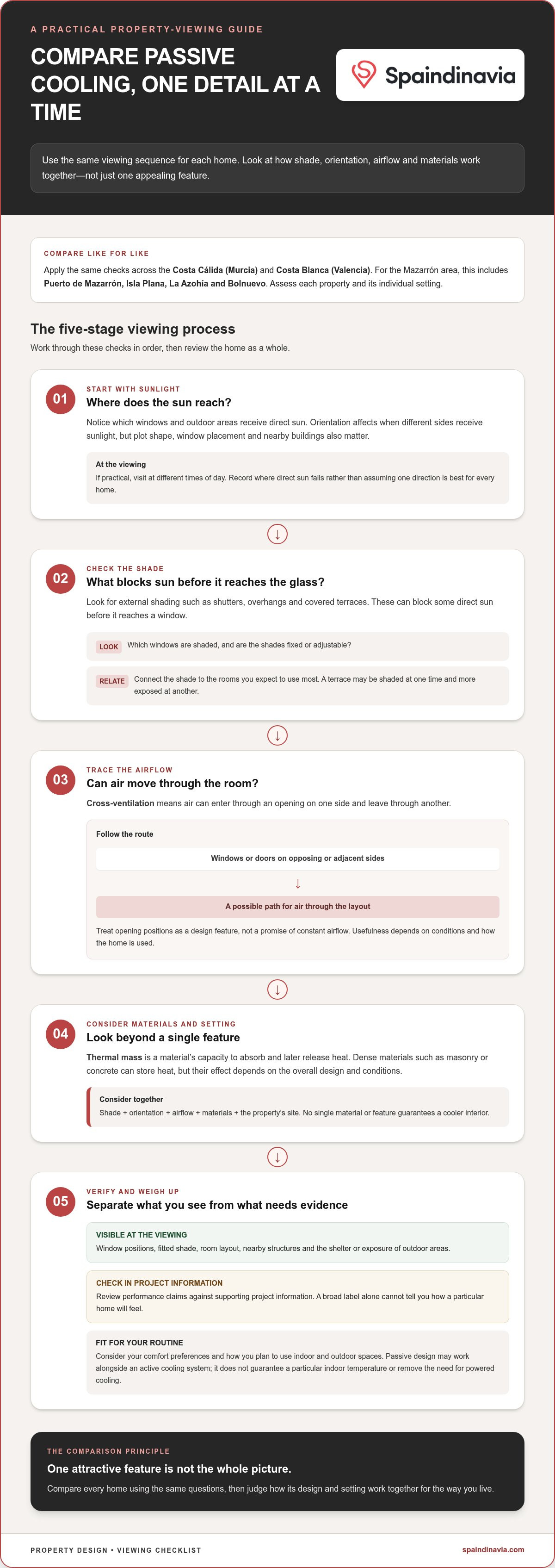
What should you check before choosing a passively designed home?
A consistent checklist helps you compare new-build villas without letting one attractive feature overshadow the rest. Use the same prompts at every viewing, whether you’re considering homes with passive cooling design Costa Calida buyers search for or comparing other properties. Focus on what you can observe, what the project information documents and how each home could suit your everyday life.
A viewing checklist to use for each property
- Map the shade. Note which windows and outdoor areas have shutters, overhangs or other shading. Consider which rooms may be most exposed during the times you expect to use them.
- Record orientation and exposure. Make a simple note of the direction main windows face and where direct sunlight falls during your visit. Nearby structures can affect shade, so include them in your observations.
- Look at ventilation routes. Notice where windows and doors are positioned and whether openings on different sides could allow air to move through the home when conditions suit.
- Review glazing and room use. Note where the windows are and which rooms matter most to you during warmer parts of the day. Relate these details to your routines, rather than judging the home by appearance alone.
- Compare your notes with project information. Look for written details that describe relevant design choices and specifications. Keep unanswered questions alongside your notes so you can discuss them during the buying process.
Match the design to your lifestyle
Think about how often you’ll occupy the property and how you prefer to spend your time at home. If you work or relax indoors during the warmer part of the day, consider the comfort of those rooms. If outdoor living matters to you, look at the shade and privacy of terraces or gardens, and how their exposure changes throughout the day.
Natural light, privacy and airflow can involve trade-offs. You may value bright rooms, for example, while also wanting shade where sunlight reaches windows directly. Write down your priorities before comparing properties, then use the same list to assess each one.
Finally, consider active cooling as a separate part of your comfort preferences. Passive design may support comfort, but you shouldn’t assume it makes mechanical cooling unnecessary. The right balance depends on the home, your routines and what feels comfortable to you.
Use your checklist as part of a wider property decision. Explore new-build villas with Spaindinavia and compare design details with your priorities in mind.
How can Spaindinavia help you choose a new-build villa?
Choosing a villa involves more than comparing design features. Your preferred level of comfort, how you plan to use the property, its setting and the wider purchase decision all matter. Spaindinavia supports buyers throughout the property purchase process, helping you keep your priorities in view as you explore new-build villas.
How does buyer support fit into the home search?
Start by making your preferences clear. You might prioritise shaded outdoor space, bright living areas, window placement or a particular balance between natural ventilation and active cooling. A focused list makes it easier to compare suitable properties and see how the available project information relates to the features that matter to you.
Your viewing notes can become a practical comparison tool. Record which rooms you expect to use most, what design details you’ve observed and what the project information says about them. This helps you weigh comfort considerations alongside layout and other priorities, rather than treating one feature as the deciding factor.
Spaindinavia guides buyers through the purchase journey and works with independent solicitors, banks and local experts. This support is part of the wider process of exploring a property and progressing a purchase. It does not replace a technical assessment of a home, but it can help you keep your preferences and design questions organised as you consider your options.
What are the next steps for comparing homes?
Shortlist villas that fit your broader needs, then review the available project information for each one. Note which design details are described clearly and how they relate to your comfort priorities. When comparing homes with passive cooling design Costa Calida buyers are considering, assess each property on its own details rather than relying on broad assumptions.
Take your time with the decision. A home that looks appealing on paper also needs to suit your daily routines, preferred indoor and outdoor spaces, and expectations for comfort. Spaindinavia offers a hand-picked property portfolio focused on quality and long-term investment potential, with buyer support throughout the purchase process.
Ready to explore options with your priorities in mind? Explore Spaindinavia’s property selection and take the next step towards finding a new-build villa that feels right for you.
Choose a villa that fits the way you live
As you compare homes with passive cooling design Costa Calida buyers may be considering, focus on the whole design rather than one standout feature. Shade, orientation, ventilation and glazing are useful clues, but how they suit your routines and comfort preferences matters just as much. Review visible details alongside project information, and consider active cooling separately rather than assuming passive design will meet every preference.
Spaindinavia is an independent real estate agency specialising in property sales and rentals, with a hand-picked portfolio that includes new-build villas. We support buyers throughout the purchase process and work with independent solicitors, banks and local experts, helping you approach this important decision with informed support.
Ready to explore your options? Explore new-build villas with Spaindinavia and take the next step towards a home that feels right for you.
Frequently Asked Questions
What is passive cooling design in a home?
Passive cooling design uses a home’s layout and features to limit unwanted heat and support comfort, without relying solely on powered cooling. It can include external shade, window placement that supports airflow, and materials that absorb and release heat. These elements work as a whole, and their effect depends on the property, its setting and how you use it. The term is not a guarantee of a particular indoor temperature.
Can passive cooling keep a home comfortable without air conditioning?
It may support comfort, but passive design alone will not suit everyone or every home. The outcome depends on the combined design, the site, the weather and your comfort preferences. Consider whether you’d want active cooling as well, particularly if you prefer a specific indoor temperature or expect to use the home during warmer periods. Treat passive features and air conditioning as complementary considerations, not necessarily alternatives.
Which features should I look for in a passively cooled home?
Look for features such as external shutters or overhangs that shade windows, window positions that may allow air to flow through rooms, and glazing suited to the home’s exposure. Also consider the materials used in walls and floors, since they can affect how heat is absorbed and released. Assess these details together, then compare what you can observe with the design information available for the individual property.
Does home orientation matter for passive cooling?
Yes. Orientation affects which sides of a home receive sunlight and when, so it can influence exposure in different rooms and outdoor spaces. But no single direction is automatically best for every property. Window placement, shading, the shape of the plot and nearby structures can all change how sunlight reaches the home. During a viewing, note where the sun falls and consider how that relates to your daily routine.
Are passive cooling homes common on the Costa Cálida and Costa Blanca?
Passive cooling features vary from one home and project to another. Rather than relying on a regional assumption or a listing label, look at each property’s visible features and available project information to understand what its design includes.
How can I compare passive cooling features when viewing new-build villas?
Use the same checklist at each viewing. Note the shading, which rooms and windows receive direct sun, possible routes for airflow, glazing and the exposure of outdoor areas. Then compare your observations with the project information, keeping documented details separate from broad claims about comfort. For homes with passive cooling design Costa Calida buyers are considering, use the same approach to assess each villa individually.
Is passive cooling the same as energy-efficient cooling?
No. Passive cooling refers to design choices that help limit heat gain or use natural airflow. Energy-efficient cooling is a broader idea that can include how efficiently a home uses energy, including for active systems such as air conditioning. A well-considered comparison looks at both the design features and any relevant documented information, without assuming that passive cooling guarantees low energy use or removes the need for mechanical cooling.


