

What if buying a home in Spain could feel less like a maze of paperwork and more like the first step towards a sunnier way of life? The Spaindinavia buying process is designed around that idea: a hand-picked property search, personal guidance and support from your first conversation through to completion.
It’s natural to have questions about legal checks, NIE paperwork or managing a home from abroad. You want a property that suits your plans, clear communication and a good understanding of what needs to happen next. Spaindinavia’s hand-picked portfolio and collaboration with independent solicitors help make the purchase journey easier to navigate.
This guide explains the main stages, from preparing for your search and comparing locations to understanding the role of legal support. It also covers how to think realistically about rental potential and how property management and key holding can help when you’re away. Whether you’re looking for a holiday retreat, a home for year-round living or a property you may rent out, having your priorities clear will help you make better decisions at each stage.
Key Takeaways
- See how the spaindinavia buying process starts with your plans and narrows the search to carefully selected homes.
- Learn how to prepare for your property search, from defining what matters most to making the most of a viewing trip.
- Compare the Costa Cálida and Costa Blanca, and explore the different settings described in this guide.
- Understand how an NIE and independent legal support fit into a Spanish property purchase.
- Discover how rental management and key holding can help you look after your home when you’re away.
The Spaindinavia Philosophy: Why Our Process Starts with Your Lifestyle
A home should fit the life you want to lead, not just look appealing in a listing. That’s why the spaindinavia buying process begins with your priorities: how you’ll use the property, what kind of setting feels right and whether you’re seeking a holiday retreat, a place to live year-round or a home with rental potential.
Quality comes before quantity. Spaindinavia’s hand-picked portfolio is focused on properties selected for their quality and potential long-term appeal. When comparing homes, consider practical details as well as first impressions: the property’s condition, layout, age, access to amenities and how well it suits your intended use. Future value can never be guaranteed, so weigh these factors as part of your decision rather than treating them as a promise of investment growth.
The Hand-Picked Portfolio Approach
Location shapes everyday life. Think about how you’ll get to shops and other amenities, how often you expect to travel and whether the surrounding setting suits the way you want to spend your time. On a viewing trip, compare the feel of each area as well as the properties themselves. A home that looks right online may not match your day-to-day priorities once you’ve seen the setting in person.
Spaindinavia specialises in new build villas, and its hand-picked portfolio also includes other property types. When viewing a new build, consider the layout, finish and features against your own needs. If rental potential is part of your plan, assess the property’s location, size and layout for the kind of stays you have in mind. Rental income cannot be promised, but a clear idea of likely use can help you decide whether the property could contribute towards its running costs.
A Bridge Between Cultures
Buying in Spain can feel unfamiliar if you’re used to UK or Scandinavian systems and expectations. Spaindinavia’s local property expertise helps make the process clearer, while collaboration with independent solicitors gives you separate legal support. Spain’s notary has a distinct function from a notary public in many common-law countries; this overview explains the role of a civil law notary.
Start by ranking your priorities. For example, decide whether a quieter setting, easy access to shops and restaurants, outdoor space or a particular property type matters most. Separate essential features from preferences, then use that list to compare homes consistently. This makes it easier to spot a genuine fit rather than being swayed by a single attractive feature.
A first conversation is the start of the buying journey. Spaindinavia helps you connect your lifestyle priorities with suitable property options and guides you through key decisions with clear communication and personal support.
The 5 Key Stages of the Spaindinavia Buying Process
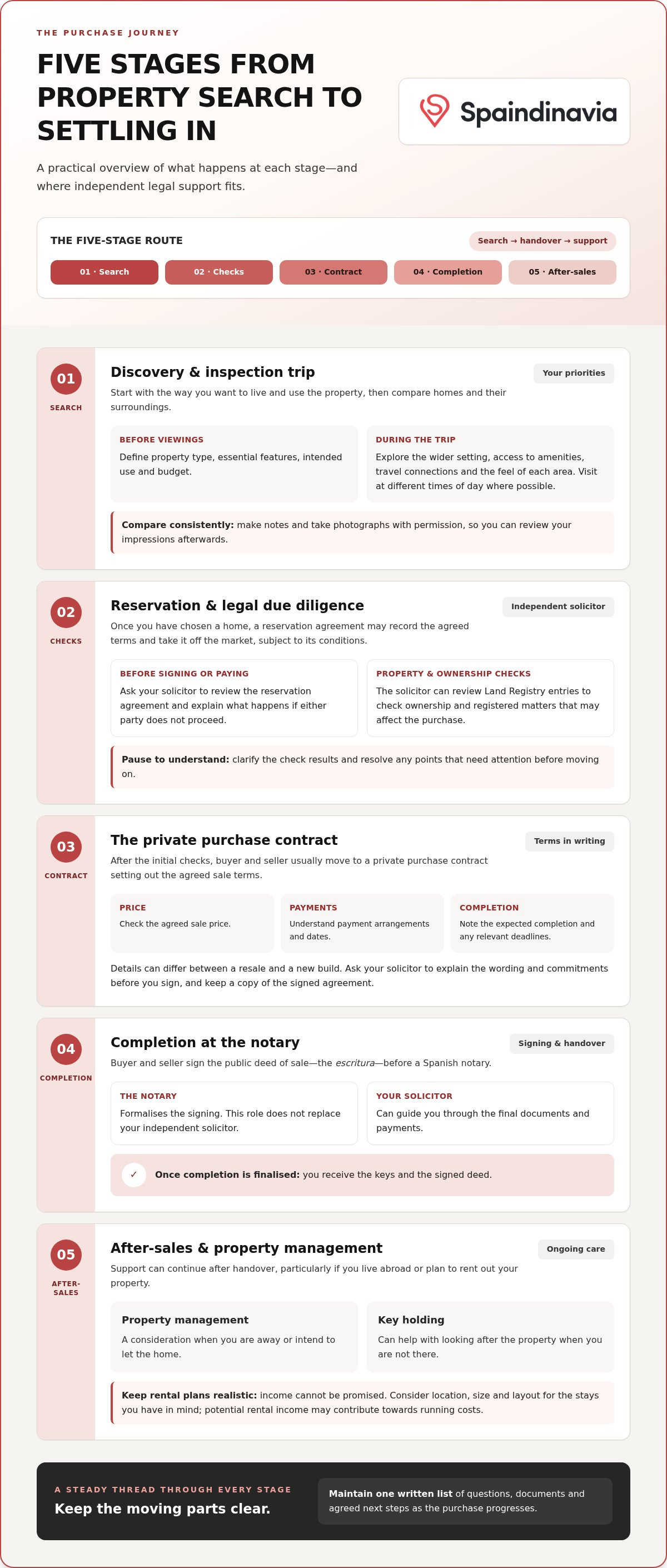
The spaindinavia buying process guides you from deciding what you want to settling into your new home. The stages below outline what to expect, while your independent solicitor supports you with the legal details of the purchase. Keep a written list of questions, documents and agreed next steps as you go. It’s a simple way to keep the moving parts clear.
1. Discovery and the inspection trip
The search starts with how you want to live and use the property. Think through your preferred property type, essential features, intended use and budget before arranging viewings. During a viewing trip, explore the wider setting as well as the homes. Visit at different times of day where possible, and consider practical needs such as access to amenities, travel connections and the atmosphere you’d enjoy returning to. Make notes and take photographs, with permission, so you can compare your impressions afterwards.
2. Reservation and legal due diligence
Once you’ve chosen a home, a reservation agreement may record the agreed terms and take the property off the market, subject to its conditions. Before paying or signing, ask your independent solicitor to review the agreement and explain what happens if either party doesn’t proceed. Spaindinavia collaborates with independent solicitors so you have separate legal support while checks are made on the property and its ownership.
The Land Registry records property ownership and registered rights. Your solicitor can review the relevant entries to check who owns the home and whether registered matters may affect the purchase. Make sure you understand the results of the checks and any points that need resolving before moving to the next stage.
3. The private purchase contract
After the initial checks, the buyer and seller usually move to a private purchase contract. It sets out the agreed sale terms, including the price, payment arrangements and expected completion. The details can differ between a resale and a new build, so ask your solicitor to explain the wording, payment dates and commitments before you sign. Keep a copy of the signed agreement and make a note of any deadlines that affect your next steps.
4. Completion at the notary
At completion, the buyer and seller sign the public deed of sale, known as the escritura, before a Spanish notary. The notary formalises the signing, but doesn’t replace your independent solicitor. Your solicitor can guide you through the final documents and payments; Spaindinavia also collaborates with banks as part of supporting the purchase. GOV.UK’s official UK government guidance offers further context for British buyers. Once completion is finalised, you receive the keys and the signed deed.
5. After-sales and management
Support can continue after handover. If you’re living abroad or plan to rent out your property, property management, rental support, maintenance and key holding can help you care for the home when you’re away. Before completion, think about how you’ll use the property, who will handle routine matters and where you’ll keep key documents and contacts. Spaindinavia’s property management and rental services support owners with ongoing care, guest communication and booking administration.
Costa Cálida vs Costa Blanca: Choosing Your Perfect Backdrop
Choosing between the Costa Cálida in the Murcia region and the Costa Blanca in the Valencia region is about more than a map. Both offer Mediterranean living, but their settings and pace can differ. The Costa Cálida is known for rugged coastal scenery and a quieter feel, while the Costa Blanca combines established resort towns with lively urban centres and a broad choice of homes. If you can, visit both and pay attention to how each feels beyond the property viewing itself.
Climate and surroundings are part of the appeal on both coasts. The Mar Menor gives the Costa Cálida a distinctive lagoon-side landscape, while the Costa Blanca has its own mix of coastal settings and established centres. Rather than relying on a general description, consider how the weather and surroundings feel during your visit and whether they suit the way you plan to use your home.
Why Mazarrón stands out
Mazarrón is a useful starting point for exploring the Costa Cálida. Puerto de Mazarrón offers a coastal centre with a year-round feel, while Isla Plana and La Azohia may appeal if you’re drawn to a quieter setting close to nature. In Bolnuevo, distinctive eroded rock formations create a memorable backdrop. Each area has its own character, so compare the things that matter to you: access to amenities, a peaceful outlook or a livelier seaside atmosphere.
Use a viewing trip to compare neighbourhoods at different times of day. Somewhere that feels tranquil during a morning visit may have a different rhythm later on. Note what you observe, from the surrounding activity to the practicalities of getting around. These checks can help you decide whether a location suits holidays, longer stays or year-round living.
The Costa Blanca and a different pace
The Costa Blanca, particularly its southern stretch, offers a wide range of new build apartments and established infrastructure alongside Spanish towns and traditions. That combination may appeal if easy access to amenities and a more energetic resort atmosphere are high on your list. The Costa Cálida, by contrast, can suit buyers looking for a more rugged coastal setting, with Mazarrón’s Puerto de Mazarrón, Isla Plana, La Azohia and Bolnuevo offering distinct options to explore.
Some buyers consider properties in both regions for different uses, such as a personal retreat in one area and a rental-focused home in the other. Treat each purchase as its own decision: compare the location, intended use and practicalities of managing the property. The UK Government guidance on buying property in Spain is also useful reading as you weigh up the legal and financial steps. In the spaindinavia buying process, comparing both coasts helps you choose a home that fits the life you have in mind, not just the view.
Legal and Financial Security: NIEs, Notaries, and Solicitors
Clear legal and financial planning can make buying in Spain feel far less daunting. The checks involved depend partly on whether you’re buying a resale home or a new build. Spaindinavia works with independent solicitors and banks, helping you understand who supports each part of the transaction. Your solicitor represents your interests independently and explains the documents before you commit.
Start with your NIE and legal checks
An NIE, or Foreigner Identification Number, is needed for property transactions in Spain. You can apply in Spain, through a Spanish consulate abroad or via a legal representative. Begin early and ask your solicitor to guide you on the process and paperwork, so this practical step doesn’t hold up later decisions.
For a new build, legal due diligence may include reviewing relevant building and planning documentation, such as licences and habitability certificates. If you’re considering an off-plan purchase, ask your independent solicitor to explain the payment protections and any bank guarantees that apply to your contract before you pay. Our buying property in Spain guide helps you prepare for key checks and avoid common purchase pitfalls.
Plan your finances by property type and region
For resale properties, buyers generally pay Property Transfer Tax (ITP). As of October 2026, the rate is 8% in the Murcia region and 9% in the Valencian Community for deeds signed from 1 June 2026. For a new build bought directly from a developer, VAT (IVA) is 10% in both regions, with Stamp Duty (AJD) also payable. Rates and applicable costs depend on the property and location, so ask your solicitor to calculate them for your purchase.
As a broad budgeting guide, allow around 10% to 13% above the purchase price for taxes and transaction costs, then get a tailored estimate before deciding your budget. Costs differ between regions and between resale and new-build homes. An itemised estimate can help you distinguish taxes from legal, notary and registration costs and see what needs to be available at each stage.
A Spanish bank account can be useful for handling purchase payments and ongoing property expenses. Discuss the practical arrangements with your bank early, especially if you’ll be transferring funds from abroad. Mortgage terms for non-residents depend on individual circumstances and lender assessment, so speak with banks before committing to a purchase and understand how your planned funding fits the payment schedule.
For a practical next step, explore our Spanish property buying support and see how independent legal guidance fits into the process.
Beyond the Keys: Property Management and Rental Potential
Getting the keys is a milestone, not the end of the journey. If you’ll spend part of the year abroad, property management and rental support can help you look after your home and make it available to guests when it suits your plans. During the spaindinavia buying process, think about ownership and ongoing care early, particularly if you won’t be living near the property full-time.
Rental potential with realistic expectations
Rental income may help contribute towards running costs, but occupancy and returns aren’t guaranteed. Demand can vary by location, season and property, so consider who your home is likely to appeal to and when. A coastal property in Puerto de Mazarrón, Isla Plana, La Azohia or Bolnuevo may suit a different holiday pattern from a home in a busier Costa Blanca resort. Think about how often you want to use the property yourself before deciding how much time to set aside for rentals.
Holiday letting also involves local requirements. Tourist rental rules can differ between the Murcia region and the Valencia region, and may change. Before letting a property, have your independent solicitor explain the current requirements for its location and intended use. Build time for this into your plans rather than assuming that a home can be advertised for short stays as soon as you receive the keys.
Care for your home whilst you’re away
Key holding gives you a local point of access when you’re not in Spain. Agreed property checks can help identify issues such as a leak or damage that may need attention. Ask for a clear record of what has been checked and any follow-up needed, so you can stay informed from abroad.
Maintenance is another practical part of caring for a property over time. Small repairs and routine upkeep can help keep a home comfortable for your own visits and presentable for guests. Spaindinavia’s property maintenance and key holding support can help when you’re away, including routine inspections and coordination of repairs. Rental management can also support guest communication, booking management and administration.
For a holiday let, guest communication and booking arrangements need to work alongside your own calendar. Clear arrival information and a reliable key handover help guests settle in, whether they’re visiting during a busy period or a quieter part of the year. Before buying, list the periods you’d like to reserve for yourself and the tasks you’d prefer to have managed. That exercise can help you choose a property and rental approach that fit your lifestyle, rather than letting investment plans take over it.
Take the Next Step Towards Your Spanish Home
A confident purchase starts with a home that fits your lifestyle, careful legal guidance and a clear plan for looking after the property once you have the keys. The spaindinavia buying process brings these pieces together through a hand-picked portfolio, with a specialism in new build villas, and personal support throughout your purchase.
As you weigh up your options, compare the quieter coastal character described in the Costa Cálida section with the different pace and amenities of the Costa Blanca. Think, too, about how you’ll use the property and whether rental management could suit your plans when you’re away.
From choosing a property to planning its ongoing care, Spaindinavia supports buyers through the process, working with independent solicitors and banks and offering rental management, maintenance and key holding services for owners.
Contact Spaindinavia to discuss your property search. Your dream home in Spain could be closer than you think.
Frequently Asked Questions
What is the first step in the Spaindinavia buying process?
Start by clarifying the lifestyle and home you’re looking for. Consider whether you want a holiday retreat, a home for year-round living or a property with rental potential, then note your preferred property type and must-have features. Spaindinavia uses these priorities to guide your search through its hand-picked portfolio. Being clear about what matters most helps focus viewings on suitable options rather than overwhelming you with properties that don’t fit.
Do I need to be in Spain to complete the property purchase?
You may be able to manage some steps from abroad, although arrangements depend on your circumstances and the transaction. For example, an NIE application can be made through a legal representative. Your independent solicitor can explain whether any documents or completion arrangements can be handled remotely in your case. Plan ahead for signing, identity checks and transferring funds, and allow time to organise any documents that need to be prepared or signed where you live.
How long does the buying process usually take from offer to completion?
There isn’t one reliable timeframe for every purchase. The process can depend on how quickly legal checks are completed, whether documents are ready, the type of property and the arrangements for payment or finance. A resale and a new build may involve different checks and milestones. Ask your independent solicitor to outline the likely steps for your chosen property, and keep a written record of agreed dates and outstanding actions.
What are the main costs involved in buying a property in the Murcia region?
For a resale property, Property Transfer Tax (ITP) is 8% in the Murcia region, part of the Costa Cálida, compared with 9% in the Valencian Community, which includes the Costa Blanca. For a new build bought directly from a developer, VAT (IVA) is 10% in both regions, and Stamp Duty (AJD) also applies. Other costs may include solicitor, notary and Land Registry fees. Ask your solicitor for an itemised estimate for your purchase.
Can Spaindinavia help me find a solicitor and a bank?
Yes. Spaindinavia collaborates with independent solicitors and banks, helping buyers connect with professionals who support the legal and financial stages of a purchase. An independent solicitor can explain the contract, carry out legal checks and advise you on documents before you sign. Banks can discuss payment arrangements and, where relevant, mortgage applications. Start these conversations early so you understand what information and preparation your transaction may require.
Is it possible to get a mortgage as a non-resident in 2026?
It may be possible, but a mortgage isn’t guaranteed and lending decisions depend on the bank’s criteria and your individual financial circumstances. As a non-resident, discuss your plans with a bank before making a commitment, and ask about the documents it needs to assess an application. Spaindinavia collaborates with banks, while your solicitor can help you understand how financing arrangements relate to the purchase contract and payment dates.
What happens if I buy a new build villa that is not yet finished?
An unfinished villa is generally purchased according to a contract that sets out the agreed terms, payment stages and expected completion arrangements. Before signing or paying, have your independent solicitor review the contract and relevant building documents, including applicable licences and completion information. If payments are made before the home is finished, ask the solicitor to explain what protections apply to your specific purchase and how they are documented.
How does Spaindinavia manage my property if I decide to rent it out?
Spaindinavia’s rental and property management support can include guest communication, booking management and administrative oversight. Property maintenance and key holding can also help owners look after a home whilst they’re away, including routine inspections and coordinating repairs. Before setting your rental plans, consider when you want to use the property yourself and allow time to understand the local requirements for holiday letting. Rental demand and income can vary, so they shouldn’t be assumed.


