

Could the flat you’re ready to buy come with a community debt question that isn’t as simple as “Has the seller paid their fees?” Understanding community of owners (comunidad de propietarios) debt means separating possible arrears linked to the property from the wider financial picture. Before you commit to a purchase, find out what a reported balance refers to and which records support it.
If you’re unsure which documents will give you a clear picture, you’re not alone. Unfamiliar terminology needn’t make a property purchase feel daunting. The right records and independent legal advice can help clarify what a balance means and what to do next.
This guide explains the key terms in plain English, outlines which community records to review and shows how to distinguish a seller’s unpaid fees from wider community debts. You’ll also find practical questions to raise with an independent Spanish solicitor, who can check the current rules and assess how they apply to your purchase. With clear information and the right support, you can make a considered decision about how to proceed.
Key Takeaways
- Understanding community of owners (comunidad de propietarios) debt starts with distinguishing an individual owner’s arrears from unpaid obligations recorded for the community as a whole.
- Review meeting minutes, community accounts and owner-specific statements to identify what a reported balance relates to.
- Compare what the available records establish with what remains unclear, then direct unanswered questions to the relevant professional.
- Before proceeding, gather the records and ask an independent Spanish solicitor to verify ownership, debts and contracts.
- Spaindinavia can help organise your property search and purchase steps, and introduce you to independent legal and other professionals without replacing their advice.
What does community of owners debt mean for a property buyer?
In Spain, a comunidad de propietarios is the community formed by property owners to manage shared parts of a building or complex. Depending on the property, these might include communal entrances, lifts or gardens. The Comunidad de propietarios in Spain overview offers background on how these communities are organised. For a buyer, the key is understanding what a particular debt entry describes.
Community debt is an amount recorded as unpaid in connection with a property owner’s contributions or with an obligation owed by the owners’ community. The phrase can describe two different financial situations, so don’t assume that every balance relates to the seller or carries the same implications. Understanding community of owners (comunidad de propietarios) debt starts with identifying who owes the amount and what the underlying record says.
What are community fees and shared expenses?
Owners may contribute towards the upkeep and management of shared property elements. Depending on the development, everyday examples could include cleaning a communal entrance, maintaining a lift or looking after shared outdoor space. These are examples, not a definitive list of chargeable items. The community’s governing documents and current records help explain which costs apply and how they are recorded.
When a figure appears in a document, check the period it covers, the charge description and whether it relates to one property or to the community’s accounts overall. A general reference to “community debt” may not answer those questions. Ask for the relevant owner-specific statement or account entry, alongside the community accounts and meeting records, so you can understand the figure in context.
How is an owner’s unpaid balance different from community debt?
An owner-specific balance is recorded against a particular property owner. It may show contributions that the owner has not paid, but the statement alone might not explain whether the amount is disputed, current or connected with another adjustment. An unpaid community bill is different: it refers to an obligation recorded for the community itself, rather than simply an individual owner’s outstanding contributions.
That distinction matters during a purchase. A community-level unpaid bill may prompt questions about the community’s accounts and decisions. An owner-specific arrears entry raises questions about the seller’s account and any implications for the buyer. Don’t treat one as proof of the other, or assume either tells the full story. Ask what the amount relates to, which period it covers and what supporting records are available.
The records can help establish what has been charged, paid or left outstanding, but they may not settle the legal consequences. Don’t rely on a general account summary to decide whether an owner’s arrears could affect your purchase. Ask an independent Spanish solicitor to assess the documents and verify the current rules on debts and buyer liability before proceeding. This gives you a clearer basis for your next steps without turning an unclear figure into an assumption.
How can community debt arise, and what records can explain it?
An apparent balance needs context before you can judge what it means for a purchase. It may relate to contributions recorded as unpaid for an individual property, or to an expense listed in the community’s accounts. The figure itself doesn’t explain who owes it, how it was calculated or whether it remains outstanding. Treat it as a question to investigate, not a conclusion.
A community debt figure is only meaningful when read alongside the records that identify its source, period and status. This is the practical starting point for understanding community of owners (comunidad de propietarios) debt: trace the entry back to its supporting documents, then separate what they state from what you still need to clarify.
Which community records help explain an arrears figure?
Depending on what’s available, useful documents to discuss with your solicitor may include community accounts, meeting minutes, the community’s rules and written statements about the property. These are examples, not an exhaustive legal checklist. Each can provide different context, such as how an amount appears in the accounts or whether meeting records refer to a related decision.
For background on the owners’ community and its operation, you can also read Spanish Comunidad de Propietarios Explained. Use general information to orient yourself, not to determine how a particular entry applies to your purchase. Ask your independent Spanish solicitor to assess whether the documents you receive are complete enough and what legal significance they may have.
What should buyers clarify about the amount and its status?
Make a short list of questions to resolve against the documents. Start with the basics: who is named as owing the amount, what period it covers and how the total was worked out. Then ask whether the records describe it as outstanding, disputed or already addressed elsewhere. A written statement may answer some points but leave others open.
Keep three columns in your notes: what the record says, what it doesn’t explain and what needs legal review. For instance, if an account shows a balance but doesn’t identify the relevant period, note that gap rather than guessing. If minutes mention an expense but don’t show how it relates to the property’s account, flag that too. This simple method helps you ask focused questions and avoids treating an assumption as a documented fact.
Don’t infer a deadline, collection step or buyer consequence from an unclear entry. Send the available records and your questions to an independent solicitor, who can verify the current rules and advise how they apply. If you’re organising a property search alongside these checks, Spaindinavia’s buyer guidance can help bring the purchase steps together while your solicitor handles the legal review.
What does community debt mean for a buyer or current owner?
A debt entry is a reason to investigate, not a verdict on who must pay. It may refer to a seller’s unpaid contributions, or to an amount the owners’ community owes to someone else. Those situations are different, and the documents may not tell the whole story. Understanding community of owners (comunidad de propietarios) debt means separating the recorded amount from the legal question of responsibility.
Use the comparison below to organise what you know and what still needs checking. It’s a guide to the questions to raise, not a substitute for legal advice.
| Type of record | What records may establish | What may remain unknown | Who should assess it |
|---|---|---|---|
| Owner-specific arrears | A statement may identify an amount recorded against the seller or a particular property. | Whether the sum is accurate, disputed, settled or relevant to a buyer’s position. | An independent Spanish solicitor, reviewing the supporting documents and current rules. |
| Community-level unpaid obligation | Accounts or meeting records may refer to a bill or other amount owed by the community. | How it affects the community’s finances, owners or future contributions. | An independent Spanish solicitor, with the available accounts and decisions. |
A debt mention alone does not establish who is legally responsible for it. The name on an entry, the way an amount is described and the documents behind it all matter. Keep those details together for review rather than treating a single line in an account as a final answer.
Does a property purchase automatically make you responsible for arrears?
Don’t assume that buying a property automatically makes you responsible for every amount mentioned in community records, or that you’re automatically clear of any debt. The outcome depends on applicable law, the facts and the documents. A property transaction is one matter; a personal debt or an obligation recorded for the community is another. Ask an independent solicitor to verify how the current rules apply to the specific property and circumstances. General guidance, such as Checking for Spanish Property Debts Before Buying, can help you identify questions, but it can’t determine your individual legal position.
What if the community itself has unpaid obligations?
A community-level concern isn’t simply the seller’s individual account under another name. Review available accounts alongside meeting decisions to understand how the amount is described and what context is recorded. These documents may raise further questions, but they don’t by themselves settle what the consequences could be for owners, shared services or future contributions. Have your solicitor assess those implications before you decide how to proceed.
If you already own a property, the same approach can help you understand an unexpected entry before responding. Keep copies of the relevant statements, accounts and decisions, note what each document actually says, and ask your solicitor to clarify anything unresolved. Clear records make it easier to decide on a considered next step.
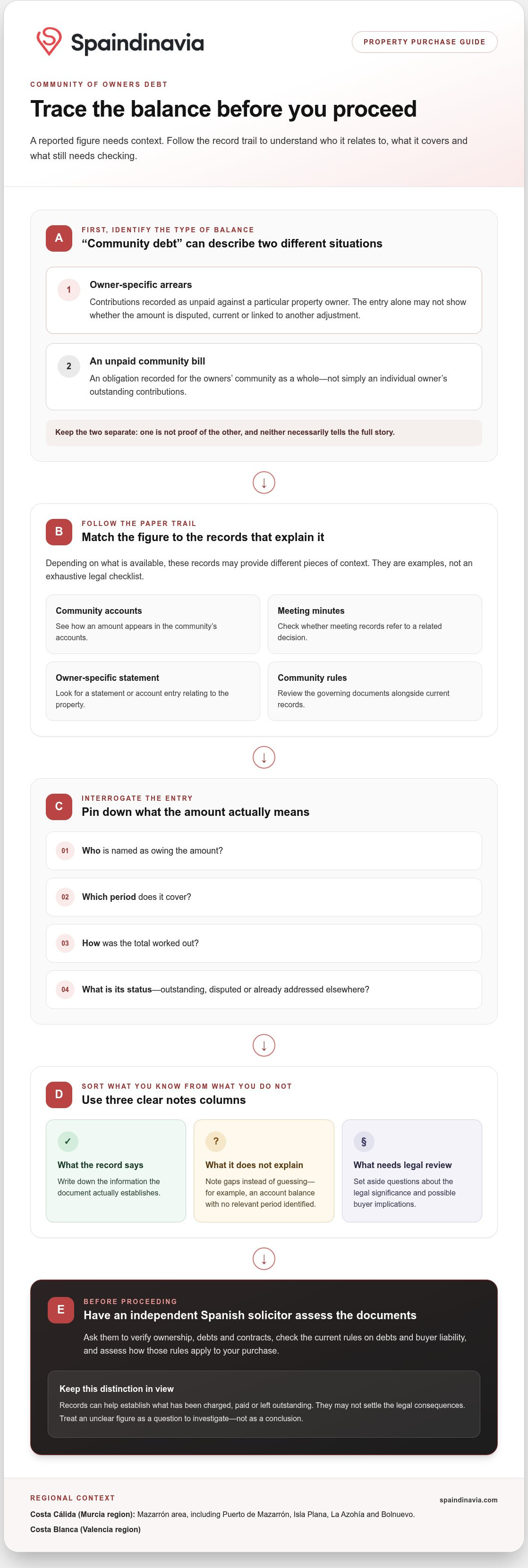
How should you check community debt before proceeding with a purchase?
Turn an unclear balance into a structured check before you commit. Start by identifying what prompted concern, then gather the relevant records, ask focused questions and have an independent Spanish solicitor review the position. This sequence helps you separate what the paperwork says from what still needs explaining. If records are missing, inconsistent or unclear, don’t fill the gaps with assumptions.
Understanding community of owners (comunidad de propietarios) debt is part of due diligence, but it shouldn’t replace checks on ownership and the rest of the purchase documents. Give your solicitor the full picture, including any correspondence or statements that refer to the community balance.
- Identify the concern. Note where the debt is mentioned and whether it appears to relate to the seller’s account or to an obligation recorded for the community.
- Gather the available records. Bring together relevant statements, community accounts, meeting minutes, written explanations and purchase documents. Keep copies and note when or from whom each document came.
- Ask focused questions. Clarify who the records say owes the amount, what period it covers, how it was calculated and whether it is described as outstanding, disputed or addressed elsewhere.
- Obtain independent legal review. Ask your solicitor to verify ownership, debts and contracts before proceeding, and to explain any gaps or inconsistencies in light of the specific purchase.
What questions should your independent solicitor address?
Ask your solicitor to identify what the documents show about the property and any stated community balance. What do the records establish, what remains unresolved, and how might the relevant documents affect the proposed purchase? Request clear advice on the next steps before you proceed. A property partner can help organise the purchase process and introduce you to an independent solicitor, but legal advice and document review should come from that solicitor.
How do debt checks fit into the wider purchase budget?
Keep community-debt questions separate from the main transaction budget. These are general planning figures for a property purchase, not an estimate of any community balance:
- Reservation fee: between €3,000 and €10,000, varying by resale versus new development.
- Arras deposit: typically around 10% of the purchase price, after the reservation fee.
- Mortgage financing: typically 60%-70% of the property value for non-resident buyers.
- Additional taxes and fees: budget approximately 10%-15% of the property price.
Additional taxes and fees can include transfer tax or VAT, notary, land-registry, legal and administrative costs. Ask your solicitor and bank how these planning figures relate to your circumstances and the documents for the specific purchase. Keep any potential community balance visible as a separate item until its meaning and implications have been assessed. Don’t assume it is covered by the general purchase-cost allowance.
The Costa Blanca and Costa Cálida enjoy over 300 days of sunshine per year. For help organising your property search and purchase steps, explore buyer support from Spaindinavia. You can work with an independent solicitor for the legal checks while keeping the wider process clear and well organised.
How can Spaindinavia support a more informed property purchase?
Buying a home in Spain involves more than finding a property you love. You’re also coordinating documents, professional advice and decisions at each stage. Spaindinavia is an independent real-estate agency that supports international buyers with personalised property searches and guidance throughout the purchase process. That support can help you keep the practical steps organised while the legal questions are reviewed by the right professional.
Understanding community of owners (comunidad de propietarios) debt is one part of making an informed decision. If a record raises a concern, gather the relevant documents and note what you need clarified. Spaindinavia can help organise the purchase journey and introduce you to an independent solicitor, notary or bank. Each professional has a distinct role, and the agency doesn’t replace their legal, notarial or financial advice.
Where does the estate agency fit in debt due diligence?
A property agency can help keep communication and purchase steps moving, including making introductions to independent professionals. An independent solicitor should interpret the legal documents, verify ownership and debts, review contracts and advise you on any implications for the proposed purchase. This clear division helps you know where to take each question: practical coordination with your property partner, legal assessment with your solicitor.
Share the concern and the documents you’ve gathered, then ask your solicitor to explain what the records establish and what remains unresolved. Spaindinavia can help you stay organised throughout the process, while your solicitor provides the independent legal assessment. Take the time you need to understand the advice before deciding how to proceed.
What are sensible next steps after identifying a concern?
Keep your property search and due diligence moving in parallel. Put the relevant statements, accounts, correspondence and purchase documents in one place. Write down specific questions, such as which amount relates to the property and which points still need an answer. Share these with your independent solicitor, then use their advice to decide whether to continue, seek clarification or reconsider the purchase.
You don’t need to abandon your wider search simply because one property raises a question. You can continue exploring suitable homes while the solicitor reviews the documents, then base your next decision on professional advice rather than assumptions. The buying process after reservation usually takes 4-6 weeks, so keeping records and questions organised can help you use that period constructively.
Spaindinavia provides buyer-focused guidance through the search and purchase process, alongside introductions to independent professionals for the legal, notarial and banking steps.
Take your next step with clarity
A property purchase is a significant personal decision, and clear answers can help you move forward at a pace that feels right. Understanding community of owners (comunidad de propietarios) debt isn’t about letting one unclear entry define your plans. It’s about getting the relevant documents in front of an independent solicitor and making your next decision with the facts in view.
As you explore your options, keep a note of any questions that could affect your choice of home or your plans for ownership. Spaindinavia can support you from property search to notary completion, with introductions to independent solicitors, notaries and banks. Each professional brings a different perspective, while your solicitor remains responsible for independent legal advice.
Ready to explore a property purchase with practical guidance along the way? Explore buyer-focused property guidance with Spaindinavia and take your next step towards a home in Spain with confidence.
Frequently Asked Questions
What is community of owners debt in Spain?
Community of owners debt may refer to unpaid contributions recorded against an individual owner, or an unpaid obligation of the owners’ community. These are different situations, and a reference to debt alone doesn’t establish who is responsible. For example, a statement might show an owner’s balance while community accounts record a separate unpaid bill. Review the relevant documents together and ask an independent Spanish solicitor what they mean for the specific property and proposed purchase.
Can a buyer become responsible for a previous owner’s community debt?
There isn’t a reliable blanket yes or no for every purchase. The answer depends on the applicable rules, the transaction facts and the documents, so don’t treat an informal explanation or a debt entry as a final decision about responsibility. Before proceeding, ask an independent Spanish solicitor to verify ownership, debts and contracts, and explain how the records apply to your circumstances. If an answer is unclear, ask what further documents or review are needed.
How can I find out whether a property has unpaid community fees?
Ask for the available property and community records, including any statement that identifies a balance linked to the property. Compare the statement with other relevant documents rather than relying on one figure in isolation. For instance, check whether the amount and period described are consistent across the records. An independent solicitor can explain what the documents establish, identify gaps and advise what further legal review is appropriate before you decide whether to proceed.
What happens if the community of owners itself has debts?
A debt recorded for the community is not necessarily the seller’s personal arrears. Look at available accounts and meeting records to understand what the reported obligation concerns and whether the documents provide relevant context. Don’t assume from a balance alone that it will affect services, owners or future contributions in a particular way. Ask an independent solicitor to assess its relevance to the property and proposed purchase, taking account of the circumstances and governing documents.
Should I hire an independent solicitor when checking community debt?
Yes. An independent Spanish solicitor can review the records and explain their legal significance for your particular transaction. Ask them to verify ownership, debts and contracts, and to clarify any uncertainty before you proceed. Spaindinavia can support the buying process and introduce buyers to independent professionals, but an estate agency isn’t a substitute for independent legal advice. Keep your questions and documents together so your solicitor can consider them as part of the same review.
Is community debt the same as community fees?
No. Community fees are contributions associated with the owners’ community; community debt describes an amount reported as unpaid or owed. An owner may have unpaid fees, while the community may separately owe an amount of its own. For example, an owner’s account and the community’s accounts could refer to different balances. Check which records support the particular figure, then ask an independent solicitor to explain what it represents and whether the distinction matters to your purchase.
What other costs should I budget for when buying property in Spain?
Keep general purchase costs separate from any community balance. Budget approximately 10%-15% of the property price for additional taxes and fees, including transfer tax or VAT, notary, land-registry, legal and administrative costs. The reservation fee is between €3,000 and €10,000, varying by resale versus new development. After reservation, the Arras deposit is typically around 10% of the purchase price. Ask your solicitor to explain the costs relevant to your transaction.


