

What if the answer you need from a property developer is given verbally, then never appears in writing? Before you contact them, prepare the questions to ask a property developer in spain, especially if contract wording, finishes or completion expectations aren’t clear. Focus on the documents and details for the particular property you’re considering. A calm, focused conversation can help, but a written record gives you something concrete to refer back to.
It’s understandable to want reassurance before taking the next step with a home in Spain. Make sure your questions relate to the property, its documents and the arrangements for that particular purchase. This guide will help you prepare specific questions, keep a clear record of your concern and the developer’s response, and decide when it may be sensible to speak with an independent Spanish solicitor for advice tailored to your circumstances.
You’ll find practical prompts covering contract terms, property specifications, expected completion and how to follow up in writing. We’ll also outline a measured way to respond if the explanation doesn’t resolve the issue, so you can raise concerns clearly without rushing into escalation. The aim is to help you move forward with greater clarity and protect your next steps.
Key Takeaways
- Prepare the questions to ask a property developer in spain by identifying the specific concern and what you need clarified.
- Compare the developer’s response with your signed contract and specifications, rather than relying on memory or verbal explanations alone.
- Keep a clear record of conversations and follow up in writing with a calm, specific request for an update.
- Consider whether continued discussion, a written complaint or independent legal advice is the most suitable next step for your circumstances.
- Check that any adviser’s experience, role and scope of support match the help you need before relying on their guidance.
Questions to Ask a Property Developer in Spain When a Concern First Appears
A clear, factual first conversation can help you understand what has happened and what information is still missing. Start by asking for clarification rather than assuming there is already a formal disagreement. If the explanation doesn’t address your concern, or you and the developer have different views about what was agreed, set out the issue in writing and keep a record of the response.
A documented developer dispute is a concern recorded in writing, with the relevant facts, supporting documents and responses kept together. This description doesn’t decide who is right. It helps you track what has been raised and what remains unresolved.
How do you describe the problem clearly?
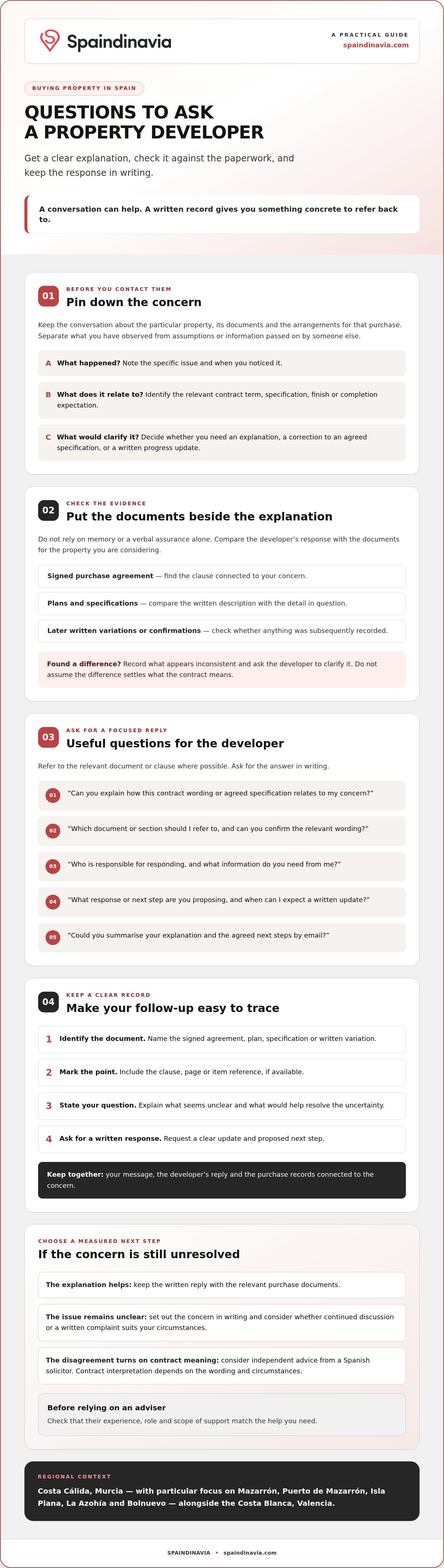
Before contacting the developer, note what happened, when you noticed it and which part of the purchase it relates to. Separate what you can observe from assumptions, frustration or information passed on by someone else. Then decide what you’re asking for: clarification of a contract term, correction of an agreed specification, or a written update on progress. A specific request makes it easier for the developer to give a focused response.
Which questions should you put to the developer first?
Use these questions to ask a property developer in Spain for a clear explanation, rather than relying on an informal assurance. Refer to the relevant document or clause where possible, and ask for the answer in writing. For background, the Spanish Civil Code includes material on obligations and contracts, but it can’t establish how a particular agreement applies to your circumstances.
- “Can you explain how this contract wording or agreed specification relates to my concern?”
- “Which document or section should I refer to, and can you confirm the relevant wording?”
- “Who is responsible for responding, and what information do you need from me?”
- “What response or next step are you proposing, and when can I expect a written update?”
- “Could you summarise your explanation and the agreed next steps by email?”
Keep your first message calm and concise. Identify the issue, point to the document or detail you’re asking about, and explain what would help resolve the uncertainty. Save your message and any reply with the related purchase records. If the disagreement turns on what a contract means, don’t treat a general explanation as a legal conclusion. Contract interpretation depends on the wording and circumstances, so consider asking an independent Spanish solicitor for advice specific to your situation.
How to Ask About the Contract, Specifications and Completion Commitments
A verbal explanation can be helpful, but check it against the documents you signed before treating it as confirmation of what was agreed. Verify completion dates, specifications and promises against the agreement for the particular property. If documents appear inconsistent, record the difference and ask for clarification rather than deciding for yourself which wording takes precedence.
What should you check in the purchase documents?
Gather your signed purchase agreement, any plans or specifications it refers to, and later written variations or confirmations. Find the exact clause, drawing or description connected to your concern. For example, if a finish differs from what you expected, compare the installed item with the written specification and note the difference. Don’t rely on recollection alone, and don’t assume an inconsistency settles the question of what the contract means.
Contract interpretation depends on the wording and the individual circumstances. For general background, the UK government guidance on buying property in Spain discusses the role of independent legal advice. Ask a Spanish solicitor to explain unclear clauses or potential implications before you decide how to respond.
How can you keep developer answers on the record?
Keep your question focused and make it easy to trace to the relevant paperwork. This four-step sequence can help:
- Identify the document: Name the signed agreement, plan, specification or written variation.
- Mark the point: Give the clause, page or item reference, if available.
- State your question: Explain what seems unclear or different, using observable details.
- Request written clarification: Ask the developer to confirm their explanation and any proposed next step by email.
For example, rather than writing, “The finish isn’t what I was promised”, identify the specification you’re referring to, describe what you observed and ask the developer to explain the difference. If you’ve already discussed it by phone or in a meeting, send a short follow-up asking them to confirm their explanation in writing.
Save dated messages, attachments and meeting notes together in a clearly named file. This makes it easier to see what you asked, what the developer answered and whether anything remains unresolved. If you’d value practical support with the wider property-buying process, Spaindinavia’s property-buying guidance may help you organise your next steps. Seek legal advice independently for contract questions.
Which Routes Can Help Resolve a Dispute with a Spanish Property Developer?
Not every concern needs the same response. A question about what a specification means may be settled through a clear explanation, whilst an unresolved disagreement may call for a more formal written complaint or independent legal advice. Choose a proportionate next step based on what you know, rather than escalating before you understand the issue.
The appropriate route depends on the documents, the facts and the nature of the dispute. No general guide can determine which process applies to your circumstances or promise a particular outcome.
When might direct discussion or a written complaint be useful?
Start with direct discussion if you think the problem may stem from a misunderstanding or missing information. State the point you want clarified and ask for a specific response. This gives the developer an opportunity to explain their position, but an informal conversation may not settle a disagreement or give you enough detail to assess what to do next.
If an earlier conversation hasn’t resolved the issue, consider sending a written complaint. Keep it factual and focused: describe the concern, refer to the relevant documents and explain what response you’re seeking. Attach only material that supports your point, and keep a copy of what you send and receive. A written complaint creates a clearer record, but it doesn’t guarantee the developer will agree with you or offer the outcome you want.
When should you ask an independent solicitor about escalation?
Speak with an independent Spanish solicitor if the disagreement depends on interpreting a contract, could have significant consequences, or you’re considering formal action. Share the signed agreement, relevant specifications, correspondence and a concise timeline. Ask which options may apply to your circumstances, what information would help assess them, and whether any time limits need checking.
Don’t assume that a general online guide establishes your rights or the correct procedure. Possible formal routes depend on the contract, the facts and the process that applies. A solicitor can advise on those case-specific questions. A property agent may offer practical transaction support, but shouldn’t be treated as a substitute for independent legal advice.
Use the questions to ask a property developer in Spain to clarify the issue and understand the developer’s response, then decide whether the matter is resolved or needs further attention. Keep your tone measured, avoid making claims you can’t support, and seek case-specific advice before taking a step whose legal effect you’re unsure about.
What to Do Before and After Contacting the Developer
Preparation can make a difficult conversation clearer and easier to follow up. Before you contact the developer, organise the records that relate to your concern and decide what response you’re asking for. A calm, specific message is more useful than a long account of every frustration, and gives both sides a clear point to address.
How should you prepare your evidence and questions?
Build a simple timeline, then gather the documents that support it. Keep the signed agreement and relevant specifications together with correspondence, photographs and meeting notes. If you have several concerns, group the records by issue so the detail doesn’t get lost.
- Record the sequence: Note dates, who you contacted, what was discussed and what response you received.
- Organise the evidence: Save documents, emails, photographs and notes with clear file names, grouped by the issue they relate to.
- Prepare your questions: List the specific point you need clarified and the action or written update you’re requesting.
Keep your first message brief and factual. Identify the property, describe the concern, refer to the relevant document and ask for a realistic written update. If you’re working through a wider buying process, a secure property purchase checklist can also help you keep important documents and questions organised.
What should you do after the developer responds?
Read the reply alongside your original questions and records. Does it answer each point? Does it match what was discussed or agreed in writing? If the developer proposes an action, ask them to confirm what will happen, who will handle it and when you can expect the next update. Save the reply with your timeline and supporting documents.
If the response doesn’t address your concern, note exactly what remains unanswered and consider whether a focused follow-up is appropriate. Pause direct discussions and seek independent advice before taking a step if you’re unsure about the meaning of the contract, the consequences of an action or whether a particular process applies. An independent Spanish solicitor can assess your documents and advise on suitable next steps for your circumstances.
For practical support with the wider property-buying process, explore Spaindinavia’s property-buying guidance. This can help you organise your next steps, whilst contract or dispute advice should come from an independent solicitor.
How to Choose Support for a Spanish Property Developer Dispute
Choose support according to the help you need. A property developer can explain its position and respond to concerns about the purchase. An estate agent may support your property search and wider buying process. An independent solicitor can give legal advice on your contract, evidence and potential next steps. These roles can complement one another, but they aren’t interchangeable.
What should you ask an independent property solicitor?
Before engaging a solicitor, explain the concern and ask how they’ll assess it. A useful first discussion should make clear what documents they need and what their advice will cover. You could ask:
- “How will you review my contract, correspondence and other relevant evidence?”
- “What does your advice cover, and how will you keep me updated?”
- “What costs may apply, and how will they be explained?”
- “Which options might suit my circumstances, and are there any time-sensitive points I should check?”
Ask for clear answers about the scope of the work and how you’ll communicate before proceeding. The right adviser should be able to explain what they can assess and identify where more information may be needed. Share the documents you’ve organised, along with a concise timeline, so the discussion can focus on your specific situation.
Where can an estate agent support the wider buying journey?
An estate agent can help with property search and transaction support, but shouldn’t be treated as your legal representative. If your concern turns on the meaning of a contract or the legal effect of a proposed step, take that question to an independent solicitor.
Spaindinavia is an independent property agency that supports buyers through property transactions in Spain, working alongside independent solicitors, banks and local experts. This wider purchase support is distinct from legal advice. You can ask an agent for practical help with the buying process whilst obtaining dispute guidance independently. Be clear about what you need, and check that each professional’s role fits that need.
Before you contact anyone, organise the relevant documents, summarise what remains unresolved and decide what outcome you’re seeking. Then direct each question to the person best placed to answer it. If you’re looking for practical support with the buying journey, explore property support from Spaindinavia. For case-specific legal advice, speak directly with an independent Spanish solicitor.
Move Forward with a Clearer Plan
The right questions to ask a property developer in spain can help you clarify a concern before it grows into a larger disagreement. Start with the signed documents, describe what’s unresolved in factual terms and ask for a specific written response. Keeping your messages and supporting records together makes it easier to track what has been answered and what still needs attention.
If the issue turns on contract wording, could have significant consequences or may require formal action, speak with an independent Spanish solicitor. A property agent can support your wider buying journey, but legal advice should come from a qualified independent professional.
Spaindinavia is an independent real estate agency supporting buyers through property transactions in collaboration with independent solicitors, banks and local experts. Explore property-buying support with Spaindinavia to learn more about practical help with your buying journey. With your facts organised and the right people involved, you can take the next step with greater confidence.
Frequently Asked Questions
What should I ask a property developer in Spain before signing a contract?
Before signing, ask the developer to explain any unclear contract terms, which specifications and plans are included, and what completion arrangements are recorded in the agreement. Ask how verbal promises or later changes will be confirmed in writing. The questions to ask a property developer in Spain should be guided by the documents in front of you. Have an independent Spanish solicitor review the agreement and explain any points you’re unsure about before you commit.
What should I do if a Spanish property developer does not answer my questions?
Follow up in writing with a concise message that identifies your property, the question you raised and the date you first contacted the developer. Refer to the relevant document, and request a written response or update. Keep copies of your messages and any delivery confirmation. If you still receive no answer, or the matter has important consequences, ask an independent Spanish solicitor what options and time-sensitive considerations may apply.
Can I complain directly to a property developer in Spain?
Yes, you can raise your concern directly with the developer. Set out the issue clearly, refer to relevant contract wording or specifications, and explain what response or action you’re seeking. Keep the complaint factual and retain a copy of what you send and any reply. A direct complaint is a way to communicate your concern, but it doesn’t guarantee a particular outcome. If it remains unresolved, consider independent legal advice about appropriate next steps.
What evidence should I keep in a dispute with a property developer?
Keep your signed contract, referenced plans and specifications, written changes, correspondence, photographs and meeting notes. Make a dated timeline recording what happened, who you contacted and what they said or did in response. Label files by issue and preserve original messages and attachments. This organised record can help you explain the concern clearly to the developer or an independent solicitor. Avoid relying only on memory or verbal assurances when written records are available.
How long does a property developer dispute in Spain take to resolve?
There’s no single timeframe that applies to every dispute. The time needed may depend on the issue, how quickly the parties respond, whether further information is required and whether the matter progresses beyond direct discussion. Ask an independent Spanish solicitor to assess your circumstances and explain what factors could affect timing, including any time limits that may need checking. Keep records as the matter develops, and don’t assume that waiting for a response pauses a relevant deadline.
Do I need a solicitor to resolve a dispute with a Spanish property developer?
You may be able to ask the developer for clarification or make a written complaint without first instructing a solicitor. Independent legal advice is especially useful if the disagreement depends on contract wording, could have significant consequences or you’re considering formal action. A solicitor can review your documents and explain which options may apply. An estate agent may support the wider buying process, but that support isn’t a substitute for legal representation or case-specific advice.
What if the property I receive does not match the developer’s specification?
Compare the property with the signed specification, plans and any written changes, then record the specific differences you’ve observed. Dated photographs can help show what you’re referring to. Write to the developer with the relevant document reference and ask them to explain the difference and set out any proposed response in writing. Don’t assume that a mismatch automatically establishes a legal breach. An independent Spanish solicitor can assess the documents and advise on your circumstances.


