
What if a specific geographical feature could guarantee you abundant sunshine while protecting your property value from the extreme weather seen elsewhere in Spain? You've likely spent years dreaming of escaping damp, grey winters where humidity levels often exceed 80%, only to worry that the intense Spanish summer heat might be too much to handle. It's natural to feel skeptical when you hear agents talk about a "perfect microclimate," but the unique climate found in certain desirable parts of Spain is backed by more than just local pride.
Discover why particular areas of Spain are lauded for their exceptional health benefits, often attributed to factors like an average annual temperature of 18 degrees Celsius and the protective barrier of surrounding mountains. We'll show you exactly how this unique environment supports a vibrant, year-round lifestyle and secures your investment against the seasonal dips found in other regions. This guide breaks down the best months to visit and explains the science that makes this coast a true sanctuary for sun seekers.
Key Takeaways
- Understand how the unique geography of the "Warm Coast" creates a sheltered environment perfect for year-round Mediterranean living.
- Discover the health benefits of a region recognized by the World Health Organization for its low humidity and therapeutic air quality.
- Learn how the climate in costa calida offers 320 days of sunshine and a unique "Second Spring" that extends the outdoor season through late autumn.
- Explore how the dry weather protects your investment from humidity damage while maximizing rental potential across all 52 weeks of the year.
- Find out how to select high-quality new builds specifically designed to harmonize with the local environment for ultimate comfort.
Understanding the Costa Cálida Microclimate: More Than Just Sun
Discover the unique appeal of the Costa Cálida, a name that literally translates to the "Warm Coast." Nestled in the Murcia region of southeastern Spain, this stretch of coastline offers a distinct environmental profile that sets it apart from its northern neighbors. While much of the Mediterranean enjoys pleasant weather, the climate in costa calida is shaped by a specific set of geographical features that create a protective bubble for residents and property owners alike.
The region's geography is dominated by the Betic Cordillera, a mountain range that acts as a formidable barrier against cooler Atlantic weather systems. This physical shield, combined with the presence of the Mar Menor, creates a stable and inviting atmosphere. The Mar Menor is Europe's largest permanent saltwater lagoon, covering 170 square kilometers. It functions as a massive thermal regulator, absorbing heat during the day and releasing it slowly at night. This process ensures that coastal towns like Los Alcázares and San Pedro del Pinatar maintain a remarkably consistent temperature throughout the year.
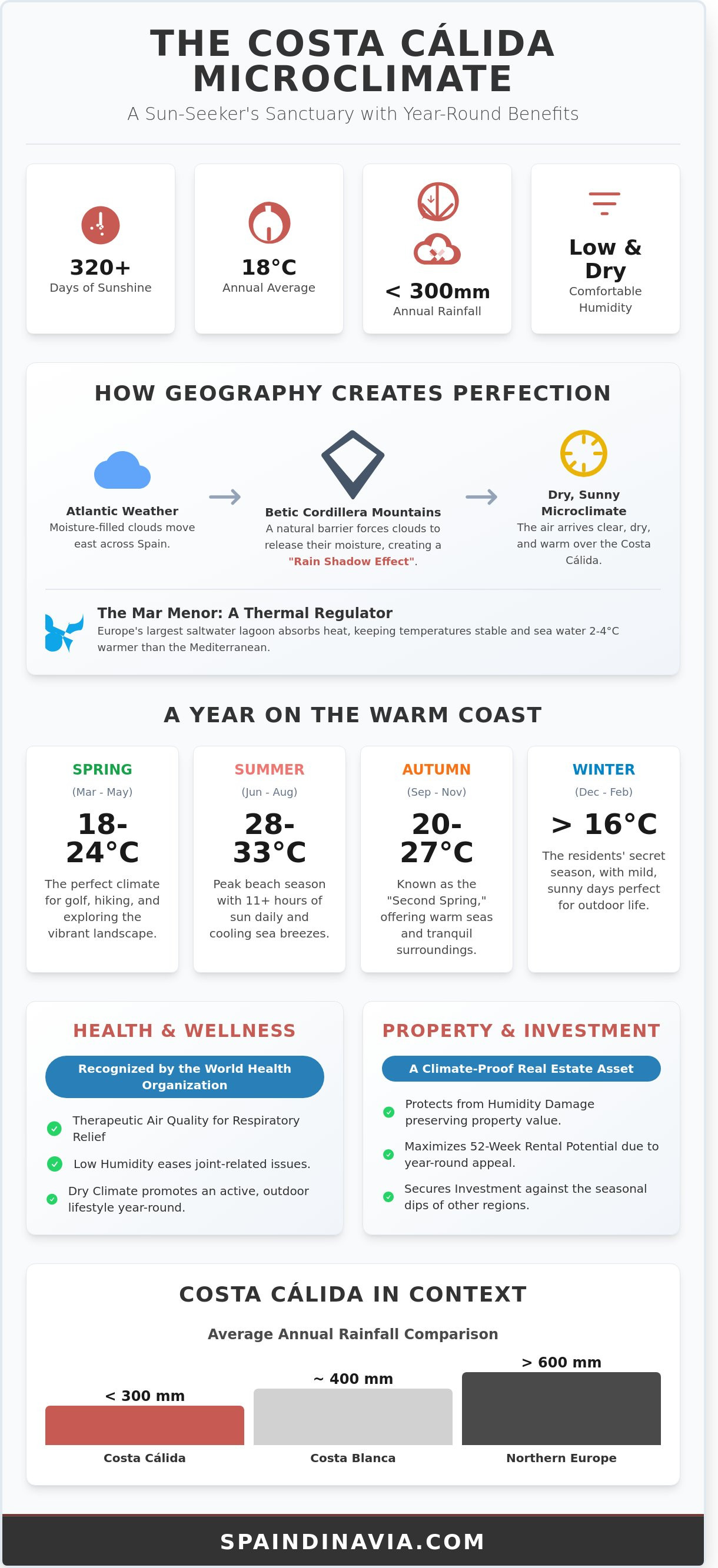
- Annual Average Temperature: 18 degrees Celsius
- Sunshine: Over 320 days per year, totaling more than 2,800 hours
- Rainfall: Extremely low, typically under 300mm annually
- Sea Temperature: Mar Menor waters are often 2 to 4 degrees warmer than the Mediterranean
The Science Behind the 320 Days of Sun
The Betic Cordillera mountains are the primary reason for the region's legendary sunshine. As clouds move from the Atlantic across the Iberian Peninsula, they're forced upward by these peaks, losing their moisture on the western slopes. By the time the air reaches Murcia, it's dry and clear. This rain-shadow effect means the climate in costa calida sees significantly less rainfall than the Costa Blanca, which averages around 350mm to 400mm. The Mediterranean Sea further stabilizes the air, preventing the extreme temperature swings found in Spain's interior provinces.
What Makes it a "Microclimate"?
A microclimate refers to a local atmospheric zone where the weather differs from the surrounding area. In the Spanish southeast, this manifests as lower humidity levels than you'll find in the Costa del Sol or the Balearic Islands. This dry air makes even the hottest summer days feel comfortable rather than oppressive. You'll also experience a "thermal inversion" during the winter months. The surrounding mountains trap a layer of warm air near the coast, keeping winter daytime temperatures frequently above 16 degrees Celsius. It's this specific combination of low humidity and mountain protection that makes the region a top choice for those seeking a healthier, outdoor lifestyle year-round.
Seasonal Breakdown: What to Expect Throughout the Year
Experience a region where the sun dominates the calendar and the clouds are rare guests. The climate in costa calida offers over 3,000 hours of sunshine annually, creating a lifestyle centered around the outdoors. According to official climate data for Murcia, the region receives less than 300mm of rainfall per year. This aridity ensures that your plans for golf, sailing, or terrace dining are rarely interrupted by the weather. You'll find that the air is dry and healthy, which is particularly beneficial for those seeking relief from respiratory or joint issues.
Spring and Summer: The Peak Outdoor Season
From March to June, the region enters its most vibrant phase. Temperatures typically range from 19°C to 26°C, making it the ideal window for active pursuits. Golfers flock to the local courses during these months to enjoy the lush greens before the peak summer heat arrives. As the calendar turns to July and August, the landscape transforms. Daytime highs often reach 32°C, but the coastal areas benefit from the "Levante" breeze. This easterly wind acts as a natural air conditioner, keeping the humidity manageable and the beaches comfortable. Even on the hottest days, the low humidity means the heat doesn't feel oppressive. Evenings are a delight; as the sun sets, temperatures dip to a pleasant 21°C, inviting you to enjoy long, slow dinners under the stars.
- March - May: 18°C to 24°C, perfect for hiking and exploration.
- June - August: 28°C to 33°C, peak beach weather with 11 hours of daily sun.
- September: 27°C, the ideal balance of warmth and tranquility.
Autumn and Winter: The Secret Season for Residents
While northern Europe prepares for the cold, the climate in costa calida enters what locals call the "Second Spring." During October and November, the landscape turns green again after a few short autumn showers. The Mediterranean Sea remains remarkably warm, often staying at 20°C well into late October. This is the best time for swimming as the summer crowds have vanished but the water retains its heat. Winter in this part of Spain is exceptionally mild and usually lasts only about six weeks from late December to early February.
You can expect daytime highs of 16°C to 18°C during the winter months. It's a common sight to see residents eating lunch on a beachfront promenade in a t-shirt, even in January. While nighttime temperatures can drop to 7°C, the days are almost always bright and clear. If you're ready to trade grey skies for a brighter way of life, explore our latest property listings and find your place in the sun. By the time February arrives, the almond blossoms are already in full bloom, signaling the early return of spring.
Health and Wellness: Why the Climate is a Medical Asset
The World Health Organization (WHO) consistently identifies the southeastern Spanish coast as one of the healthiest places to live globally. This isn't just a tagline; it's a result of a unique geographic configuration. The climate in costa calida provides a stable environment where the body can thrive without the stress of extreme temperature swings or damp, bone-chilling winters. For many, moving here is a medical decision as much as a lifestyle choice.
The Benefits for Joints and Respiratory Health
Low humidity is the secret behind the region's reputation as a sanctuary for those with chronic pain. While northern European climates often exacerbate arthritis and rheumatism through high moisture levels, the dry air here offers genuine relief. Average annual temperatures hover around 18 degrees Celsius, ensuring that joints stay warm and mobile throughout the year. You'll likely notice a reduction in daily stiffness within just a few weeks of arrival.
The proximity to the Mar Menor and the salt flats of San Pedro del Pinatar adds a layer of natural therapy. These areas create a mineral-rich atmosphere that acts as a giant outdoor salt room. You'll find that the official tourism site provides extensive information on how the local mud baths and saline-rich air support respiratory health and skin conditions like psoriasis. It's common to see residents taking advantage of these natural treatments daily, turning health maintenance into a social activity under the sun.
Mental Well-being and the Mediterranean Pace
Sunlight is a powerful biological tool. With 320 days of sunshine every year, your body receives a consistent dose of Vitamin D, which is essential for bone density and immune function. More importantly, these 3,000 hours of light per year directly impact your mental health. The abundance of natural light regulates your circadian rhythm, which improves sleep quality and effectively eliminates Seasonal Affective Disorder (SAD). You don't have to fight the winter blues when the sun is a permanent neighbor.
Discover how the climate in costa calida changes your social habits. The terrace culture isn't just a holiday luxury; it's a way of life that prevents isolation. People spend more time outdoors, walking on the promenades or meeting friends at local cafes. This active, social lifestyle is a major factor in why Spain’s life expectancy reached 83.3 years in 2023. Relocating here isn't just about buying a property, it's about investing in a longer, more vibrant future. Let us help you find a home where your health and happiness come first.
Why Climate Matters for Property Owners and Investors
Owning a home in Spain is a financial decision as much as a lifestyle one. The unique climate in costa calida directly impacts your bank balance through reduced maintenance and consistent revenue. High humidity is a silent killer for coastal properties, yet the Costa Calida maintains a dry heat that prevents the damp and mold issues prevalent in more humid Mediterranean pockets. You'll likely save over €1,200 every few years by avoiding the intensive repainting and structural repairs required in wetter climates like the Costa Verde.
Think of your terrace as more than just a place for a morning coffee. In this region, outdoor spaces function as "extra rooms" for at least 10 months of the year. For a standard 100m² villa, a well-designed 40m² solarium increases your usable living area by 40% without the heavy tax implications of indoor square footage. This adds tangible value to your resale price. Additionally, with over 3,000 hours of sunshine annually, solar installations on new builds offer an impressive return. Most owners see a full ROI on solar panels within 5 to 7 years, significantly lowering monthly utility bills from day one.
Protecting Your Investment from the Elements
Properties here endure less "salt air" erosion compared to the Costa Blanca or the Atlantic coast. The drier air means salt particles don't cling as aggressively to facades, preserving the integrity of modern render and glass for longer. You'll also notice a difference in your running costs. Data shows that heating and cooling expenses in the Murcia region typically run 28% lower than in Northern Spain, where damp winters require constant climate control to protect interiors.
Rental Demand and the Year-Round Market
The 52-week rental potential is a reality here, not a marketing pitch. While many European destinations shut down in October, the climate in costa calida attracts "Winter Sun" seekers and remote workers from November through March. Golf tourism provides a massive boost; local courses see peak occupancy during the shoulder seasons when temperatures hover around a comfortable 19°C. This steady demand ensures that your property remains a liquid asset with high resale appeal because buyers know the rental income is reliable.
Let us help you secure a profitable future in the sun. Discover our range of high-yield properties today.
Finding Your Home in the Sun with Spaindinavia
Finding your ideal property involves more than just picking a floor plan; it's about understanding how the local environment affects your daily comfort. Spaindinavia acts as your essential bridge between Northern European quality expectations and the vibrant Spanish reality. We recognize that moving from a cooler climate requires a shift in how you evaluate property features. While a home in Oslo or Stockholm focuses on trapping every bit of heat, a villa in Murcia must master the balance of natural ventilation and solar protection. Our team ensures you don't just buy a house, you secure a home built specifically for the unique climate in costa calida.
We prioritize your long-term satisfaction by selecting properties that handle the 3,000 annual hours of sunshine with ease. Our personal service is rooted in the fact that we live in the same areas we sell. This local presence allows us to provide honest, practical advice on which neighborhoods catch the best Mediterranean breezes and which villas offer the best protection against the August heat.
A Hand-Picked Portfolio for the Mediterranean Life
Our selection focuses on new build villas that meet or exceed strict 2026 energy efficiency standards. We look for specific architectural details like thermal break windows and advanced aerothermal systems that keep interiors at a steady 22 degrees Celsius throughout the year. We evaluate every listing based on its ability to harmonize with the climate in costa calida, ensuring your home remains a sanctuary regardless of the season.
- Optimal orientation: We prioritize south-facing terraces for winter warmth and shaded outdoor areas for summer relief.
- Modern insulation: Our portfolio features properties with high-density materials that exceed current building codes by 15 percent.
- Smart design: Deep porches and pergolas are strategically placed to provide natural shade during the 2:00 PM peak heat.
Your Journey to 320 Days of Sunshine Starts Here
Transitioning to a life with 320 days of sun requires a secure, transparent process. We guide you through every milestone, from the initial digital viewing to the final signature at the notary. Our network includes independent solicitors and local banks that specialize in international clients, ensuring your transaction is 100 percent compliant with Spanish law. This "trygg affär" or safe deal approach is the cornerstone of our service.
We currently manage a portfolio of over 50 high-quality new build projects across the Costa Blanca and Costa Cálida. Whether you seek a frontline golf villa in Altaona or a modern apartment near the Mar Menor, we match your lifestyle to the right microclimate. Contact us today to view our latest projects and let us help you start your new chapter in the sun.
Start Your New Chapter Under the Spanish Sun
Choosing a home is about more than four walls; it's about the air you breathe and the light that wakes you up every morning. With over 320 days of sun guaranteed each year, the climate in costa calida offers a unique microclimate that acts as a natural asset for your health and a secure shield for your property investment. You aren't just buying real estate; you're securing a lifestyle where the sun is a constant companion and the winters are famously mild.
Since 2016, Spaindinavia has served as a trusted bridge for buyers seeking the perfect balance of Scandinavian reliability and Spanish warmth. We provide comprehensive support throughout the entire buying process, from the first viewing to the moment you turn the key in the lock. Our local experts take care of the complex details so you can focus on the excitement of your move. We've built our reputation on being there for you every step of the way, ensuring a safe and transparent journey to your new home. Let us help you find a place where quality of life is the daily priority.
Discover Your Dream New Build Villa in the Sun
The Mediterranean life you've always imagined is closer than you think, and we're ready to walk that path with you.
Frequently Asked Questions
Is the Costa Cálida climate too hot in the summer?
Summer temperatures usually peak at 32°C in July and August, which stays manageable due to constant coastal breezes. These Mediterranean winds provide a natural cooling effect that prevents the stagnant heat found in inland Spanish cities. You'll find that the climate in Costa Calida remains comfortable for outdoor dining and beach activities throughout the peak season.
Does it ever rain in the Costa Cálida?
Rainfall is rare in this region, as the area averages only 30 to 35 days of rain per year. Most of this precipitation occurs during short, intense bursts in October and November rather than long, gray weeks. With over 320 days of sunshine annually, you can plan your outdoor activities with 90% certainty that the weather will remain dry and clear.
Can you swim in the sea during the winter months?
Sea temperatures in the Mar Menor stay around 14°C to 16°C during January and February, which is often warm enough for a quick, refreshing dip. Many local residents use thin wetsuits for water sports during this period to enjoy the water for longer sessions. The shallow depth of the Mar Menor lagoon means it warms up significantly faster than the open Mediterranean, often reaching 20°C by early May.
How does the climate compare to the Costa del Sol or Costa Blanca?
The Costa Cálida is generally 2°C warmer and significantly drier than its northern neighbor, the Costa Blanca. While the Costa del Sol experiences higher humidity and more Atlantic influence, the climate in Costa Calida is protected by surrounding mountain ranges. This creates a unique microclimate that results in 3,000 hours of sunshine per year, which is roughly 10% more than many other Spanish coasts.
Is the air quality good for people with allergies?
Air quality in this region is exceptional, and the World Health Organization has previously recognized the Murcia province for its clean, health-giving environment. The combination of salt flats in San Pedro del Pinatar and the lack of heavy industry creates an atmosphere low in pollen and pollutants. People with respiratory issues or skin conditions often find their symptoms improve within 48 hours of arriving in the region.
What are the sunniest months to visit for property viewing?
June and July are the sunniest months, offering 10 to 11 hours of direct sunlight each day to inspect potential homes. If you prefer milder temperatures for walking through villas, April and May provide 8 hours of sun with comfortable averages of 22°C. We recommend these spring months so you can experience the local gardens in full bloom while assessing the natural light in your potential new home.
Do I need heating in a villa during the winter?
You'll likely need a heat source for evening use between December and March when indoor temperatures can drop to 15°C after sunset. Modern villas now include integrated air conditioning with heat pumps or underfloor heating in bathrooms to ensure your comfort. While the daytime sun keeps the house warm, a pellet burner or electric heater is essential for the 3 months of the year when the sun goes down early.
What is the "Mar Menor effect" on local temperatures?
The Mar Menor acts as a giant thermal regulator that keeps the surrounding land 2°C to 3°C warmer in winter than areas just 10 kilometers inland. This lagoon is never deeper than 7 meters, so it retains heat efficiently during the day and releases it slowly at night. It creates a gentle microclimate that prevents frost and allows tropical plants like hibiscus and bougainvillea to thrive year round without any protection.


