

Your community fees are far more than just a monthly expense; they are the insurance policy that protects your property's long-term appreciation and your daily quality of life. We know that understanding community fees (gastos de comunidad) in spain can feel daunting, especially when the fear of unexpected "derrama" levies or complex legal jargon starts to cloud your Mediterranean dream. You deserve to feel secure in the knowledge that your investment is being managed correctly and that every Euro spent is contributing to a better lifestyle in the sun.
In this 2026 guide, we'll help you master the essentials of Spanish property ownership so you can budget with total precision. We'll walk you through the latest regulations, from the new nationwide waste management tax to the 2026 statutory interest rates on unpaid debts. By the end of this article, you'll have the clarity you need to ensure your community is well-run, your rights are protected, and your focus remains exactly where it should be: on enjoying your beautiful home.
Key Takeaways
- Discover the essential role of the "Comunidad de Propietarios" and why these mandatory contributions are vital for maintaining the long-term value of your home.
- Master your monthly budget by understanding community fees (gastos de comunidad) in spain, including how they are calculated based on your property’s square metres.
- Learn how to identify and prepare for a "derrama", the special levies used for significant structural repairs or communal improvements.
- Identify the critical due diligence steps, such as obtaining a debt-free certificate, to ensure you don't inherit unpaid fees from a previous owner.
- Understand how professional property management can provide peace of mind and protect your Mediterranean investment while you are abroad.
What are Community Fees (Gastos de Comunidad) in Spain?
Think of community fees as the heartbeat of your Spanish home. They aren't just another bill to pay; they're the collective fuel that keeps your Mediterranean lifestyle running smoothly. When you buy a property that's part of a complex or a building, you aren't just buying four walls. You're also becoming a joint owner of the swimming pools, the lifts, the gardens, and the hallways. understanding community fees (gastos de comunidad) in spain is the first step toward ensuring your investment remains a source of joy rather than a source of stress.
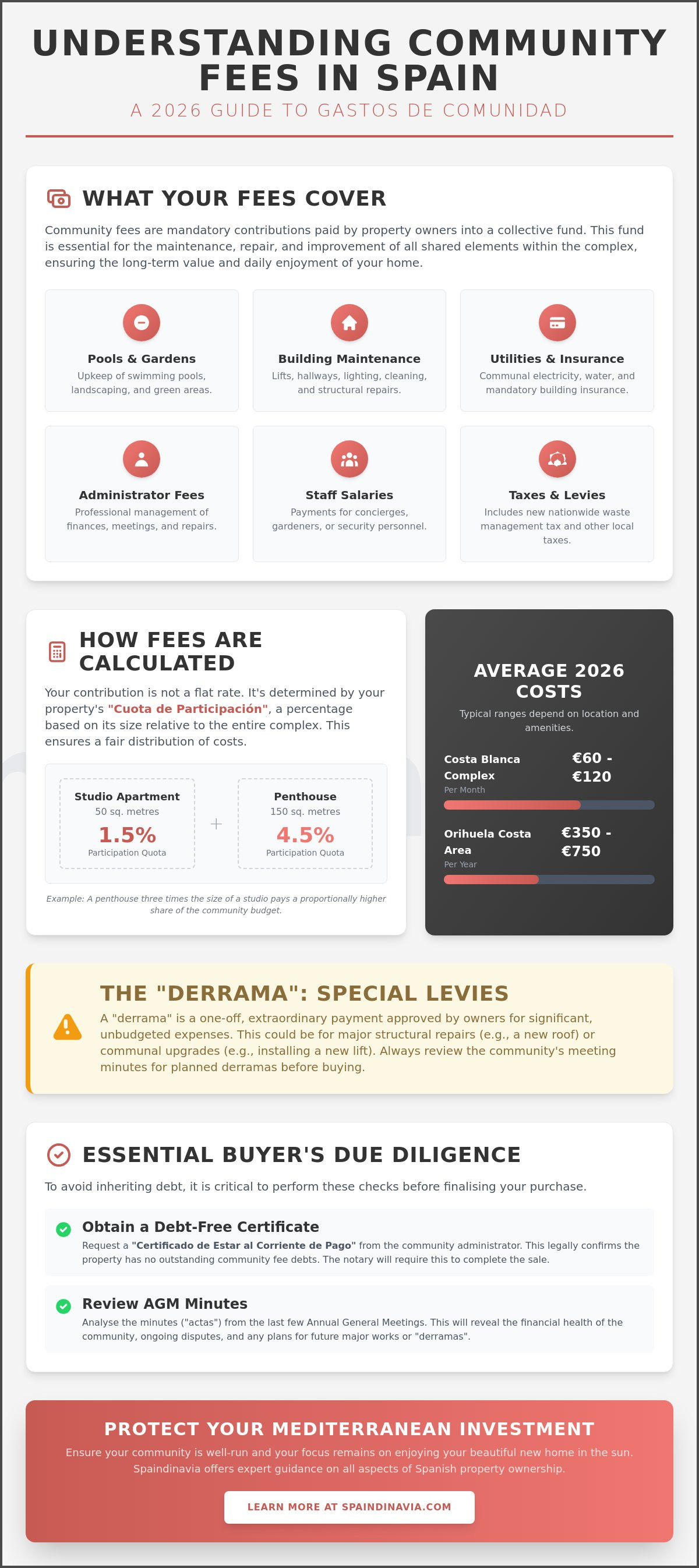
In legal terms, every owner is part of the Comunidad de Propietarios. This is a mandatory legal entity that manages the shared elements of the property. Your contribution isn't a flat rate. It's determined by your "cuota de participación", which is a percentage based on the size of your property in relation to the total size of the complex. If you own a large penthouse, your share will naturally be higher than someone in a studio apartment. This system ensures that the financial responsibility is shared fairly across the entire community.
The Legal Foundation: Horizontal Property Law
Everything regarding communal living is governed by a robust legal framework. The Horizontal Property Law (Ley de Propiedad Horizontal) is the 1960 legislation that protects owner rights and provides the legal framework for communal living. This law ensures that every owner, regardless of their nationality, is treated equally. It dictates how meetings are held, how budgets are approved, and how disputes are settled. Because this law is so established, it provides a sense of security for international buyers. It ensures that the rules of the game are clear and that the community cannot simply invent new charges without following a strict democratic process.
What exactly do your fees cover?
The scope of these fees depends entirely on the type of property you've chosen. In a standard apartment block, your money covers the essentials. This includes cleaning the stairwells, maintaining the lift, lighting the communal areas, and building insurance. For those who choose the Spaindinavia standard of living in a modern resort, the list of benefits grows. Your fees might fund 24-hour security, manicured tropical gardens, and the pristine upkeep of multiple swimming pools.
A portion of your fees also pays for a professional "Administrador de Fincas". This person acts as the community manager. They handle the accounting, organise the annual meetings, and ensure that repairs are carried out promptly. Having a professional at the helm is a vital part of a buying property in Spain guide because it ensures the complex doesn't fall into disrepair. Whether you've purchased one of our new build villas or a resale apartment, these fees protect the aesthetic and functional value of your home, keeping your "life in the sun" exactly as you imagined it.
How Community Fees are Calculated and Managed
Your monthly contribution isn't a figure plucked from thin air. It's a precisely calculated share of the total running costs of your complex. For those understanding community fees (gastos de comunidad) in spain, the most important term to master is the "Cuota de Participación". This coefficient is assigned to every property when the building is first registered. It's usually based on the square metres of your home compared to the total area of the community. If you own a spacious bungalow in a smaller complex, your percentage will be higher than a compact studio in a high-rise block. It's a fair system. You pay exactly for the portion of the shared space you own.
The financial year revolves around the Annual General Meeting (AGM). This is where the community's budget is proposed, debated, and approved. For a residential complex with a pool on the Costa Blanca, you can expect to pay between €60 and €120 per month in 2026. If your dream home is in the Orihuela Costa, average annual fees typically range between €350 and €750. These figures cover the annual budget, which is proposed by the Administrator and voted on by owners. Payment schedules vary depending on the community's preference. Some collect fees monthly, whilst others prefer quarterly or even bi-annual payments to keep administrative tasks simple.
Factors that influence the cost
Several variables dictate your final bill. Larger communities often benefit from economies of scale. Whilst a complex with 200 units might have more facilities, the cost of maintaining the pool is split amongst many owners. Staffing is another major factor. Having a 24-hour concierge or on-site gardeners will increase the monthly fee, but it adds a layer of security and beauty that protects your property's value. Older buildings might lack a spa or gym, but they often require higher maintenance reserves for structural upkeep as they age.
The role of the Community President and Administrator
It's vital to distinguish between these two figures. The President is a fellow owner, elected to represent the community's interests. They hold the legal representation of the community. The Administrator is a hired professional who manages the day-to-day finances, legalities, and debt collection. You have a legal right to request financial statements or meeting minutes at any time to ensure transparency. If you're currently browsing for your next home, our team at Spaindinavia can help you review the community standing of any property you're considering.
Transparency is the cornerstone of a well-managed community. As of 2026, the statutory interest rate on unpaid debts is 3.25%. Communities can vote to apply a higher rate to late payers at the AGM. This ensures that the community remains solvent and that responsible owners aren't burdened by the debts of others. Being an active participant in your community meetings is the best way to ensure your funds are being spent wisely on the services that matter most to you.
Navigating Extraordinary Expenses and the "Derrama"
Occasionally, your community might face a cost that wasn't planned for in the annual budget. In Spain, this one-off payment is known as a "derrama". Whilst the word might sound intimidating to new buyers, it's actually a vital tool for protecting the long-term value of your investment. Think of it as a collective investment in the future of your building. Whether it's a fresh coat of paint for the facade or a vital repair to the communal plumbing, these projects ensure your Mediterranean retreat remains a place of beauty and safety.
A derrama is typically proposed when the community's regular funds can't cover a significant project. Common reasons include structural maintenance, modernising the lift system, or improving accessibility with new ramps. Understanding community fees (gastos de comunidad) in spain involves recognising that these payments are a legal obligation once they've been approved by the community of owners. To keep your experience stress-free, we recommend setting aside a small contingency fund of roughly €500 to €700. This proactive approach ensures that when the community decides to upgrade your shared spaces, you can contribute with confidence.
Voting thresholds and your rights
The rules for passing a derrama depend on the nature of the work. Repairs that are essential for the building's structural integrity or basic habitability aren't just optional; they're mandatory. Structural safety repairs cannot be blocked by a minority of owners when they are required for the building's conservation or to meet legal accessibility standards. For "luxury" improvements, such as installing a new gym or a paddle tennis court, the voting requirements are stricter. Usually, these require a three-fifths majority. If you vote against a luxury improvement and the cost exceeds three months of your ordinary community fees, you may not be obliged to pay, though you might be restricted from using the new facility.
The Reserve Fund (Fondo de Reserva)
Every community in Spain is legally required to maintain a reserve fund. This is a financial safety net, currently set at a minimum of 10% of the community's last ordinary budget. A healthy reserve fund is the sign of a well-managed community. It acts as a buffer, often covering smaller repairs without the need for a derrama. When you're looking at resale apartments or townhouses, we always suggest checking the balance of this fund. A robust reserve suggests that the owners are committed to the building's upkeep, which is a fantastic indicator of a "trygg affär" or secure deal. At Spaindinavia, we make it our priority to help you investigate these details during the due diligence process, ensuring there are no hidden surprises waiting for you after you receive the keys.
Essential Due Diligence: Reviewing Community Health Before Buying
Buying a home in the sun is an emotional journey, but your head must lead the way when it comes to the paperwork. A vital part of any buying property in Spain guide is the investigation into the community's financial health. You aren't just purchasing a flat; you're joining a micro-economy. Understanding community fees (gastos de comunidad) in spain means knowing how to spot a community that's thriving versus one that's struggling. A beautiful pool is of little value if the community behind it is facing insolvency or legal turmoil.
Your first priority is requesting the "Certificado de Estar al Corriente de Pago". This certificate proves the current owner is debt-free. Without it, you could be liable for unpaid fees from the year of purchase and the three preceding years. Next, ask for the minutes from the last two Annual General Meetings (AGMs). These documents are the true "source of truth". They reveal hidden disputes, planned repairs, or recurring issues that a simple viewing won't show. You should also verify the reserve fund balance and check for any "derramas" that have been approved but not yet collected. If a major roof repair was voted for last month, you need to know if you'll be the one receiving the bill.
Red Flags to watch out for
Keep a keen eye out for "morosidad" or high delinquency rates. If a significant percentage of your neighbours aren't paying their fees, the burden of maintenance falls on the responsible owners. This often leads to a cycle of deferred maintenance where essential repairs are ignored because there's no money in the pot. Ongoing legal battles are another warning sign. If the community is suing a developer for structural defects, it could mean years of legal fees and uncertainty for you as a new owner. A history of constant, small derramas might also suggest that the ordinary budget is set too low, which is a recipe for financial instability.
Working with your solicitor
Your independent lawyer plays a crucial role here. They must verify the community status before you sign the deeds at the Notary. In Spain, the law is clear: the property itself carries the debt. Your solicitor ensures the seller clears every cent of community debt before the title transfers to you. It's also worth noting that new build villas often have different structures. They might belong to a "Macro-comunidad" which manages large-scale infrastructure like private roads and street lighting, whilst resale apartments focus on the building's immediate shared zones. If you're ready to start your journey with confidence, browse our latest property listings and let our experts handle the details for you.
Protecting Your Investment with Spaindinavia
At Spaindinavia, we see ourselves as more than just estate agents; we are your local partners in every sense. Understanding community fees (gastos de comunidad) in spain shouldn't be a hurdle that stops you from enjoying your new life. From the moment you begin your search for new build apartments or resale villas, we provide the clarity you need to feel completely at home. We act as the bridge between your Scandinavian expectations of transparency and the local Spanish administrative systems, ensuring that every detail of your communal obligations is crystal clear before you commit.
A well-run community is the secret ingredient for maximizing ROI and lifestyle in 2026. When shared areas are kept in pristine condition and the community accounts are healthy, your property’s market value remains protected. We've seen firsthand how proactive management can turn a simple residential complex into a highly sought-after destination for both buyers and holiday renters. By choosing a property with a strong "Comunidad", you're investing in a collective future that prioritises quality of life and financial stability.
Managing your property from afar
For non-resident owners, staying involved with community decisions can feel like a challenge whilst you're away. You don't have to worry about missing an important vote or being unaware of a new community decision. Our rental management and key holding services ensure you have a professional presence on the ground. This is particularly vital given the 2025/2026 changes to the Horizontal Property Law, which empower communities to restrict tourist rentals or increase fees for rental properties by up to 20% with a three-fifths majority vote.
We use modern digital tools to keep you updated on these shifts, whilst our team acts as your trusted liaison with the community administrator. This level of personal service provides the peace of mind that your Mediterranean investment is being watched over by experts. We handle the communication amongst neighbours and administrators so you can focus on the excitement of your next visit. Whether it's navigating the new nationwide waste management tax or understanding municipal IBI rates, we're here to translate complex regulations into simple, actionable advice.
Conclusion: Building a secure future in the sun
Ultimately, community fees are a positive force for any homeowner. They represent a collective commitment to quality, security, and Mediterranean beauty. By engaging with your community and staying informed about your rights, you contribute to a vibrant neighbourhood that will bring you joy for years to come. Engaging with your neighbours at the AGM or staying updated via your administrator is the best way to ensure your "life in the sun" remains stress-free and rewarding.
Whether you're looking for bungalows, townhouses, or commercial premises, we're here to guide you through every step of the purchase and beyond. We believe in "trygg affär" — a secure deal that lasts a lifetime. Contact Spaindinavia today to find your dream home and let us help you build a secure, sunny future on the Spanish coast with total confidence.
Take the Next Step Toward Your Dream Home
Your journey toward a life in the sun should be filled with excitement, not paperwork anxiety. These communal contributions are the foundation of a well-maintained, thriving neighbourhood. They protect your property's value and ensure your shared spaces remain as beautiful as the day you first saw them. Mastering the art of understanding community fees (gastos de comunidad) in spain is the final piece of the puzzle in making a secure, long-term investment that brings you joy for years to come.
We're here to ensure your transition to Spanish property ownership is seamless. With our hand-picked portfolio of quality new builds and expert support from independent solicitors, you can buy with total confidence. Even whilst you're away, our comprehensive property management ensures your home is cared for and your interests are represented. Find your perfect, well-managed Spanish home with Spaindinavia and start your Mediterranean chapter today. Your sanctuary in the sun is waiting, and we're ready to help you find it.
Frequently Asked Questions
What happens if I refuse to pay my community fees in Spain?
Refusing to pay can lead to serious legal consequences, including the application of a statutory interest rate of 3.25% for 2026. Communities also have the power to restrict your access to non-essential communal facilities, such as the swimming pool or gym, if you fall behind on payments. In extreme cases, the community can take legal action to place an embargo on your property or even force a judicial auction to recover the debt.
Can the community prevent me from renting out my property to tourists?
Yes, communities have significant power over short-term lets following the April 3, 2025, changes to the Horizontal Property Law. A three-fifths majority vote (60%) can now ban tourist rentals entirely or increase the community fees for those specific properties by up to 20%. This is a vital factor in understanding community fees (gastos de comunidad) in spain for anyone looking at holiday rental properties as an investment.
How much are typical community fees for a villa compared to an apartment?
Typical fees for an apartment in a Costa Blanca residential complex with a pool range from €60 to €120 per month. Independent villas often have lower fees unless they're part of a private estate with shared security, lighting, and roads. In areas like the Orihuela Costa, average annual fees for communal maintenance usually sit between €350 and €750 depending on the level of luxury provided.
Do I have to pay community fees if I don’t use the communal swimming pool?
You're legally required to pay your full share of the community fees even if you choose not to use certain facilities. Your contribution is based on your "cuota de participación" (participation coefficient) rather than your personal usage of the gardens or pool. These fees are mandatory because they ensure the entire complex remains functional and well-maintained, which protects the resale value of your home.
How often can the community increase the monthly fees?
Community fees are typically reviewed and adjusted once a year during the Annual General Meeting (AGM). The Administrator proposes a new budget to cover rising costs, such as the 2026 nationwide waste management tax, which is expected to cost households between €120 and €200 per year. Any proposed increase must be debated and approved by a majority vote of the owners.
What is the "Certificado de Deuda" and why is it vital for buyers?
The "Certificado de Deuda" is a document issued by the community administrator confirming that the property is free of any outstanding debts. It's vital because, under Spanish law, the new owner is liable for unpaid fees from the year of purchase and the three preceding calendar years. Your solicitor will ensure this certificate is presented at the Notary to protect you from inheriting the previous owner's debts.
Can I vote at the AGM if I cannot attend the meeting in person?
You can certainly vote at the AGM even if you're out of the country by appointing a proxy to represent you. This is a common practice for owners of investment properties or second homes. You simply sign a representation form, allowing a trusted neighbour or your property manager to cast your vote, ensuring your voice is heard on important community decisions.
Are community fees tax-deductible if I rent out my Spanish property?
Community fees are generally tax-deductible against your rental income when you're understanding community fees (gastos de comunidad) in spain for tax purposes. If you're a non-resident renting out your property, you can deduct these expenses proportionally for the periods the property is occupied by tenants. This is a great way to manage your running costs whilst enjoying the benefits of a well-maintained Mediterranean complex.


