
Did you know that scheduling your pool pump to run during the early hours can slash your energy expenses by as much as 70%? It's a common concern for homeowners that the cost of running a swimming pool in Spain might spiral, especially with the shifting electricity prices and drought regulations we're seeing in 2026. You deserve to enjoy that shimmering turquoise water without the nagging worry of a surprise bill landing on your doormat.
We believe your home in the sun should be a source of pure relaxation, not a cause for financial stress. Discover the itemised annual expenses and smart saving strategies that make maintaining a private pool both predictable and affordable. We'll provide a clear breakdown of monthly budgets, from chemical balancing to professional maintenance fees, whilst addressing critical water restrictions in regions like Mallorca and Murcia. Let's help you navigate the "Valle" off-peak hours and energy-efficient tech to ensure your investment adds nothing but value and joy to your Spanish lifestyle.
Key Takeaways
- Learn how to itemise your monthly budget to effectively manage the cost of running a swimming pool in Spain, from peak summer usage to winter hibernation.
- Discover how simple upgrades like variable speed pumps and thermal covers can slash your electricity bills and prevent costly water evaporation.
- Compare the upfront investment of saltwater systems against traditional chlorine kits to determine which offers the best long-term value for your lifestyle.
- Understand the benefits of professional maintenance for non-resident owners to ensure your pool remains a pristine asset rather than a source of stress.
- Evaluate how a private pool boosts your property's rental yield and overall market value, making it one of the most rewarding features of a Spanish home.
Understanding the Core Monthly Expenses of a Spanish Pool
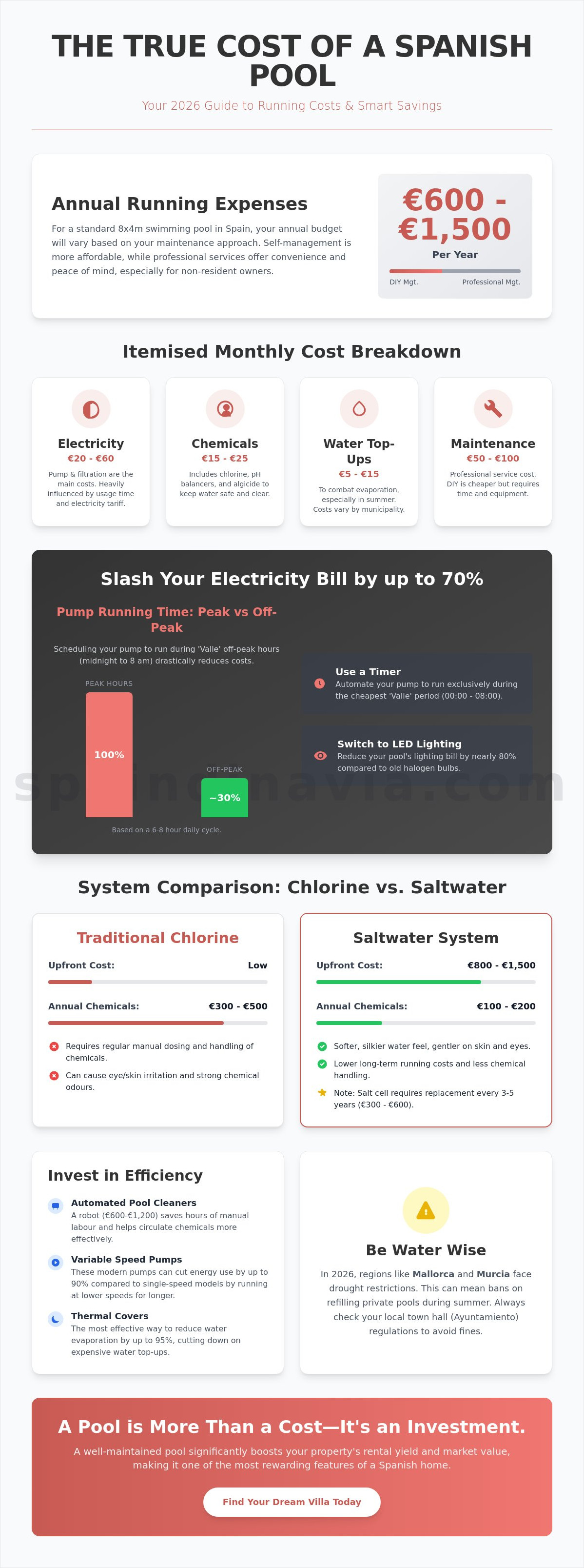
Owning a home with a private pool is the ultimate Mediterranean dream, but understanding the actual cost of running a swimming pool in Spain is essential for a stress-free experience. These costs aren't just one single figure. They're a blend of electricity for the pump, chemical treatments, water replenishment, and professional labour. For a standard 8x4m pool, you should budget between €600 and €1,500 per year, depending on whether you manage it yourself or hire an expert to help.
Your expenses will fluctuate with the seasons. During the active summer months, your pump works harder and chemicals disappear faster under the intense sun. In winter, the pool enters a hibernation phase. Whilst costs drop significantly during these cooler months, you can't simply ignore the water. The myth of set and forget often leads to expensive repairs, such as calcification or pump failure. Consistent general swimming pool maintenance ensures that small issues don't turn into major financial headaches later, protecting both your lifestyle and your property's value.
The Electricity Bill: Powering the Pump and Filter
In the height of the Spanish summer, your filtration pump needs to run for at least 6 to 8 hours daily to keep the water safe and clear. With the 2026 regulated PVPC tariff averaging €0.1383 per kWh, timing is everything. If you've secured a competitive fixed-rate tariff under €0.12 per kWh, you're in a strong position. The smartest move is using the Valle off-peak period between midnight and 8 am, which is 60% to 70% cheaper than peak hours. Don't forget your evening ambiance; switching to LED lighting can reduce your pool's lighting bill by nearly 80% compared to old halogen bulbs, allowing you to enjoy those midnight swims without the guilt.
Water Usage and the Evaporation Factor
The relentless sun in regions like Alicante and Malaga causes significant evaporation, often requiring weekly top-ups to keep the skimmers functioning. Water prices in Spain vary wildly by municipality. You might pay €1.90 per cubic metre on average, but this can climb to over €3.50 in drier coastal areas or the Balearic Islands. It's rarely necessary to drain and refill a pool entirely, which is fortunate, as a full refill for a standard pool could cost upwards of €100 in water alone. Stay informed about your local town hall rules. In 2026, areas like Mallorca and Murcia have faced strict drought alerts, meaning refilling private pools can be restricted or even banned during peak summer weeks to conserve resources.
Chemicals and Cleaning: Keeping Your Water Crystal Clear
Maintaining the perfect chemical balance is about more than just aesthetics; it's about protecting your health and your property investment. For most villa owners, the DIY cost of running a swimming pool in Spain regarding chemicals typically sits between €15 and €25 per month. Your essential kit will always include chlorine (tablets or granules), pH increaser or decreaser, and algicide. Flocculant is a tool for binding micro-particles to keep water clear by allowing them to be easily filtered out. Keeping these supplies stocked ensures your water remains inviting even during the sweltering August heatwaves.
Modern technology has introduced automated pool cleaners, often called robots, which have become a staple in Spanish gardens. Whilst a high-quality robot might require an initial investment of €600 to €1,200, it significantly reduces the manual labour required and helps distribute chemicals more evenly. We often suggest that clients looking for new build villas prioritise properties with pre-installed automated systems to simplify their long-term maintenance journey.
Chlorine vs Saltwater: A Financial Comparison
Choosing between traditional chlorine and a saltwater chlorinator is one of the most significant financial decisions you'll make. A saltwater system has a higher entry price, usually costing between €800 and €1,500 for installation. However, your ongoing annual chemical spend drops to approximately €100 to €200, compared to the €300 to €500 you might spend on traditional chlorine treatments. You must factor in the salt cell replacement every three to five years, which currently costs between €300 and €600. For long-term owners, the softer water and reduced chemical handling often outweigh these periodic expenses.
Preventative Maintenance to Avoid "Green Pool" Costs
Consistency is your best financial ally. If a pool is neglected and turns green, the "recovery" process involves heavy shock treatments and intensive filtration, which can cost upwards of €100 in a single week. Phosphate removers and preventative algicides might seem like extra expenses, but they act as insurance against these costly bloom events. This is particularly vital in 2026 as the drought management committee in various regions continues to monitor water usage. Keeping your water chemically perfect means you'll never need to perform a "drain and refill" operation, which is both environmentally irresponsible and increasingly regulated by local town halls. A small monthly investment in testing kits and professional water analysis ensures your Mediterranean dream stays crystal clear without breaking the bank.
Modern Efficiency: How to Reduce Your Running Costs in 2026
Embracing modern technology is the most effective way to ensure the cost of running a swimming pool in Spain remains an affordable luxury. In recent years, the shift towards eco-friendly and energy-efficient equipment has transformed how homeowners manage their Mediterranean retreats. By investing in the right tools today, you can protect your budget from fluctuating energy prices whilst enhancing your overall lifestyle. We believe that a smart pool is a sustainable pool, allowing you to focus on making memories rather than monitoring bills.
The landscape of pool ownership has changed significantly. In 2026, we see a clear trend towards "active" efficiency, where hardware and software work together to minimise waste. Whether you're looking at resale villas or planning a new installation, prioritising these upgrades will pay dividends for years to come. Let's explore the essential technologies that are helping savvy owners slash their monthly outgoings.
Variable Speed Pumps: A 2026 Essential
Traditional single-speed pumps are quickly becoming a relic of the past in modern Spanish villas. These older models operate at maximum power regardless of the task, which is incredibly wasteful. In contrast, a variable speed pump allows you to dial down the flow for routine filtration and only ramp up for tasks like vacuuming or backwashing. Since the power required by a pump drops significantly as you reduce its speed, these units can reduce your electricity consumption by up to 80%. Given that pump operation typically costs between €300 and €600 annually, the return on investment is often achieved in less than two years. Beyond the financial savings, you'll enjoy a much quieter garden environment, as these pumps operate with a gentle hum rather than a loud drone.
The Power of the Pool Cover
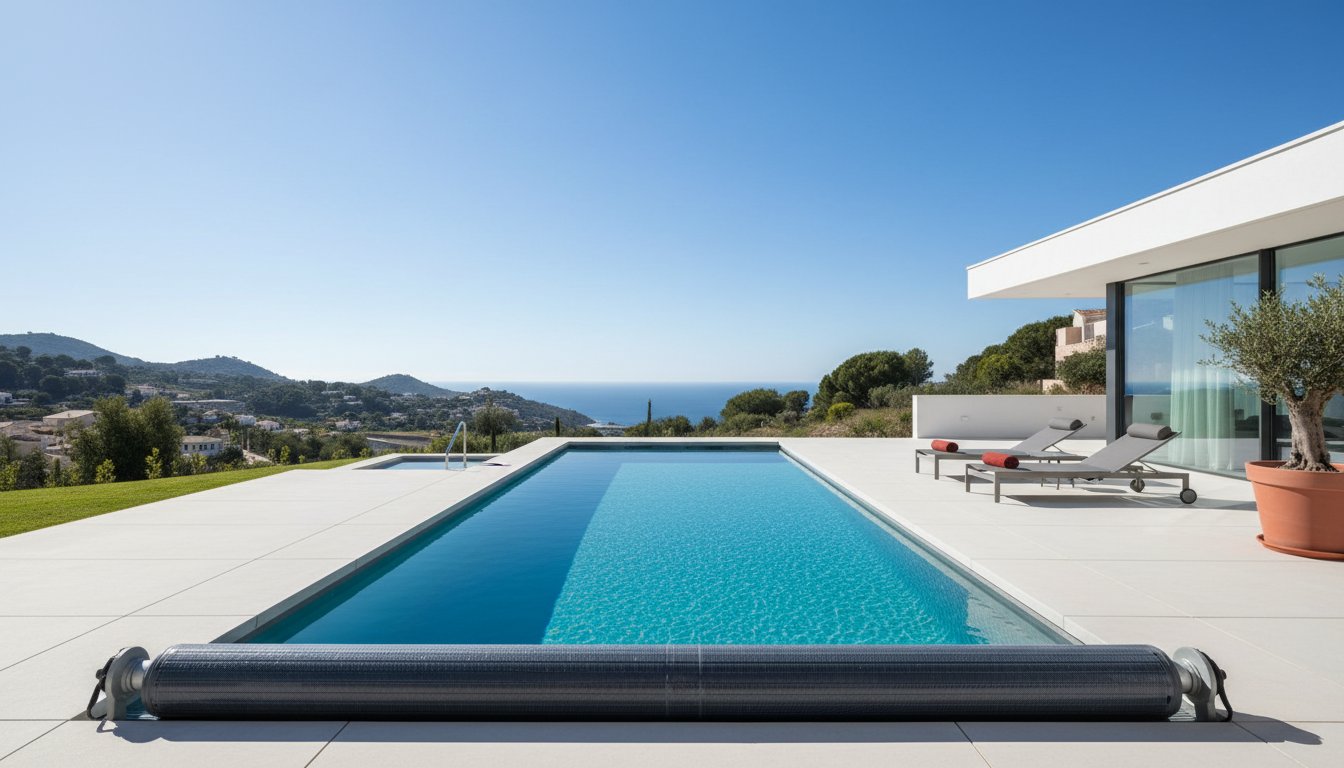
A high-quality thermal pool cover is perhaps the simplest yet most effective tool in your efficiency arsenal. During the intense Spanish summer, evaporation is the primary cause of water loss. A cover can reduce this evaporation by up to 90%, saving you a significant amount on your monthly water bill. It also serves as a shield against UV rays, which naturally degrade chlorine. By keeping the pool covered when not in use, you'll find your chemical consumption drops because the chlorine remains active for longer. For those who enjoy an extended swimming season, a thermal cover helps retain the heat absorbed during the day, keeping the water at a comfortable temperature without the need for expensive electric heaters.
To further refine your budget, consider 2026 IoT smart monitors. These floating sensors connect to your smartphone and provide real-time data on your water chemistry. Instead of guessing and potentially over-dosing your pool with expensive chemicals, you'll receive precise instructions on exactly what is needed. This precision prevents chemical waste and keeps your water perfectly balanced with minimal effort.
Professional Management vs DIY Maintenance
Deciding whether to roll up your sleeves or hire a local expert is a pivotal choice for every homeowner. The cost of running a swimming pool in Spain is often most predictable when you outsource the heavy lifting to a professional. In 2026, the average fee for a dedicated "pool man" ranges between €50 and €120 per month. This cost depends on the frequency of visits and the size of your pool. Whilst it's an added monthly expense, it serves as a safeguard for your lifestyle and your property's future market value.
Hiring a professional is particularly vital for non-resident owners or those managing holiday rental properties. Guests expect crystal-clear water upon arrival, and a single "green pool" event can lead to lost bookings and negative reviews. Beyond the surface, professional upkeep protects your spain property investment by ensuring the structural integrity of the basin remains intact. Improper chemical balancing is a common DIY pitfall that leads to long-term tile erosion and grout damage, which can cost thousands of euros to retile.
What a Professional Pool Service Includes
A standard service contract typically covers weekly or fortnightly visits during the summer and reduced frequency in winter. Your technician handles essential tasks like clearing skimmer baskets, backwashing the sand filter, brushing the walls, and precise chemical balancing. For those who own new build villas, these experts also monitor the latest filtration technology and ensure warranties remain valid through proper servicing. Winter maintenance packages are a popular choice for absent owners, providing peace of mind that the pool won't become a breeding ground for mosquitoes whilst the property is vacant.
DIY Maintenance: Tools and Time Investment
If you enjoy the meditative process of garden care, DIY maintenance is certainly achievable. You'll need an initial investment of approximately €150 to €300 for high-quality telescopic poles, nets, brushes, and a manual vacuum head. The real cost here is your time. Expect to spend at least two to three hours every week on cleaning and water testing to stay ahead of the Spanish sun. It's a rewarding task, but you must be honest about your schedule. When technical issues arise, such as a leaking valve or a burnt-out pump motor, we always recommend calling in a specialised technician. Attempting complex repairs yourself can often lead to further damage and higher bills in the long run.
Whether you choose the hands-on approach or professional support, the goal is a stress-free Mediterranean life. If you are still searching for your dream home with a sun-drenched terrace and a pristine pool, browse our latest property listings to find your perfect match.
Is a Pool Worth the Cost? ROI and Lifestyle Value
When you weigh up the cost of running a swimming pool in Spain, it's easy to focus solely on the monthly outgoings. However, the true value of a pool is measured in more than just euros and cents. It's the centrepiece of the Mediterranean lifestyle, offering a private sanctuary for health, relaxation, and family memories. For many, the joy of a morning swim under the Spanish sun or a cooling dip after a long day is an intangible benefit that far outweighs the annual maintenance budget.
We see a pool as an investment in your quality of life. Whilst the financial commitment is real, the rewards are equally tangible. Whether you are hosting summer barbecues or enjoying a quiet evening by the water, a well-kept pool transforms a house into a dream home. It's about finding that perfect balance between the practicalities of a budget and the emotional richness of a life lived outdoors.
Boosting Rental Income with a Pool
If you plan to offer your property as a holiday rental, a private pool is no longer just an "extra"; it's a fundamental requirement for high occupancy. Data from the Spanish rental market suggests that guests are often willing to pay a premium of 20% to 30% for a villa with its own pool compared to a similar property with only communal access. The visual appeal of sparkling blue water in your marketing photography creates an immediate emotional connection with potential tenants. This increased demand often means your pool pays for its own annual running costs within just a few weeks of peak summer bookings, making it a savvy choice for those focused on investment returns.
Future-Proofing Your Investment
The real estate landscape in 2026 is increasingly driven by efficiency and sustainability. Savvy buyers are now prioritising properties that feature modern, low-maintenance pool systems, such as the variable speed pumps and salt chlorinators we discussed earlier. By documenting your maintenance history and showing a commitment to energy-efficient technology, you build significant trust during the resale process. A pristine, cost-effective pool is a powerful selling point that can significantly shorten your time on the market. If you are ready to find your own slice of paradise, contact Spaindinavia to discover villas and investment properties with the most efficient pool systems already installed. Our team is here to ensure your journey to a life in the sun is both secure and inspiring.
Ultimately, the final verdict is clear. Whilst a pool requires a consistent annual budget of €600 to €1,500, the combination of increased rental yields, higher property resale value, and the sheer pleasure of ownership makes it a rewarding investment. By choosing modern technology and professional oversight, you can enjoy all the benefits of a private pool without any of the stress.
Embrace Your Future in the Spanish Sun
Mastering the cost of running a swimming pool in Spain is all about making informed choices from the very beginning. By prioritising energy-efficient technology like variable speed pumps and saltwater systems, you've seen how monthly expenses become predictable and manageable. Whether you choose the hands-on satisfaction of DIY care or the effortless security of professional management, your pool remains a vital asset for both your daily lifestyle and your property's long-term value.
At Spaindinavia, we're dedicated to being your reliable bridge to a life in the Mediterranean. As local experts in the Costa Cálida and Costa Blanca markets, we specialise in high-quality new builds that feature the latest in sustainable pool tech. We also provide comprehensive property management for absent owners, ensuring your investment is perfectly maintained whilst you're away. Discover our portfolio of efficient new build villas with private pools and let us help you find a home where the only thing you need to worry about is which book to read by the water. Your dream of a sun-drenched terrace and a sparkling pool is closer than you think, and we're here to guide you every step of the way.
Frequently Asked Questions
How much does it cost to run a pool in Spain per month?
On average, you should budget between €50 and €125 per month to cover the cost of running a swimming pool in Spain. This figure includes electricity for the filtration pump, essential chemicals, and the water required for regular top-ups. During the peak of summer, costs sit at the higher end of this scale due to increased pump activity, whilst winter costs are significantly lower.
Is it cheaper to have a saltwater or chlorine pool in Spain?
Saltwater pools are generally cheaper to maintain over the long term, despite a higher initial installation price. You will typically spend between €100 and €200 annually on salt, whereas traditional chlorine treatments can cost up to €500 per year. When you factor in the salt cell replacement every few years, the saltwater system still offers a more stable and affordable chemical budget.
How often should I change the water in my Spanish swimming pool?
You should rarely need to fully drain and refill your pool; once every 5 to 10 years is standard if you maintain the chemical balance correctly. Given the 2026 drought restrictions in areas like Murcia and Mallorca, keeping your water healthy is more important than ever. Proper filtration and pH management ensure you don't have to perform a total refill, which local town halls may currently restrict.
Does a swimming pool increase my Spanish property taxes (IBI)?
Yes, a private pool typically leads to a modest increase in your annual IBI (Impuesto sobre Bienes Inmuebles) tax. Because a pool adds to the "valor catastral" or cadastral value of your property, the local government will adjust your tax bill accordingly. It is a vital detail to check when purchasing a home, as any new pool must be correctly registered with the Catastro to avoid future legal complications.
Can I use a pool cover during the Spanish summer?
Using a thermal cover during the summer is highly recommended to prevent water evaporation and save on chemical costs. A cover can reduce water loss by up to 90%, which is essential during heatwaves and drought periods. It also prevents UV rays from degrading your chlorine, meaning you'll spend less on chemicals whilst keeping the water at a perfect temperature for an evening dip.
What is the cheapest way to heat a pool in Spain?
Solar heating is the most cost-effective method, as it utilises Spain's 300-plus days of sunshine to provide free energy. Once the initial panels are installed, your only ongoing cost is the minor electricity used by the pump. For those who want more control, a modern heat pump combined with a thermal cover is a highly efficient alternative, allowing you to swim comfortably from March through to November.
How much does a professional pool cleaning service cost in 2026?
Professional pool maintenance in 2026 generally costs between €50 and €120 per month. This fee usually covers weekly visits during the summer months and fortnightly visits during the winter hibernation period. Many owners find this investment worthwhile for the peace of mind it provides, especially if the property is a holiday rental where guest satisfaction is paramount.
Will a pool help me sell my Spanish villa faster?
A well-maintained pool is one of the most sought-after features for buyers and can significantly speed up the sale of your villa. It is often a non-negotiable search filter for international buyers looking for their dream home in the sun. Beyond the speed of the transaction, a pool with energy-efficient technology adds tangible value to your property, making it a standout listing in a competitive market.


