

A home can feel perfect at first glance and still not suit the way you plan to live in Spain. Knowing what to look for when viewing a property in spain helps you look beyond the sunny terrace, assess what you can see and identify what needs checking before you decide.
It’s easy to focus on the views and imagine your new routine. But a viewing is also your chance to inspect the property’s visible condition, ask focused questions and consider whether it fits your plans. If you’re comparing the Costa Cálida with the Costa Blanca, think about the setting and lifestyle you want as well as the home itself.
This practical checklist covers the property’s condition, its suitability for your intended use and the questions to follow up after a visit. It also explains which legal and financial checks come next, so you can compare homes clearly and make informed decisions. A well-organised viewing gives you more than a first impression: it helps you decide what to investigate next.
Key Takeaways
- Use a consistent checklist for what to look for when viewing a property in spain, from visible condition to how well the home fits your plans.
- Compare properties using the same criteria, and separate what you observe from assumptions or questions that need professional verification.
- Record unanswered questions during each visit so you can follow them up rather than relying on memory or first impressions.
- Before committing, have an independent solicitor verify ownership, debts and contract terms. The reservation fee varies between resale and new-build properties.
- Review your notes, arrange the next checks and understand the key financial steps before moving from viewing to purchase.
What to look for when viewing a property in Spain: prepare before you visit
A little preparation makes each viewing more useful and less pressured. A structured visit helps you assess whether a home fits your plans, spot visible condition issues and note what needs checking afterwards. A useful answer to what to look for when viewing a property in spain starts with knowing your priorities, rather than trying to remember every detail once you’re inside.
Set priorities before viewing a property in Spain
Write down how you intend to use the property: as a holiday home, a permanent residence or an investment. Then separate essentials from preferences. You might need step-free access and a particular number of bedrooms, while a larger terrace or extra storage could be desirable but not essential.
- Essential requirements: list the rooms, layout or accessibility features you need.
- Preferences: note features such as outdoor space, storage or a particular style of home.
- Questions: prepare prompts about maintenance, which fixtures are included and any visible work that may be needed.
Bring your list, leave space for notes and record what you observe rather than relying on memory. If you’d like to take photographs, ask permission first. Photos can help you compare room layouts and finishes later, but they can’t confirm a property’s legal or technical status.
Plan viewings across Costa Blanca and Costa Cálida
Use the same checklist for every home, whether you’re viewing on the Costa Blanca or the Costa Cálida. Both regions enjoy over 300 days of sunshine per year, but the right choice depends on the individual property, its setting and how you plan to use it. Compare the actual homes on your shortlist rather than assuming one region will suit you better.
As you compare properties, note what you value about each setting and how well the home’s layout suits your intended use. Keep these observations specific to the property you visit, rather than making assumptions about every home in a region.
Before each visit, make a fresh copy of your checklist and use a consistent format. For each property, record:
- How the rooms and storage meet your essential requirements.
- Which features are present, and which preferences you could compromise on.
- Questions to follow up, including anything you couldn’t assess during the visit.
This simple routine makes it easier to compare homes fairly. It also helps you keep the appeal of a sunny setting in perspective while assessing practical details that will matter to your day-to-day life.
How to inspect a property in Spain during the viewing
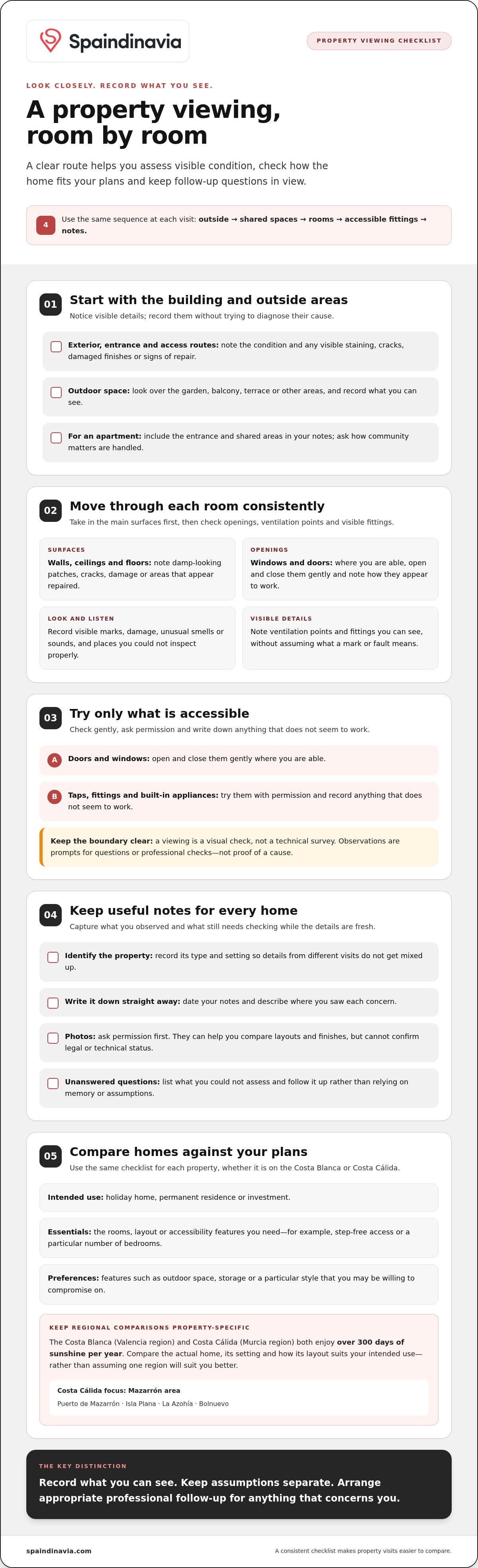
A steady, room-by-room check helps you notice details that are easy to miss when you’re imagining life in a new home. Use the same route at each viewing, starting outside and moving through any shared areas before inspecting the interior. This gives you a practical way to assess what to look for when viewing a property in spain, without expecting a short visit to answer every technical question.
Check the building, outside areas and shared spaces
Begin with what you can see. Look at the exterior, entrance and access routes, then note the condition of any garden, balcony, terrace or other outdoor space. Watch for visible staining, cracks, damaged finishes or signs of repair. Record where you saw them and what they looked like, but don’t try to diagnose their cause from appearances alone.
If you’re viewing an apartment, include the entrance and other shared areas in your observations. Note their visible condition and ask how community matters are handled. Record the property type and setting alongside your notes so details from different visits don’t get mixed up.
Work through each room and record what you notice
Move through the home consistently, looking at walls, ceilings and floors before checking windows, doors, ventilation points and visible fittings. Note damp-looking patches, cracks, damage or areas that appear to have been repaired. These observations are prompts for further questions or professional checks, not proof of what caused an issue.
- Look and listen: note visible marks, damage, unusual smells or sounds, and areas you couldn’t inspect properly.
- Check access: where you’re able to, open and close doors and windows gently, and see whether they appear to work as expected.
- Try accessible fittings: with permission, run taps and check visible fittings or built-in appliances. Record anything that doesn’t seem to work rather than assuming why.
- Write it down straight away: date your notes and identify the property clearly, so details from different visits don’t get mixed up.
A viewing is a visual check, not a technical survey. If something concerns you, note its location, take a photograph only with permission and arrange appropriate professional follow-up before relying on an explanation. The Official guide to buying property in Spain also offers broader guidance on the purchase process, including legal and financial considerations.
Spaindinavia organises inspection trips with guided visits to selected properties. Explore arranged property viewings to focus your visit on homes selected for your search and keep your observations centred on your priorities.
Compare homes in Spain by condition, location and intended use
After visiting several properties, details can blur together. A consistent comparison helps you separate what you observed from what you felt and see which home best matches your priorities. Record practical strengths alongside concerns, rather than letting a striking view or first impression make the decision for you.
Use the same comparison criteria for every property
Give each home a simple score against your essential needs and optional preferences. This is a personal aid, not a technical assessment: a layout that works well for you may matter more than a feature another buyer would prioritise. Add notes to explain each score, especially where an observation needs follow-up.
Condition: Record visible wear, repairs or damage, and flag anything that needs professional verification.
Layout: Note whether the rooms, circulation and storage suit your everyday plans.
Outdoor space: Describe the type of space and how useful it seems for your intended use.
Location: Write down the setting and what you noticed during your visit.
Open questions: List anything you couldn’t establish, including details to clarify about maintenance or included features.
Keep facts separate from impressions. “Two bedrooms and a terrace” is an observation; “the terrace will be private all year” may be an assumption. Mark questions that require a professional opinion, and don’t treat a viewing score as confirmation of a home’s technical condition. For buyers seeking an idea of what comprehensive technical evaluations entail, professional inspection resources such as lininspects.com illustrate the level of detail required to provide peace of mind with real estate investments. Also note each property’s strongest practical advantage, so your comparison isn’t only a list of possible concerns.
New-build and resale homes may differ in design, energy efficiency, warranties and how established the surrounding neighbourhood feels. Compare the information available for each individual home rather than assuming every property in either category will share the same qualities. Keep what you can see, what you’ve been told and what still needs checking as separate points.
Match the home and region to your plans
Think about how the property would work as a holiday home, a full-time residence or an investment. A layout that suits occasional stays may not meet your needs for everyday living. Consider how much space you’ll use, whether the arrangement feels practical and which maintenance questions you want answered before deciding.
Apply the same personal criteria across the Costa Blanca and the Costa Cálida. Neither is automatically the better choice; the right fit depends on your preferred setting, property requirements and intended use. Compare individual homes against the same criteria rather than making assumptions based on a place name.
Use your notes to identify where a home fits, where it falls short and what remains uncertain. This makes what to look for when viewing a property in spain a practical comparison process, not just a checklist of features. A well-matched property is one that meets your key needs and has clear next steps for any points that still need checking.
What documents and costs should follow a property viewing in Spain?
A viewing can show you the home’s visible condition and help you decide whether it suits your plans. It can’t establish who legally owns the property, whether debts are attached to it or what a contract commits you to. Treat the visit as the start of your checks, not a substitute for them. Knowing what to look for when viewing a property in spain also means knowing which questions need legal or financial follow-up before you move forward.
Arrange independent legal checks before proceeding
Ask an independent solicitor to verify ownership, debts, contracts and relevant property documentation. Keep your viewing notes and unanswered questions together so you can identify which points need checking for the specific home. The same care applies whether you’re considering a property on the Costa Blanca or the Costa Cálida.
Foreign buyers can purchase property in Spain without restrictions, and a NIE, the foreigner identification number, is required for the purchase and financial transactions. Include obtaining or organising this number in your planning. Before you commit, make sure you understand the documents you’re being asked to sign and have the relevant terms reviewed independently.
Understand the financial steps after finding a home
Once you’ve found a property you’re interested in, clarify the amounts and stages involved before agreeing to proceed. The reservation fee is between €3,000 and €10,000, varying between resale and new-development properties. After this, the deposit under a private purchase contract, known as an Arras, is typically around 10% of the purchase price. These are separate steps, so make sure you understand how each payment relates to the next before signing or paying.
Also plan for costs beyond the property price. Budget approximately 10%-15% of the property price for taxes and fees, including transfer tax or VAT, notary, land-registry, legal and administrative costs. This estimate is additional to the purchase price, not part of it. If you’re considering a mortgage as a non-resident, financing is typically 60%-70% of the property value. Treat this as a planning guide, not a confirmed offer for your circumstances.
Before making a decision, write down the purchase price, the reservation fee, the expected Arras deposit and the separate cost allowance. Ask your solicitor to review the contract and explain any terms you’re unsure about. Clear answers help you understand the commitment and decide on your next steps with care.
For support organising viewings and planning the purchase process, explore property-buying support.
From property viewing to next steps: make a considered decision
A viewing can leave you excited about a home, but you don’t have to decide on the spot. Give yourself time to review what you saw, identify what still needs checking and consider whether the property genuinely fits your plans. Knowing what to look for when viewing a property in spain is only part of the process; clear next steps help turn your observations into a considered choice.
Review your notes and decide what needs follow-up
Start by comparing each property with your priorities. Look at practical advantages as well as visible concerns, and separate observations from assumptions or unanswered questions. Then sort those questions by who can help answer them: the agent can clarify property details, while ownership, debts and contract terms should be verified by an independent solicitor. Visual impressions are useful, but they aren’t a substitute for legal checks or professional advice.
A simple follow-up list can keep the decision manageable:
- Review your notes: compare each home against your essential requirements and intended use.
- List open questions: note what you need clarified, without treating an assumption as a fact.
- Arrange relevant checks: direct property queries to the agent and legal matters to your independent solicitor; arrange other professional follow-up where needed.
- Decide at your own pace: move forward only when you understand the next steps and feel ready.
Apply the same thoughtful process wherever you’re looking, whether on the Costa Blanca or the Costa Cálida. Your own priorities, not a broad assumption about a region, should guide your choice.
Continue with a supported purchase process
Once you’ve chosen to proceed, organise the purchase steps and keep track of who is handling each one. The buying process after reservation usually takes 4-6 weeks. A clear point of contact can help you understand what is happening as the transaction progresses. This is a timeframe to plan around, not a reason to skip checks or rush a decision.
Spaindinavia supports international buyers with personalised property searches, organised inspection trips and assistance throughout the purchase process, from reservation through notary completion. Its one-partner approach keeps viewings and follow-up steps connected. Support also includes introductions to independent solicitors, notaries and banks, so you can work with the relevant professionals as you move towards completion.
Whether you’re comparing options or ready to plan viewings, explore property searches and viewing support for selected homes on the Costa Blanca and Costa Cálida.
Turn your shortlist into a confident next step
Your next move doesn’t need to be a quick yes or no. Give yourself space to decide which home deserves a closer look and what you need to learn before taking things further. Your notes can turn what to look for when viewing a property in spain into a plan shaped around your needs, rather than someone else’s idea of the perfect home.
As you refine your shortlist, consider the kind of setting you want on the Costa Blanca or Costa Cálida. Compare the homes you’re considering across both regions, focusing on the individual properties and how each setting fits the life you’re planning.
Spaindinavia can help with buyer-focused guidance and a property search shaped around your priorities. Explore property searches and viewing support to take the next step towards finding a home in Spain.
Frequently Asked Questions
Can foreigners buy property in Spain?
Yes. Foreigners can buy property in Spain, with no restrictions. You’ll still need to complete the relevant purchase and financial steps, and a NIE is required for property purchases and financial transactions. A viewing is an opportunity to assess a home, not confirmation of its legal or financial position. Once a property interests you, plan the required checks and paperwork as part of your next steps.
Do I need a NIE to buy a property in Spain?
Yes. A NIE, or Número de Identificación de Extranjero, means Foreigner Identification Number. It’s required for a property purchase and financial transactions in Spain. Add this to your preparations once you’ve identified a home you may wish to buy. Keep it in mind alongside your other purchase arrangements, and allow time to organise the relevant requirements without assuming that a viewing itself completes any part of the purchase.
How much should I budget for costs when buying a property in Spain?
Budget approximately 10%-15% of the property price for buying taxes and fees, in addition to the property price itself. This estimate includes costs such as transfer tax or VAT, notary, land-registry, legal and administrative fees. Use the range to plan your overall budget rather than treating it as a final bill. Keep this allowance separate from the amount set aside for the property.
How much is the reservation fee for a property in Spain?
The reservation fee is between €3,000 and €10,000, and varies between resale and new-development properties. It’s one stage in the purchase process, before the later private purchase contract, known as an Arras. Before proceeding, make sure you understand how the reservation fits into the proposed purchase and how it relates to the next contractual step. Review the relevant paperwork carefully so you know what you’re agreeing to.
How much mortgage financing can non-residents typically receive in Spain?
Mortgage financing for non-resident buyers is typically 60%-70% of the property value. This is a general range, not a promise of approval or a decision about your individual circumstances. Before committing to a property, work out your own financing position and how it fits with the purchase price and other buying costs. That preparation can help you judge whether a home is financially suitable before moving ahead.
What ongoing costs should I consider after buying a property in Spain?
Typical ongoing annual costs include property tax (IBI), community fees, utilities and home insurance. The costs that apply depend on the property and its arrangements, so consider each home individually when planning for ownership. These recurring expenses are separate from the approximate 10%-15% estimate for buying taxes and fees. Keep the two budgets distinct: one covers the purchase, while the other helps you plan for ongoing costs after buying.
How long does the property buying process take in Spain after reservation?
The buying process after reservation usually takes 4-6 weeks. This is the usual timeframe, not a guaranteed completion date, so avoid making plans that depend on an exact day. A viewing helps you decide what to look for when viewing a property in spain, but it can’t replace legal checks. Have an independent solicitor verify ownership, debts and contracts so you can make an informed decision as the purchase progresses.


