

What if the cheapest inspection quote leaves important checks or follow-up costs out of the picture? If you’re working out how to budget for a property inspection in spain, don’t rely on a single headline figure. Match the checks to the property and your concerns, because an apartment, an older villa and a new build may call for different assessments.
It’s natural to want a clear allowance before committing to a home. Quotes may cover different areas or provide different levels of detail, so check what each one includes. A bank valuation is also different from an inspection of the property’s condition. Make sure you’re comparing the same type of service.
This guide explains what can affect your inspection budget, how to compare quotes on a like-for-like basis and what to consider if an inspection identifies a concern. It also covers practical questions to ask an independent professional, so you can plan for possible follow-up without assuming every finding calls for the same next step.
Key Takeaways
- Learn how to budget for a property inspection in spain by matching the assessment to the home and any specific concerns, rather than assuming every buyer needs the same checks.
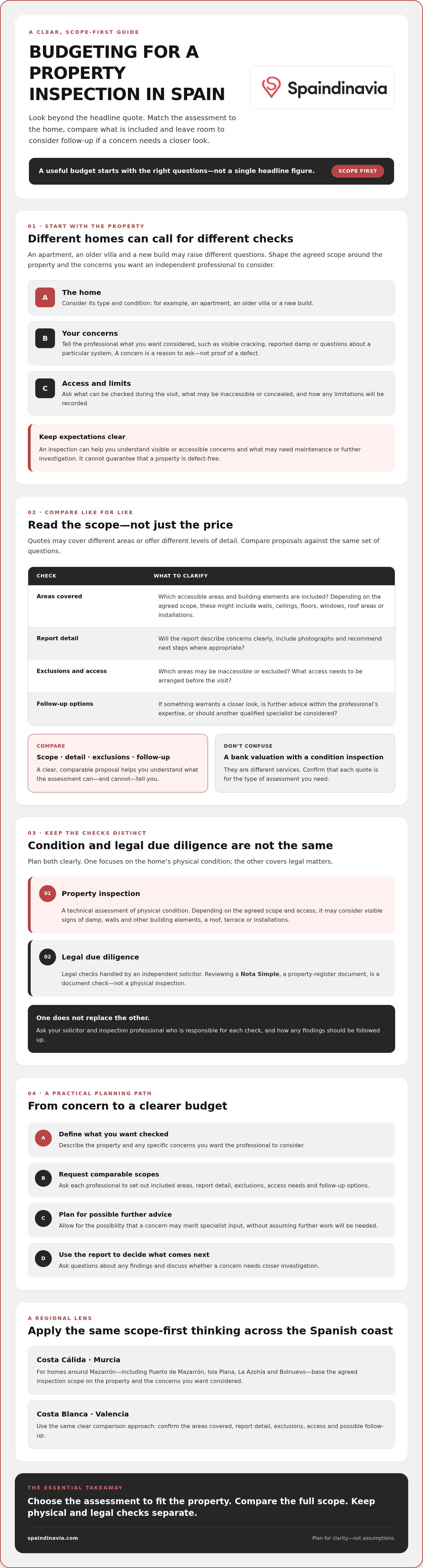
- Compare proposals by the areas covered, report detail, exclusions and follow-up options, not just the headline price.
- Separate a technical assessment of the property’s condition from legal due diligence so each can be planned clearly.
- Use a simple step-by-step approach to define your concerns, request comparable scopes and allow room for further advice if needed.
- Prepare questions for an independent professional and use the report to decide what to investigate next, without assuming it will uncover problems.
Why budget for a property inspection in Spain before you commit?
A home can look ready for long lunches on the terrace and quiet evenings in the sun, but appearances don’t reveal everything about its physical condition. A property inspection is a technical assessment that can help you understand what may need maintenance or closer investigation before you decide how to proceed. It’s separate from legal due diligence, which covers matters such as ownership and property records.
Planning how to budget for a property inspection in spain starts with the property itself. A newer apartment, an older villa and a home with visible cracking raise different questions. Base your budget on the agreed scope and the concerns you want an independent professional to consider, rather than assuming every property needs the same assessment.
What does a property inspection help you understand?
Depending on the agreed scope and access available, an inspection may assess visible signs of damp, the condition of walls and other building elements, or areas such as a roof, terrace and installations. The report can help distinguish routine maintenance questions from concerns that may warrant specialist advice. For background on the technical use of surveying in construction, see Construction surveying. It’s related context, not a substitute for a property-condition assessment.
An inspection can identify issues that are visible or accessible during the visit, but it can’t guarantee that a property is defect-free. Before booking, ask what the professional will inspect, whether restricted or concealed areas are excluded, what access they need and how they’ll report concerns. If an area can’t be checked, the report should make that limitation clear.
How is an inspection different from legal checks?
An inspection professional assesses the property’s physical condition. An independent solicitor examines legal matters. For example, reviewing a Nota Simple, a property-register document, is a document check, not a physical inspection. Neither step replaces the other: a building may appear well maintained while legal questions remain, or its paperwork may be in order while a physical concern needs attention.
Confirm with your solicitor and inspection professional who is responsible for each check, and ask how any findings should be followed up. This helps you plan the purchase clearly and make informed decisions before committing, without assuming an inspection will find a problem.
Which property inspection services might belong in your budget?
A general condition assessment may be a sensible starting point, but it isn’t automatically the right scope for every home. A recently updated apartment, an older villa and a property with a specific concern may call for different questions. Inspection scope should follow the property’s condition and your specific concerns, not a one-size-fits-all checklist.
As you consider how to budget for a property inspection in Spain, separate the initial assessment from optional follow-up. First, find out what the professional can assess during the initial visit. Then ask how they would recommend addressing a concern if further expertise or investigation appears necessary. You can plan for that possibility without assuming further work will be needed.
What can a general condition assessment cover?
Ask the inspection professional to list the accessible areas and building elements included in their assessment. Depending on the agreed scope, these might include visible walls, ceilings, floors, windows, roof areas or installations. Don’t assume every item is included just because it appears on a general checklist.
Before agreeing to a proposal, check what you’ll receive in writing. Does the report include photographs, describe concerns clearly and recommend next steps where appropriate? Ask which areas may be inaccessible or excluded, and whether the professional needs particular access arranged in advance. A clear scope makes it easier to understand what the assessment can and can’t tell you.
When might a specialist assessment be worth considering?
A general assessment may flag something that needs a closer look. For example, reported damp, a concern about cracking or questions about a particular system could prompt a discussion about specialist advice. These are reasons to ask questions, not proof of a defect or a sign that every buyer needs an additional assessment. Listing photographs alone aren’t enough to diagnose a problem.
Ask the inspection professional whether a specific concern falls within their expertise and whether another qualified specialist should investigate it. If follow-up is suggested, request a separate description of its purpose, scope, deliverables and access requirements before setting aside funds. This keeps the initial inspection and possible next steps distinct in your budget.
For broader purchase planning, GOV.UK’s official guidance on buying property in Spain is a useful reference. An estate agent can help you with questions during your property search, while independent professionals advise on their own areas of expertise. Spaindinavia supports buyers throughout the purchase process and works with independent solicitors, banks and local experts. You can learn about buying property with Spaindinavia as you organise the steps around your purchase.
How to compare property inspection quotes without false price assumptions
A lower quote isn’t necessarily better value if it covers fewer areas or provides a less detailed report. To understand what you’re comparing, focus on the agreed scope, what you’ll receive and what may cost extra. Property size, condition, access and requested checks can all affect a provider’s proposal, so don’t assume one quote represents a standard service for every home.
Understanding the role of a chartered surveyor can help you prepare questions, but check each professional’s experience, qualifications and proposed scope independently. Ask for the quote in writing and confirm when the report is expected rather than relying on an assumed turnaround.
What should an inspection quote specify?
Look for a clear description of the property and assessment, the areas the professional expects to access, and the report format. Ask whether photographs, explanations of concerns and recommendations are included. Check whether travel, a return visit or a referral to another specialist is excluded or quoted separately. If access to a roof, terrace or particular room is uncertain, ask how that will affect the assessment.
How can you compare like with like?
Give each provider the same property details and list of concerns. Then record what each proposal includes and excludes. This comparison helps reveal differences without relying on broad price averages:
| Property type or concern | Areas to confirm | Report detail to check | Exclusions to ask about | Follow-up options |
|---|---|---|---|---|
| Apartment | Which accessible rooms and elements are included? | Are photographs and recommendations provided? | Are shared or inaccessible areas outside the scope? | Can the professional explain concerns or suggest next steps? |
| Villa or townhouse | Are areas such as the roof or terrace included? | How are findings recorded and prioritised? | Are access limitations or additional visits excluded? | Would a specific concern need separate expertise? |
| Property with a particular concern | Is the concern within the assessment’s scope? | Will the report explain any limits to the inspection? | Is specialist investigation quoted separately? | Can a qualified specialist assess it if recommended? |
Before choosing, ask each provider to explain any technical terms you don’t understand. A clear answer helps you understand what the proposal covers. If you’re working out how to budget for a property inspection in Spain, compare the same scope first, then consider possible follow-up separately. Spaindinavia supports buyers throughout the purchase process and works with independent professionals. Explore property purchase support, while keeping technical advice with the independent professional you select.
How to plan an inspection budget and prepare for possible follow-up
A clear plan helps you set aside a sensible amount for the initial assessment without assuming it will uncover problems. Keep possible follow-up advice in mind, but treat it as a separate, conditional step. An inspection report describes findings and may recommend further investigation; it doesn’t usually tell you exactly what repairs will cost.
An inspection finding is a reason to ask further questions, not a confirmed repair estimate. If work is recommended, get a separate assessment or written estimate from a suitably qualified professional before making decisions about costs.
Use this simple process to organise your budget:
- 1. Define your concerns. Note the property type, its apparent condition and any specific questions you want the inspector to consider.
- 2. Request comparable scopes. Share the same information with each provider so you can compare proposals on the same basis.
- 3. Review exclusions. Check access assumptions, areas not assessed, report details and whether extra visits or specialist advice are separate.
- 4. Reserve follow-up capacity. Allow room in your wider purchase plan for further advice if the report recommends it, without treating that as inevitable.
What information should you gather before requesting quotes?
Prepare the property type, any available plans and relevant documents supplied by the seller. List your questions and the areas you’d like the professional to assess. Be specific: if you’re concerned about a visible mark or a particular system, describe what you’ve noticed without trying to diagnose it yourself.
Also confirm how access will be arranged. Ask the provider what they need to enter the property and check who will coordinate this with the seller or their representative. Clear arrangements can help avoid uncertainty about what the professional will be able to inspect.
What should you do if the report raises concerns?
Start by asking the inspector to explain the findings, their limitations and any recommended next steps. If they suggest a closer assessment, seek separate advice from a relevant qualified specialist. If you need a repair estimate, request it separately; don’t treat a condition report as a contractor’s quotation.
Keep legal or contractual questions with your independent solicitor. The inspector can explain technical observations, but shouldn’t be assumed to advise on your legal position. If you’re buying through Spaindinavia, the agency can support you throughout the purchase process and work with independent professionals. Discuss your Spanish property purchase as you plan the next steps.
Your next steps for arranging an inspection during a Spanish property purchase
Once you’ve decided what you want checked, keep the process organised. Choose an independent professional, agree the scope clearly and review the report carefully to understand the property’s condition before deciding what to do next. Keep technical inspection and legal due diligence as separate parts of your purchase plan, with each handled by the appropriate independent professional.
How do you choose an independent inspection professional?
Ask about the professional’s experience with your type of property and the scope you’re considering. Before proceeding, request a sample report or a clear explanation of its format. Check how findings are described and whether photographs or recommendations are included.
Confirm the professional’s relevant credentials and whether their insurance is appropriate for the work they propose. Ask them to explain how to verify any requirements that apply to their role. Don’t rely on assumptions or treat a recommendation from another party as a substitute for your own checks.
How can you keep the purchase process organised?
Keep inspection quotes, written scope confirmations, the final report and any follow-up recommendations together. This gives you a useful record of what was agreed and what the professional could assess. If the report raises a technical concern that may affect purchase discussions, share it with your independent solicitor and ask for advice on legal or contractual questions.
Use this checklist to keep the next steps clear:
- Choose an independent professional whose experience fits the property and requested assessment.
- Agree the inspection scope, access arrangements and report format in writing.
- Compare proposals by what they include and exclude, not just by headline price.
- Read the report carefully, ask the professional to clarify findings and follow up on recommendations where appropriate.
- Keep legal questions with your independent solicitor.
Knowing how to budget for a property inspection in Spain is one part of preparing for a confident purchase. Spaindinavia supports buyers throughout the purchase process and works with independent solicitors, banks and local experts, without carrying out technical inspections. If you’re considering a move, you’re welcome to speak with Spaindinavia about your property search and the steps involved in your buying journey.
Plan your inspection with confidence before you commit
A sensible inspection budget starts with the property and your concerns, not an assumed standard price. Agree the scope in writing, compare what each proposal includes and excludes, and keep possible specialist advice separate from the initial assessment. If the report raises a concern, treat it as a prompt to ask questions, not as a confirmed repair estimate. Keep technical findings and legal due diligence distinct, and speak to the appropriate independent professionals about each.
Knowing how to budget for a property inspection in spain can make this part of your purchase feel more manageable. Spaindinavia is an independent property agency that supports buyers throughout the purchase process and works with independent solicitors, banks and local experts. The agency can support you as you explore your options, while inspection advice remains with the professional you appoint.
Ready to take the next step in your property search? Talk to Spaindinavia about your Spanish property search. With clear questions and the right independent guidance, you can move towards your new home with greater confidence.
Frequently Asked Questions
How much should I budget for a property inspection in Spain?
There isn’t one figure that applies to every home, so request written quotes based on the property and the precise scope you need. To work out how to budget for a property inspection in Spain, compare what each proposal includes and excludes, including access assumptions and report detail. Property characteristics and requested assessments can affect the quote. It’s also sensible to leave room in your wider purchase plan for follow-up advice if further investigation is recommended.
Is a property inspection required when buying a home in Spain?
Don’t assume the same inspection requirements apply to every purchase. A technical assessment of a property’s physical condition is different from legal due diligence, and the checks to consider depend on the home and your circumstances. Ask an independent solicitor about legal matters and a qualified inspection professional about the condition assessment. If you’re unsure whether a specific requirement applies, confirm it with an appropriately qualified professional before relying on it.
What does a property inspection in Spain usually include?
The inspection’s contents depend on the property and the scope agreed with the professional. Before booking, ask which accessible rooms and building elements will be assessed, what the written report will include, and which areas are excluded or may be inaccessible. A report may identify concerns for further investigation, but it can’t guarantee that no defects exist. Nor should you treat its findings as a confirmed estimate of repair costs.
Can I arrange a specialist inspection after a general survey?
Yes. If the initial assessment raises a concern, ask the inspector whether a separate specialist assessment may be appropriate. A finding doesn’t automatically mean additional work is needed, so clarify why it’s being recommended and what question the follow-up would address. Before proceeding, confirm the specialist’s scope, access needs and report or other deliverables, and request a separate written quote directly from the qualified professional.
When should I arrange a property inspection in Spain?
Arrange it early enough in your purchase process to receive and review the report before making relevant decisions. The timing will depend on access to the property, the seller’s arrangements and the professional’s availability, so confirm these details directly rather than assuming a standard schedule. Ask your independent solicitor how the inspection fits with your purchase timetable and whether any findings raise contractual questions that need legal advice.
What happens if an inspection finds a problem?
Ask the inspector to explain the finding, any limits to the assessment and the recommended next step. If further investigation is advised, seek separate specialist input; if you need repair costs, request an estimate from an appropriate professional. The inspection report isn’t necessarily a final diagnosis or repair quotation. Take legal or contractual questions to your independent solicitor, then use the clarified information to consider your options calmly.


