

What if the strongest case for a second home in Spain isn’t a promise of rental income, but a clear plan for how your family would use it? It’s understandable if the purchase feels like an indulgence at first. The commitment goes beyond the price of the property, and family members may have different expectations about holidays, budgets and responsibilities. Justifying the cost of a second home in Spain to family starts with taking those concerns seriously.
A balanced decision doesn’t depend on persuading everyone that buying is right. It means looking together at the likely costs of buying and owning, how often you’d realistically visit, and who would handle practical tasks when you’re away. Rental income may be one factor, but it shouldn’t be treated as guaranteed or as a substitute for affordability.
This guide will help you weigh ownership against other holiday options, connect the decision to your family’s priorities and identify questions to resolve before taking the next step. You’ll also see how property management can help organise ownership without removing its costs or uncertainties.
Key Takeaways
- Ask each family member what they’d want from a second home, then identify the priorities you share.
- Build a cost worksheet covering purchase, ongoing ownership, travel, upkeep and periods when the property is unused. Label each figure as confirmed, estimated or awaiting professional verification.
- Compare buying, renting for holidays and waiting against the same family needs, so you can weigh flexibility and responsibilities fairly.
- When justifying the cost of a second home in Spain to family, prepare a balanced proposal covering goals, affordability, likely use, responsibilities and decision timing.
- Before progressing, check that your family agrees on the plan, the commitment feels affordable and independent professionals have verified key details.
Justifying a Second Home in Spain: Start With the Family’s Real Priorities
A second home in Spain can mean sunny breaks, treasured family time and a different pace of life. It’s also a substantial commitment, with costs and responsibilities that continue when you’re not there. Give both sides space in the conversation. Before looking at properties or making a financial case, ask what each family member hopes the home will offer: rest, time together, a base for independent visits, or something else.
Spain’s appeal to visitors helps explain why a home there may feel attractive, and tourism is described as a major component of the national economy. But a country’s popularity doesn’t tell you how often your family would visit or whether buying suits your circumstances. Start with your likely use and separate essential needs from appealing extras, such as extra space for occasional guests.
A good family decision is affordable, genuinely usable and acceptable to everyone involved. That doesn’t mean everyone needs identical priorities. It does mean discussing different expectations before deciding what kind of property, if any, could work.
What would the family genuinely use the property for?
Build a realistic picture of how the family might use the home. Note who could visit, when they could travel, how long they might stay and what could limit those plans. Don’t assume everyone will visit equally often. Some may want shared holidays; others may prefer separate stays or the option to invite guests. Talk through these possibilities and compare them with actual calendars, rather than relying on an optimistic schedule.
It also helps to distinguish a long-term lifestyle goal from an immediate accommodation need. Wanting a familiar place to return to over the years is different from needing somewhere to stay on an upcoming trip. Write down which hopes are central and which are bonuses. This gives your family a clearer basis for comparing ownership with other ways of spending time away.
How to make space for different opinions
Invite concerns before presenting a preferred property or a financial case. Ask each person to name their main concern and what information would help them assess it. One person may focus on affordability; another may be unsure how often they’d travel or who would organise the home when it’s empty. Record the questions before trying to answer them.
A request to wait or reconsider is useful information, not resistance to overcome. It may point to a missing detail, an unresolved family priority or a timing issue. If you’re justifying the cost of a second home in Spain to family, begin by listening, then agree which questions need answers before the next discussion. A calm, shared process is more useful than pressure to reach a quick yes.
Assess the Full Cost of a Second Home in Spain Without Overpromising
The purchase price is only one part of the decision. Build a worksheet that captures what the household may pay before buying, throughout ownership and while nobody is staying in the home. Label each entry as confirmed, estimated or awaiting professional verification. This makes it easier to see where a figure comes from and stops assumptions being mistaken for facts.
Which financial commitments belong in the family discussion?
Organise the worksheet into practical categories. Add amounts only when they’ve been checked for the specific property and your circumstances:
- Purchase: transaction-related charges and any financing costs that apply.
- Ongoing ownership: regular property charges, utilities and insurance, where relevant.
- Care: maintenance, potential repairs and any management support you choose to use.
- Use: travel costs and the cost of keeping the home ready when it’s unoccupied.
For each figure, note whether it comes from a document, an estimate or a professional who has checked the details. Don’t leave repairs and care out simply because nothing appears to need attention now. The worksheet is a planning tool, not a substitute for property-specific advice.
Then test whether the household budget still feels comfortable using cautious assumptions. Include a version with no rental income, and consider how the commitment would feel if travel plans changed or upkeep proved greater than expected. Compare that picture with realistic alternatives, such as renting accommodation for holidays or postponing the purchase. Each option has different costs, flexibility and responsibilities, so compare them against the same intended use and planning horizon. Don’t compare the purchase price alone with the cost of one holiday rental.
How to discuss rental income responsibly
Letting may be worth investigating, but it brings questions of its own. Consider whether the property would be available when your family wants to use it, what management and maintenance could involve, and which income and costs need checking. Ask an appropriately qualified independent professional to review relevant legal, tax and financial assumptions before including rental income in your household plan.
Possible rental income is uncertain, so it shouldn’t be treated as guaranteed affordability. If you’re justifying the cost of a second home in Spain to family, a fair starting point is whether ownership works without relying on income that may not materialise.
If you’d like to explore property options as part of your research, you can review Spanish property options without treating that step as a decision to buy.
Second Home in Spain or Renting: Compare the Trade-Offs Fairly
Buying isn’t automatically better value than renting, and renting isn’t always the better fit. Compare three choices against the same family needs and planning horizon: buying a home, renting holiday accommodation as needed, or waiting while you learn more. Focus on how each option affects access, flexibility, responsibilities and your ability to change plans. The right choice is the one that fits your real pattern of use and feels financially comfortable.
| Family priority | Buy | Rent | Wait |
|---|---|---|---|
| Access | A familiar base, subject to availability for family use. | Choose accommodation for each trip, subject to what’s available. | No fixed base yet; keep plans open. |
| Flexibility | Less flexibility to change course after committing. | More choice over where and when to stay. | Time to clarify preferences before deciding. |
| Responsibilities | Ongoing care and decisions, including when unoccupied. | Fewer ownership tasks, but accommodation must be arranged for each visit. | No property to look after while the family considers its options. |
| Family use | May suit repeat visits and a shared base. | Can suit occasional or varied trips. | Lets the family test how often it would travel. |
When ownership may fit the family’s plans
A home of your own may suit a family that expects to return regularly and values having a familiar place to settle in. Check those hopes against actual calendars: work, school and other commitments may limit visits, even when everyone likes the idea. Discuss who would coordinate care and make decisions while the property is empty. If no one is comfortable taking responsibility, that matters as much as the appeal of repeat stays.
When renting or waiting may be the wiser choice
Renting can preserve choice if travel habits, preferred locations or family expectations are still taking shape. Waiting may be sensible if the budget only works under optimistic assumptions, including uncertain rental income, or if key costs haven’t been verified. Use regular visits to learn what the family genuinely needs: how often you go, what kind of accommodation works and whether everyone wants to return to the same place.
For families justifying the cost of a second home in Spain to family, this comparison can turn a debate about whether buying is “worth it” into a more useful question: which option supports the family’s plans without creating a commitment it isn’t ready to carry?
How to Present a Second-Home Proposal Your Family Can Evaluate
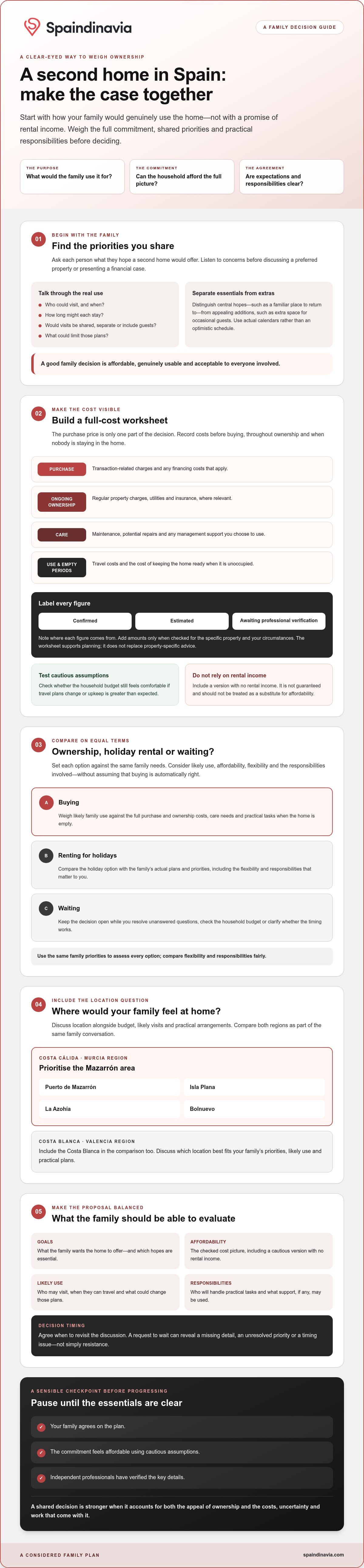
A useful proposal isn’t a sales pitch. It’s a concise summary that lets everyone examine the idea, question assumptions and decide what still needs checking. Explain why the home appeals to the family, set out commitments that have been verified, and separate those from estimates and open questions. Include what could make the plan unsuitable, not just the reasons you’d like it to work.
Use a shared agenda to keep the conversation practical and fair:
- 1. Goals: What does each person hope the home would make possible? Note shared aims as well as differences.
- 2. Affordability: Agree the household’s budget boundaries before discussing particular properties. Identify which figures are confirmed and which need independent verification.
- 3. Use: Talk through likely visits, how family members would book their stays, whether guests could be invited and how competing plans would be handled.
- 4. Responsibilities: Decide who would coordinate upkeep, make day-to-day decisions and organise care when the property is unoccupied.
- 5. Decision timing: Agree what information is still needed and when you’ll review the proposal together, without treating the meeting as a commitment to buy.
Keep the supporting material factual and easy to scan. A one-page summary listing known commitments, estimates, unanswered questions and the source of each figure is often more useful than a lengthy presentation. Invite everyone to test the assumptions. If a cost hasn’t been checked, say so plainly instead of presenting it as settled.
For each open question, record who will look into it and what kind of answer is needed. Legal, financial and property matters may require advice from appropriately qualified independent professionals. This gives the family a clear way to move from general concern to useful information, without expecting one person to resolve every uncertainty.
Before ending the conversation, ask what would make the plan unsuitable. What if family members visit less often than hoped? How would the household respond if costs changed or circumstances shifted? Would the decision still feel manageable without uncertain income? These questions help reveal the plan’s limits and what needs to be checked.
When justifying the cost of a second home in Spain to family, agreeing on a review point can be more helpful than asking for an immediate yes. Revisit the proposal once the key questions have answers. If you’re ready to explore suitable property options as part of that research, discuss Spanish property options.
Choose the Next Step: Explore Spanish Property With Clear Expectations
Before moving from discussion to property searches, check that the family has a workable position on four points: everyone understands the plan, the commitment feels affordable, expected use is realistic and the responsibilities are acceptable. Agreement doesn’t mean everyone has identical hopes. It means concerns have been heard and no one is relying on assumptions they haven’t checked.
What to verify before viewing or making a commitment
Review your household budget and any financing assumptions independently, and clarify who would handle ongoing ownership responsibilities. Ask appropriately qualified independent professionals to confirm legal, tax and transaction details relevant to your circumstances before including them in your calculations. Keep a written record of what’s confirmed, what remains an estimate and what needs advice.
A practical next step is to work through a Buying Property in Spain Guide alongside your own list of questions. Use it to organise your research, not as a substitute for advice tailored to your circumstances. If an answer could affect the family’s decision, note who will verify it and what information you need before proceeding.
How professional support can make research clearer
An independent property agent can help you understand which property types may suit the family’s needs and guide you through stages of the buying process. That support can make the search easier to organise, but it shouldn’t replace independent advice on legal, financial or tax questions. Keep those roles clear as you gather information.
Spaindinavia offers support throughout the buying process, as well as property management and rental management services. Its portfolio includes new build villas, resale apartments and other property types. Management support may help owners organise a property while they’re away, but it doesn’t guarantee rental income or occupancy. Ask what support includes and whether it fits the responsibilities your family is willing to take on.
Use the next step to gather information, not to create pressure. If your family’s priorities are taking shape, discuss what you’re looking for and explore suitable property options with Spaindinavia. An initial conversation doesn’t commit you to buying. For families justifying the cost of a second home in Spain to family, a clear process and verified answers can make the decision more grounded, whether you proceed, wait or keep renting.
Discuss your Spanish property plans with Spaindinavia.
Make Your Next Step a Shared One
Justifying the cost of a second home in Spain to family is less about winning an argument and more about making a decision everyone can assess. Start with what your family hopes to gain, compare ownership fairly with renting or waiting, and make sure the full commitment feels manageable without relying on uncertain rental income.
Before moving ahead, agree what still needs checking and seek independent professional advice on legal, financial and property details. If exploring homes feels like the right next step, Spaindinavia can offer guidance throughout the buying process, working with independent solicitors, banks and local experts. Property management, rental management and key-holding services are also available to help owners organise a property while they’re away, without guaranteeing income or occupancy.
Discuss your Spanish property plans with Spaindinavia and explore suitable options at a pace that works for your family. A thoughtful decision, including a decision to wait, can help you move forward with confidence.
Frequently Asked Questions
How do I explain the cost of a second home in Spain to my family?
Explain the full commitment, not just the purchase price. List the costs you’ve confirmed, the amounts still being estimated and the details that need independent professional advice. Then connect the figures to your family’s likely use, responsibilities and alternatives, such as renting for holidays or waiting. Justifying the cost of a second home in Spain to family is easier when you invite questions and make clear that uncertain rental income isn’t guaranteed affordability.
Is buying a second home in Spain worth it for occasional holidays?
It depends on whether the home’s benefits justify its ongoing commitment for your family. Consider how often you’re likely to visit, whether a familiar base matters, and whether the household can comfortably manage costs and care while the home is unused. Compare those factors with renting accommodation for each trip. If your travel habits are uncertain, try regular visits first and note what works before deciding whether ownership would genuinely add value.
What costs should a family consider before buying a second home in Spain?
Look beyond the purchase price. Your planning worksheet should cover applicable transaction charges, financing, ongoing ownership costs, utilities, travel, maintenance, management if needed and periods when the home is unused. Mark each amount as confirmed, estimated or awaiting professional verification. The details depend on the property and your circumstances, so ask appropriately qualified independent professionals to check legal, tax, financial and transaction questions before relying on figures.
Can rental income help justify a second home in Spain?
It may contribute to the financial picture, but don’t assume it will cover ownership costs. Any estimate should account for whether the home is available to let, the time your family wants to use it, management and maintenance, and relevant tax or legal considerations. Treat potential income as uncertain until assumptions have been checked with qualified independent professionals. Test affordability without rental income first, so the decision doesn’t depend on bookings that may not happen.
How can we compare buying a second home with renting in Spain?
Compare buying, renting and waiting against the same family needs and planning horizon. Consider access, flexibility, responsibilities and how easily you could change plans. Ownership may offer a familiar base for repeat visits, alongside ongoing care and commitments. Renting means arranging accommodation for each trip, but can suit changing travel plans. Waiting gives you time to learn what the family wants. Write down the trade-offs and compare realistic use, not just the purchase price with a rental bill.
What if my family disagrees about buying a Spanish second home?
Pause the decision and make space for each person’s concerns. Ask everyone to name their main question and what information would help address it, then record what remains unresolved. Disagreement may point to different expectations about affordability, visits or responsibilities, rather than simple opposition. Agree who will check each open question and set a time to review what you learn. A request to wait is useful information, not something to overcome through pressure.
Should we rely on holiday letting to make a second home affordable?
No, don’t rely on holiday letting as a guaranteed way to make ownership affordable. Income and occupancy are uncertain, and letting may affect when your family can use the property. Consider management, maintenance and the practical work involved, then check relevant legal, tax and financial assumptions with qualified independent professionals. Build your budget on the basis that rental income may not materialise. Treat letting as an option to investigate, not a promise that the home will pay for itself.


