

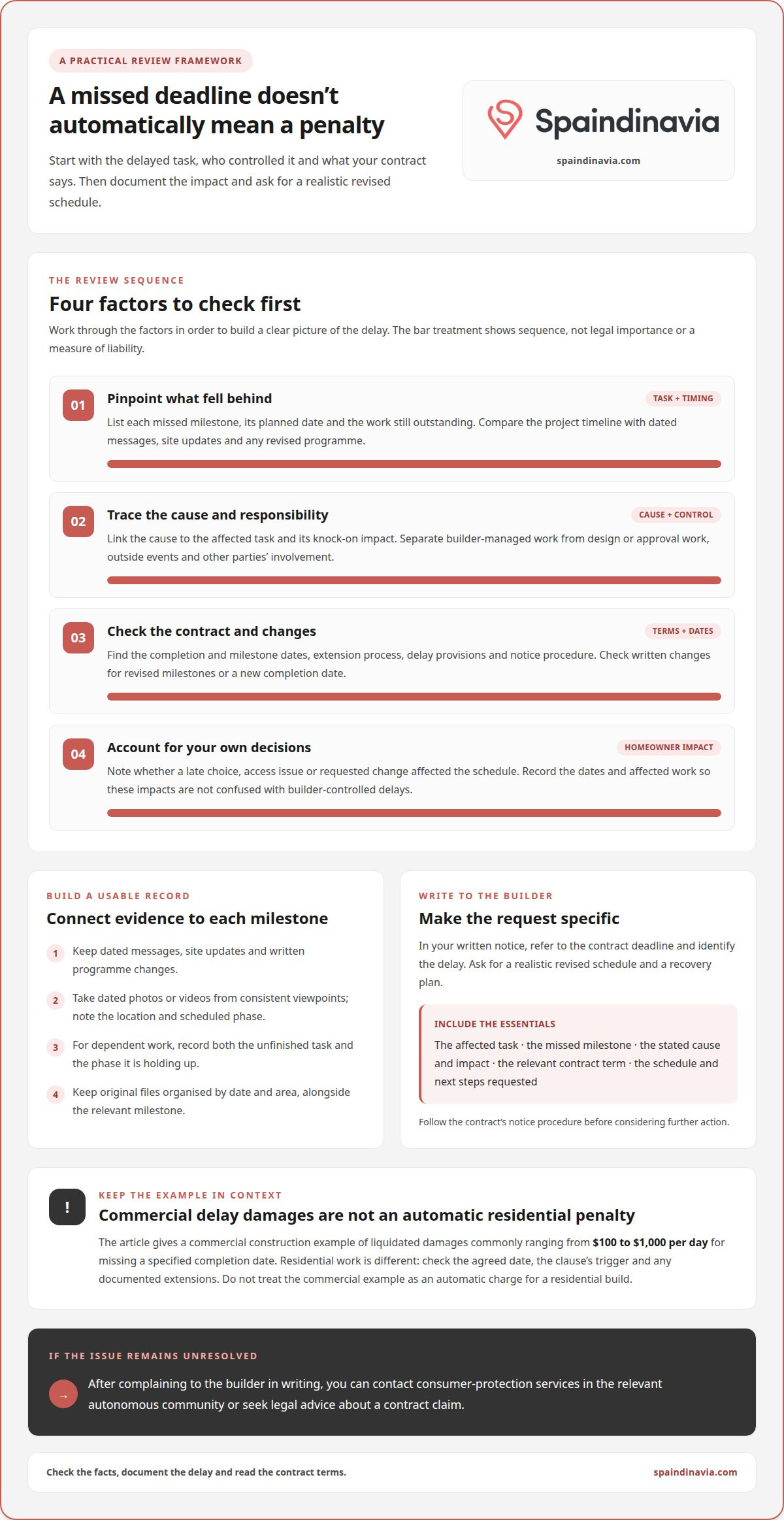
A missed completion date doesn’t automatically mean your Spanish builder owes you a penalty. If you’re deciding what to do if your Spanish builder misses deadlines, start by checking the contract, identifying the cause of the delay and putting your concerns in writing.
It’s understandable to expect the agreed timetable to matter, especially when a new home is part of your plans for life in Spain. Whether a penalty may apply depends on the contract, including its provisions for delays, and on who was responsible for the work that fell behind.
This guide explains how to distinguish builder-controlled delays from other causes, what to include in a written notice and which contract terms to review. You’ll also learn how to request a realistic revised schedule and when to seek legal advice before taking further action. A clear, documented approach can help you understand your position and decide what to do next.
Key Takeaways
- Trace each delay to the party responsible, distinguishing work controlled by the architect or builder from setbacks caused by outside parties.
- Use the agreed phases and milestones to pinpoint where progress fell behind and keep dated records of what happened.
- Send written notice that refers to the contract deadline and asks for a realistic revised schedule and recovery plan.
- Look for contract wording on delay penalties, excusable delays and notice procedures before deciding what action to take.
- Understand how liquidated damages and flow-down clauses work, and when a delay may warrant legal advice.
What should I do first when a subcontractor missed deadlines?
Start by identifying which task was delayed, who controlled it and what the contract says about extensions. In Spain, complain to the builder in writing first. If the issue remains unresolved, contact consumer-protection services in the relevant autonomous community or seek legal advice about a contract claim.
-
Identify the causes of delay
List each missed milestone, its planned date and the work still outstanding. Then ask what caused the delay and how it affected later tasks. For example, distinguish a late materials delivery from unfinished work the builder could have scheduled earlier.
Compare dated messages, site updates and any revised programme with the contract timeline. Weather, supply-chain problems and labour shortages can delay construction, but a general explanation won’t show which task was affected or for how long. Record the stated cause and its impact on completion rather than treating every delay alike.
-
Distinguish who controlled the deadlines
Match each delayed task to the person responsible for arranging or completing it. An architect may control design or submission work, while a neighbouring landowner or administrative authority may affect a separate approval or consent. Record these separately from building work managed by the contractor.
Check whether an outside event was beyond the contractor’s control and whether the contract treats it as an excusable delay. Severe weather is one example a contract may address. Don’t assume every third-party issue automatically excuses the builder. Link the event to the affected task and review the relevant clause.
-
Review completion and delay clauses
Find the agreed completion date, milestone dates and any clause explaining how delays are handled. Check whether the contract describes a penalty, an extension process or a deadline as essential to the agreement. These terms help you assess whether missing the date has a contractual consequence.
Compare the contract wording with the project’s actual timeline, including any written changes. A delay clause may set conditions for granting an extension or applying a penalty. Keep the exact clause with the relevant missed milestone in your records instead of relying on a verbal summary.
-
Account for homeowner delays and changes
Review whether a decision, access issue or requested change on your side affected the schedule. For example, a late choice of finish may delay a task that depends on that selection. Note the dates and affected work so delays related to your decisions aren’t confused with work the builder controlled.
Check each change order for its effect on timing as well as scope. A change that adds work should record an updated completion date and any revised milestones. Compare signed changes with the current programme before deciding which original deadlines still apply, and keep related emails or meeting notes with the contract.
Separating responsibility for each construction phase
Map each phase to the party responsible, then compare documented progress with the relevant milestone. This helps distinguish a delayed trade from a knock-on effect elsewhere.
-
Assign responsibility by construction phase
Make a phase-by-phase schedule showing each task, the responsible party, the planned milestone and any dependent work. For example, separate design completion, foundations, structural work, roofing and internal finishing. Use the contract, agreed programme and written changes to identify who was meant to coordinate each stage.
Then trace the delay backwards. If plastering can’t start because electrical work remains incomplete, record both the unfinished trade and its effect on the next phase. Don’t assign blame based only on which workers are absent today. The schedule may show that an earlier task caused the hold-up.
-
Record progress with photos and video
Take dated photos or videos from consistent viewpoints, such as each room entrance and the same exterior corner. Capture identifiable details, including unfinished surfaces, installed materials and areas where work has stopped. Add a brief note linking each image to its location and scheduled phase.
Keep the original files and organise them by date and area instead of relying on a selection sent through messaging apps. Pair the images with the relevant milestone and written site updates. This creates a clearer record of progress than an undated image or a general note saying the project is behind.
-
Check completion dates for residential work
For a residential build, compare the agreed completion date with the outstanding work and any signed changes affecting the programme. Check whether the contract ties completion to specific phases, inspections or handover tasks. A revised schedule should show which milestones moved and how the remaining work depends on them.
If payments are held in escrow, review the release conditions alongside the phase records. The contract may link release to specified work being completed or verified. Match each payment stage to dated evidence and the agreed milestone. Don’t treat a payment as proof that every related task is finished.
For commercial construction, liquidated damages for missing a specified completion date commonly range from $100 to $1,000 per day. Treat this as a commercial-contract example, not an automatic charge for residential work. Check the agreed completion date, the clause’s trigger and any documented extensions before calculating its effect.
Written notice and notice-to-cure procedures
Put the delay and your requested next steps in writing. Follow the contract’s notice procedure before considering more serious action.
-
Send written notice and allow a cure
Write to the contractor using the method and contact details stated in the contract. Identify the missed milestone, relevant contract clause and outstanding work. Ask for a written explanation of the cause and a realistic plan for completing the delayed work.
Check whether the contract sets out a notice-to-cure procedure. This means notifying the contractor of a problem and giving them an opportunity to put it right through the stated process. Follow the delivery method and timing carefully. Don’t rely only on a phone call or take major action before completing any required notice steps.
-
Record changes and revised deadlines
Record every agreed change to the work or schedule in a written change order. Describe the altered work, the reason for it and its effect on dependent tasks. For example, a changed window specification may affect installation and later finishing, so the revised timeline should account for both stages.
For commercial construction, put any agreed change to the completion date in writing and have both parties approve it. Keep the signed version with the original contract and replace outdated schedule copies. For any project, don’t treat a casual conversation as a clear record of a changed deadline. Document what was agreed and who approved it.
-
Set project milestones in writing
Ask for a revised schedule that reflects completed work and delays already encountered. It should list the remaining tasks, who is responsible for each and the target date for every milestone. A broad promise to “catch up soon” gives you no practical way to track progress or spot another delay.
Set milestones around observable work, such as completing roof installation before internal finishing begins. If a missed task affects later work, ask for the timeline to show those dependencies. Tell anyone whose plans depend on the completion date as soon as another delay seems likely, so they can adjust their arrangements.
-
Keep written project records
Keep the contract, notices, replies, meeting notes, signed changes and revised schedules together in a dated project file. After a meeting, send a concise written summary of decisions, outstanding actions and agreed dates. If the contractor corrects your summary, retain both versions so the discussion remains traceable.
Add dated photos, site updates and missed-milestone records to the same file. Organise them by phase or topic so you can connect a delay with its cause and any promised remedy. Keep copies of emails and delivery confirmations for formal notices. These records can show what you sent and when.
Is There a Penalty When a Contractor Does Not Finish on Time?
A missed completion date alone doesn’t establish that a penalty applies. Read the contract’s remedies and consider the cause and impact of the delay.
-
Write to the contractor about missed deadlines
Send a concise written account identifying the missed completion date, outstanding work and relevant contract terms. Ask the contractor for an explanation, a practical plan and a revised completion date. Keep the tone factual, focusing on how the delay affects completion rather than assigning blame.
Save the message and response with your project records. If the contractor proposes a solution, ask for the key actions and dates in writing. A clear exchange helps establish what each party understood and whether the proposed plan addresses the delay.
-
Review contract penalties and incentives
Look for wording that sets a penalty for late completion or an incentive for meeting or beating the agreed timetable. Check what triggers the clause, how any amount is calculated and whether extensions affect the completion date. A penalty written into the contract differs from a general expectation that late work should lead to compensation.
Compare the clause with the facts: the agreed deadline, written extensions, cause of delay and actual impact. Don’t assume a penalty applies automatically. If the clause is unclear or its effect is substantial, ask a lawyer how it relates to your agreement.
-
Check which delay remedies may apply
Remedies can depend on applicable rules, the contract and whether the work is a new build or renovation. The agreement’s scope, completion terms, delay provisions and documented changes all matter. The project type alone doesn’t establish a particular remedy.
There’s no single dispute timeline or legal-cost figure for every Spanish construction delay. Timing depends on the evidence, the issues in dispute and whether the parties resolve matters through discussion or formal proceedings. Legal costs can include advice, representation and any relevant expert or procedural expenses.
A breach of contract occurs when a party fails to meet its obligations under the agreement. If delays cause significant financial harm or suggest a breach, seek timely legal advice before deciding how to enforce your rights.
-
Consider replacing the contractor
Consider a change only if delays continue and the project shows no improvement. Before taking action, review the contract’s termination and notice procedures. Ending the arrangement without following its terms can create further complications.
If you appoint a replacement, transfer the contract, plans, written changes, progress records and current schedule. Explain what remains unfinished and the completion goals. For a future project, set realistic milestones and discuss likely challenges before work begins. References, reviews and examples of past work can help inform your choice.
Liquidated damages and flow-down clauses
Liquidated damages are a contract rate linked to delay, not an automatic charge whenever work is missing. Check the main contract and any subcontract before deciding whether a deduction applies.
- Understand what the rate is meant to cover. Liquidated damages are intended as a reasonable estimate of harm caused by delay, as the American Institute of Architects (AIA) describes. The contract should link the agreed rate to late completion rather than use it as an unexplained punishment.
Look for the specified completion date, the event that triggers the rate and any agreed extensions. For example, a clause may apply only if the whole project misses its completion date, not whenever one trade finishes late.
- Read the clause in the main contract. Identify which party owes the damages, how the rate is calculated and the period it covers. Check whether the clause refers to the original completion date or a revised date recorded in a signed change order.
Compare those terms with the documented cause and duration of the delay. Don’t assume a contractor owes a stated amount simply because the schedule slipped. The clause’s trigger and the project facts must match.
- Check whether damages can flow down to a subcontractor. A flow-down clause passes relevant obligations from the main contract into a subcontract. Liquidated damages apply to a subcontractor only if the subcontract provides for them.
Read both agreements side by side. Check whether the subcontract identifies the same completion obligation, delay trigger and rate. A general reference to the main contract may not establish whether a specific damages clause was included.
- Confirm whether the main contractor was charged. A subcontractor should not be charged liquidated damages for late completion if the owner didn’t charge the general contractor. Compare any proposed deduction with the owner’s claim and the wording of the subcontract.
For example, if the owner made no liquidated-damages claim against the general contractor, a matching deduction from a subcontractor isn’t supported by the stated principle. Keep the relevant notices, payment records and contract clauses together.
- Agree clear terms before work begins. An owner and contractor can agree on penalties for future delays or incentives for meeting or beating a revised timeline. State the trigger, calculation method and treatment of agreed extensions in the contract, rather than leaving these points to verbal discussion.
For a commercial property project, clear linked clauses help show which party carries each delay risk. If you’re considering a property decision alongside construction risks, explore property options as a separate next step.
Spaindinavia
Once you’ve reviewed the delay and decided how it affects your plans, Spaindinavia can help you explore other property options. These include new-build villas, resale apartments, townhouses and bungalows.
On the Costa Cálida in the Murcia region, including Puerto de Mazarrón, Isla Plana, La Azohía and Bolnuevo, you’ll find a more relaxed lifestyle and strong value. The Costa Blanca in the Valencia region offers livelier areas and a wider property selection. Spaindinavia can help you consider which setting best suits your plans.
To discuss your property plans, contact Spaindinavia.
Choose your next step with confidence
Knowing what to do if your Spanish builder misses deadlines can help you decide what comes next. Consider what matters most now: continuing with the project, seeking legal advice or rethinking your property plans. The right path depends on your priorities and the documents you have.
If the delay has changed your plans for living in Spain, you can treat a new property search as a separate decision. Think about the setting and type of home that best suits your everyday life, whether you want a coastal base or a quieter place to settle. There’s no need to rush into a choice before you’re ready.
For a friendly conversation about your property plans, speak with Spaindinavia. A considered next step can bring your plans back into focus and help you move forward at your own pace.
Frequently Asked Questions
Missing deadlines: Why does it matter?
A delay can disrupt more than the building schedule. It may affect moving arrangements, temporary accommodation or plans to use the property. If you’re weighing what to do if your Spanish builder misses deadlines, note the practical consequences separately from your frustration with the timetable. For example, record whether you’ve had to postpone a move or another booked task. This helps explain why the delay matters to you.
What is a notice to cure?
A notice to cure gives the contractor a formal opportunity to address an identified failure under the contract. Its purpose is to make the issue and requested remedy clear, not to settle every disagreement. Check whether the contract specifies who must receive the notice and how delivery is recorded. Keep the notice and proof of delivery together, especially if later correspondence refers to a different problem or proposed remedy.
What does a Spanish construction contract say about project deadlines and delays?
Alongside dates, a construction contract may define the included work, the parties’ responsibilities and the documents that form part of the agreement. Check whether plans, specifications or a schedule are attached and whether later signed documents change them. If two documents appear inconsistent, note the exact passages and ask a Spanish construction lawyer how to read them together. Don’t rely on an informal summary when it differs from the signed paperwork.
What are the legal consequences in Spain if a builder misses the agreed completion date?
There’s no automatic consequence that applies to every missed date. The outcome depends on the agreement and the facts, including the delay’s effect on the project and any recorded changes. A missed deadline may support a contractual claim, but the date alone doesn’t establish the remedy or amount. If you’re deciding what to do if your Spanish builder misses deadlines, organise the relevant documents and evidence before seeking advice.
How can I check whether a delay is justified under Spanish construction law?
Build a dated sequence showing when the reported event occurred, when the affected work stopped and when it resumed. Compare it with site updates, correspondence and the planned order of work. For example, an explanation about a delayed delivery is more useful when linked to the materials and task affected. This chronology can help distinguish a cause connected to the delay from an explanation that doesn’t account for its impact on the schedule.
What written notice should I send a Spanish builder who is behind schedule?
Make the notice easy to identify and act on: include the property or project reference, contract date, affected work and the response you’re seeking. Attach or identify relevant records, such as the agreed schedule or a message confirming a missed handover. Keep the original files and a copy of what you send. A focused notice helps prevent confusion when several phases or separate issues are under discussion.
Can I claim compensation or liquidated damages for construction delays in Spain?
A claim depends on the contract and the basis for seeking compensation. Keep evidence of losses linked to the delay, such as invoices or records of additional arrangements, and distinguish them from costs you would have incurred anyway. If the agreement sets liquidated damages, check how its stated trigger relates to the facts. A Spanish lawyer can assess the wording and evidence together, rather than treating a late finish alone as proof of an amount owed.
Can I terminate a contract with a Spanish builder for missing deadlines, and how?
Whether termination is available depends on the agreement and circumstances, so don’t treat a missed date as automatic permission to end the arrangement. Before deciding, list the completed work, what remains and which project documents or materials are held on site. If you need a replacement, a clear inventory and status summary can help maintain continuity. Get advice on the consequences of ending the contract before communicating that decision.


