

When you’re comparing new build villas with underfloor heating and cooling, the key question isn’t just whether the feature is listed. It’s how the complete system is designed to work in the home. Underfloor systems can provide a different kind of comfort from conventional air conditioning, so it pays to understand the details before you reserve a property.
Heating and cooling use the floor in different ways, and cooling may not feel like air conditioning that blows cool air around a room. The system, its controls and the property itself all affect what to expect.
This guide explains how these systems work and what to look for in a property specification, including the equipment, controls, rooms served and maintenance information. You’ll also find practical ways to compare villas against your household’s needs. Spaindinavia specialises in new-build villas and supports buyers throughout the purchase process, helping you assess property details as you weigh up your options.
Key Takeaways
- Understand how the floor transfers heat and why buyers may value comfort without visible radiators.
- Heating and cooling work differently. A heat pump may be part of the system, but the listing phrase doesn’t tell you the full setup.
- Compare underfloor systems with separate air conditioning by considering comfort, equipment placement and controls.
- Use the written specification to distinguish confirmed system details from marketing descriptions.
- Compare the whole villa and its systems with your household’s routines, not just a feature name.
What does underfloor heating and cooling mean in a new-build villa?
Imagine a room without radiators taking up wall space, with warmth delivered through the floor. That’s one reason some villa buyers consider underfloor systems: the equipment can be less visible in living areas, and the floor becomes part of how the home manages heat. But new build villas with underfloor heating and cooling describes a general approach, not a complete technical specification.
Underfloor heating transfers warmth into a room through the floor; underfloor cooling uses the floor to absorb heat from the room. The two modes have opposite purposes, but the phrase alone doesn’t tell you what equipment supplies them, which rooms are covered or how the system is controlled.
For a broader introduction to the principles and system types, see Underfloor Heating and Cooling Systems. Treat the listing as a starting point, then use the project specification to understand how the system is designed for that property.
How is underfloor heating different from radiators?
Radiators release heat from units around a room, while underfloor heating transfers it through the floor surface. This can leave more wall space available for furniture and artwork. Neither approach is automatically more comfortable or suitable: the result depends on the system design, controls and building. Consider how you use and arrange each room, rather than choosing on appearance alone.
What does underfloor cooling add?
In cooling mode, the floor absorbs heat from indoor spaces. This is radiant cooling, so it won’t feel like the stream of cool air produced by many conventional air-conditioning units. You may notice a change in the room’s overall comfort rather than air blowing directly on you. The amount of cooling, the rooms it serves and the way it is controlled depend on the project specification.
Keep expectations grounded in the complete design and the home’s operating conditions. The floor system is only one part of the picture: the villa’s layout, construction and controls also affect the indoor experience. When comparing properties, distinguish what the description states from what you’re assuming. Check whether it specifies both heating and cooling, then look for details about equipment, controls and room coverage. These points will help you judge whether the system fits your plans.
How do underfloor heating and cooling systems work?
The floor is where heat enters or leaves the room, but it doesn’t create or remove heat by itself. In heating mode, the system supplies warmth that passes through the floor into the space. In cooling mode, it transfers heat from the room into the floor system. The equipment behind this process varies. A heat pump may be included, but the description in a property listing doesn’t guarantee a particular setup.
Cooling comfort depends on more than the floor surface: equipment, controls, room conditions and how the system is operated all matter. Two properties described in similar terms can therefore have different arrangements. Wavin’s overview of the advantages of underfloor heating and cooling provides further context about how these systems can be used.
What role can a heat pump play?
An air-source heat pump takes heat from outdoor air and transfers it into a home for heating. A reversible system can also transfer heat from indoors to outdoors for cooling. A heat pump is one possible component, not something to assume is included in every villa. Look for the equipment named in the written specification and note its stated role. Don’t judge a home’s running costs or comfort from the words “heat pump” alone.
Why do humidity and condensation matter for cooling?
Air contains moisture. The dew point is the temperature at which moisture can start to condense on a surface. If a cooled floor becomes too cold for the indoor humidity conditions, condensation may form. Cooling controls may therefore need to manage floor temperatures in relation to humidity. Designs vary, so look for the safeguards and control functions described in the project specification rather than assuming all systems work alike.
Where specified, thermostats let occupants set a preferred temperature. Some systems may also divide the home into zones, so different areas can be controlled separately. This can be useful when bedrooms, living areas and less frequently used rooms have different comfort needs. Check which rooms each control covers and whether heating and cooling are controlled together or separately.
When comparing new build villas with underfloor heating and cooling, note the named equipment, controls, humidity safeguards and rooms served. These details show what the system is designed to do without promising a particular outcome. If you’re comparing property specifications, Spaindinavia’s new-build villa portfolio is a useful starting point for your search.
Underfloor heating and cooling versus separate air conditioning
Choosing between underfloor cooling and separate air conditioning comes down to the kind of comfort and room design you prefer. Underfloor systems transfer heat through the floor, while many air-conditioning units cool by circulating air. This affects how noticeable the cooling may feel, where equipment is placed and how you manage comfort in different rooms.
Underfloor cooling may suit you if you prefer less visible equipment and a more even-feeling indoor environment. Separate air conditioning may appeal if you like a noticeable flow of cool air or want a direct cooling sensation. The result depends on the installed system and the home. John Guest discusses possible health benefits of underfloor heating; consider such general claims separately from the specific technical details of a villa.
Which system may suit your preferred kind of comfort?
Consider how you feel about moving air. Some people like the direct sensation of air conditioning; others prefer comfort delivered through the floor without a stream of air. If clear walls and discreet equipment matter to your interior plans, check where the system’s components will sit. If you prefer to adjust temperatures quickly, look closely at the stated controls and how the system is designed to respond.
What trade-offs should a buyer understand?
Response and everyday operation vary with the system, controls and building. For underfloor cooling, humidity management and suitable floor coverings are also important points to review. Compare written specifications rather than assuming that similarly described villas will feel or operate in the same way.
| Option | Potential advantages | Limitations and details to verify |
|---|---|---|
| Underfloor heating and cooling | Floor-based comfort and less visible room equipment may suit a clean interior design. | Cooling may not feel like blown air. Review controls, humidity safeguards, floor-covering suitability and which rooms are served. |
| Separate air conditioning | Air movement is more noticeable and may suit those who prefer a direct cooling sensation. | Check unit locations, room coverage and controls alongside any underfloor heating. |
Use the table to compare new build villas with underfloor heating and cooling against what matters to your household. List your priorities, such as discreet equipment, separate room controls or moving air, then compare each property’s stated design with them. That makes the decision practical and personal rather than a contest between system names.
To start comparing properties, explore Spaindinavia’s new-build villa portfolio and consider which home and specification fit your plans.
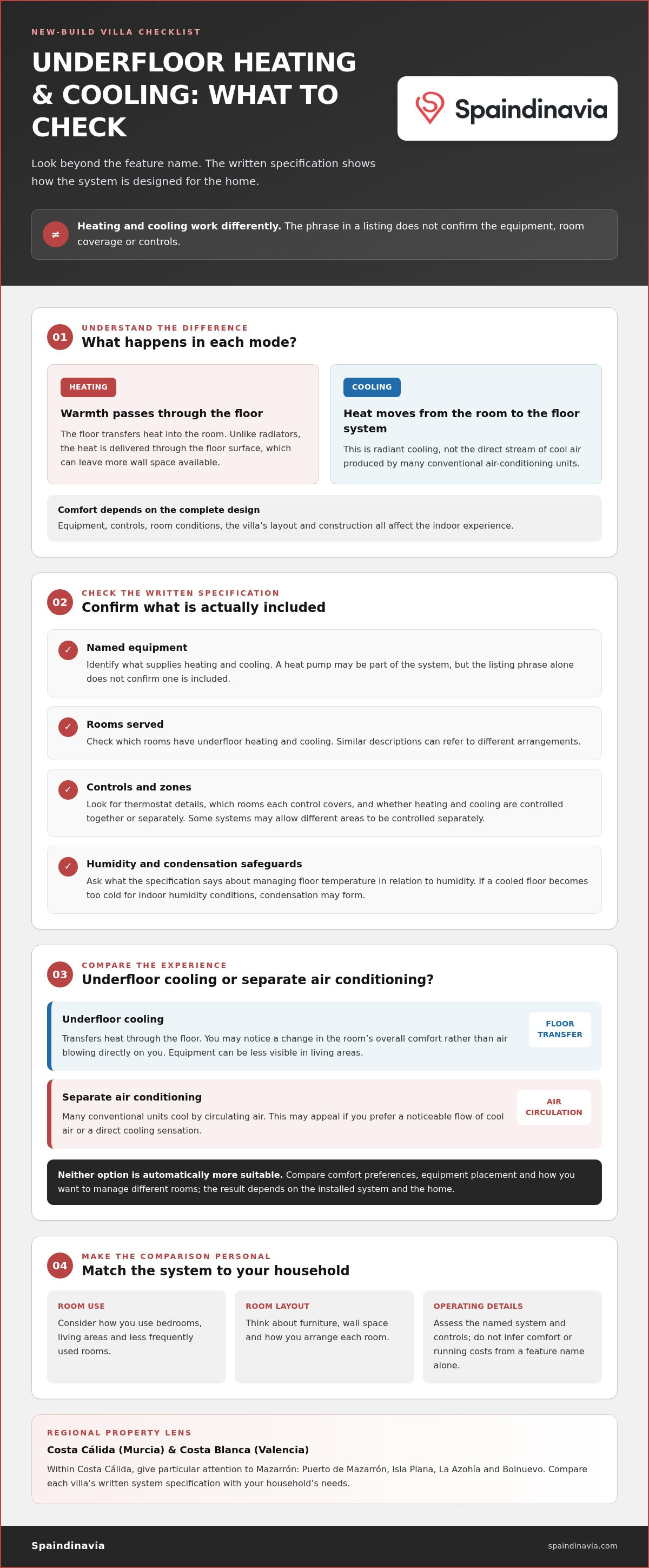
What should you check before choosing a villa with underfloor heating and cooling?
A feature heading can make a villa sound well equipped, but it doesn’t show exactly what’s installed or how the system suits your household. Whether reviewing holiday villas or working with regional estate agencies like Heinrichs Immobilien when assessing modern residential developments, use each property’s written specification as your reference. Record what the documents state clearly, and keep assumptions based on listing language separate. A consistent comparison makes it easier to see what you know about each home.
Which system details belong on your comparison checklist?
Use the same checklist for every property. Record what the documents say instead of filling gaps based on what you expect the system to include.
- Record the equipment. Note the heating and cooling equipment named in the specification. Don’t infer a particular heat pump or system arrangement from a general feature description.
- Check the operating modes. Look for an explicit description of both heating and cooling. A reference to underfloor heating alone doesn’t establish that the floor system also provides cooling.
- Map room coverage. Record which rooms are served in each mode. Note any differences between living areas, bedrooms and other spaces rather than assuming the whole villa is covered.
- Review controls and zones. Check whether thermostats or separate room zones are described, and which spaces they control. This helps you compare the level of control specified for each home.
- Look for practical guidance. Note any information about humidity management, maintenance and compatible floor finishes. Keep unclear points on your list for the property documentation review.
How can you assess the feature during a property decision?
Compare the written details with how you expect to live. Will you occupy the villa throughout the year or mainly during holidays? Do people in your household prefer different room temperatures? Would separate controls be useful, or would you rather have a simple arrangement? Your answers will help you identify which system details matter most.
Keep your comparison consistent by using the same checklist for each villa and separating documented facts from marketing descriptions. For example, “underfloor heating and cooling” in a heading is not the same as a specification that names the equipment, operating modes, zones and rooms served. Keep unanswered technical points with the property documents so they remain visible during your purchase review.
For broader purchase preparation, Spaindinavia’s Buying Property in Spain Guide: The Essential 2026 Checklist for Secure Investment can help you organise the wider decision. Once you’ve set your priorities, browse Spaindinavia’s new-build villas and compare the available property details against your checklist.
Choose a new-build villa with support throughout your purchase
Underfloor heating or cooling can be a useful feature, but it shouldn’t make the decision on its own. Review the complete system information alongside the villa’s layout, finishes and other features. Specifications vary between properties, so compare what each home actually states rather than expecting one standard setup.
Separate must-haves from preferences. You might value discreet equipment, particular room controls or a certain feel indoors. Balance those preferences with practical considerations, such as how you’ll use the rooms and how often you expect to occupy the villa. A feature is worth prioritising when it fits the way you plan to live.
Match the property to the way you plan to live
Think about your comfort preferences and how often you’ll use the villa. A home occupied year-round may need to meet different expectations from one used mainly for holidays. Note the system details that matter most to you and keep those priorities alongside the property documents. This turns your search for new-build villas into a comparison based on both the stated features and your daily plans.
Keep the decision balanced. Heating and cooling matter, but so do the number and layout of rooms, the finishes you prefer and how the property works as a whole. Note differences between specifications rather than treating a feature heading as proof that systems are identical. You’ll then have a clearer basis for comparing homes. For overseas buyers navigating complex property specifications and acquisitions in international markets, consultancy services such as Keys to Israel provide professional guidance through every step of the search and evaluation process.
Take the next step with Spaindinavia
Spaindinavia specialises in new-build villas and offers a hand-picked portfolio for buyers to explore. The agency supports you throughout the buying process, working with independent solicitors, banks and local experts. This support can help you keep property details and wider purchase decisions in view as you compare homes and move towards a choice.
Take your priorities with you as you browse, and focus on villas whose stated details match your plans. Explore new-build villas with Spaindinavia and take your next step with confidence.
Turn your priorities into your next step
Let your shortlist reflect more than a feature name. Picture an ordinary day in your future home: which rooms you’ll use most, how you like your home to feel and which practical details will matter to you. This can guide your decision without making one system feature carry the whole choice.
As you explore new build villas with underfloor heating and cooling, keep your priorities beside the property details. This makes it easier to identify homes worth a closer look and note what you need to understand as your purchase progresses. A considered shortlist can make the next stage more manageable.
Spaindinavia can help you explore properties and support you through the buying process. Browse the available options and see which homes fit the life you’re planning. Explore new-build villas with Spaindinavia and take your next step with confidence.
Frequently Asked Questions
Is underfloor cooling as effective as air conditioning?
Not necessarily in the same way. Underfloor cooling doesn’t provide the direct stream of cool air you may expect from an air-conditioning unit, and the experience depends on the system and home. If you prefer moving air or want to control the temperature in a particular room, check how the villa’s cooling is designed to work. For new build villas with underfloor heating and cooling, compare the stated system with your comfort preferences rather than assuming both approaches feel the same.
Can underfloor heating and cooling operate through the same floor?
Some systems use the same floor-based distribution for both modes, depending on the equipment and design specified for the property. The floor itself doesn’t create heat or cold; it transfers energy to or from the room. Look for documentation describing both operating modes and their controls. A listing that mentions underfloor heating doesn’t necessarily mean the floor also provides cooling.
Does underfloor cooling cause condensation?
Condensation can form if a cooled surface becomes cold enough for moisture in the indoor air to collect on it. It won’t necessarily happen in every home. The system design and controls, as well as indoor humidity, all matter. Look in the property’s technical documents for information about how cooling is managed in humid conditions. A general claim that a villa has underfloor cooling doesn’t explain its condensation safeguards.
Can rugs or floor coverings affect underfloor heating?
They can affect how readily heat passes from the floor into the room. A thick rug or covering may insulate the surface more than a thinner option, so don’t assume every finish is equally suitable. If you plan to bring favourite rugs or change the flooring after purchase, note their materials and placement. Compare them with the floor-finish guidance in the property documents before making decorating plans.
Is underfloor heating suitable for a home that is occupied only part-time?
It may be suitable, but your routine matters. If you arrive for short stays and want rooms to feel warm soon after you get there, check how the specified system is designed to respond when settings change. Your priorities may be different if you leave the home at a steady setting between visits. Include arrival patterns, preferred temperatures and ease of control in your villa comparison.
Does underfloor heating need regular maintenance?
Maintenance depends on the system’s components and the guidance supplied for the property. A floor-based network and its heat source may have different care requirements, so there isn’t one schedule for every villa. Check the handover documents for operating instructions, maintenance guidance and information about system support. Keep these records with your home documents for future reference.
Can underfloor heating and cooling be installed in an existing villa?
It may be possible, but suitability depends on the building, the chosen system and the changes needed to accommodate it. Installation can involve work to floors and other parts of the home, so it isn’t automatically a straightforward upgrade. If you’re comparing a resale villa with a new build, consider the existing heating and cooling arrangements, the property layout and your renovation plans.


