

Imagine standing on your new terrace in Bolnuevo or Isla Plana, coffee in hand, only to realise your electricity has been cut because of a missed direct debit. It's a frustrating scenario that many face simply because they found the prospect of opening a spanish bank account as a non-resident too daunting to tackle from abroad. Whether you're eyeing a modern apartment in the Costa Blanca or a traditional villa in the Costa Calida, having a local financial footing is the key to a stress-free transition.
We understand that the fear of hidden quarterly fees and the confusion surrounding NIE numbers can make the process feel like a hurdle rather than a milestone. You want a secure way to pay property taxes and remain eligible for a Spanish mortgage without having to fly over for every signature. In this 2026 guide, we'll demystify the banking landscape from Puerto de Mazarrón to La Azohia. You'll learn exactly how to secure a functional Spanish IBAN and manage your Mediterranean lifestyle with total confidence, even whilst you're still based in the UK.
Key Takeaways
- Discover why a local IBAN is essential for managing utility bills and property taxes for your home in Puerto de Mazarrón (Costa Cálida) or the wider Costa Blanca (Valencia region).
- Master the documentation requirements for opening a spanish bank account as a non-resident, including the role of the NIE and the Certificate of Non-Residency.
- Compare resident and non-resident account features to ensure you choose the most cost-effective option whilst staying compliant with Spanish financial regulations.
- Learn how to navigate bank fees and currency exchange to protect your investment in coastal gems like Isla Plana, La Azohia, and Bolnuevo, or across the Costa Blanca.
- Explore the pros and cons of online versus in-branch applications to find the most convenient route for your journey in either the Costa Cálida or Costa Blanca regions.
Why You Need a Spanish Bank Account for Property Investment
Securing your piece of paradise in the sun involves more than just finding the perfect view. Whether you're purchasing one of our resale apartments in Puerto de Mazarrón or a sleek new build villa on the Costa Blanca, a local bank account is your most vital tool. Spanish utility providers and local town halls almost exclusively use the SEPA direct debit system. This means that without a Spanish IBAN, keeping the lights on in your holiday home or paying your annual IBI (Council Tax) becomes unnecessarily complicated.
The process of opening a spanish bank account as a non-resident ensures your Mediterranean lifestyle remains uninterrupted. Beyond the basics, it provides a secure way to manage non-resident income tax. The Bank of Spain regulates these financial institutions, offering a layer of security that protects your investment from the moment you deposit your first Euro. This financial foundation allows you to manage property maintenance payments with ease, even whilst you're back in the UK.
The Role of Banking in Costa Cálida and Costa Blanca Property Ownership
The banking needs of a homeowner often vary between regions. In the Costa Blanca, popular for its vibrant gated developments, a local account is essential for managing monthly community fees. These cover the upkeep of shared pools and gardens amongst the larger resorts. Meanwhile, in the Costa Cálida, specifically around the tranquil shores of Isla Plana, La Azohia, or Bolnuevo, having a local branch presence provides peace of mind. It allows you to build a personal relationship with experts who understand the local market nuances of the Murcia region, making the purchase of resale apartments much smoother.
Financing and Mortgages for Non-Residents
If you're seeking a mortgage to fund your purchase, Spanish lenders will insist on you having an account within their own institution. This isn't just for their convenience; it's how they service your monthly repayments and manage property insurance standing orders. On the day of completion, you'll need a banker's draft for the final "Escritura" (Title Deed) signing at the Notary. This document is the final step in making that dream home yours. Having your account ready avoids last-minute stress, ensuring you can focus on the joy of receiving your keys and starting your new life by the sea.
Resident vs Non-Resident Accounts: Choosing the Right Option
Deciding on the right account type is a pivotal step in your journey to owning a home by the sea. For most buyers looking at new build villas or resale apartments, the initial path involves opening a spanish bank account as a non-resident. This is specifically designed for those who spend fewer than 183 days per year in Spain. While it serves as a perfect bridge for managing a holiday home in the Costa Cálida or Costa Blanca, understanding how it differs from a resident account will save you both time and money.
Traditional high-street banks remain the most reliable choice for property owners. While digital fintech solutions offer sleek apps, they sometimes struggle with specific Spanish administrative tasks, such as paying certain local taxes in the Murcia region. Banks with physical branches in Puerto de Mazarrón or Isla Plana provide a level of personal service that digital-only platforms can't match. Having a local manager who knows your name is a significant advantage when you're managing a property from another country.
Key Differences in Fees and Services
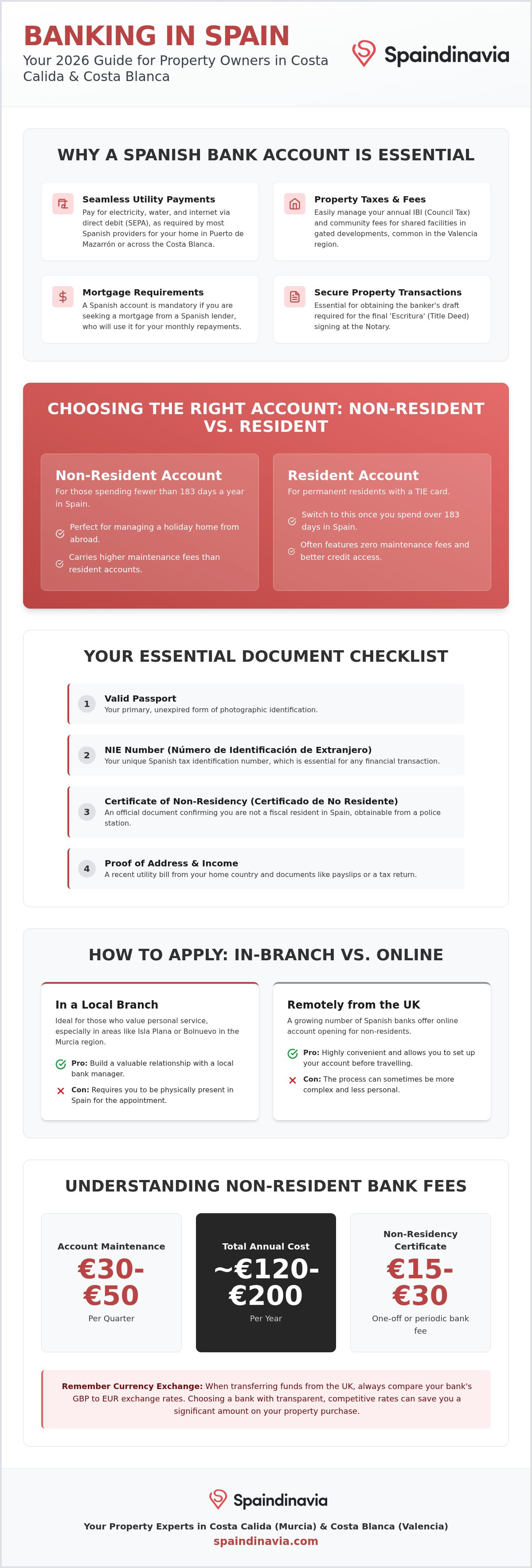
In 2026, non-resident accounts typically carry higher maintenance fees than resident ones. You can expect to pay between €30 and €50 every quarter, which totals roughly €120 to €200 per year. You might also encounter a small fee of €15 to €30 for the bank to manage your Certificate of Non-Residency. If you're transferring Pounds from the UK to Euros, look for banks with transparent exchange rates. Many high-street branches across both the Costa Blanca and the Costa Cálida now offer specialised expat accounts that simplify these international transfers whilst keeping costs manageable.
When to Switch to a Resident Account
Your banking status isn't set in stone. If you decide to make Bolnuevo or La Azohia your permanent home, you can convert your account. The trigger for this is usually obtaining your TIE (residency card) and spending more than half the year in Spain. Resident accounts often feature zero maintenance fees and better access to local credit. When applying for residency, you'll need to prove you meet the official financial requirements by showing sufficient funds in your Spanish account. Updating your status is a straightforward process that helps you integrate into the local community. If you're still searching for the perfect location to settle, we can help you explore investment properties across both regions.
Essential Documentation and Requirements for Non-Residents
Gathering the right paperwork is the most significant step toward successfully opening a spanish bank account as a non-resident. While digital trends in 2026 suggest a move toward simplicity, Spanish banks remain thorough. They must comply with strict anti-money laundering (AML) protocols. Whether you're buying a townhouse in Puerto de Mazarrón or a new build villa in the Costa Blanca, having your documents organised will prevent unnecessary delays at the branch.
You'll generally need to provide the following core documents:
- A valid passport: British citizens should ensure their passport has at least six months of validity remaining.
- Proof of address: A recent utility bill or bank statement from the UK, typically dated within the last three months.
- Proof of income: This could be your P60, recent payslips, or a pension statement to prove the source of your funds.
- NIE Number: Whilst some banks allow you to open an account with just a passport, most will require your Número de Identidad de Extranjero to fully activate all services.
Obtaining Your Certificate of Non-Residency
The Certificado de No Residencia is a vital document that confirms to the bank that you aren't a tax resident in Spain. You can apply for this through a Spanish police station once you arrive in either the Costa Cálida or the Costa Blanca, or via a Spanish consulate whilst still in the UK. Many banks in coastal areas like Isla Plana or Bolnuevo, as well as those across the Valencia region, will offer to obtain this on your behalf for a fee, usually ranging from €15 to €30. It's important to remember that this certificate is typically only valid for three months. We often coordinate with local experts to ensure this paperwork aligns perfectly with your property completion dates in either the Murcia or Valencia regions.
Proof of Funds and Compliance
Spanish banks have tightened their scrutiny in 2026, especially for non-EU applicants. If you're planning a significant deposit for a property in La Azohia or a resort in the Costa Blanca, be prepared to explain the origin of your wealth. For documents not issued in Spanish, you may need a Traductor Jurado (Sworn Translator) to provide an official version. Retirees should have their latest annual pension increase letter ready, whilst self-employed investors will likely need their most recent audited accounts or tax returns. This level of detail ensures your transaction is secure and compliant with the latest Bank of Spain regulations.
Step-by-Step Guide to Opening Your Account Online or In-Person
Ready to move forward with your property goals? The process of opening a spanish bank account as a non-resident has become significantly more streamlined in 2026. Whether you're finalising a deal on a resale apartment in Puerto de Mazarrón or exploring new build villas in the Costa Blanca, you now have the flexibility to choose between digital convenience or a traditional face-to-face service. Selecting a bank with a strong regional presence in both the Costa Cálida and Costa Blanca ensures you have local support whenever you visit your new home.
Once you've chosen your bank, the steps are logical. Gather your certified documentation, submit your application, and sign your contract. After activation, you'll need to transfer an initial deposit. For traditional accounts, this often ranges from €500 to €3,000. Finally, set up your online banking portal and debit cards to begin managing your Mediterranean lifestyle from anywhere in the world.
Opening Your Account Online from the UK
Many major Spanish banks now offer 100% digital onboarding for non-residents. This typically involves a video identification call where you'll present your passport to a bank official. It's a secure, modern way to get your Spanish IBAN before you even board a flight. In 2026, most banks can send your physical debit cards directly to your UK address, though some may require you to collect them from a branch in the Costa Blanca or Costa Cálida upon your first visit. This digital route is perfect for those wanting to pay property taxes or secure a mortgage whilst still based abroad.
Visiting a Branch in Costa Cálida or Costa Blanca
If you prefer a personal touch, visiting a branch in Puerto de Mazarrón or Isla Plana is a fantastic option. Coastal areas often have English-speaking staff accustomed to helping international buyers. Booking an appointment during your property viewing trip allows you to ask specific questions about local taxes in the Murcia region or community fees in the Valencia region. This face-to-face meeting builds a relationship with a local manager who can provide bespoke advice as you settle into Bolnuevo or La Azohia. If you're still in the early stages of your journey, why not explore our latest resale apartments to find your perfect match?
Activation is the final hurdle. Once the bank approves your documents, you'll sign the digital or physical contract. Ensure you download the bank's app immediately. This allows you to monitor transfers and set up virtual cards for secure online payments. With your account active, you're one step closer to enjoying the sun-drenched lifestyle of the Spanish coast.
Navigating Bank Fees and Secure Property Transactions
Managing the ongoing costs of your Mediterranean getaway requires a bit of financial savvy. When you're opening a spanish bank account as a non-resident, you'll quickly notice that maintenance fees are usually higher than those for residents. In 2026, these charges typically range from €60 to €200 annually, depending on the institution and the services included. While this is a standard part of owning a holiday home, understanding the fee structure helps you budget effectively for your new life in the sun.
One of the most significant costs for UK buyers involves currency exchange. Transferring Pounds to Euros through a traditional high-street bank often results in poor exchange rates and high transaction fees. Using a specialised currency broker alongside your Spanish account can save you thousands of pounds over the course of a property purchase. This becomes particularly vital when preparing the "Cheque Bancario" or Banker's Draft. This physical document is the essential way to pay the seller at the Notary's office. It provides a secure, guaranteed payment that allows the title deeds to be signed and the keys to be handed over immediately.
Minimising Transaction and Maintenance Costs
You don't always have to accept the standard fee structure. Many banks across the Costa Blanca and Costa Cálida will waive maintenance charges if you maintain a specific minimum balance or take out home insurance through their affiliated providers. It's also wise to be wary of hidden charges for international transfers or using ATMs that aren't part of your specific bank's network. Always request a clear breakdown of commissions before you sign. This is especially important for receiving large transfers from abroad meant for property maintenance or rental management services in Puerto de Mazarrón or Isla Plana.
How Spaindinavia Supports Your Financial Journey
We act as your local bridge to a secure and transparent purchase. Our team regularly connects buyers with independent solicitors and trusted bank managers across the Murcia region. This personal network is invaluable when securing new build villas or resale apartments in La Azohia and Bolnuevo. We ensure every financial step is clear, from the initial reservation deposit to the final completion. For a comprehensive look at the entire journey, consult our buying property in Spain guide. Having a functional local account makes managing your investment much simpler, allowing you to enjoy your Mediterranean lifestyle whilst we help handle the practical details in both the Valencia and Murcia regions.
Your Financial Foundation for a Mediterranean Lifestyle
Securing your financial footing is the final, vital step in turning your Spanish property dream into a reality. By mastering the process of opening a spanish bank account as a non-resident, you've ensured that your new life in the sun is built on a solid foundation. Whether you're managing a modern apartment in the Costa Blanca or a charming resale villa in the Costa Cálida, having a local IBAN simplifies everything from utility bills to property taxes. It's the key to a stress-free experience whilst you're enjoying the beaches of Bolnuevo or the sunsets in Isla Plana.
At Spaindinavia, we specialise in more than just finding the perfect home. We act as your local experts in Puerto de Mazarrón and across the southern Costa Blanca, collaborating with independent legal and financial professionals to guide you through every bureaucracy. From your initial search to the final settlement, we're here to ensure your journey is secure and inspiring. Ready to take the next step? Find your dream villa in Costa Cálida or Costa Blanca with Spaindinavia and let us help you settle into your new Mediterranean home with total confidence.
Frequently Asked Questions
Can I open a Spanish bank account as a non-resident from the UK?
Yes, you can. Many major Spanish banks now offer digital onboarding specifically for those based in the UK. This is ideal if you're planning a purchase in either the Costa Blanca or the Costa Cálida. The process of opening a spanish bank account as a non-resident via video identification is secure and efficient. This allows you to have your IBAN ready before you even board a flight to Puerto de Mazarrón.
Do I need an NIE number to open a bank account in Spain?
Whilst some banks allow you to open an account with just a passport, having an NIE is highly recommended. It simplifies the process of paying local taxes in the Murcia region and setting up utilities in the Valencia region. Most financial institutions will eventually require it to provide full services for your new home in Bolnuevo or Isla Plana, ensuring all your direct debits run smoothly from day one.
What are the typical maintenance fees for a non-resident account?
You should budget between €30 and €50 per quarter for maintenance fees. This amounts to roughly €120 to €200 annually for non-residents. Additionally, banks often charge a small fee of €15 to €30 to obtain the required Certificate of Non-Residency on your behalf. These costs are standard for managed accounts across both the Costa Cálida and Costa Blanca and cover the administrative costs of non-resident compliance.
How long does it take to open a Spanish bank account in 2026?
Timeframes have improved significantly in 2026. Online applications can often be processed within 24 to 48 hours once your digital identification is complete. If you visit a branch in Puerto de Mazarrón or the Costa Blanca in person, the account is typically opened the same day. However, allow up to five working days for all debit cards and online access codes to be delivered and fully activated for remote use.
Can I use a digital bank like Wise or Revolut for my Spanish property purchase?
Digital banks are excellent for currency transfers, but they aren't always sufficient for the final property completion. Most Spanish Notaries require a Banker's Draft from a traditional Spanish bank for the final signing. Furthermore, some local town halls in the Murcia and Valencia regions may not accept digital-only IBANs for certain tax payments, making a high-street account a safer choice for your long-term investment.
Do I need to visit Spain in person to open the account?
No, an in-person visit is no longer strictly mandatory for opening a spanish bank account as a non-resident. Many institutions offer fully remote setups via their mobile apps. However, we often suggest visiting your local branch in Isla Plana or La Azohia, or perhaps a coastal town in the Costa Blanca, during your viewing trip. Meeting your manager in person builds a helpful relationship for future property management and maintenance needs whilst you are back in the UK.
Is my money protected in a Spanish bank account?
Yes, your funds are secure. Spanish banks are members of the Deposit Guarantee Fund, which protects up to €100,000 per depositor, per institution. This provides peace of mind for investors looking at new build villas or resale apartments in the Costa Blanca and Costa Cálida. The system is overseen by the Bank of Spain to ensure a stable and transparent financial environment for all international buyers.
What happens to my account if I eventually become a Spanish resident?
Your bank can easily convert your status once you obtain your residency permit. Resident accounts often feature lower maintenance fees and better access to local credit facilities. It's a simple administrative update that helps you integrate further into the local community in Bolnuevo or across the Valencia region. We recommend notifying your branch as soon as your tax status changes to benefit from these improved terms and services.


