
The secret to a stress-free Mediterranean home transformation isn't found in a toolbox; it's actually found in the local town hall archives. You might be thinking, "I want to renovate and expand my property - What do I need to know and do?" whilst staring at a sun-drenched terrace that needs a fresh layout. Whether you're looking at a villa in the hills of Bolnuevo or a beachfront apartment in Puerto de Mazarrón, the dream of a modern lifestyle in the Costa Calida or the Costa Blanca often feels tangled in red tape. It's completely natural to feel overwhelmed by the distinction between "obra menor" and "obra mayor" licences or to worry about the language barrier when dealing with Murcia or Valencia regional regulations.
We understand that you want security and clarity before you start knocking down walls. This guide provides a clear roadmap to master the legal, financial, and practical steps required to successfully transform your Spanish home. We'll explore the updated 2026 building regulations, explain how to claim significant tax deductions for energy-efficient upgrades, and show you how to increase the resale value of your property in Isla Plana or La Azohia. By the end of this article, you'll have the expert knowledge needed to build your dream life with total peace of mind.
Key Takeaways
- Learn to distinguish between cosmetic refreshes and structural expansions to ensure your project aligns with your lifestyle goals in both the Costa Blanca and Costa Calida.
- Navigate the legal landscape by understanding when you need an "Obra Mayor" licence, answering the vital question: "I want to renovate and expand my property - What do I need to know and do?"
- Protect your finances by factoring in a 15% contingency fund and mandatory professional fees for architects and notaries in areas like Puerto de Mazarrón and Bolnuevo.
- Master the local construction timeline by accounting for Spanish holidays whilst prioritising thermal insulation to keep your Mediterranean home comfortable throughout every season.
- Secure your long-term investment and boost market value by obtaining the "Final de Obra" certificate to ensure all expansions are fully legalised for future resale.
Defining Your Property Goals: Renovation vs Structural Expansion
Begin your journey by clarifying exactly why you're picking up the sledgehammer. Every home has a story, but sometimes that story needs a new chapter to stay relevant. If you've found yourself thinking, "I want to renovate and expand my property - What do I need to know and do?", the first step is distinguishing between a simple aesthetic update and a structural change. Whether you're based in the vibrant Costa Blanca or the tranquil Costa Calida, your motivation usually falls into two categories: improving your daily lifestyle or boosting your investment yield for future resale.
General home improvement projects, such as a "facelift" involving new tiling or a modern kitchen, can often be completed with minimal paperwork. However, footprint-altering expansions, like adding a sunroom in Bolnuevo or an extra bedroom to a villa in Isla Plana, change the game entirely. These structural changes impact your plot-to-build ratio, also known as occupancy. In both the Murcia and Valencia regions, local laws strictly dictate how much of your land can be covered by buildings. Exceeding this limit can lead to serious legal headaches, so assessing your plot's remaining "buildability" is your absolute priority before committing to a design.
Before you decide to build outwards, look for hidden potential within your existing walls. Sometimes, removing a non-structural partition in a Puerto de Mazarrón apartment can create the open-plan flow you crave without the need for a complex expansion. This approach often saves money whilst still delivering that "new home" feeling.
Assessing Needs and Lifestyle Requirements
Organise your ideas by creating a prioritised list of must-haves versus luxury additions. Think about how your needs change whilst living in Spain year-round; a terrace that's perfect for July might need glass curtains to be useful in January. Analyse the natural light flow in your current layout. If you're in La Azohia, you'll want to capture those Mediterranean sunsets. Don't just add space; ensure the new layout improves the way you move through the home.
The "Move or Improve" Dilemma
Compare the costs of a major renovation against the fees associated with buying a new build villa or apartment. Buying a different property involves transfer taxes and notary fees, which might outweigh the cost of an expansion. However, you must determine if your desired project is physically and legally possible on your specific plot. If you love your neighbours and that specific view of the coast, improving your current home is often the most rewarding path.
Navigating Spanish Building Regulations and Planning Licences
Once you've decided on your vision, the next step involves the local Town Hall, known as the Ayuntamiento. If you've been asking, "I want to renovate and expand my property - What do I need to know and do?", then understanding the permit system is your first hurdle. Whether you're dealing with the regional rules of Murcia or the slightly different requirements in Valencia, you'll need to navigate a specific set of Spanish building regulations. Every municipality has its own "Plan General", which dictates what can be built and where. Skipping this step isn't an option; local authorities use aerial photography to spot unauthorised changes, which can lead to hefty fines or even demolition orders.
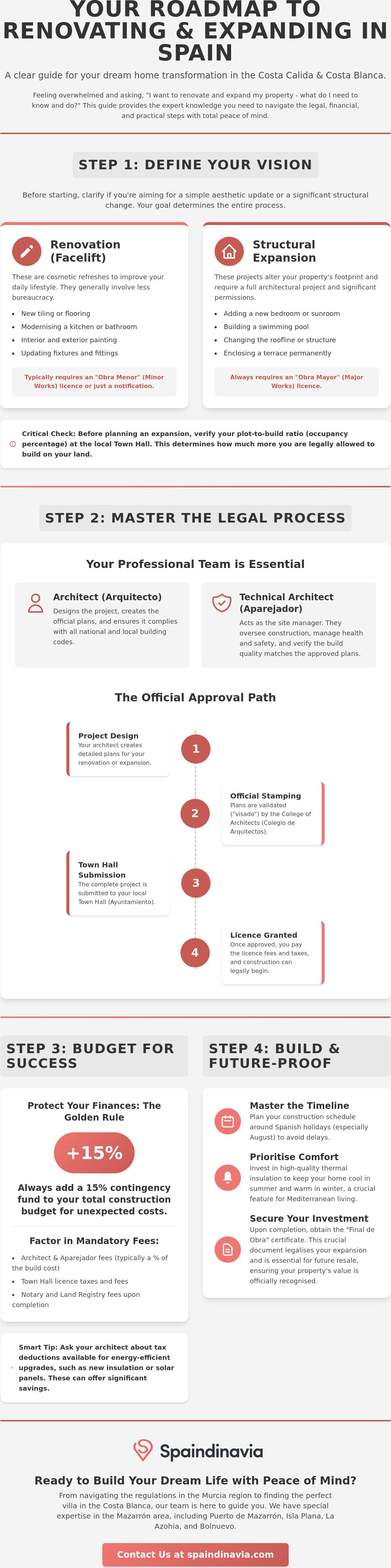
For any significant expansion, you'll need a team of professionals. An architect designs the project, but you'll also likely require a Technical Architect, known as an Aparejador. This person acts as the site manager, ensuring the build follows the approved plans and meets safety standards. Once the plans are ready, they must be "visited" or stamped by the College of Architects (Colegio de Arquitectos). This official validation confirms the architect is qualified and the project meets technical norms. If you're looking for resale villas with potential for expansion, checking these legal requirements early is vital for a smooth journey.
Obra Menor vs Obra Mayor: Which Do You Need?
Licences are split into two main categories. An Obra Menor is for minor works like interior tiling, painting, or replacing a bathroom. These permits are usually granted quickly, sometimes even over the counter. Conversely, an Obra Mayor is required for structural changes, adding rooms, or changing the building's footprint. This process is more complex and involves municipal taxes (ICIO), which generally range between 3% and 6% of the construction budget. Expect a wait of several months for an Obra Mayor permit in both the Costa Blanca and Costa Calida regions.
Working with Local Authorities
Before buying materials, visit the town hall to check for "urbanistic" restrictions. This is especially important in coastal areas like Isla Plana or La Azohia, where the Ley de Costas (Coastal Law) might restrict expansions near the shoreline. Always check your Nota Simple for any existing illegal extensions added by previous owners. If the property already exceeds its allowed "buildability", adding even a small sunroom in Bolnuevo or Puerto de Mazarrón could be legally impossible. Clearing these hurdles early ensures your investment remains secure and fully legalised.
Budgeting for Success and Selecting Your Construction Team
Financial planning is the backbone of any successful project. If you've reached the stage where you're saying, "I want to renovate and expand my property - What do I need to know and do?", the answer begins with a clear-eyed look at your finances. Whether you're upgrading a townhouse in Bolnuevo or a large villa in the Costa Blanca, costs can escalate quickly without a disciplined approach. We always recommend establishing a budget that includes a 15% contingency fund. This buffer is essential for covering those "surprises" that inevitably hide behind old Spanish masonry or beneath the floor tiles of a resale apartment.
Selecting your crew is about more than just finding the lowest quote. You should vet contractors by visiting their previous local projects in areas like Puerto de Mazarrón or Isla Plana to see their craftsmanship firsthand. Ask for references and speak with former clients about their reliability. Whilst the legal framework in Spain is unique, some general HUD home improvement resources offer excellent universal advice on protecting yourself from contractor fraud and managing project financing. In the Murcia and Valencia regions, ensuring your builder has the correct insurance is a non-negotiable step for your protection.
It's also vital to understand how IVA (VAT) applies to your project. For certain renovations on a primary residence, you might qualify for a reduced IVA rate of 10% instead of the standard 21%. This distinction can save you thousands of pounds on a major expansion. Always confirm the current tax rates with your solicitor or a local tax expert before signing any construction contracts.
The Essential Professional Team
- The Architect: They create the technical project and ensure the structural integrity of your expansion meets modern safety standards.
- The Builder: Look for a licensed professional who manages site safety and coordinates the various trades, from plumbers to electricians.
- The Solicitor: They play a crucial role by verifying contracts and ensuring the finished work is legally registered at the Land Registry.
Hidden Costs of Spanish Renovations
Don't forget the smaller fees that add up. You'll need to pay municipal taxes (ICIO) based on your construction budget and factor in waste disposal fees for debris containers. Additionally, expanding your home often requires a utility upgrade. You may need to increase your electrical capacity, known as Potencia, which requires a new certificate from a qualified electrician to ensure your home in La Azohia can handle the increased load.
Executing the Build: From Structural Expansion to Finishing Touches
Whilst the legal paperwork is vital, the physical build is where your vision truly takes shape. If you've been asking, "I want to renovate and expand my property - What do I need to know and do?" during the construction phase, the answer lies in managing expectations and local rhythms. Construction in both the Costa Blanca and the Costa Calida follows a unique schedule. You must account for the daily siesta, where loud works often pause, and the traditional August holiday period, when many suppliers close. Maintaining open communication with your neighbours in Bolnuevo or Isla Plana is equally important. A friendly chat about the timeline can prevent complaints to the Town Hall that might otherwise stall your project.
Modern builds in 2026 are governed by the updated Technical Building Code (CTE), which places a heavy emphasis on sustainability. This includes the Global Warming Potential (GWP) calculation, measuring the environmental impact of your materials from transport to eventual demolition. Integrating smart home features and energy-efficient climate control isn't just about comfort; it's a legal and financial strategy. For projects that significantly reduce non-renewable energy consumption, you could qualify for tax deductions of up to 40% or even 60% for entire building rehabilitations, provided the work is completed by 31 December 2026. If you are searching for new build villas that already meet these high standards, exploring our latest listings can save you the effort of a complex retrofit.
Climate-Smart Renovations
The Mediterranean climate is beautiful but demanding. In coastal areas like Puerto de Mazarrón and La Azohia, you must choose materials that withstand high UV exposure and salt air corrosion. Prioritise high-quality thermal insulation to protect against the summer heat and the surprisingly damp winter chill. We recommend implementing solar solutions for water heating and electricity, as the regions of Murcia and Valencia offer some of the highest solar gain in Europe. Focus on cross-ventilation and creating seamless outdoor-indoor living spaces to truly capture the Mediterranean lifestyle.
Structural Expansion Considerations
When adding a new room or a second storey, ensuring new foundations are correctly tied to the original structure is critical for long-term stability. Managing site access for heavy machinery can be tricky in established urbanisations, particularly in hilly areas like Bolnuevo. Your builder must coordinate deliveries carefully to avoid blocking narrow residential streets. Finally, always match your exterior aesthetics to the original property. Maintaining the character of your home ensures the expansion looks like a natural evolution rather than an afterthought, which is essential for future valuations.
Enhancing Resale Value and Future-Proofing Your Investment
Completing the physical construction is a significant milestone, but the final steps of your journey are what truly solidify your financial gain. If you began this process thinking, "I want to renovate and expand my property - What do I need to know and do?", you now understand that the finish line isn't the last brick laid. It's the moment your new square metres are officially recognised by the Spanish state. A legal expansion significantly boosts the market price of your villa in Bolnuevo or your apartment in the Costa Blanca, but only if the paperwork is flawless. Without correct registration, you're essentially gifting the next owner a legal headache, which will inevitably lead to price negotiations during a sale.
The 2026 market prioritises homes that are ready for immediate occupancy and fully compliant with the latest regulations. Buyers in areas like Puerto de Mazarrón and Isla Plana are increasingly savvy about energy ratings and legal status. By ensuring your renovation meets modern lifestyle standards whilst being fully documented, you're not just creating a better home; you're future-proofing a valuable asset in the Murcia and Valencia regions.
Legalising the New Structure
Once the builder finishes, your architect must issue the "Final de Obra" certificate. This document confirms the work matches the original approved plans. You must then take this certificate to a Notary to sign the "Obra Nueva" (New Work) deed. This is a critical step that many homeowners overlook. This deed is what allows the Property Registry to update your "Escritura" (Title Deed) to reflect the increased size of the property. Finally, ensure the Catastro is notified so your IBI (council tax) records are accurate. Having this paper trail in order is the only way to guarantee a smooth, high-value sale in the future.
ROI Focus: Which Renovations Pay Off?
Not all improvements offer the same return on investment. In the current Mediterranean market, modernising kitchens and bathrooms remains the top value-adder. However, there's a growing demand for additional bedrooms with en-suite facilities, particularly for holiday rental properties in La Azohia. Successful Spain property investment strategies always prioritise legal compliance alongside aesthetic upgrades. Adding a fourth bedroom to a three-bedroom villa can move your property into a completely different price bracket. Focus on high-quality finishes and energy-efficient systems to ensure your home stands out amongst the competition in both the Costa Calida and the Costa Blanca.
Start Your Mediterranean Transformation Today
Transforming your property into a modern sanctuary requires a blend of creative vision and legal precision. By categorising your project correctly and securing the "Final de Obra" certificate, you protect both your daily comfort and your long-term investment. Whether you're modernising a villa in Bolnuevo or expanding a coastal home in Isla Plana, the key is to work with experts who understand the distinct regulations of the Costa Calida and the Costa Blanca. If you're still asking, "I want to renovate and expand my property - What do I need to know and do?", remember that the most successful projects begin with a secure legal foundation and a clear budget.
We're here to act as your reliable bridge to the local market, offering local expertise in Puerto de Mazarrón, La Azohia, and throughout the Murcia and Valencia regions. Our team provides comprehensive support from legal vetting to property management, ensuring every step is stress-free. For a secure start, consult our buying property in Spain guide. When you're ready to find your next project, explore our hand-picked portfolio of properties for renovation potential. Your dream lifestyle in a warmer climate is well within reach, and we're delighted to help you achieve it.
Frequently Asked Questions
Do I need a building licence for a small renovation in Spain?
Yes, almost every modification to a property requires some form of official notification or licence from your local Ayuntamiento. Even minor cosmetic changes, such as replacing floor tiles or painting your exterior, usually require a "comunicación previa" or a minor works permit. This rule applies across both the Costa Blanca and the Costa Calida to ensure all work meets local safety and aesthetic standards.
What is the difference between Obra Menor and Obra Mayor?
The primary difference lies in whether the work affects the building's structure or footprint. An Obra Menor covers small-scale cosmetic updates and interior repairs that don't involve structural walls. If you are thinking, "I want to renovate and expand my property - What do I need to know and do?", you'll likely need an Obra Mayor. This major licence is mandatory for extensions, floor additions, or any project that changes the external appearance or structural integrity of your home.
How long does it typically take to get a renovation licence?
Processing times vary significantly between municipalities in the Murcia and Valencia regions. A minor works permit in Puerto de Mazarrón or Bolnuevo might be issued within a few weeks. However, a major works licence for a structural expansion in the Costa Blanca can often take between six and twelve months. It is vital to factor these administrative timelines into your overall project schedule to avoid frustrating delays.
Can I legalise an extension that was built without a permit?
Legalisation is often possible through a process called an "Expediente de Legalización," provided the structure complies with current urbanistic laws. You will need a qualified architect to produce technical plans and certify that the build meets safety codes. You must also pay the original municipal taxes plus potential late fees. This process is essential for homeowners in Isla Plana or La Azohia who wish to sell their property without legal complications.
How does expanding my property affect my Spanish council tax (IBI)?
Your IBI will increase because the tax is calculated based on the cadastral value, which includes the total built square metres. Once your expansion is finished and the "Obra Nueva" deed is registered, the Catastro office will update their records. This ensures your property in the Mazarrón area is correctly valued. Whilst your annual tax bill will rise, the increase is usually proportionate to the added value and utility of your larger home.
What happens if I renovate my home without a building licence?
Renovating without a licence can result in heavy fines, a permanent stop-work order, and even a court-ordered demolition of the unauthorised work. Local authorities in both the Costa Calida and Costa Blanca use satellite imagery and drones to identify illegal construction. If you're asking, "I want to renovate and expand my property - What do I need to know and do?", the most important step is securing your permits first to protect your investment and peace of mind.
Do I need an architect for interior renovations?
An architect is not usually required for simple cosmetic updates, but they are legally mandatory for any project involving structural changes. If you plan to remove a load-bearing wall or add a new room, an architect must sign off on the plans to ensure the building remains safe. In the Murcia region, you will also likely need a Technical Architect to oversee the daily construction and safety protocols on-site.
How much should I budget for planning permission fees in Spain?
You should generally budget between 4% and 10% of your total construction costs for municipal fees and taxes. This includes the ICIO tax, which ranges from 3% to 6% depending on the town hall, and various administrative processing fees. These costs are calculated based on the professional budget submitted by your architect, so ensure your financial plan accounts for these mandatory payments early in the process.


