

What if the person overseeing your property signing isn’t the one checking that the purchase protects your interests? If you’re buying in Spain, this guide has the difference between a notary and a lawyer in Spain explained in clear, practical terms, so you can see why both roles matter.
It’s natural to assume the notary handles every legal detail. In Spain, however, the notary formalises the transaction, while your independent lawyer advises you, reviews purchase documents and checks relevant property information from your perspective. The notary’s role at completion does not replace independent legal advice.
Knowing when to involve each professional can make the buying process clearer. This article explains what the notary and lawyer do, what to prepare and what happens at completion. Spaindinavia, a real-estate agency, helps coordinate the buying journey and introduces buyers to independent legal and financial professionals. Your lawyer provides advice focused on your interests.
Key Takeaways
- Understand the difference between a notary and a lawyer in Spain: one formalises the signing, while the other advises you from the buyer’s perspective.
- Know what the notary’s role at completion involves, and why the formal signing is only one part of a well-supported purchase.
- See which ownership, debt and contract checks your independent lawyer can review before you commit to the purchase.
- Follow the key purchase stages, from reservation and the Arras agreement to completion, so you can prepare for each step.
- Learn how Spaindinavia can help coordinate introductions to independent legal professionals as you progress with your purchase.
Notary vs lawyer in Spain: why buyers need to understand the difference
Buying a home in Spain can feel unfamiliar, especially when the professionals involved have roles that do not map neatly onto those in your home country. The key question is who formalises the transaction and who gives advice focused on your interests. To have the difference between a notary and a lawyer in Spain explained clearly, start by separating their responsibilities.
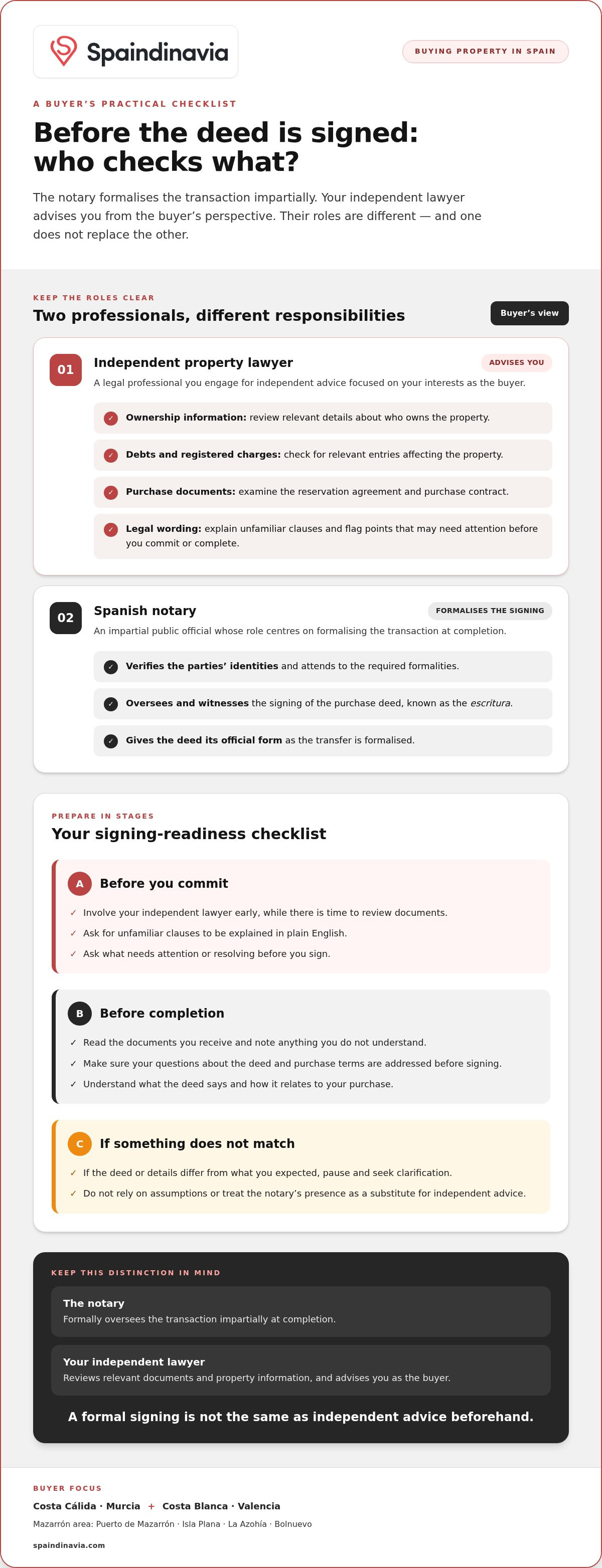
A Spanish notary is a public official whose role is impartial. A property lawyer, or abogado, is a legal professional you engage for independent advice about your purchase. The notary’s involvement is an important part of formalising the transaction, but the notary is not your personal adviser and does not check every potential issue on your behalf.
What does a Spanish notary do?
In Spain’s civil-law notary system, the notary has a public role in formalising legal documents. At a property completion, this includes overseeing the signing of the purchase deed, known as the escritura, and attending to the formalities involved. The notary is impartial rather than acting as the buyer’s or seller’s personal legal adviser.
That distinction matters. A notary’s presence does not replace independent advice on whether the property and the purchase terms suit you. Before signing, make sure you understand what the deed says and raise questions with your lawyer.
What does an independent property lawyer do?
Your independent lawyer advises you from the buyer’s perspective. Their work can include reviewing ownership information, checking for debts or other registered charges, and examining the reservation agreement and purchase contract. They can explain legal wording and flag points that may need attention before you commit or complete.
Ask your lawyer to explain unfamiliar clauses in plain English and to identify anything that needs resolving before you sign. These checks help you understand the transaction and make informed decisions. The lawyer’s review and the notary’s formal role are separate parts of the process.
The notary formalises the transaction impartially; your independent lawyer advises you with your interests as the buyer in view.
Notary
Serves an impartial public role. Broad purpose: oversee the formal execution of the deed and related completion formalities.
Independent lawyer
Advises the buyer. Broad purpose: review purchase documents and relevant property information, and explain legal issues from the buyer’s perspective.
Keep the distinction in mind throughout the purchase. A completed signing is not the same as receiving independent advice beforehand. Engaging your lawyer early gives them time to review documents and explain concerns while you can still consider the terms. The notary and lawyer each have a place in the transaction, but they are not interchangeable.
What the Spanish notary does at property completion
At the end of a property purchase, the notary formalises the transaction through the signing of the public deed. This is a key moment, but it helps to understand what that formality means before you arrive. The notary provides an official framework for recording the agreed transfer. The notary is not your personal representative, and their involvement does not mean every question about the property has been examined on your behalf.
The notary’s role in formalising the purchase
The purchase deed, called the escritura, is the formal document used to record the transfer of the property. At completion, the notary oversees its signing and attends to the relevant formalities. In practical terms, this is where the parties formalise their agreement in an official document. The deed is more than an informal record of what was discussed, so take care to understand its contents before signing.
The notary’s formal role includes verifying the parties’ identities, overseeing the required formalities, witnessing the signing and giving the deed its official form. For a buyer, the practical point is that the notary’s work centres on formalising the transaction at completion. Your independent lawyer can explain the legal effect of the deed and how it relates to your purchase.
The signing appointment is not a substitute for preparing in advance. Read the documents you receive, note anything you do not understand, and make sure your questions are addressed before you sign. If the deed or details recorded in it differ from what you expected, pause and seek clarification rather than relying on assumptions.
What the notary’s impartiality means for the buyer
Impartiality means the notary does not act as the buyer’s personal adviser or advocate, or as the seller’s. The notary is neutral in relation to both parties. That can support an orderly formal signing, but neutrality is different from advice aimed specifically at protecting one side’s interests.
Imagine that a buyer and seller have agreed on a property and attend the notary to formalise the transfer. The notary does not negotiate for the buyer or argue for the seller. Instead, the notary handles the formal act according to the applicable requirements. This is why buyers should not assume the notary has carried out every investigation they need before committing to the purchase.
That distinction is central to understanding the difference between a notary and a lawyer in Spain: the notary formalises the transaction impartially, while independent advice is a separate part of preparing for a purchase. Keep those roles clear as you approach completion, and make sure you understand the deed before signing.
If you’re organising a purchase and want help keeping the practical steps clear, explore property purchase guidance as you prepare for completion.
What your independent lawyer checks and advises on
Before you commit to buying a property in Spain, an independent lawyer can help you understand what you’re agreeing to and identify issues that may need attention. Their advice is focused on you as the buyer. This is particularly useful if you’re purchasing from abroad or are unfamiliar with the documents and terms involved.
The checks and advice needed can vary with the property and the terms of the sale. Use the points below to prepare questions, then ask your lawyer what applies to your purchase and what action is appropriate.
Legal checks before you commit
Ask your lawyer to review the ownership information, check for debts or charges connected with the property, and examine the documents you’re being asked to sign. These checks can help you understand whether the seller’s information and the paperwork support the transaction as presented. If something is unclear or appears inconsistent, your lawyer can explain the issue and advise you before you make a commitment.
Timing matters. A review is most useful while you still have time to understand the terms and raise questions, rather than discovering unfamiliar wording at the last moment. Share documents with your lawyer promptly, keep copies together, and tell them about any promises or arrangements discussed outside the written agreement. This context helps them assess whether the paperwork reflects what you believe you’ve agreed.
Do not assume a document is straightforward just because it is short or presented as a standard form. Ask for a plain-English explanation of unfamiliar clauses, including what they require you to do and what may happen if the terms are not met.
Contract advice and buyer representation
Your lawyer can review the reservation agreement and purchase contract, explain their wording and advise you on how the terms affect your position as a buyer. They can identify points you may want clarified before signing. The advice depends on the documents and your circumstances, so general information cannot replace a lawyer’s review of your individual purchase.
This is separate from the notary’s impartial function. Your lawyer helps you make informed decisions in your own interests. The difference between a notary and a lawyer in Spain, explained in practical terms, is that independent legal advice gives the buyer a professional perspective focused on their own position.
Your independent lawyer helps you understand the risks and terms from your side of the deal, so you can decide how to proceed with clearer information.
To make an initial conversation useful, take the documents you have and ask questions such as:
- Does the ownership information match the property and seller described in the paperwork?
- Are there debts or charges I should understand before proceeding?
- What do the reservation agreement and purchase contract require me to do?
- Are any terms unclear or worth resolving before I sign?
- What should I understand about my legal and tax obligations as a buyer?
How the notary and lawyer fit into a Spanish property purchase
The notary and independent lawyer contribute at different points in your purchase. Your lawyer can review documents and advise you as decisions arise; the notary’s formal role comes at completion, when the purchase deed is signed. Thinking of the process as a sequence helps you know when to ask questions and what to prepare.
From reservation and Arras to completion
Each purchase has its own details, but these broad stages show how legal advice and formal completion fit together:
- Reservation: A property may be reserved with a fee of €3,000-€10,000. Before paying or signing, have your independent lawyer explain the reservation terms and what they mean for you.
- Legal review: Your lawyer can review available ownership information, check for debts or charges, and explain the documents and proposed terms. Share paperwork promptly and ask about anything you do not understand before proceeding.
- Arras agreement: The contrato de arras, often called an Arras agreement, is a private purchase contract setting out agreed terms for the sale. A deposit of around 10% is typical after the reservation fee. Ask your lawyer to explain the wording, payment terms and consequences set out in your agreement before signing.
- Completion: Once the parties are ready to complete, the notary oversees the formal signing of the purchase deed. Read and understand the document, and raise questions through your legal adviser before signing if anything is unclear.
This is a practical overview, not a fixed legal timetable. The order and details can depend on the transaction, so use your lawyer’s advice for your circumstances rather than assuming every purchase follows identical steps.
Planning financing, additional costs and timing
If you’re a non-resident and plan to use a mortgage, financing is typically 60%-70% of the property value. Treat this as a planning figure, not an individual lending decision. Speak with your bank early and work out how you’ll cover the remaining purchase funds alongside other expenses.
Budget approximately 10%-15% of the property price for additional buying costs, including taxes and fees. These may include transfer tax or VAT, notary, land-registry, legal and administrative costs. Treat the range as a broad planning estimate. Ask your independent lawyer which costs apply to your purchase and how to allow for them in your budget.
After reservation, the buying process usually takes 4-6 weeks. Use this period to keep documents organised, respond promptly to requests and stay in contact with your lawyer as the transaction progresses. Knowing the difference between a notary and a lawyer in Spain through these stages helps you prepare: legal advice supports your decisions, while the notary formalises completion.
For help coordinating the purchase journey and introductions to independent professionals, explore property purchase support with Spaindinavia, a real-estate agency.
How Spaindinavia helps you coordinate independent legal support
Once you understand the separate roles of your lawyer and notary, practical support can help keep the wider purchase journey organised. Spaindinavia is a real-estate agency, not a legal adviser or notary. The agency introduces buyers to independent lawyers, notaries and banks, and assists with the purchase process from reservation through to completion.
An agency contact can help you keep track of documents, questions and milestones, but advice about your individual purchase should come from your independent solicitor. With the difference between a notary and a lawyer in Spain explained, you can see how coordination and legal advice work alongside one another without confusing their roles.
An agency contact alongside independent legal advice
Spaindinavia assists buyers with reservation, legal checks, the purchase contract and notary completion. This helps keep the process connected: you can understand what stage you’re at, what paperwork is involved and where independent professional input fits. The agency can introduce you to a lawyer for buyer-focused legal advice and to a notary for the formal completion stage.
Keep your lawyer involved as documents arrive, especially before signing or paying under an agreement. Your solicitor can explain the legal wording, review relevant information and advise you on your circumstances. Spaindinavia helps coordinate the journey, while your independent solicitor provides the legal review and advice.
A useful habit is to keep a single folder for reservation documents, lawyer correspondence, the purchase contract and completion information. Share updates with the relevant professionals and keep a short list of questions, so important details do not get lost between stages.
Plan your next steps with clear guidance
Buying a home is also about choosing a setting that suits the life you want. Costa Blanca and Costa Cálida enjoy over 300 days of sunshine per year. As you compare properties, keep practical priorities alongside the legal process: how you plan to use the home, which documents you need to understand and which decisions call for independent advice.
For a broader overview of the stages and preparation involved, continue with the Buying Property in Spain Guide. Use it to organise your questions and plan what information to gather as you move towards a purchase.
Take the process one decision at a time. Keep your independent solicitor involved in legal matters, use the notary for the formal completion stage, and draw on Spaindinavia’s buyer-focused property support to coordinate the journey. This helps you move forward with clearer guidance while keeping coordination separate from legal advice.
Take your next step with confidence
Before moving ahead, write down what you need from your future home and which decisions still feel unclear. This gives you a practical starting point for conversations, keeps important questions visible and helps you make choices at a pace that feels right for you. With the difference between a notary and a lawyer in Spain explained, you can approach the next stage with a clearer sense of what guidance you need and when.
A property purchase is a significant personal decision, but you do not have to organise every part of the journey alone. If you’re ready to explore homes in Spain, contact Spaindinavia about its buyer-focused property support and take a considered step towards finding a place that fits the life you want.
Frequently Asked Questions
Is a notary the same as a lawyer in Spain?
No. A Spanish notary and a lawyer have distinct roles. The notary is an impartial public official involved in formalising documents, while an independent lawyer advises you as the buyer. Their work can complement each other: one supports the formal transaction, the other gives advice focused on your position. Do not treat notary involvement as a replacement for independent legal advice. A qualified Spanish legal professional can explain how these roles apply to your purchase.
Do I need both a notary and an independent lawyer to buy property in Spain?
Using both gives you distinct forms of support: formal completion with a notary and independent legal advice for your purchase. Spaindinavia recommends hiring an independent solicitor to verify ownership, debts and contracts. As a practical step, arrange for your solicitor to review the documents before you sign or make a payment under an agreement.
Can foreigners buy property in Spain?
Yes. Foreigners can buy property in Spain, with no restrictions based on nationality. Buyers still need to prepare for the financial and legal steps involved in a purchase. An NIE, or Foreigner Identification Number, is required for property purchases and financial transactions. Include getting your NIE in your preparation, and organise your financial documents so the relevant professionals can help you progress through the transaction.
What does a lawyer check when buying a property in Spain?
Spaindinavia recommends hiring an independent solicitor to verify ownership, debts and contracts. Ask your solicitor to explain what the ownership information and contract terms mean for the property you’re considering, and to identify any questions that need resolving before you proceed. This buyer-focused advice is separate from the notary’s impartial role in formalising the transaction. The precise legal advice depends on your documents and circumstances.
How long does buying a property in Spain take after reservation?
The buying process after reservation usually takes 4-6 weeks. During this period, keep your paperwork organised and work with the relevant professionals on the legal checks and transaction steps. Respond promptly to requests and keep a note of outstanding questions so you’re prepared as the purchase progresses. This is the usual timeframe for planning, not a promise that every individual transaction will complete within a particular number of weeks.
What additional costs should I budget for when buying property in Spain?
Budget approximately 10%-15% of the property price for taxes and fees. This can include transfer tax or VAT, notary, land-registry, legal and administrative costs. Treat the range as a planning estimate rather than a personalised calculation: the applicable costs depend on the purchase. Ask your independent solicitor which tax and fee categories relate to your transaction so you can plan for the funds needed.
How much deposit do I pay when buying property in Spain?
The deposit under the private purchase contract, known as Arras, is typically around 10% of the purchase price after the reservation fee. The reservation fee is between €3,000 and €10,000, varying between resale and new development. Before paying, have your independent solicitor explain how the reservation payment and deposit are set out in your agreements and what the terms mean for your purchase.


